
Haunted house
A house said to hold the spirits of its dead, and how the scares are investigated
A haunted house is a building believed to hold the spirits of the dead, often people who died there violently or by misfortune. The belief spans the world, from Roman letters to Japan's summer ghost houses, while investigators mostly trace the signs to ordinary causes.
- Pliny the Younger told of a chain-dragging ghost in his Athens house in the first century AD
- Japanese ghost houses open each August, when ancestral spirits are believed to visit
- A 1921 medical report tied a family's haunting to carbon monoxide
- Police in Wuhan filled a derelict house with fake skulls to train officers' nerves
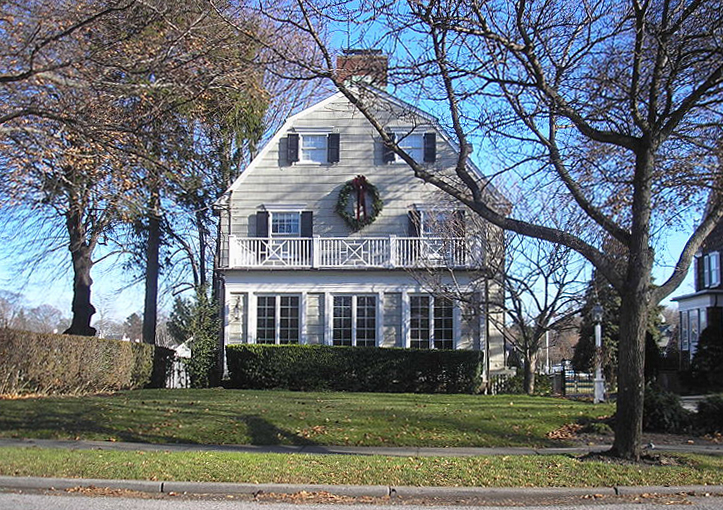
- The Lutzes left Amityville after 28 days and later admitted their book was largely fiction
What it is
A haunted house, also called a spook house or ghost house, is a building said to hold the spirits of people who have died. Those spirits are usually imagined as former residents, or as others with some tie to the property. Parapsychologists, who study claims of the paranormal, often connect hauntings to violent or sorrowful events in a building's past: a murder, a fatal accident, a suicide. The idea belongs to ghostlore, the body of belief about the dead, and counts among the most widespread paranormal convictions worldwide. It also takes built form. Japan opens ghost houses each summer as paid frights, police in Wuhan built one for training, and books and films such as The Amityville Horror have carried the theme far beyond the places themselves.
Where it comes from
Written accounts reach back to the Roman world. In the first century AD, Pliny the Younger described in a letter how the spectre of a bearded old man, dragging chains, haunted his house in Athens, and the tale helped make his letters famous. The Greek writer Lucian and the Roman playwright Plautus also left memorable ghost stories. The historian Owen Davies, who writes on the paranormal, notes that in the British Isles hauntings were once laid at the door of fairies, with ghosts taking over that role later. Because for centuries most people died where they lived, mansion or hovel alike, the home became the natural setting for a haunting, the bedroom the likeliest room. Buildings often earned the label after standing empty or falling into ruin: Davies suggests that a human space left unfilled invites other forces in.
How it is done
Hauntings are reported rather than performed. The signs people describe include cold patches, creaking and knocking, a sense that someone else is in the room, and objects that seem to move alone. Those who look into such claims work the other way round, treating each report as a puzzle with an ordinary answer. The investigator Ben Radford once sealed four sets of identical batteries in taped bags, left half at the reputedly haunted Wolfe Manor in Clovis, California, and half elsewhere, then measured them a day later to compare drain. In a Buffalo case he replayed a recording of unexplained music and voices from a stair top, made while he and the owner talked outside, to show the noises matched muffled street sound.
Tools and materials
Little equipment is needed on either side. Investigators have used simple household items: a recording device set on a stair landing, identical batteries sealed in taped bags, and a meter to read the charge afterwards. Purpose-built haunted houses rely on staging instead. Police in Wuhan filled a derelict building with faked severed limbs, bones and skulls, and added the feel of a storm, with lightning and rain. Japanese ghost houses are known for elaborate decorations and costumes.
Haunted house, drawn and placed
- Living
- Revived
- Fading
- Historical
- Legendary
- Performed
- Lineage
- Ghostlore
- Timing
- August, for Japan's ghost houses
What it is for
A haunting itself is not made for anything, but houses built or used as haunted places serve clear ends. In Japan, the August ghost houses give people a place to hear frightening stories and to shiver on purpose, a pastime said to make hot summer weather feel cooler. In Wuhan, the police use their haunted house to test the nerve of the force. In Sragen, on the Indonesian island of Java, officials said in 2020 that quarantine rule-breakers would be locked in abandoned houses believed to be haunted, hoping fear would move people where scientific appeals had not.
Who does it
No one is trained to be haunted, but several trades gather around the claim. Parapsychologists treat hauntings as spirits of the dead. At the other pole stand skeptical investigators such as Joe Nickell and Ben Radford, who visit reported cases and look for ordinary causes. Around them work historians like Owen Davies, science writers such as Terence Hines, the psychologists Michael Persinger and Chris French, and the toxicologist Albert Donnay, each testing a different explanation. Harry Price, who built the fame of Borley Rectory in England, was himself a skilled magician and in time was shown to have hoaxed.
Peoples and places
The belief crosses borders, with local colour. In the British Isles, older blame fell on fairies. In Middle Eastern countries, the jinn are said to haunt empty homes and sites. Japan ties its ghost houses to a Buddhist-linked custom of August, when ancestral spirits may visit. Planners for the Shanghai Disneyland park dropped a planned haunted mansion rather than mock local fears of ghosts. Polling shows the reach: a 2005 Gallup survey put belief that houses can be haunted at roughly four in ten Britons, with somewhat fewer Americans and Canadians, and a 2020 Research Co. poll found Canadian women far more convinced than Canadian men, four in ten against one in four.
At a glance: who, where and when
Belief worlds



What people believe
The underlying picture is that the dead may stay where they lived or died. Parapsychologists tie a haunting to a violent or tragic end in the building: a murder, an accident, a suicide. Because people historically died at home, the house, and especially the bedroom, became the expected haunt. Empty or derelict buildings are thought especially open: Davies records the idea that a human space left without occupants lets outside forces enter. Elsewhere the tenants differ. The jinn of the Middle East are held to occupy vacant places, and in Japan ancestral spirits are believed to call in August. Ghost hunters have even claimed the dead drain batteries, a claim Radford's sealed-battery test found no support for.
When it is done
August is the fixed season in Japan, where the ghost-house custom is linked to the belief that the spirits of ancestors may visit at that time of year. The houses are raised as summer frights: visitors come for scary tales, elaborate decorations and costumes, and the shivers are treated as a way to feel cooler in the heat of the season.
How scholars and sceptics see it
Researchers read the haunted house as a window onto mind and place. Benjamin Radford, who wrote a book on ghost investigation, calls haunting one of the most common paranormal beliefs and notes that almost every town claims a haunted spot, while more than a century of searching has yielded no verifiable fact about ghosts. Joe Nickell finds waking dreams, memory effects, suggestion and confirmation bias in most cases he opens; as a place gains a name, reports pile up. Terence Hines points out that old houses creak and chill naturally. Albert Donnay links sightings to carbon monoxide from the gas-lamp era, and Michael Persinger blamed magnetic fields, though Chris French could not repeat his results.
Cautions and what is closed
Two practical risks sit behind the stories. One is gas: carbon monoxide has been tied to suspected hauntings since a 1921 journal report matched a family's headaches, heard voices, fatigue and low mood to the poison. The writer Carrie Poppy believed a demon watched her until a skeptical forum suggested the gas, and her home did hold unsafe levels. Donnay adds pesticides and formaldehyde as possible causes of hallucination, naming the pattern the Haunted House Syndrome. The other risk is fraud: Davies records that even devout believers through the centuries knew many hauntings were staged, and case files include a boy who shook a house by jumping on a shared beam and a girl who tied her hair to objects to fake movement.
Compare and confuse
The label changes with the spirit blamed. In older Britain the intruder was a fairy rather than a ghost; in the Middle East it is the jinn. Raps and knocks are classed as poltergeist phenomena, and poltergeist cases form a strand of their own. Japan's purpose-built obakeyashiki shares the name but is entertainment, not a dwelling reputed to be haunted.
Law and persecution
The Amityville story reached a courtroom: when the Lutz family was sued, they conceded that nearly everything in their 1977 book The Amityville Horror was invented. In Sragen, on Java, lawmakers turned belief into policy in 2020, deciding that people who broke quarantine rules would be locked in abandoned houses thought to be haunted, as a way to move a population they described as superstitious after science-based appeals had failed.
Today
Belief stays broad: recent polls put haunted-house belief at a quarter to two fifths of adults in Canada, the United States and Britain, and a 2009 Pew survey found nearly three in ten Americans felt they had made contact with a dead person. Old buildings keep the trade. Corvin Castle in Romania is regularly named among the most haunted places anywhere; locals say Vlad the Impaler walks it since his death in an ambush, with others killed inside. Casa Loma, a Toronto museum finished in 1914, draws ghost rumours, and Wuhan's police training house also admits visitors.
Questions people ask about Haunted house
What is a haunted house?
A building, most often a home, that people believe holds the spirits of the dead, usually former residents or others tied to the place. Parapsychologists link hauntings to violent or tragic deaths there. Reported signs include cold spots, knocking and a feeling of a presence.
Where does the idea come from?
Tales of haunted dwellings go back at least to Rome: Pliny the Younger wrote in the first century AD of a bearded, chain-rattling ghost in his Athens house, and Plautus and Lucian also penned famous ghost stories. Historian Owen Davies adds that Britons once blamed fairies instead.
Why do houses feel haunted?
Researchers give several readings: ordinary creaks and chills, suggestion and confirmation bias, sleep-transition illusions, hoaxes, and fumes. Toxicologist Albert Donnay argues that carbon monoxide, pesticides and formaldehyde can cause haunting-type hallucinations, and carbon monoxide has been linked to such cases since the 1920s.
Has investigation found evidence of ghosts?
Investigator Benjamin Radford writes that more than a century of work has produced no verifiable fact about ghosts. In cases he examined, recorded voices matched muffled outdoor sound, night tapping fit sleep disorders, and a battery test found no drain at a reputedly haunted California manor.
Can a haunted house be built on purpose?
Yes. Japan's obakeyashiki open each August as frights that help people feel cooler in the heat. Police in Wuhan, China equipped a rundown house with faked limbs, bones and skulls, plus storm effects, to test recruits' nerve; it also admits visitors.
Good reading and sources
- A Brief History of the Haunted HouseSmithsonian Magazine, Article
- Strawberry Hill, Horace WalpoleThe Guardian, Article
- Haunted house on WikipediaEncyclopedia
- More photos on Wikimedia CommonsPhotos and video
- Wikidata recordOpen data
The facts on this page come from the Wikipedia article "Haunted house", written by its contributors and used under the CC BY-SA 4.0 licence, and from its Wikidata record (CC0). EveryJaadu rewrote the text in its own words, with AI assistance, and compares every page with the article to make sure no passage is copied. It may be reused under the same CC BY-SA 4.0 licence with a link back.
It may contain mistakes. Names and customs differ from one community to the next, and some knowledge is closed to outsiders and left out here. This page describes belief and practice. It does not say that any of it works, it is not a how-to, and it is not medical advice. If something is wrong, tell us. Last refreshed 2026-10-16.
More from the United States
All the entries from the United States 🇺🇸 United States and 5 moreSatanism
A modern set of beliefs using the figure of Satan as a symbol or deity.Tradition · Power and authority · Cursing and harm Living
🇺🇸 United States and 5 moreSatanism
A modern set of beliefs using the figure of Satan as a symbol or deity.Tradition · Power and authority · Cursing and harm Living
 🇺🇸 United States and 1 moreGroundhog DayGrund'sau dåk
A North American custom using a burrowing rodent to forecast the end of winterTradition · Seeing and foretelling · Luck and prosperity Living
🇺🇸 United States and 1 moreGroundhog DayGrund'sau dåk
A North American custom using a burrowing rodent to forecast the end of winterTradition · Seeing and foretelling · Luck and prosperity Living
 🇺🇸 United States and 1 morePunxsutawney Phil
A groundhog who serves as the central figure in an annual American weather prediction festival.Belief · Seeing and foretelling · Wonder and entertainment Living
🇺🇸 United States and 1 morePunxsutawney Phil
A groundhog who serves as the central figure in an annual American weather prediction festival.Belief · Seeing and foretelling · Wonder and entertainment Living
 🇺🇸 United StatesSalem Witch Trials
A colonial legal crisis where over two hundred people faced accusations of sorcery in Massachusetts.Belief · Cursing and harm Historical
🇺🇸 United StatesSalem Witch Trials
A colonial legal crisis where over two hundred people faced accusations of sorcery in Massachusetts.Belief · Cursing and harm Historical
Related elsewhere
All belief 🇮🇳 India and 2 moreYantraयन्त्र
A geometric diagram from Indian traditions used for worship and meditationTradition · Protection · Speaking with spirits and the dead Living
🇮🇳 India and 2 moreYantraयन्त्र
A geometric diagram from Indian traditions used for worship and meditationTradition · Protection · Speaking with spirits and the dead Living
 🇮🇪 Ireland and 5 moreHalloween
A Christian vigil on 31 October for the dead, now marked by costumes and carved vegetablesRite · Speaking with spirits and the dead · Protection Living
🇮🇪 Ireland and 5 moreHalloween
A Christian vigil on 31 October for the dead, now marked by costumes and carved vegetablesRite · Speaking with spirits and the dead · Protection Living
 🇮🇳 India and 1 moreMantraमन्त्रम्
A sacred sound or phrase repeated to focus the mind and invoke spiritual powerText · Speaking with spirits and the dead · Power and authority Living
🇮🇳 India and 1 moreMantraमन्त्रम्
A sacred sound or phrase repeated to focus the mind and invoke spiritual powerText · Speaking with spirits and the dead · Power and authority Living
 🇱🇻 Latvia and 1 moreLatvian mythology
A collection of myths about gods, spirits, and the afterlife from the Baltic region.Tradition · Speaking with spirits and the dead · Power and authority Living
🇱🇻 Latvia and 1 moreLatvian mythology
A collection of myths about gods, spirits, and the afterlife from the Baltic region.Tradition · Speaking with spirits and the dead · Power and authority Living