Magic in East Asia
Taoist talismans, the I Ching and feng shui, onmyodo and the omamori, and the mudang of Korea. 308 entries on EveryJaadu so far.
Places of magic
Kyoto 5Beijing 3Edo 3Mount Tai 3Shikoku 3Akita 2Asakusa 2Guangdong 2Himeji Castle 2Kifune Shrine 2Kumano Sanzan 2Mount Hiei 2Mount Ōmine 2Mukden 2Nagano Prefecture 2Sado Island 2Sendai 2Seoul 2Shimane Prefecture 2Aikoku Station 1Aizu region 1Akishino-dera 1Amami Ōshima 1Amoy 1Anyang 1Aojiang 1Aomori prefecture 1Ariake Sea 1Asagaya 1Awaji Island 1
Rites of the region
Writing and burning a fu talismanJoss paper and the Hungry Ghost offeringKau cim and jiaobeiThe I Ching and the yarrow stalksFeng shui placementSetsubun bean-throwingHarai, the Shinto rite of purificationOmamori and ofuda renewalOmikuji fortune slipsGut, the Korean shaman rite
Countries
PurposeProtectionHealingSeeing and foretellingLuck and prosperityLove and attractionCursing and harmCleansing and purificationSpeaking with spirits and the deadChange and initiationBinding and oathsPower and authorityWonder and entertainment
WhoShamansFolk healersPriests and ritual specialistsWitches, sorcerers and cunning folkDiviners and readersMediums and the possessedCeremonial magicians and alchemistsHouseholds and ordinary peopleStage magiciansScholars and sceptics
BeliefHindu and TantricBuddhistJainMuslim and SufiJewishChristianSikhZoroastrianShinto and TaoistIndigenous and shamanicAfrican and Afro-diasporicPagan and NeopaganEsoteric and occultFolk and village customSecular and stageOther traditions
 🇨🇳 China and 5 moreChinese guardian lions石獅 (shíshī)
Stone lion pairs placed at entrances to ward off harm and welcome fortuneCharm · Protection · Luck and prosperity Living
🇨🇳 China and 5 moreChinese guardian lions石獅 (shíshī)
Stone lion pairs placed at entrances to ward off harm and welcome fortuneCharm · Protection · Luck and prosperity Living
 🇯🇵 JapanTorii鳥居
A traditional Japanese gate marking the boundary between the mundane and sacred spaces of Shinto shrines.Tradition · Speaking with spirits and the dead · Protection Living
🇯🇵 JapanKuda-gitsune管狐 (kuda-gitsune)
A small spirit kept in a tube or sleeve to aid fortune-telling and cursing in Japanese folklore.Being · Seeing and foretelling · Cursing and harm Legendary
🇯🇵 JapanTorii鳥居
A traditional Japanese gate marking the boundary between the mundane and sacred spaces of Shinto shrines.Tradition · Speaking with spirits and the dead · Protection Living
🇯🇵 JapanKuda-gitsune管狐 (kuda-gitsune)
A small spirit kept in a tube or sleeve to aid fortune-telling and cursing in Japanese folklore.Being · Seeing and foretelling · Cursing and harm Legendary
 🇯🇵 Japan and 3 moreManeki-neko招き猫
A Japanese figurine of a beckoning cat believed to bring luck and prosperityCharm · Luck and prosperity · Protection Living
🇯🇵 Japan and 3 moreManeki-neko招き猫
A Japanese figurine of a beckoning cat believed to bring luck and prosperityCharm · Luck and prosperity · Protection Living
 🇯🇵 JapanEn no Gyōja役小角
A legendary Japanese ascetic and founder of Shugendō mountain practiceFigure · Power and authority · Protection Historical
🇨🇳 China and 3 moreZi Wei Dou Shu紫微斗數
A Chinese natal astrology system mapping stars across twelve life palacesTradition · Seeing and foretelling Living
🇯🇵 JapanEn no Gyōja役小角
A legendary Japanese ascetic and founder of Shugendō mountain practiceFigure · Power and authority · Protection Historical
🇨🇳 China and 3 moreZi Wei Dou Shu紫微斗數
A Chinese natal astrology system mapping stars across twelve life palacesTradition · Seeing and foretelling Living
 🇨🇳 China and 1 moreScapulimancy
Divination using animal shoulder blades, practiced across Asia and the Americas.Oracle · Seeing and foretelling · Cursing and harm Living
🇨🇳 China and 1 moreScapulimancy
Divination using animal shoulder blades, practiced across Asia and the Americas.Oracle · Seeing and foretelling · Cursing and harm Living
 🇨🇳 ChinaNüwa女媧
A Chinese mother goddess who created humanity and repaired the skyFigure · Wonder and entertainment Legendary
🇨🇳 ChinaNüwa女媧
A Chinese mother goddess who created humanity and repaired the skyFigure · Wonder and entertainment Legendary
 🇨🇳 China and 1 moreFulu符籙
Taoist talismans with cryptic symbols used for healing and protectionCharm · Healing · Protection Living
🇫🇷 France and 3 moreBardo Thodolབར་དོ་ཐོས་གྲོལ (bar do thos grol)
A Tibetan Buddhist guide for navigating the intermediate state between death and rebirth.Text Living
🇨🇳 China and 1 moreFulu符籙
Taoist talismans with cryptic symbols used for healing and protectionCharm · Healing · Protection Living
🇫🇷 France and 3 moreBardo Thodolབར་དོ་ཐོས་གྲོལ (bar do thos grol)
A Tibetan Buddhist guide for navigating the intermediate state between death and rebirth.Text Living
 🇨🇳 China and 3 moreHmong folk religionKev Dab Qhuas
The ethnic religion of the Miao and Hmong peoples, centered on spirit worship and shamanic healing.Tradition · Healing · Protection Living
🇯🇵 Japan and 1 moreKuji-in九字印
A system of nine syllables and hand gestures used for protection and spiritual alignment in Japanese esoteric traditionsRite · Protection · Speaking with spirits and the dead Historical
🇨🇳 China and 3 moreHmong folk religionKev Dab Qhuas
The ethnic religion of the Miao and Hmong peoples, centered on spirit worship and shamanic healing.Tradition · Healing · Protection Living
🇯🇵 Japan and 1 moreKuji-in九字印
A system of nine syllables and hand gestures used for protection and spiritual alignment in Japanese esoteric traditionsRite · Protection · Speaking with spirits and the dead Historical
 🇯🇵 JapanMiko巫女
A Shinto shrine priestess and traditional female medium in JapanTradition · Speaking with spirits and the dead · Protection Living
🇯🇵 JapanMiko巫女
A Shinto shrine priestess and traditional female medium in JapanTradition · Speaking with spirits and the dead · Protection Living
 🇯🇵 JapanTengu天狗
Japanese mountain spirits that evolved from ominous birds into protective forest guardians.Being · Cursing and harm · Protection Legendary
🇯🇵 JapanTengu天狗
Japanese mountain spirits that evolved from ominous birds into protective forest guardians.Being · Cursing and harm · Protection Legendary
 🇯🇵 JapanShugendō修験道
A Japanese mountain ascetic path blending Esoteric Buddhism, Shinto, and folk ritualsTradition · Protection · Healing Living
🇯🇵 JapanShugendō修験道
A Japanese mountain ascetic path blending Esoteric Buddhism, Shinto, and folk ritualsTradition · Protection · Healing Living
 🇯🇵 JapanKitsuneきつね
A Japanese fox spirit known for shapeshifting and trickeryBeing · Cursing and harm · Protection Legendary
🇯🇵 JapanKitsuneきつね
A Japanese fox spirit known for shapeshifting and trickeryBeing · Cursing and harm · Protection Legendary
 🇨🇳 China and 1 moreMoon blocks筊杯
Two crescent blocks thrown to a deity for a yes or noOracle · Seeing and foretelling Living
🇨🇳 China and 1 moreMoon blocks筊杯
Two crescent blocks thrown to a deity for a yes or noOracle · Seeing and foretelling Living
 🇨🇳 ChinaOracle bone甲骨
Divination using heated ox bones and turtle shells in ancient ChinaRite · Seeing and foretelling · Power and authority Historical
🇨🇳 ChinaOracle bone甲骨
Divination using heated ox bones and turtle shells in ancient ChinaRite · Seeing and foretelling · Power and authority Historical
 🇨🇳 China and 5 moreFeng shui風水
A Chinese geomantic practice for aligning structures with cosmic energyTradition · Protection · Luck and prosperity Living
🇨🇳 China and 5 moreFeng shui風水
A Chinese geomantic practice for aligning structures with cosmic energyTradition · Protection · Luck and prosperity Living
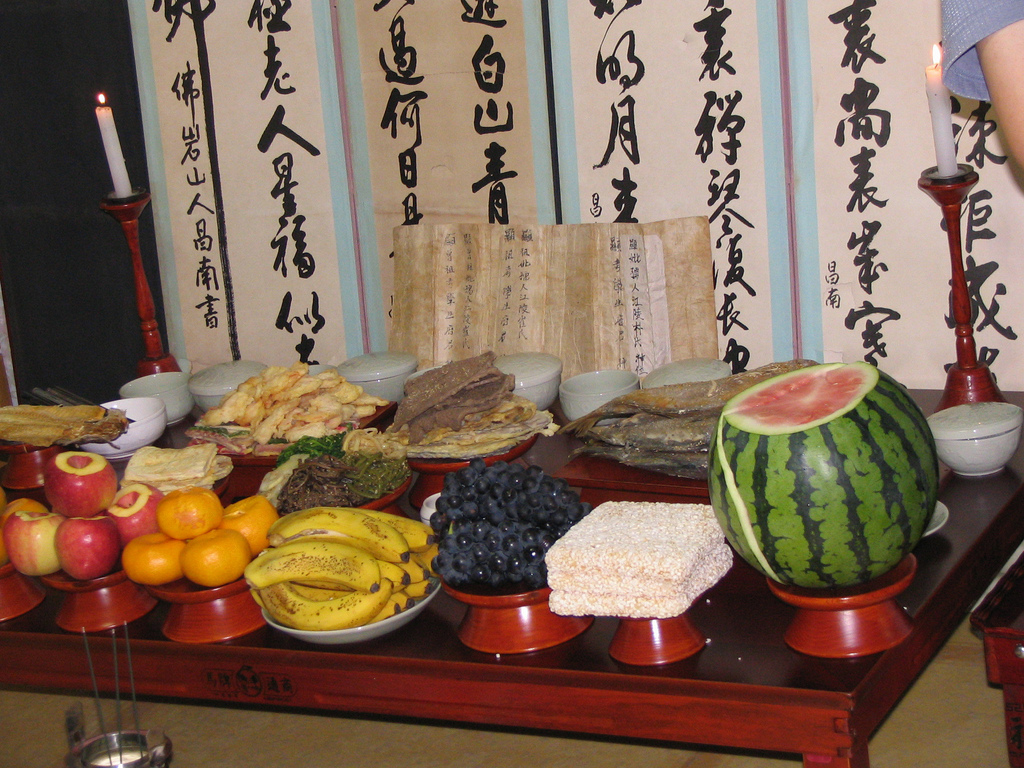 🇰🇷 South KoreaJesa제사
A Korean ancestral memorial rite involving food offerings and ritual bowsRite · Speaking with spirits and the dead · Luck and prosperity Living
🇰🇷 South KoreaJesa제사
A Korean ancestral memorial rite involving food offerings and ritual bowsRite · Speaking with spirits and the dead · Luck and prosperity Living
 🇯🇵 JapanKagura神楽
A Shinto ritual dance where performers embody deities to purify and welcome spiritsTradition · Protection · Speaking with spirits and the dead Living
🇯🇵 JapanOmamori (sample)お守り
A small shrine charm in a brocade pouch.Charm · Protection · Luck and prosperity Living
🇰🇷 South Korea and 1 moreFan death선풍기 사망설
A South Korean urban legend that running a fan in a sealed room causes fatal suffocationBelief Fading
🇯🇵 JapanKagura神楽
A Shinto ritual dance where performers embody deities to purify and welcome spiritsTradition · Protection · Speaking with spirits and the dead Living
🇯🇵 JapanOmamori (sample)お守り
A small shrine charm in a brocade pouch.Charm · Protection · Luck and prosperity Living
🇰🇷 South Korea and 1 moreFan death선풍기 사망설
A South Korean urban legend that running a fan in a sealed room causes fatal suffocationBelief Fading
 🇨🇳 ChinaElemental
Mythic beings linked to earth, water, air, and fire in Renaissance occultism.Being · Wonder and entertainment Historical
🇨🇳 ChinaElemental
Mythic beings linked to earth, water, air, and fire in Renaissance occultism.Being · Wonder and entertainment Historical
 🇯🇵 JapanTeru teru bōzuてるてる坊主
A white paper doll hung outside to ask for sunny weatherCharm · Luck and prosperity Living
🇯🇵 JapanTeru teru bōzuてるてる坊主
A white paper doll hung outside to ask for sunny weatherCharm · Luck and prosperity Living
 🇨🇳 ChinaJin Chan金蟾
A three-legged toad charm used in feng shui to attract wealth and guard against bad luckBeing · Luck and prosperity · Protection Living
🇨🇳 ChinaJin Chan金蟾
A three-legged toad charm used in feng shui to attract wealth and guard against bad luckBeing · Luck and prosperity · Protection Living
 🇯🇵 JapanHatsuyume初夢
The first dream of the new year and its traditional omensBelief · Seeing and foretelling · Luck and prosperity Living
🇯🇵 JapanHatsuyume初夢
The first dream of the new year and its traditional omensBelief · Seeing and foretelling · Luck and prosperity Living
 🇯🇵 JapanSaruboboさるぼぼ
A faceless red doll from Japan, given as a charm for family and fortuneCharm · Luck and prosperity · Protection Living
🇯🇵 JapanSaruboboさるぼぼ
A faceless red doll from Japan, given as a charm for family and fortuneCharm · Luck and prosperity · Protection Living
 🇯🇵 JapanCurse of the Colonelカーネルサンダースの呪い
A Japanese sports superstition blaming a baseball team's losses on an offended fast-food mascot.Belief · Luck and prosperity Historical
🇯🇵 JapanCurse of the Colonelカーネルサンダースの呪い
A Japanese sports superstition blaming a baseball team's losses on an offended fast-food mascot.Belief · Luck and prosperity Historical
 🇨🇳 China and 4 moreFuji扶乩
Chinese planchette writing: gods and ancestors reply through a stylus on sandRite · Speaking with spirits and the dead · Seeing and foretelling Living
🇨🇳 China and 4 moreFuji扶乩
Chinese planchette writing: gods and ancestors reply through a stylus on sandRite · Speaking with spirits and the dead · Seeing and foretelling Living
 🇯🇵 Japan and 1 moreGood Luck Flag寄せ書き日の丸 (yosegaki hinomaru)
A Japanese national flag signed by loved ones to wish a soldier safety and victory.Charm · Protection · Luck and prosperity Living
🇯🇵 Japan and 1 moreGood Luck Flag寄せ書き日の丸 (yosegaki hinomaru)
A Japanese national flag signed by loved ones to wish a soldier safety and victory.Charm · Protection · Luck and prosperity Living
 🇹🇼 TaiwanKuai Kuai culture乖乖文化
A Taiwanese custom of placing obedient snacks on machines to ensure smooth operationBelief · Protection Living
🇹🇼 TaiwanKuai Kuai culture乖乖文化
A Taiwanese custom of placing obedient snacks on machines to ensure smooth operationBelief · Protection Living
 🇯🇵 Japan and 1 moreTennin天人
Heavenly beings in Japanese Buddhism, often depicted as beautiful women with feathered scarves.Being · Luck and prosperity Historical
🇯🇵 Japan and 1 moreTennin天人
Heavenly beings in Japanese Buddhism, often depicted as beautiful women with feathered scarves.Being · Luck and prosperity Historical
 🇯🇵 JapanKin no unko金のうんこ
A Japanese charm shaped like faeces that is believed to bring good fortuneCharm · Luck and prosperity Living
🇯🇵 JapanKin no unko金のうんこ
A Japanese charm shaped like faeces that is believed to bring good fortuneCharm · Luck and prosperity Living
 🇨🇳 China and 1 moreChinese shamanism巫教 (Wūjiào)
Spirit-mediums of China who dance and trance to carry messages between people and godsTradition · Speaking with spirits and the dead · Seeing and foretelling Living
🇨🇳 China and 1 moreChinese shamanism巫教 (Wūjiào)
Spirit-mediums of China who dance and trance to carry messages between people and godsTradition · Speaking with spirits and the dead · Seeing and foretelling Living
 🇨🇳 ChinaPig dragon玉豬龍
A coiled Neolithic jade amulet from Hongshan culture, possibly an early dragon imageCharm · Power and authority Historical
🇨🇳 ChinaPig dragon玉豬龍
A coiled Neolithic jade amulet from Hongshan culture, possibly an early dragon imageCharm · Power and authority Historical
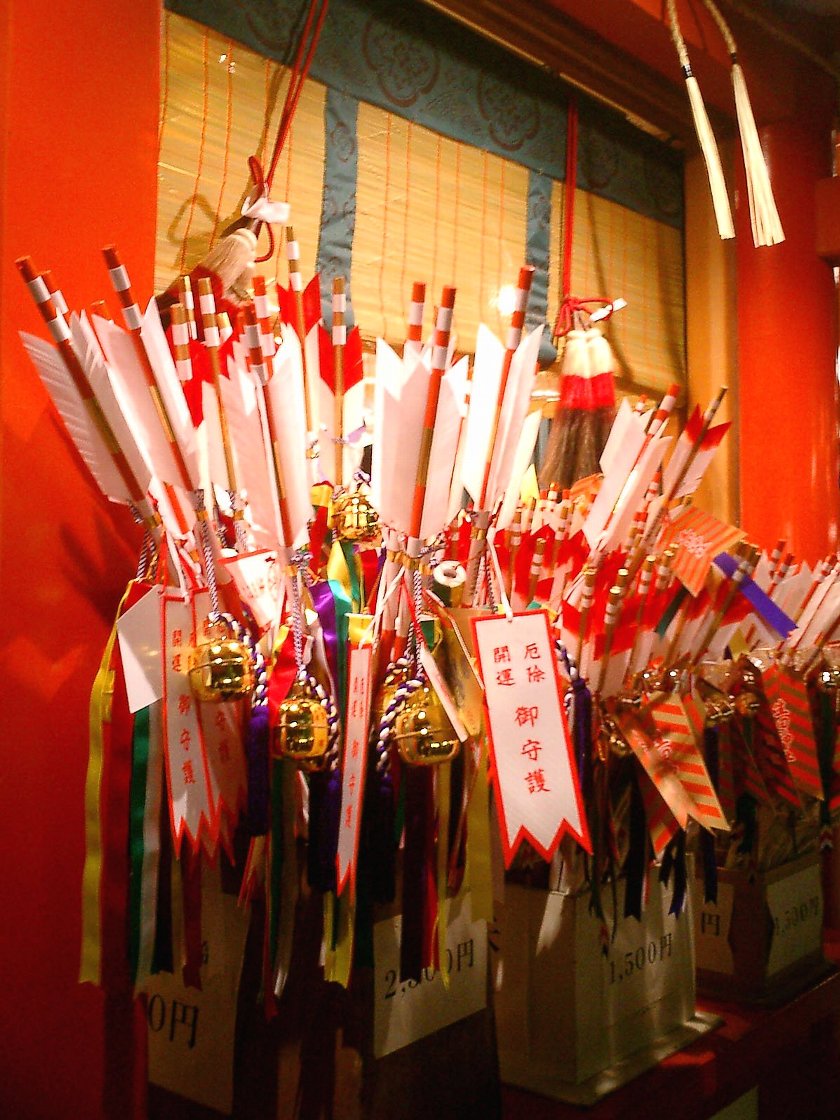 🇯🇵 JapanHamaya破魔矢
A blunt arrow given at shrines to ward off evil and secure good luck for the new yearCharm · Protection · Luck and prosperity Living
🇯🇵 JapanUshi no toki mairi丑の時参り
A Japanese ritual of cursing performed at a shrine during the early morning hours.Rite · Cursing and harm Historical
🇯🇵 JapanHamaya破魔矢
A blunt arrow given at shrines to ward off evil and secure good luck for the new yearCharm · Protection · Luck and prosperity Living
🇯🇵 JapanUshi no toki mairi丑の時参り
A Japanese ritual of cursing performed at a shrine during the early morning hours.Rite · Cursing and harm Historical
 🇨🇳 China and 1 moreJiaobei筊杯 (jiǎobēi)
Wooden crescent blocks thrown in pairs to ask temple deities yes or no questionsOracle · Seeing and foretelling · Speaking with spirits and the dead Living
🇨🇳 China and 1 moreJiaobei筊杯 (jiǎobēi)
Wooden crescent blocks thrown in pairs to ask temple deities yes or no questionsOracle · Seeing and foretelling · Speaking with spirits and the dead Living
 🇨🇳 ChinaI Ching divination
A Chinese oracle using hexagrams derived from yarrow stalks or coinsOracle · Seeing and foretelling Historical
🇨🇳 ChinaI Ching divination
A Chinese oracle using hexagrams derived from yarrow stalks or coinsOracle · Seeing and foretelling Historical
 🇯🇵 JapanFukusuke福助
A kneeling Japanese doll believed to bring wealth and honorCharm · Luck and prosperity · Power and authority Living
🇯🇵 JapanFukusuke福助
A kneeling Japanese doll believed to bring wealth and honorCharm · Luck and prosperity · Power and authority Living
 🇨🇳 China and 2 moreCoin-sword辟邪劍 (bì xié jiàn)
A Chinese numismatic talisman made of cash coins strung on a rod to ward off evil spiritsCharm · Protection Living
🇨🇳 China and 2 moreCoin-sword辟邪劍 (bì xié jiàn)
A Chinese numismatic talisman made of cash coins strung on a rod to ward off evil spiritsCharm · Protection Living
 🇹🇼 Taiwan and 1 moreOng Yah王爺 (Ông-iâ)
Royal Lord deities of Fujian and Taiwan who tour the land, driving out diseaseBeing · Protection · Healing Living
🇯🇵 JapanOsaki尾先
A mountain spirit in Japanese folklore that brings wealth or possession.Being · Luck and prosperity · Cursing and harm Legendary
🇹🇼 Taiwan and 1 moreOng Yah王爺 (Ông-iâ)
Royal Lord deities of Fujian and Taiwan who tour the land, driving out diseaseBeing · Protection · Healing Living
🇯🇵 JapanOsaki尾先
A mountain spirit in Japanese folklore that brings wealth or possession.Being · Luck and prosperity · Cursing and harm Legendary
 🇯🇵 JapanUchide no kozuchi打ち出の小槌
A legendary Japanese magic hammer that taps out desired items from thin airFigure · Luck and prosperity · Power and authority Legendary
🇯🇵 JapanUchide no kozuchi打ち出の小槌
A legendary Japanese magic hammer that taps out desired items from thin airFigure · Luck and prosperity · Power and authority Legendary
 🇨🇳 ChinaPodomancy
A divination method that reads the lines and shapes of the soles to reveal character and fateOracle · Seeing and foretelling Historical
🇨🇳 ChinaPodomancy
A divination method that reads the lines and shapes of the soles to reveal character and fateOracle · Seeing and foretelling Historical
 🇨🇳 China and 5 moreRegional forms of shamanism
A global overview of indigenous spirit-interaction practices across Asia and the Americas.Tradition · Healing · Speaking with spirits and the dead Living
🇨🇳 ChinaChronomancy
A divination method to find lucky days and the best times for action.Oracle · Luck and prosperity Historical
🇨🇳 China and 5 moreRegional forms of shamanism
A global overview of indigenous spirit-interaction practices across Asia and the Americas.Tradition · Healing · Speaking with spirits and the dead Living
🇨🇳 ChinaChronomancy
A divination method to find lucky days and the best times for action.Oracle · Luck and prosperity Historical
Photo credits on this page
The small pictures above come from Wikimedia Commons under free licences. Some are cropped to fit.
- Elemental: No machine-readable author provided. Ragesoss assumed (based on copyri, Public domain, source
- Jin Chan: Tristanb, CC BY-SA 3.0, source
- Sarubobo: Unknown author, CC BY-SA 3.0, source
- Hatsuyume: Takeuchi Seihō, Public domain, source
- Teru teru bōzu: Novaric at English Wikipedia, CC BY-SA 3.0, source
- Good Luck Flag: takato marui, CC BY-SA 2.0, source
- Curse of the Colonel: Ogiyoshisan, CC BY-SA 3.0, source
- Kin no unko: enmoto, CC BY 2.0, source
- Tennin: Unknown author, Public domain, source
- Kuai Kuai culture: 總統府, CC BY 2.0, source
- Hamaya: Tomomarusan, CC BY 2.5, source
- Fulu: Youle26, CC BY-SA 4.0, source
- Pig dragon: Prof. Gary Lee Todd, CC BY-SA 4.0, source
- Moon blocks: Hsiung/d6478coke, CC BY 2.0, source
- Curse: Katsushika Hokusai, Public domain, source
- Fukusuke: Nesnad, CC BY-SA 3.0, source
- I Ching divination: A.Davey, CC BY 2.0, source
- Jiaobei: Jnzl's Public Domain Photos, CC BY 2.0, source
- Ong Yah: Suzuki1314 at Chinese Wikipedia, Public domain, source
- Torii: JordyMeow, CC BY-SA 3.0, source
- Maneki-neko: Su--May, CC BY 2.0, source
- En no Gyōja: Wmpearl, CC0, source
- Scapulimancy: Albert Peter Low, CC BY-SA 4.0, source
- Nüwa: 山胖z, CC BY 3.0, source
- Podomancy: Eyefive45, CC BY-SA 4.0, source
- Uchide no kozuchi: Yashima Gakutei, CC0, source
- Hmong folk religion: Thomas Riccio, CC BY 4.0, source
- Miko: Chris Gladis, Flickr user MShades, CC BY 2.0, source
- Shugendō: 唐山健志郎 (Kenshiro Karayama), CC BY-SA 3.0, source
- Kitsune: Yoshitoshi, Public domain, source
- Oracle bone: Unknown author, CC0, source
- Feng shui: Unknown author, Public domain, source
- Jesa: by Joseph Steinberg (Baltimoron in Korea) at Flickr, CC BY-SA 2.0, source
- Kagura: Elstner Hilton, Public domain, source
- Chinese guardian lions: Pvt pauline, CC BY-SA 3.0, source
- Chinese shamanism: No machine-readable author provided. +上帝+ assumed (based on copyright, CC BY-SA 3.0, source
- Coin-sword: Etnografiska museet, CC BY 2.5, source
- Fuji: Unknown author, CC BY 4.0, source
- Regional forms of shamanism: Man Sing, Public domain, source