Spirits, creatures and beings
Djinn, fairies, orisha, golems and the other powers that magic deals with.
Beings are the powers that magic deals with: spirits, ancestors, gods, djinn, fairies, orisha, nats, kami, demons, golems, ghosts and the many kinds of household and landscape spirit. People in most cultures have described a world shared with unseen others, who may help, trouble or ask for respect. This page covers what these beings are said to be and the very different ways communities relate to them. They are always described here as what communities believe, not as established fact.
Different kinds of beings
A being can be a god with a priesthood, such as an orisha served in Yoruba religion, Cuba and Brazil. It can be an ancestor, honoured in China, Africa and Mexico. It can belong to a place, such as the kami of Shinto, the Thai phi or the Burmese nats. It can be a trouble-maker, like the djinn of Arabic and Islamic tradition, formed from smokeless fire, or the fairies of Ireland, whom people avoided naming.
Relationship, not command
In many traditions, a person does not command a being but enters a relationship with it, through offerings, promises and respect. Possession and mediumship are forms of that relationship, as in Vodou, Candomblé, Korean mudang rites and Sufi gatherings. In ceremonial magic of the European grimoires, by contrast, the magician summons spirits by name and authority, which the Church condemned as demon-raising. The same being may be loved in one household and feared in the next, and a spirit helpful to its servant can be harmful to a stranger.
Religions and renaming
Dominant religions often absorbed beings by relabelling them. Christian missionaries called many African and Indigenous spirits demons. Islam reads the djinn as real creatures, some of whom are Muslim, and Hindu and Buddhist traditions fold local deities into their own pantheons. Pagan and fairy beliefs were sometimes recast as the devil's work, which fed witch trials in Europe. Churches and mosques have sometimes divided beings into good and evil in ways the older traditions did not, so that a neutral local spirit became a demon on the day a missionary arrived.
Harm and interpretation
Belief in harmful spirits has been used to accuse people. Children in parts of West and Central Africa have been branded as witches possessed by evil spirits, and some have been abused by pastors or families in the name of deliverance. Scholars read spirit beliefs as ways to make sense of illness, loss and conflict, and many communities see them simply as neighbours. That is why accusations tied to spirit beliefs fall hardest on children and the vulnerable, and why many agencies train local leaders to challenge them.
Being on EveryJaadu
The entries written up so far, best known first.
 🇯🇵 JapanKoromodakoころもだこ
A Japanese sea yōkai that expands to sink boats and drown sailorsBeing · Cursing and harm Legendary
🇯🇵 Japan and 1 moreHiderigami日照り神
A drought spirit from Chinese and Japanese folklore that brings dry weather.Being · Cursing and harm Legendary
🇬🇷 GreeceSoterΣωτήρ
A Greek daimon of safety and deliverance from harmBeing · Protection · Speaking with spirits and the dead Legendary
🇹🇼 TaiwanLui-kong-tsiau雷公鳥
A Taiwanese thunder-creature said to summon storms from treetopsBeing · Wonder and entertainment Legendary
 🇵🇰 Pakistan and 1 moreApalālaअपलाल
A nāga king of Buddhist story, said to be converted by the BuddhaBeing Legendary
🇲🇳 MongoliaAlmaz
A feral forest spirit from the North Caucasus with magical hair and a split nature.Being · Cursing and harm Legendary
🇯🇵 JapanMiage-nyūdō見上入道
A yōkai on Sado Island that grows when looked up at and can be dismissed by specific chants or challenges.Being · Cursing and harm Legendary
🇯🇵 JapanFurutsubaki-no-rei古椿の霊
A spirit said to live in old camellia trees, appearing as a woman who lures or warnsBeing · Cursing and harm · Seeing and foretelling Legendary
🇯🇵 JapanŌnyūdō大僧正
A giant monk spirit in Japanese folklore, ranging from helpful helpers to menacing shadows.Being · Cursing and harm · Healing Legendary
🇯🇵 JapanSankai産怪
A yōkai born from a woman during childbirth if proper care is neglectedBeing · Cursing and harm Legendary
🇫🇮 FinlandRahko
A Finnish mythic figure linked to the darkening of the Moon and nightmaresBeing · Cursing and harm Legendary
 🇻🇳 VietnamBà Chúa Kho
A Vietnamese temple where a grain goddess is asked for prosperityBeing · Luck and prosperity Living
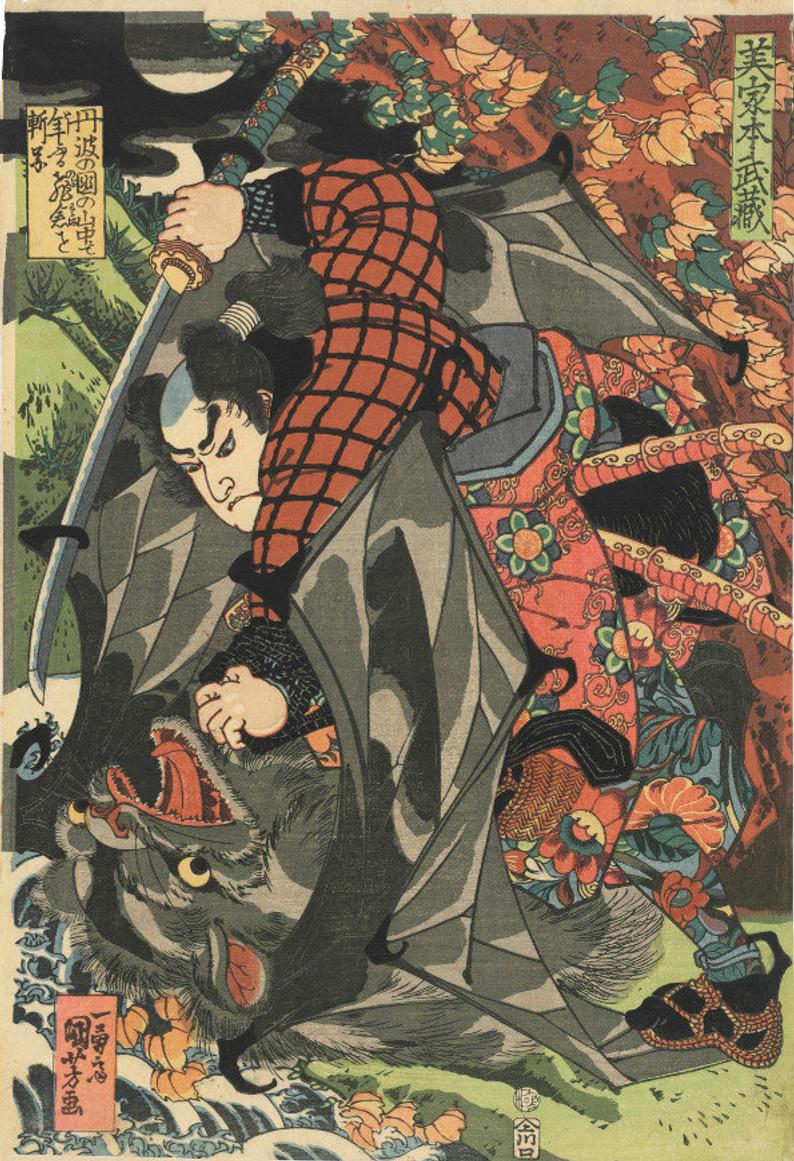 🇯🇵 JapanNobusuma野衾
A Japanese yōkai said to be a flying squirrel or bat that attacks travelers at night.Being · Cursing and harm · Luck and prosperity Legendary
 🇷🇺 RussiaAlkonostАлконост
A woman-faced bird of Russian folklore whose song makes listeners forget everythingBeing · Seeing and foretelling · Healing Legendary
 🇪🇸 SpainGuayota
Tenerife's dark god of Mount Teide, said to have stolen the sunBeing · Cursing and harm Legendary
 🇬🇷 GreeceMaeraΜαῖρα
The hound of Erigone in Greek myth, set among the stars as ProcyonBeing Legendary
 🇮🇱 IsraelSeraphשָׂרָף
Six-winged heavenly beings who chant 'holy, holy, holy' at God's throneBeing · Speaking with spirits and the dead · Cleansing and purification Living
🇬🇧 United KingdomBauchan
A Scottish domestic spirit known for its contradictory helpfulness and mischief.Being · Cursing and harm · Power and authority Historical
🇺🇸 United States and 1 moreMuut
A Cahuilla spirit who guides souls, often shown as an owlBeing · Speaking with spirits and the dead Legendary
🇮🇳 IndiaIndus worm
A giant carnivorous river creature from ancient Greek accounts of the IndusBeing · Cursing and harm Legendary
🇯🇵 JapanJubokko樹木子
A blood-drinking yōkai tree from Japanese folklore that mimics ordinary wood.Being · Cursing and harm · Healing Legendary
 🇨🇳 ChinaLuduan甪端
A mythical Chinese creature said to speak every language and travel vast distances in a single dayBeing · Wonder and entertainment Legendary
🇭🇹 Haiti and 3 moreNago lwa
A Haitian Vodou nation of masculine spirits rooted in Yoruba traditionsBeing · Power and authority · Speaking with spirits and the dead Living
 🇯🇵 JapanIbaraki-dōji茨木童子
A Japanese oni of Heian tales, servant of Shuten-dōji who loses an armBeing · Cursing and harm Legendary
 🇯🇵 JapanHachiman八幡神
A Japanese deity of war and the imperial family, worshipped as both kami and bodhisattva.Being · Protection · Power and authority Living
 🇯🇵 Japan and 5 moreSmallpox demon疱瘡神 (Hōsōgami)
A spirit blamed for smallpox in medieval Japan and the rituals used to appease itBeing · Protection · Cursing and harm Historical
🇮🇪 IrelandBiróg
An Irish fairy woman who aids a wooing and rescues a childBeing · Protection · Love and attraction Legendary
 🇸🇪 Sweden and 2 moreSea monk
A sixteenth-century sea creature said to look like a human monk in robesBeing · Wonder and entertainment Legendary
🇷🇴 RomaniaMuma Pădurii
A forest spirit in Romania who protects nature and punishes those who harm itBeing · Protection · Cursing and harm Legendary
🇯🇵 JapanSazae-oni栄螺鬼
A yōkai born from an old turban snail, said to take human shape and bargain for goldBeing · Cursing and harm Legendary
🇬🇧 United KingdomCaoineag
A Highland spirit whose night cries signal impending death for a specific family lineBeing · Seeing and foretelling Historical
 🇬🇧 United KingdomFat Lips
A spirit said to live in a Scottish abbey ruin, tidying and drying a woman's cellBeing · Protection Legendary
🇲🇽 MexicoAlicante
A mythical Mexican snake that steals milk and hypnotizes its victimsBeing · Cursing and harm · Luck and prosperity Legendary
🇨🇱 Chile and 1 moreChonchon
A human head that flies at night in Mapuche belief, its cry warning of a death to comeBeing · Cursing and harm · Seeing and foretelling Legendary
🇸🇦 Saudi ArabiaAbu Fanousأبو فانوس
A wandering light of the Arabian desert, said to lure travellers and vanishBeing · Cursing and harm · Protection Living
🇲🇽 MexicoOtomitl
A giant son of Aztec myth who settled the land after a great flood.Being Legendary
 🇮🇪 Ireland and 1 moreManannán mac Lir
A sea god and otherworld king in Gaelic mythology who guards the hidden lands of the Tuatha Dé Danann.Being · Protection · Power and authority Legendary
 🇩🇪 Germany and 1 moreAufhocker
A German folklore spirit that leaps on travelers and weighs them down.Being · Cursing and harm Legendary
🇯🇵 JapanTsurube-otoshi釣瓶落とし
A Japanese yokai that drops from trees to attack or devour humansBeing · Cursing and harm Historical
 🇮🇸 Iceland and 3 moreElf
A supernatural person of Germanic lore, linked to illness, beauty and magicBeing · Cursing and harm Legendary
🇯🇵 JapanAobōzu青坊主
A blue priest yōkai of Japan, told differently in every provinceBeing · Cursing and harm Legendary
🇮🇹 ItalyMazapégul
A mischievous elf of Romagna with a red cap that steals sleep and braids horse manesBeing · Cursing and harm · Luck and prosperity Historical
 🇲🇳 Mongolia and 1 moreOngon
Ancestor spirits in Mongolian shamanism, represented by consecrated idols and talismansBeing · Protection · Speaking with spirits and the dead Living
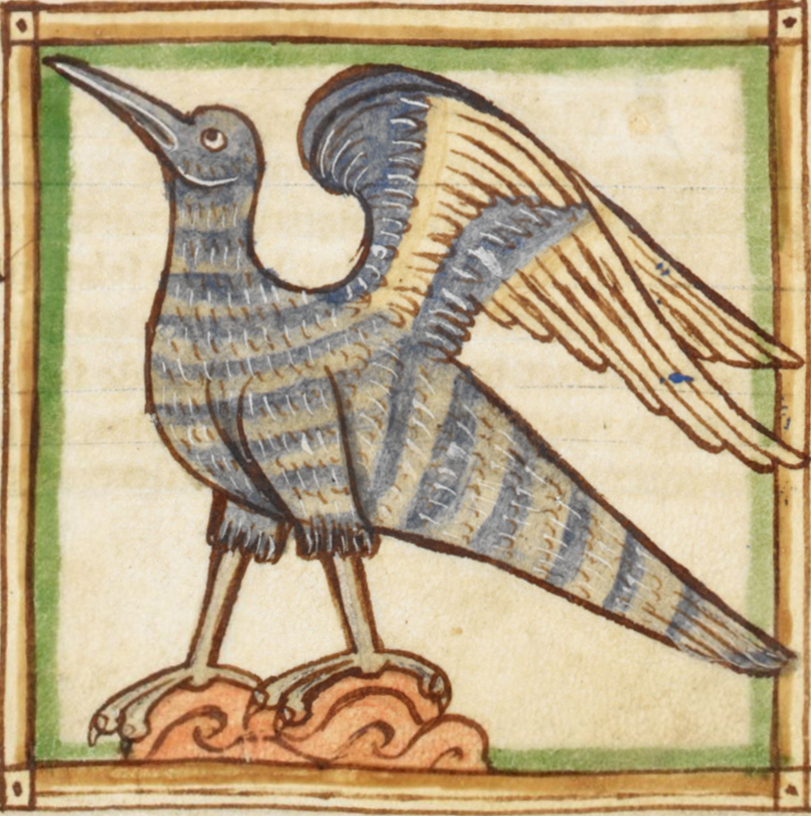 🇩🇪 GermanyHercinia
A legendary German bird whose feathers were said to shine in the darkBeing Legendary
🇯🇵 JapanIsonade磯撫で
A giant sea yōkai of Western Japan said to hook sailors with its barbed tailBeing · Cursing and harm Legendary
🇧🇪 Belgium and 1 moreKabouter
A tiny Dutch folklore spirit that helps with chores and punishes those who spy on them.Being · Protection · Cursing and harm Legendary
Photo credits on this page
The small pictures above come from Wikimedia Commons under free licences. Some are cropped to fit.
- Hercinia: Unknown author, Public domain, source
- Ongon: Vyacheslav Kirillin, CC BY-SA 4.0, source
- Sea monk: Japetus Steenstrup, Public domain, source
- Maera: Gary Todd, CC0, source
- Alkonost: Viktor Vasnetsov, Public domain, source
- Apalāla: Biswarup Ganguly, CC BY 3.0, source
- Koromodako: FITM, Public domain, source
- Bà Chúa Kho: _Tam_quan_den_Ba_Chua_Kho_(Bac_Ninh).jpg : hqhuyanh, CC BY 1.0, source
- Nobusuma: Utagawa Kuniyoshi ( 歌川国芳 , Japanese, *1798, †1861), Public domain, source
- Guayota: MPF, CC BY-SA 3.0, source
- Seraph: Pietro Perugino, CC BY 2.0, source
- Luduan: Gisling, CC BY 2.5, source
- Ibaraki-dōji: Utagawa Kunisada, CC BY-SA 4.0, source
- Hachiman: SLIMHANNYA, CC BY-SA 4.0, source
- Smallpox demon: 佐賀県立図書館, CC0, source
- Fat Lips: Pasicles, CC0, source
- Manannán mac Lir: Kenneth Allen, CC BY-SA 2.0, source
- Aufhocker: Longbow4u, Public domain, source
- Elf: Martin Brandenburg, Public domain, source