Aobōzu
In its own language: 青坊主
Japanese: ao (blue) plus bōzu (priest)
A blue priest yōkai of Japan, told differently in every province
Aobōzu is a yōkai, a spirit of Japanese folklore, usually described as a large figure in the shape of a priest. Its deeds change with each prefecture, from a child-snatcher in wheat fields to a mountain god who wrestles, and it lives on in school ghost stories.
- One spirit, many habits: each Japanese prefecture tells the blue priest's tale its own way
- In Yamaguchi it is a mountain god, tiny yet able to fling any boastful sumo challenger
- A Shizuoka warning keeps children out of the wheat fields on spring evenings
- In Kagawa legend, a spoken refusal makes it vanish; silence is punished
- Sekien's caption-less yōkai picture book leaves its famous plate's subject unsettled
What it is
An aobōzu is a yōkai, one of the spirits and strange beings that crowd Japanese storytelling. It wears the form of a bōzu, a priest, and is generally pictured as a large, human-shaped figure. Nearly everything beyond that depends on the district telling the tale: what the spirit does, whom it frightens, and even whether it is a spirit at all rather than an animal wearing the shape. Tales of it cluster in named prefectures across Japan, from Wakayama to Fukushima, each with its own habits for the creature. It also has a life in Japanese art, appearing repeatedly in traditional picture books of yōkai.
Where it comes from
The tales scatter the spirit's home across the country, and their differences follow regional lines. A notable appearance in art comes in Toriyama Sekien's Gazu Hyakki Yagyō, a four-part e-hon, or picture book, which includes a plate often linked to the blue priest; since the book carried no captions, that link stays open to question. Sekien may instead have drawn the mehitotsu-bō, a monk with a single eye who was a familiar subject for Edo-period painters. A further reading treats the plate as wordplay: ao can signal immaturity, so the picture may mock a priest whose training has not ripened by turning him into a yōkai. Modern retellings, from a Fukushima school tale of the early 1930s to Shōwa-era city legends, carried the figure into new settings.
How it is done
The tales come with rules for meeting the spirit. In one Nagano version, a person who holds their breath and turns around seven times at the foot of a particular pine draws the priest out, and it answers with a scolding, telling them to leave the rocks untrampled and the tree unbroken. Kagawa's rule concerns speech: answer the priest aloud and refuse, and it goes away, but meet its question with silence and it strikes. The Yamaguchi tales teach a different lesson, against pride: take up the little priest's sumo challenge and its mountain-god strength will throw you without effort.
Aobōzu, drawn and placed
- Living
- Revived
- Fading
- Historical
- Legendary
- Performed
- Lineage
- Japanese yōkai folklore
- Timing
- spring evenings, in the Shizuoka telling
What it is for
The stories do practical work. In Shizuoka, the tale of a child lifted out of the wheat is told partly so that grown-ups can keep children away from the fields on spring evenings; a youngster walking home after dark is just the listener the story needs. At one mountain school in Fukushima, dread of the presence in the lavatory was enough to stop pupils using it. Elsewhere the warnings are broader: vacant houses in Okayama may hold a visitor with blue skin or blue robes, and Yamaguchi's small wrestler punishes overconfidence. The blue priest thus stands as a dusk warning for the young, a mark of respect owed to houses, rocks and trees, and a check on human swagger.
Peoples and places
Each prefecture keeps its own telling. Minabe, in Wakayama's Hidaka District, reports only that the spirit shows itself. At Kaneyama in Fukushima, the shape belongs to a weasel; in Gifu and Hiroshima, to a tanuki, the shape-changing raccoon dog of Japanese story. Okayama places a blue-bodied or blue-clothed figure in empty houses. Yamaguchi makes it a Yama-no-Kami, a mountain god, small in size yet able to fling any challenger. Kagawa's priest approaches women with a question about hanging, and Yamagata's haunts a school lavatory at the foot of a mountain. Shizuoka, including its Haibara District, attaches it to wheat fields, and Nagano to one particular pine.
At a glance: who, where and when
Peoples
What people believe
The world these tales assume is one where forms are negotiable. A weasel or a tanuki can step into a priest's shape, so a blue figure by the road may be a mask worn by an animal. In Yamaguchi, the mask belongs to a god: the Yama-no-Kami takes a small priest's body to test the people it meets. Words carry force, as the Kagawa rule shows, where a plain spoken refusal ends the meeting and quiet is taken as consent and punished. The colour blue itself, in body, clothes or face, is the one constant that lets listeners recognise the being.
When it is done
Spring is the one season the stories name. In Shizuoka, the danger hour is dusk, when children walking home late may cross a wheat field and meet what waits in the crop, which is why adults keep them out of the fields on spring evenings. Later settings are modern rather than seasonal: a Fukushima school haunting is placed in the early 1930s, and the run of city legends and school ghost stories that renewed the figure's fame belongs to the Shōwa years.
Compare and confuse
The closest neighbour is the mehitotsu-bō, whose name means one-eyed monk and who was a stock figure in Edo-period painting, as in Sawaki Sūshi's Hyakkai Zukan. Sekien's caption-less plate is the hinge between the two readings. Within the legends themselves, the priest's shape is often borrowed: a tanuki wears it in Gifu and Hiroshima, a weasel at Kaneyama in Fukushima.
Today
From the Shōwa period on, the blue priest took on modern duties, moving into city legends and the ghost stories schoolchildren tell each other, a line that runs back through the lavatory hauntings of schools in Yamagata and Fukushima. The regional tales remain part of Japan's folklore record, and the figure keeps its place among the yōkai recorded by artists in the line of Toriyama Sekien.
Questions people ask about Aobōzu
What is an aobōzu?
A yōkai, a spirit from Japanese folklore, shaped like a large priest. The name joins ao, blue, with bōzu, priest. Accounts of its behaviour differ from region to region: some places report a plain appearance, others an animal in disguise or a mountain god in miniature.
Where do stories of it come from?
The tales are attached to named prefectures across Japan, with versions differing along regional lines. In art the figure appears in Toriyama Sekien's Gazu Hyakki Yagyō, a picture book with no captions, and from the Shōwa period it also moved into city legends and school ghost stories.
Is it dangerous in the stories?
In several tellings, yes. Kagawa's priest knocks women unconscious and hangs them when they ignore it without a word, and Shizuoka's carries off children who cross a wheat field near sunset in spring. In Wakayama and Okayama, by contrast, it is only said to appear.
How is it sent away, according to legend?
The Kagawa legend gives one rule: speak. A woman who answers and refuses sees the priest disappear, while one who stays silent is attacked. In Nagano, the spirit that comes when a person holds their breath and spins seven times by a pine tells them to spare the rocks and the tree.
Are there school sightings in the tales?
Yamagata Prefecture tells of a priest's blue face looking up from the bowl of a mountain-side elementary school lavatory at anyone who enters. In Fukushima, pupils at one school in the early 1930s were too frightened to use theirs. Such settings fed the Shōwa-era ghost stories.
Good reading and sources
The facts on this page come from the Wikipedia article "Aobōzu", written by its contributors and used under the CC BY-SA 4.0 licence, and from its Wikidata record (CC0). EveryJaadu rewrote the text in its own words, with AI assistance, and compares every page with the article to make sure no passage is copied. It may be reused under the same CC BY-SA 4.0 licence with a link back.
It may contain mistakes. Names and customs differ from one community to the next, and some knowledge is closed to outsiders and left out here. This page describes belief and practice. It does not say that any of it works, it is not a how-to, and it is not medical advice. If something is wrong, tell us. Last refreshed 2026-10-18.
More from Japan
All the entries from Japan 🇯🇵 JapanOni鬼(おに)
A horned demon of Japanese folklore known for strength and evil deedsBeing · Cursing and harm · Luck and prosperity Legendary
🇯🇵 JapanOni鬼(おに)
A horned demon of Japanese folklore known for strength and evil deedsBeing · Cursing and harm · Luck and prosperity Legendary
 🇯🇵 JapanBaku獏
A Japanese spirit said to eat bad dreams and protect sleepersBeing · Protection Living
🇯🇵 JapanBaku獏
A Japanese spirit said to eat bad dreams and protect sleepersBeing · Protection Living
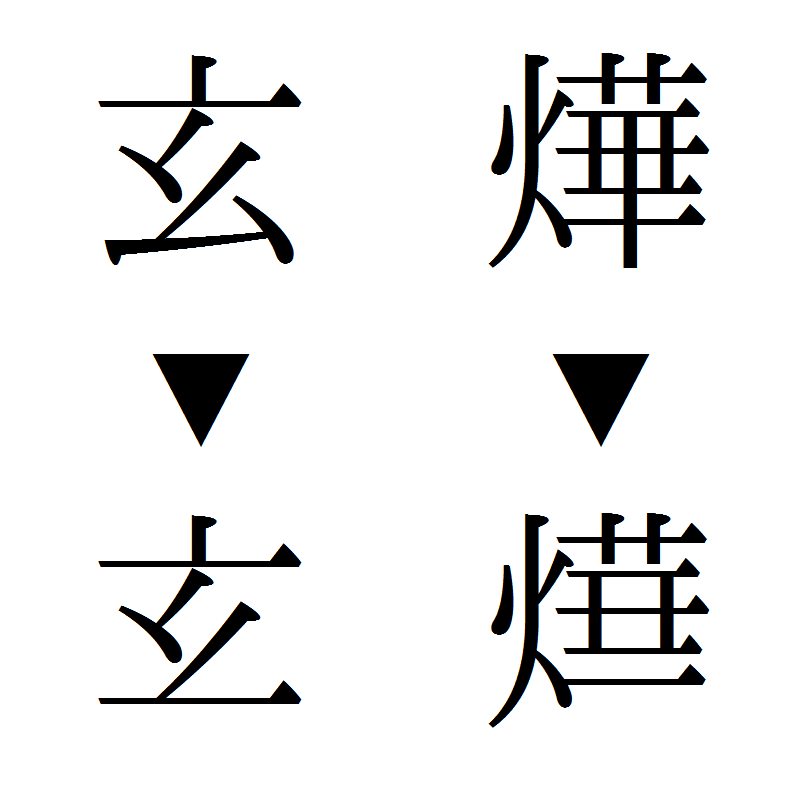 🇨🇳 China and 2 moreNaming taboo避諱
A cultural rule against speaking or writing the names of rulers and ancestors in East AsiaBelief · Protection Historical
🇨🇳 China and 2 moreNaming taboo避諱
A cultural rule against speaking or writing the names of rulers and ancestors in East AsiaBelief · Protection Historical
Related elsewhere
All being 🇷🇸 Serbia and 5 moreVampire
An undead being from European folklore that feeds on the life force of the living.Being · Cursing and harm Legendary
🇷🇸 Serbia and 5 moreVampire
An undead being from European folklore that feeds on the life force of the living.Being · Cursing and harm Legendary
 🇨🇭 Switzerland and 5 moreWerewolf
A figure in folklore who transforms into a wolf or hybrid beastFigure · Cursing and harm Legendary
🇨🇭 Switzerland and 5 moreWerewolf
A figure in folklore who transforms into a wolf or hybrid beastFigure · Cursing and harm Legendary
 🇺🇸 United States and 5 moreSatanism
A modern set of beliefs using the figure of Satan as a symbol or deity.Tradition · Power and authority · Cursing and harm Living
🇺🇸 United States and 5 moreSatanism
A modern set of beliefs using the figure of Satan as a symbol or deity.Tradition · Power and authority · Cursing and harm Living
 🇪🇬 Egypt and 1 moreLilithלִילִית
A feminine figure from Mesopotamian and Jewish mythology, often depicted as a night demon or spirit.Being · Cursing and harm Legendary
🇪🇬 Egypt and 1 moreLilithלִילִית
A feminine figure from Mesopotamian and Jewish mythology, often depicted as a night demon or spirit.Being · Cursing and harm Legendary