Spirits, creatures and beings
Djinn, fairies, orisha, golems and the other powers that magic deals with.
Beings are the powers that magic deals with: spirits, ancestors, gods, djinn, fairies, orisha, nats, kami, demons, golems, ghosts and the many kinds of household and landscape spirit. People in most cultures have described a world shared with unseen others, who may help, trouble or ask for respect. This page covers what these beings are said to be and the very different ways communities relate to them. They are always described here as what communities believe, not as established fact.
Different kinds of beings
A being can be a god with a priesthood, such as an orisha served in Yoruba religion, Cuba and Brazil. It can be an ancestor, honoured in China, Africa and Mexico. It can belong to a place, such as the kami of Shinto, the Thai phi or the Burmese nats. It can be a trouble-maker, like the djinn of Arabic and Islamic tradition, formed from smokeless fire, or the fairies of Ireland, whom people avoided naming.
Relationship, not command
In many traditions, a person does not command a being but enters a relationship with it, through offerings, promises and respect. Possession and mediumship are forms of that relationship, as in Vodou, Candomblé, Korean mudang rites and Sufi gatherings. In ceremonial magic of the European grimoires, by contrast, the magician summons spirits by name and authority, which the Church condemned as demon-raising. The same being may be loved in one household and feared in the next, and a spirit helpful to its servant can be harmful to a stranger.
Religions and renaming
Dominant religions often absorbed beings by relabelling them. Christian missionaries called many African and Indigenous spirits demons. Islam reads the djinn as real creatures, some of whom are Muslim, and Hindu and Buddhist traditions fold local deities into their own pantheons. Pagan and fairy beliefs were sometimes recast as the devil's work, which fed witch trials in Europe. Churches and mosques have sometimes divided beings into good and evil in ways the older traditions did not, so that a neutral local spirit became a demon on the day a missionary arrived.
Harm and interpretation
Belief in harmful spirits has been used to accuse people. Children in parts of West and Central Africa have been branded as witches possessed by evil spirits, and some have been abused by pastors or families in the name of deliverance. Scholars read spirit beliefs as ways to make sense of illness, loss and conflict, and many communities see them simply as neighbours. That is why accusations tied to spirit beliefs fall hardest on children and the vulnerable, and why many agencies train local leaders to challenge them.
Being on EveryJaadu
The entries written up so far, best known first.
 🇪🇬 Egypt and 1 moreSphinx
A composite creature of human head and lion body found in Egyptian and Greek mythBeing · Protection Legendary
 🇨🇳 China and 1 moreLoong龍
A water deity and imperial symbol in Chinese culture, depicted as a coiled serpent with four legs.Being · Protection · Luck and prosperity Historical
 🇷🇺 Russia and 3 moreLeshyлеший
A forest spirit from Slavic folklore who guards the woods and misleads travelers.Being · Protection · Cursing and harm Legendary
🇬🇧 United KingdomBlack dog
A spectral hound from English folklore that signals death or guards the living.Being · Cursing and harm · Protection Legendary
 🇳🇬 Nigeria and 2 moreEshuÈṣù
A Yoruba spirit of crossroads, messengers and the balance between joy and sorrowBeing · Speaking with spirits and the dead · Protection Living
 🇮🇶 Iraq and 1 morePazuzu𒀭𒅆𒊒𒍪𒍪 (pà.zu.zu)
A Mesopotamian wind demon and protective amulet against child-harming spiritsBeing · Protection · Cursing and harm Historical
 🇮🇳 India and 3 moreYakshaयक्ष (Sanskrit), ยักษ์ (Thai)
Nature spirits and guardian deities in South and Southeast Asian traditionsBeing · Protection · Power and authority Living
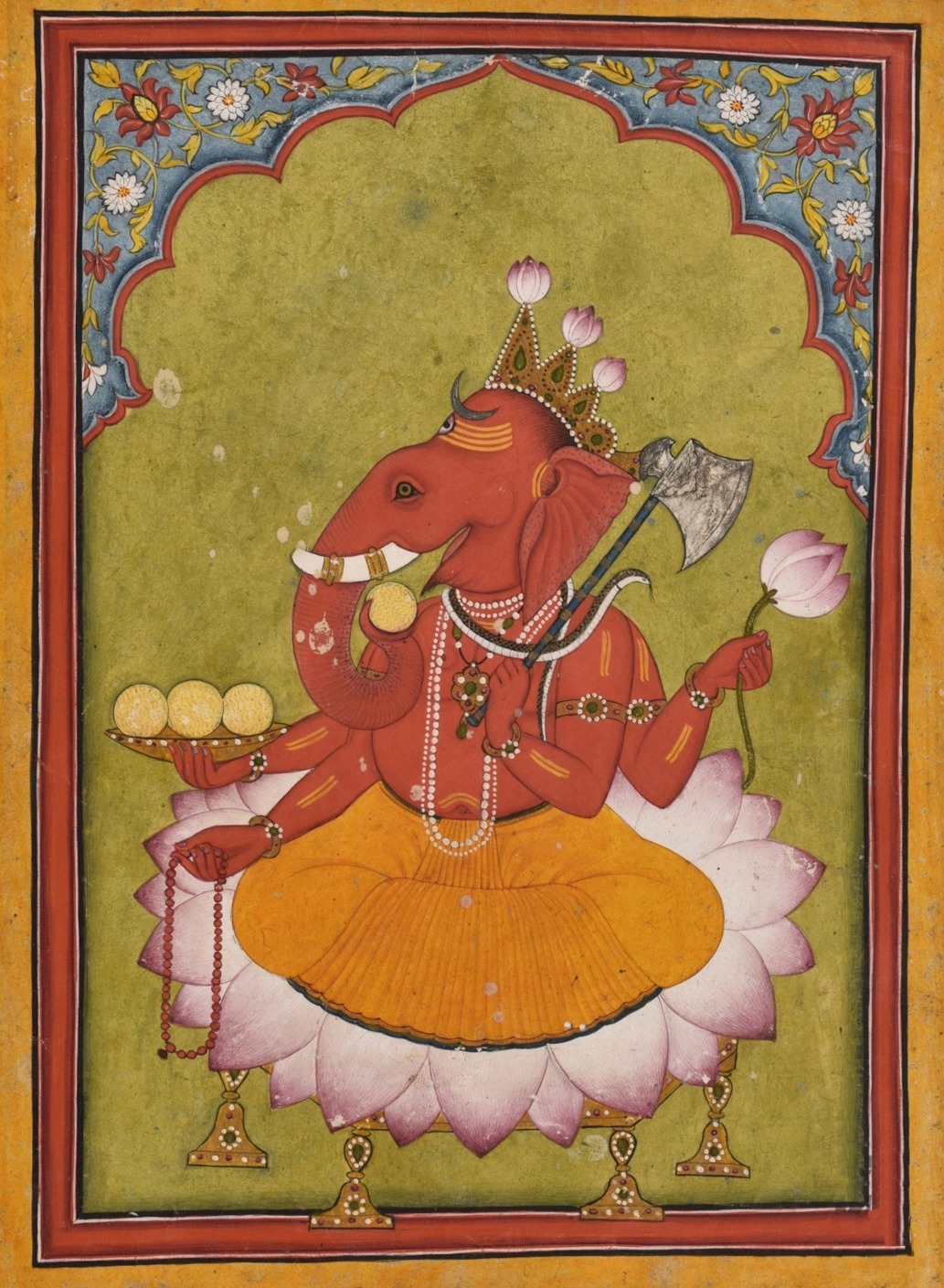 🇮🇳 India and 5 moreGaneshaगणेश (Gaṇeśa)
An elephant-headed Hindu deity worshipped as the remover of obstacles and patron of wisdom.Being · Protection · Luck and prosperity Living
 🇳🇬 Nigeria and 1 moreObatalaỌbatalá
The Yoruba king of white cloth who is believed to have created humanity and presides over purity.Being · Protection · Healing Living
 🇪🇸 Spain and 5 moreDuende
A humanoid spirit of Iberian and Latin American folklore, ranging from helpful to mischievous.Being · Protection · Cursing and harm Living
 🇮🇶 Iraq and 1 moreLamassu𒀭𒆗 (dlamma)
A Mesopotamian guardian spirit, a winged bull with a human head, set to watch the gatesBeing · Protection · Power and authority Historical
🇪🇬 EgyptHekaḥkꜣw
The ancient Egyptian deification of magic, medicine, and primordial creative powerBeing · Healing · Protection Historical
 🇯🇵 JapanKami神
Spirits and deities of Shinto, found in nature, ancestors, and placesBeing · Protection · Luck and prosperity Living
🇬🇧 United KingdomGhillie DhuGille Dubh
A solitary Scottish fairy known for protecting forests and guiding lost childrenBeing · Protection · Luck and prosperity Historical
 🇳🇬 Nigeria and 3 moreYemọjaYemoja
A mother spirit of rivers and oceans worshipped across Yoruba and diaspora traditionsBeing · Protection · Healing Living
🇵🇪 Peru and 1 moreSupay
An Andean spirit of the underworld who balances life and death forcesBeing · Cursing and harm · Protection Historical
 🇨🇳 China and 1 moreDongyue Dadi東嶽大帝
The Chinese mountain god of Mount Tai who rules lifespans and underworld recordsBeing · Speaking with spirits and the dead · Power and authority Living
 🇳🇬 Nigeria and 2 moreỌya
A Yoruba orisha of storms and the dead, worshipped in Africa and the Americas.Being · Protection · Speaking with spirits and the dead Living
 🇮🇪 Ireland and 1 moreAos Sí
Supernatural beings of Irish and Scottish folklore, said to dwell in mounds and influence the human world.Being · Protection · Cursing and harm Living
 🇯🇵 JapanŌkuninushi大国主神
A Japanese kami of the earth, nation-building, and protective magic.Being · Protection · Healing Living
 🇮🇪 Ireland and 5 moreFairy
A European spirit with magical powers and human form found in folklore and artBeing · Protection · Cursing and harm Legendary
 🇮🇳 India and 2 moreBrahmarakshasaब्रह्मराक्षसः
A cursed Brahmin spirit in Hindu lore, feared for harm and venerated in temples.Being · Cursing and harm · Protection Living
🇭🇺 HungaryTáltos
A Hungarian mythic figure with supernatural powers who acts as a spiritual mediator.Being · Healing · Seeing and foretelling Legendary
 🇲🇾 Malaysia and 1 morePawang
A shaman from Indonesia and Malaysia who commands spirits, weather, and wild animals.Being · Protection · Cursing and harm Living
 🇲🇲 MyanmarNatနတ်
Spirits venerated in Myanmar alongside Buddhism, including deified humans and nature guardians.Tradition · Protection · Speaking with spirits and the dead Living
 🇮🇹 ItalyJupiterIuppiter
The Roman sky father and king of the gods, associated with thunder and oathsBeing · Power and authority · Protection Historical
 🇪🇬 Egypt and 2 moreAmunjmn (Old/Middle Egyptian); Amoun (Coptic)
The hidden creator god of ancient Egypt, later fused with the sun deity Ra.Being · Power and authority · Protection Historical
 🇷🇺 RussiaKikimoraКикимора
A female house spirit in Slavic folklore that reflects the state of a home.Being · Cursing and harm · Protection Legendary
 🇪🇬 EgyptAbraxasἈβράξας
A Gnostic archon and the name on ancient protective gemstonesBeing · Protection Historical
 🇬🇹 GuatemalaMaximónRi Laj Mam
A Maya folk saint and trickster deity venerated in the Guatemalan HighlandsBeing · Protection · Healing Living
 🇮🇳 India and 5 moreKartikeyaKārttikeya
Hindu god of war and victory, son of Shiva and ParvatiBeing · Power and authority · Protection Living
 🇳🇿 New ZealandTaniwha
Supernatural beings in Māori lore, acting as guardians or dangerous predators of water and landBeing · Protection · Cursing and harm Living
 🇮🇳 India and 3 moreYakshiniयक्षिणी
Some guard, some haunt: female nature spirits of Hindu, Buddhist and Jain loreBeing · Protection · Luck and prosperity Living
 🇮🇳 IndiaPanjurli
A divine wild boar spirit of Tulu Nadu, honoured as guardian of fields and forestsBeing · Protection · Luck and prosperity Living
 🇺🇸 United StatesKahuna
A Hawaiian expert or priest, keeper of hidden knowledge in craft and spiritTradition · Healing · Seeing and foretelling Living
 🇭🇹 Haiti and 1 moreEzili DantorÈzili Dantò
A fierce mother spirit in Haitian Vodou who protects the marginalized and demands loyalty.Being · Protection · Cursing and harm Living
 🇪🇬 EgyptWadjetwꜢḏyt
The green cobra goddess who protected Lower Egypt and the pharaohs.Being · Protection · Power and authority Historical
 🇬🇧 United KingdomBrowniebrùnaidh
A nocturnal household spirit from Scottish folklore that performs chores in exchange for offerings.Being · Protection · Luck and prosperity Legendary
 🇬🇧 United Kingdom and 1 moreChurch grim
A guardian spirit of Christian churchyards, often appearing as a black dog or lamb.Being · Protection Historical
 🇨🇱 ChileMoaimoꞌai
Monolithic ancestor statues of Rapa Nui, carved from volcanic stone between the fifteenth and sixteenth centuries.Being · Power and authority · Protection Historical
 🇯🇵 JapanBaku獏
A Japanese spirit said to eat nightmares and restore peaceful sleepBeing · Protection Living
 🇬🇷 Greece and 1 moreHecateἙκάτη
A Greek goddess of magic, crossroads, and the moon, often shown in three forms.Being · Protection · Power and authority Historical
 🇭🇹 Haiti and 2 moreLwa
Spirits in Haitian Vodou that mediate between people and the creator god.Being · Protection · Healing Living
 🇮🇩 IndonesiaBarongᬩᬭᭀᬂ
A lion-like spirit king of Balinese mythology who battles the witch-queen Rangda in ritual dance.Being · Protection · Wonder and entertainment Living
 🇸🇪 Sweden and 2 moreDísdísir
Female spirits of fate and protection in Norse traditionBeing · Protection · Luck and prosperity Historical
 🇮🇳 IndiaKaliकाली
A fierce Hindu goddess of time and destruction, worshipped as a protective mother.Being · Protection · Cursing and harm Living
 🇨🇳 China and 2 moreXiezhi獬豸
A one-horned beast of Chinese legend that butts the guiltyBeing · Protection · Power and authority Legendary
 🇯🇵 JapanTengu天狗
Japanese mountain spirits that evolved from ominous birds into protective forest guardians.Being · Cursing and harm · Protection Legendary
Photo credits on this page
The small pictures above come from Wikimedia Commons under free licences. Some are cropped to fit.
- Ezili Dantor: Oficinalis, CC BY-SA 4.0, source
- Yemọja: Samuel Tobbytex007, CC BY-SA 4.0, source
- Church grim: Inès Lee, CC BY-SA 4.0, source
- Loong: Unknown author, CC0, source
- Panjurli: Uajith, CC BY-SA 3.0, source
- Baku: Momotarou2012, CC BY-SA 3.0, source
- Dís: Emil Doepler, Public domain, source
- Ancient Mesopotamian religion: editor Austen Henry Layard , drawing by L. Gruner, Public domain, source
- Lamassu: Daderot, CC0, source
- Pawang: Unknown author, CC BY-SA 3.0, source
- Nat: Emily Khine, CC BY-SA 4.0, source
- Jupiter: ArchaiOptix, CC BY-SA 4.0, source
- Amun: MusikAnimal, CC BY-SA 4.0, source
- Kikimora: Гиппиус Татьяна Николаевна (1877-1957), Public domain, source
- Yakshini: Brihaspati, CC BY-SA 4.0, source
- Kahuna: Unknown author, Public domain, source
- Wadjet: Rama, CC BY-SA 3.0 fr, source
- Sphinx: Ipipipourax, CC BY-SA 3.0, source
- Moai: Rivi, CC BY-SA 3.0, source
- Hecate: Henryk Siemiradzki, Public domain, source
- Barong: Michael Gunther, CC BY-SA 4.0, source
- Kali: Raja Ravi Varma, Public domain, source
- Tengu: Katsushika Hokusai, Public domain, source
- Kartikeya: Dassmahen, CC BY-SA 4.0, source
- Ganesha: anonymous, Public domain, source
- Taniwha: Pseudopanax at en.wikipedia, Public domain, source
- Ọya: Picture taken by Eurico Zimbres, CC BY-SA 2.5, source
- Aos Sí: AE [George William Russell] (1867-1935), CC BY 4.0, source
- Ōkuninushi: Yashima Gakutei, CC0, source
- Brahmarakshasa: Chaitnyags, CC BY-SA 4.0, source
- Lwa: Hector Hyppolite, Public domain, source
- Fairy: Henry Fuseli, Public domain, source
- Eshu: Sailko, CC BY 3.0, source
- Maximón: Sapfan (Jan Pesula), Public domain, source
- Abraxas: Louis Breton, M. Jarrault, Public domain, source
- Kami: Bernard Gagnon, CC BY-SA 3.0, source
- Dongyue Dadi: H2v5o68z, CC0, source
- Obatala: Isha, CC BY 3.0, source
- Yaksha: Gunkarta ( talk ), CC BY-SA 3.0, source
- Duende: René Mayorga, CC BY-SA 2.0, source
- Brownie: Unknown author, CC BY-SA 2.5, source
- Xiezhi: Carty239 at English Wikipedia, Public domain, source
- Leshy: Γραφέας, CC BY-SA 4.0, source