Spirits, creatures and beings
Djinn, fairies, orisha, golems and the other powers that magic deals with.
Beings are the powers that magic deals with: spirits, ancestors, gods, djinn, fairies, orisha, nats, kami, demons, golems, ghosts and the many kinds of household and landscape spirit. People in most cultures have described a world shared with unseen others, who may help, trouble or ask for respect. This page covers what these beings are said to be and the very different ways communities relate to them. They are always described here as what communities believe, not as established fact.
Different kinds of beings
A being can be a god with a priesthood, such as an orisha served in Yoruba religion, Cuba and Brazil. It can be an ancestor, honoured in China, Africa and Mexico. It can belong to a place, such as the kami of Shinto, the Thai phi or the Burmese nats. It can be a trouble-maker, like the djinn of Arabic and Islamic tradition, formed from smokeless fire, or the fairies of Ireland, whom people avoided naming.
Relationship, not command
In many traditions, a person does not command a being but enters a relationship with it, through offerings, promises and respect. Possession and mediumship are forms of that relationship, as in Vodou, Candomblé, Korean mudang rites and Sufi gatherings. In ceremonial magic of the European grimoires, by contrast, the magician summons spirits by name and authority, which the Church condemned as demon-raising. The same being may be loved in one household and feared in the next, and a spirit helpful to its servant can be harmful to a stranger.
Religions and renaming
Dominant religions often absorbed beings by relabelling them. Christian missionaries called many African and Indigenous spirits demons. Islam reads the djinn as real creatures, some of whom are Muslim, and Hindu and Buddhist traditions fold local deities into their own pantheons. Pagan and fairy beliefs were sometimes recast as the devil's work, which fed witch trials in Europe. Churches and mosques have sometimes divided beings into good and evil in ways the older traditions did not, so that a neutral local spirit became a demon on the day a missionary arrived.
Harm and interpretation
Belief in harmful spirits has been used to accuse people. Children in parts of West and Central Africa have been branded as witches possessed by evil spirits, and some have been abused by pastors or families in the name of deliverance. Scholars read spirit beliefs as ways to make sense of illness, loss and conflict, and many communities see them simply as neighbours. That is why accusations tied to spirit beliefs fall hardest on children and the vulnerable, and why many agencies train local leaders to challenge them.
Being on EveryJaadu
The entries written up so far, best known first.
 🇮🇳 India and 1 moreSantoshi Mataसंतोषी माता
A Hindu goddess of contentment worshipped through a Friday ritual fast.Being · Protection · Luck and prosperity Living
🇮🇳 India and 1 moreSantoshi Mataसंतोषी माता
A Hindu goddess of contentment worshipped through a Friday ritual fast.Being · Protection · Luck and prosperity Living
 🇯🇵 JapanMiko巫女
A Shinto shrine priestess and traditional female medium in JapanTradition · Speaking with spirits and the dead · Protection Living
🇯🇵 JapanMiko巫女
A Shinto shrine priestess and traditional female medium in JapanTradition · Speaking with spirits and the dead · Protection Living
 🇦🇷 Argentina and 5 moreGauchito Gil
A folk saint from Argentina who protects the poor and outcastsBeing · Protection · Healing Living
🇦🇷 Argentina and 5 moreGauchito Gil
A folk saint from Argentina who protects the poor and outcastsBeing · Protection · Healing Living
 🇬🇹 GuatemalaMaximónRi Laj Mam
A Maya folk saint and trickster deity venerated in the Guatemalan HighlandsBeing · Protection · Healing Living
🇬🇹 GuatemalaMaximónRi Laj Mam
A Maya folk saint and trickster deity venerated in the Guatemalan HighlandsBeing · Protection · Healing Living
 🇮🇳 India and 4 moreShivaशिव
A principal Hindu deity of destruction and yoga, worshipped across South and Southeast AsiaBeing · Power and authority · Change and initiation Living
🇮🇳 India and 4 moreShivaशिव
A principal Hindu deity of destruction and yoga, worshipped across South and Southeast AsiaBeing · Power and authority · Change and initiation Living
 🇳🇬 Nigeria and 5 moreEleguaÈṣù-Ẹlẹ́gbára
A Yoruba deity of crossroads and messenger who opens all spiritual pathsBeing · Protection · Speaking with spirits and the dead Living
🇳🇬 Nigeria and 5 moreEleguaÈṣù-Ẹlẹ́gbára
A Yoruba deity of crossroads and messenger who opens all spiritual pathsBeing · Protection · Speaking with spirits and the dead Living
 🇮🇳 IndiaKaliकाली
A fierce Hindu goddess of time and destruction, worshipped as a protective mother.Being · Protection · Cursing and harm Living
🇮🇳 IndiaKaliकाली
A fierce Hindu goddess of time and destruction, worshipped as a protective mother.Being · Protection · Cursing and harm Living
 🇮🇩 IndonesiaBarongᬩᬭᭀᬂ
A lion-like spirit king of Balinese mythology who battles the witch-queen Rangda in ritual dance.Being · Protection · Wonder and entertainment Living
🇮🇩 IndonesiaBarongᬩᬭᭀᬂ
A lion-like spirit king of Balinese mythology who battles the witch-queen Rangda in ritual dance.Being · Protection · Wonder and entertainment Living
 🇳🇬 Nigeria and 5 moreOgunÒgún
A West African deity of iron, war and metalworking found in Yoruba and diaspora traditionsBeing · Protection · Cursing and harm Living
🇳🇬 Nigeria and 5 moreOgunÒgún
A West African deity of iron, war and metalworking found in Yoruba and diaspora traditionsBeing · Protection · Cursing and harm Living
 🇨🇳 China and 5 moreGuanyin觀音 (Guānyīn)
The Bodhisattva of compassion, worshipped across East Asia as a listener to human sufferingBeing · Protection · Healing Living
🇨🇳 China and 5 moreGuanyin觀音 (Guānyīn)
The Bodhisattva of compassion, worshipped across East Asia as a listener to human sufferingBeing · Protection · Healing Living
 🇭🇹 HaitiGedeGuédé
A family of spirits in Haitian Vodou who guard the dead and grant fertility.Being · Speaking with spirits and the dead · Protection Living
🇭🇹 HaitiGedeGuédé
A family of spirits in Haitian Vodou who guard the dead and grant fertility.Being · Speaking with spirits and the dead · Protection Living
 🇳🇬 Nigeria and 2 moreEshuÈṣù
A Yoruba spirit of crossroads, messengers and the balance between joy and sorrowBeing · Speaking with spirits and the dead · Protection Living
🇨🇳 China and 4 moreKitchen God灶君
The Chinese hearth deity who reports domestic conduct to the Jade EmperorBeing · Protection · Luck and prosperity Living
🇳🇬 Nigeria and 2 moreEshuÈṣù
A Yoruba spirit of crossroads, messengers and the balance between joy and sorrowBeing · Speaking with spirits and the dead · Protection Living
🇨🇳 China and 4 moreKitchen God灶君
The Chinese hearth deity who reports domestic conduct to the Jade EmperorBeing · Protection · Luck and prosperity Living
 🇳🇬 Nigeria and 2 moreỌya
A Yoruba orisha of storms and the dead, worshipped in Africa and the Americas.Being · Protection · Speaking with spirits and the dead Living
🇳🇬 Nigeria and 2 moreỌya
A Yoruba orisha of storms and the dead, worshipped in Africa and the Americas.Being · Protection · Speaking with spirits and the dead Living
 🇮🇳 India and 5 morePretaप्रेत
A suffering spirit of insatiable hunger found in Asian religious traditionsBeing · Speaking with spirits and the dead Living
🇮🇳 India and 5 morePretaप्रेत
A suffering spirit of insatiable hunger found in Asian religious traditionsBeing · Speaking with spirits and the dead Living
 🇮🇳 IndiaTaraतारा (Sanskrit), তারা (Bengali)
A fierce Hindu goddess of protection and wisdom, central to the Mahavidya tradition.Being · Protection · Power and authority Living
🇮🇳 IndiaTaraतारा (Sanskrit), তারা (Bengali)
A fierce Hindu goddess of protection and wisdom, central to the Mahavidya tradition.Being · Protection · Power and authority Living
 🇳🇬 NigeriaOrunmilaỌ̀rúnmìlà
Yoruba deity of wisdom and the creator of the Ifá divination systemBeing · Seeing and foretelling · Speaking with spirits and the dead Living
🇮🇳 IndiaAlakshmiदेवी अलक्ष्मी
A Hindu goddess of misfortune and the shadow opposite to LakshmiBeing · Cursing and harm Living
🇳🇬 NigeriaOrunmilaỌ̀rúnmìlà
Yoruba deity of wisdom and the creator of the Ifá divination systemBeing · Seeing and foretelling · Speaking with spirits and the dead Living
🇮🇳 IndiaAlakshmiदेवी अलक्ष्मी
A Hindu goddess of misfortune and the shadow opposite to LakshmiBeing · Cursing and harm Living
 🇭🇹 Haiti and 1 moreEzili DantorÈzili Dantò
A fierce mother spirit in Haitian Vodou who protects the marginalized and demands loyalty.Being · Protection · Love and attraction Living
🇭🇹 Haiti and 1 moreEzili DantorÈzili Dantò
A fierce mother spirit in Haitian Vodou who protects the marginalized and demands loyalty.Being · Protection · Love and attraction Living
 🇨🇳 China and 2 moreEight Immortals八仙
Eight legendary Taoist figures of China, each with a power and a vesselFigure · Protection · Healing Living
🇨🇳 China and 2 moreEight Immortals八仙
Eight legendary Taoist figures of China, each with a power and a vesselFigure · Protection · Healing Living
 🇬🇷 GreeceTriple Goddess
A Neopagan deity representing three female life stages and lunar phasesBeing · Power and authority Living
🇬🇷 GreeceTriple Goddess
A Neopagan deity representing three female life stages and lunar phasesBeing · Power and authority Living
 🇯🇵 JapanBaku獏
A Japanese spirit said to eat bad dreams and protect sleepersBeing · Protection Living
🇯🇵 JapanBaku獏
A Japanese spirit said to eat bad dreams and protect sleepersBeing · Protection Living
 🇳🇬 Nigeria and 1 moreObatalaỌbatalá
The Yoruba king of white cloth who is believed to have created humanity and presides over purity.Being · Protection · Healing Living
🇧🇷 BrazilPomba Gira
An Afro-Brazilian spirit of love and desire worshipped in Umbanda and QuimbandaBeing · Love and attraction · Power and authority Living
🇮🇷 Iran and 2 moreHaoma
A divine plant and spirit in Zoroastrianism, linked to healing and ancient rituals.Substance · Healing · Speaking with spirits and the dead Living
🇳🇬 Nigeria and 1 moreObatalaỌbatalá
The Yoruba king of white cloth who is believed to have created humanity and presides over purity.Being · Protection · Healing Living
🇧🇷 BrazilPomba Gira
An Afro-Brazilian spirit of love and desire worshipped in Umbanda and QuimbandaBeing · Love and attraction · Power and authority Living
🇮🇷 Iran and 2 moreHaoma
A divine plant and spirit in Zoroastrianism, linked to healing and ancient rituals.Substance · Healing · Speaking with spirits and the dead Living
 🇳🇿 New ZealandTaniwha
Supernatural beings of Māori lore, acting as guardians or dangerous predators in water and earthBeing · Protection · Cursing and harm Living
🇮🇳 India and 1 moreDaayanदायन
A vengeful female spirit from Indian folklore, often blamed for misfortune and witchcraft accusations.Being · Cursing and harm · Luck and prosperity Living
🇳🇿 New ZealandTaniwha
Supernatural beings of Māori lore, acting as guardians or dangerous predators in water and earthBeing · Protection · Cursing and harm Living
🇮🇳 India and 1 moreDaayanदायन
A vengeful female spirit from Indian folklore, often blamed for misfortune and witchcraft accusations.Being · Cursing and harm · Luck and prosperity Living
 🇮🇸 Iceland and 1 moreHidden-folkhuldufólk
Supernatural beings in Nordic folklore who live in a parallel world within the landscape.Being · Protection · Luck and prosperity Living
🇧🇯 Benin and 2 morePapa Legba
A loa who stands at the crossroads and opens the gate between people and spiritsBeing · Speaking with spirits and the dead · Power and authority Living
🇮🇸 Iceland and 1 moreHidden-folkhuldufólk
Supernatural beings in Nordic folklore who live in a parallel world within the landscape.Being · Protection · Luck and prosperity Living
🇧🇯 Benin and 2 morePapa Legba
A loa who stands at the crossroads and opens the gate between people and spiritsBeing · Speaking with spirits and the dead · Power and authority Living
 🇨🇦 CanadaNanabozhoᓇᓇᐳᔓ
A shapeshifting spirit and trickster in Anishinaabe storytelling from North AmericaBeing · Cursing and harm · Power and authority Living
🇨🇦 CanadaNanabozhoᓇᓇᐳᔓ
A shapeshifting spirit and trickster in Anishinaabe storytelling from North AmericaBeing · Cursing and harm · Power and authority Living
 🇦🇺 AustraliaRainbow Serpent
A creator spirit of water and land in Aboriginal Australian mythologyBeing · Healing · Cursing and harm Living
🇵🇪 Peru and 1 morePishtacoñañaq; kharisiri
An Andean bogeyman said to steal human fat for oil and medicineBeing · Cursing and harm · Power and authority Living
🇦🇺 AustraliaRainbow Serpent
A creator spirit of water and land in Aboriginal Australian mythologyBeing · Healing · Cursing and harm Living
🇵🇪 Peru and 1 morePishtacoñañaq; kharisiri
An Andean bogeyman said to steal human fat for oil and medicineBeing · Cursing and harm · Power and authority Living
 🇲🇽 Mexico and 2 moreAluxaluxo'ob
A small Maya spirit believed to guard fields and cause mischief if offended.Being · Protection · Luck and prosperity Living
🇲🇽 Mexico and 2 moreAluxaluxo'ob
A small Maya spirit believed to guard fields and cause mischief if offended.Being · Protection · Luck and prosperity Living
 🇵🇪 Peru and 5 morePachamama
The Andean mother goddess of space-time and the earthBeing · Protection · Healing Living
🇵🇪 Peru and 5 morePachamama
The Andean mother goddess of space-time and the earthBeing · Protection · Healing Living
 🇵🇪 Peru and 1 moreApu
Sacred mountain spirits in Andean tradition that protect communities and control natural resourcesBeing · Protection · Healing Living
🇵🇪 Peru and 1 moreApu
Sacred mountain spirits in Andean tradition that protect communities and control natural resourcesBeing · Protection · Healing Living
 🇭🇹 Haiti and 2 moreLwa
Spirits in Haitian Vodou that mediate between people and the creator god.Being · Protection · Healing Living
🇭🇹 Haiti and 2 moreLwa
Spirits in Haitian Vodou that mediate between people and the creator god.Being · Protection · Healing Living
 🇺🇸 United StatesKahuna
A Hawaiian expert or priest, keeper of hidden knowledge in craft and spiritTradition · Healing · Seeing and foretelling Living
🇯🇵 JapanZashiki-warashi座敷童子
A parlor spirit from northern Japan that brings fortune or ruin to a household.Being · Luck and prosperity · Protection Living
🇺🇸 United StatesKahuna
A Hawaiian expert or priest, keeper of hidden knowledge in craft and spiritTradition · Healing · Seeing and foretelling Living
🇯🇵 JapanZashiki-warashi座敷童子
A parlor spirit from northern Japan that brings fortune or ruin to a household.Being · Luck and prosperity · Protection Living
 🇰🇷 South KoreaJeoseung Saja저승사자
A Korean psychopomp who escorts the dead to the afterlife.Being · Speaking with spirits and the dead Living
🇰🇷 South KoreaJeoseung Saja저승사자
A Korean psychopomp who escorts the dead to the afterlife.Being · Speaking with spirits and the dead Living
 🇮🇪 Ireland and 1 moreAos Sí
Supernatural beings of Irish and Scottish folklore, said to dwell in mounds and influence the human world.Being · Protection · Cursing and harm Living
🇮🇪 Ireland and 1 moreAos Sí
Supernatural beings of Irish and Scottish folklore, said to dwell in mounds and influence the human world.Being · Protection · Cursing and harm Living
 🇮🇷 Iran and 1 moreJinnجِنّ
Supernatural beings in Islamic and pre-Islamic Arabian belief, created from smokeless fire.Being · Protection · Cursing and harm Living
🇮🇩 Indonesia and 3 moreToyoltuyul
An undead infant spirit in Southeast Asian folklore, invoked for theft and fortune.Being · Luck and prosperity · Cursing and harm Living
🇮🇷 Iran and 1 moreJinnجِنّ
Supernatural beings in Islamic and pre-Islamic Arabian belief, created from smokeless fire.Being · Protection · Cursing and harm Living
🇮🇩 Indonesia and 3 moreToyoltuyul
An undead infant spirit in Southeast Asian folklore, invoked for theft and fortune.Being · Luck and prosperity · Cursing and harm Living
 🇯🇵 JapanKodama木霊
A tree spirit in Japanese folklore that brings misfortune if the host tree is harmedBeing · Cursing and harm Living
🇯🇵 JapanKodama木霊
A tree spirit in Japanese folklore that brings misfortune if the host tree is harmedBeing · Cursing and harm Living
 🇮🇳 India and 3 moreYakshaयक्ष (Sanskrit), ยักษ์ (Thai)
Nature spirits and guardian deities in South and Southeast Asian traditionsBeing · Protection · Power and authority Living
🇮🇳 India and 3 moreYakshaयक्ष (Sanskrit), ยักษ์ (Thai)
Nature spirits and guardian deities in South and Southeast Asian traditionsBeing · Protection · Power and authority Living
 🇮🇳 India and 3 moreYakshiniयक्षिणी
Some guard, some haunt: female nature spirits of Hindu, Buddhist and Jain loreBeing · Protection · Luck and prosperity Living
🇮🇳 India and 3 moreYakshiniयक्षिणी
Some guard, some haunt: female nature spirits of Hindu, Buddhist and Jain loreBeing · Protection · Luck and prosperity Living
 🇮🇳 India and 2 moreBrahmarakshasaब्रह्मराक्षसः
A cursed Brahmin spirit in Hindu lore, feared for harm and venerated in temples.Being · Cursing and harm · Protection Living
🇮🇳 India and 2 moreBrahmarakshasaब्रह्मराक्षसः
A cursed Brahmin spirit in Hindu lore, feared for harm and venerated in temples.Being · Cursing and harm · Protection Living
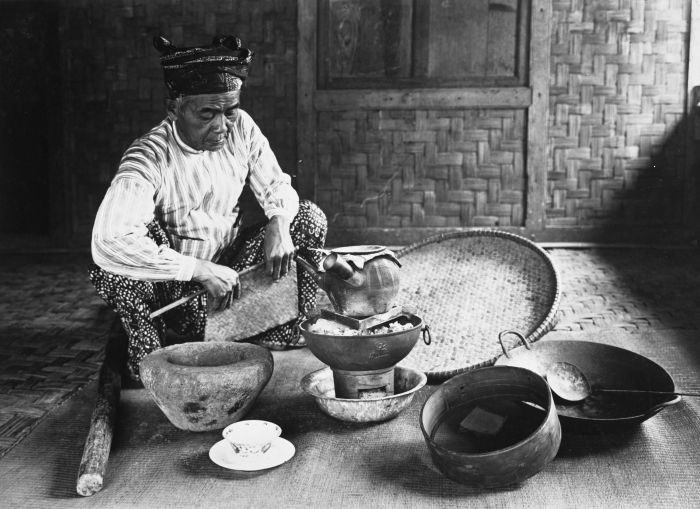 🇮🇩 Indonesia and 2 moreDukun
A traditional healer and spirit medium in Indonesian folk practiceTradition · Healing · Seeing and foretelling Living
🇮🇩 Indonesia and 2 moreDukun
A traditional healer and spirit medium in Indonesian folk practiceTradition · Healing · Seeing and foretelling Living
 🇯🇵 JapanKami神
Spirits and deities of Shinto, found in nature, ancestors, and placesBeing · Protection · Luck and prosperity Living
🇯🇵 JapanKami神
Spirits and deities of Shinto, found in nature, ancestors, and placesBeing · Protection · Luck and prosperity Living
Photo credits on this page
The small pictures above come from Wikimedia Commons under free licences. Some are cropped to fit.
- Orunmila: unknown Yoruba artist, CC0, source
- Tara: Chore Bagan Art Studio, Public domain, source
- Guanyin: JL Cogburn, CC BY-SA 2.0, source
- Dukun: Unknown author, CC BY-SA 3.0, source
- Eight Immortals: Fanghong, CC BY-SA 3.0, source
- Gazu Hyakki Yagyō: Toriyama Sekien, Public domain, source
- Preta: Temple, Richard Carnac, Sir, Public domain, source
- Ezili Dantor: Oficinalis, CC BY-SA 4.0, source
- Jinn: VenusFeuerFalle, CC0, source
- Triple Goddess: Unknown author, Public domain, source
- Baku: Momotarou2012, CC BY-SA 3.0, source
- Taniwha: Pseudopanax at en.wikipedia, Public domain, source
- Hidden-folk: Schorle, CC BY-SA 3.0, source
- Nanabozho: D. Gordon E. Robertson, CC BY-SA 3.0, source
- Rainbow Serpent: unknown (as drawn by an Aboriginal), Public domain, source
- Alux: Gary Todd, CC0, source
- Pachamama: Penarc, CC BY-SA 3.0, source
- Apu: Cecilia Sacsa, CC BY-SA 4.0, source
- Lwa: Hector Hyppolite, Public domain, source
- Kahuna: Unknown author, Public domain, source
- Jeoseung Saja: National Folk Museum of Korea, CC BY 4.0, source
- Aos Sí: AE [George William Russell] (1867-1935), CC BY 4.0, source
- Yaksha: Gunkarta ( talk ), CC BY-SA 3.0, source
- Yakshini: Brihaspati, CC BY-SA 4.0, source
- Brahmarakshasa: Chaitnyags, CC BY-SA 4.0, source
- Kami: Bernard Gagnon, CC BY-SA 3.0, source
- Ogun: Chado07, CC BY-SA 4.0, source
- Ọya: Picture taken by Eurico Zimbres, CC BY-SA 2.5, source
- Elegua: Sailko, CC BY 3.0, source
- Obatala: Isha, CC BY 3.0, source
- Gede: Calvin Hennick, for WBUR Boston, CC BY 3.0, source
- Barong: Michael Gunther, CC BY-SA 4.0, source
- Eshu: Sailko, CC BY 3.0, source
- Shiva: Indianhilbilly, CC BY-SA 3.0, source
- Kali: Raja Ravi Varma, Public domain, source
- Maximón: Sapfan (Jan Pesula), Public domain, source
- Gauchito Gil: Sergio Serrano, CC BY-SA 2.0, source
- Santoshi Mata: Nishu0246, CC BY-SA 4.0, source
- Miko: Chris Gladis, Flickr user MShades, CC BY 2.0, source