Spirits, creatures and beings
Djinn, fairies, orisha, golems and the other powers that magic deals with.
Beings are the powers that magic deals with: spirits, ancestors, gods, djinn, fairies, orisha, nats, kami, demons, golems, ghosts and the many kinds of household and landscape spirit. People in most cultures have described a world shared with unseen others, who may help, trouble or ask for respect. This page covers what these beings are said to be and the very different ways communities relate to them. They are always described here as what communities believe, not as established fact.
Different kinds of beings
A being can be a god with a priesthood, such as an orisha served in Yoruba religion, Cuba and Brazil. It can be an ancestor, honoured in China, Africa and Mexico. It can belong to a place, such as the kami of Shinto, the Thai phi or the Burmese nats. It can be a trouble-maker, like the djinn of Arabic and Islamic tradition, formed from smokeless fire, or the fairies of Ireland, whom people avoided naming.
Relationship, not command
In many traditions, a person does not command a being but enters a relationship with it, through offerings, promises and respect. Possession and mediumship are forms of that relationship, as in Vodou, Candomblé, Korean mudang rites and Sufi gatherings. In ceremonial magic of the European grimoires, by contrast, the magician summons spirits by name and authority, which the Church condemned as demon-raising. The same being may be loved in one household and feared in the next, and a spirit helpful to its servant can be harmful to a stranger.
Religions and renaming
Dominant religions often absorbed beings by relabelling them. Christian missionaries called many African and Indigenous spirits demons. Islam reads the djinn as real creatures, some of whom are Muslim, and Hindu and Buddhist traditions fold local deities into their own pantheons. Pagan and fairy beliefs were sometimes recast as the devil's work, which fed witch trials in Europe. Churches and mosques have sometimes divided beings into good and evil in ways the older traditions did not, so that a neutral local spirit became a demon on the day a missionary arrived.
Harm and interpretation
Belief in harmful spirits has been used to accuse people. Children in parts of West and Central Africa have been branded as witches possessed by evil spirits, and some have been abused by pastors or families in the name of deliverance. Scholars read spirit beliefs as ways to make sense of illness, loss and conflict, and many communities see them simply as neighbours. That is why accusations tied to spirit beliefs fall hardest on children and the vulnerable, and why many agencies train local leaders to challenge them.
Being on EveryJaadu
The entries written up so far, best known first.
 🇨🇳 China and 3 moreChinese dragon龍
A legendary water deity and imperial symbol in East Asian cultureBeing · Protection · Luck and prosperity Historical
🇨🇳 China and 3 moreChinese dragon龍
A legendary water deity and imperial symbol in East Asian cultureBeing · Protection · Luck and prosperity Historical
 🇯🇵 JapanMiko巫女
A Shinto shrine priestess and traditional female medium in JapanTradition · Speaking with spirits and the dead · Protection Living
🇯🇵 JapanMiko巫女
A Shinto shrine priestess and traditional female medium in JapanTradition · Speaking with spirits and the dead · Protection Living
 🇯🇵 JapanKodama木霊
A tree spirit in Japanese folklore that brings misfortune if the host tree is harmedBeing · Cursing and harm Living
🇯🇵 JapanKodama木霊
A tree spirit in Japanese folklore that brings misfortune if the host tree is harmedBeing · Cursing and harm Living
 🇯🇵 JapanInugami犬神
A Japanese spirit of dog possession and folk sorceryBelief · Cursing and harm · Power and authority Historical
🇯🇵 JapanInugami犬神
A Japanese spirit of dog possession and folk sorceryBelief · Cursing and harm · Power and authority Historical
 🇨🇳 China and 2 moreXiezhi獬豸
A one-horned beast from East Asia that separates the guilty from the innocentBeing · Cursing and harm · Protection Legendary
🇨🇳 China and 2 moreXiezhi獬豸
A one-horned beast from East Asia that separates the guilty from the innocentBeing · Cursing and harm · Protection Legendary
 🇯🇵 JapanTengu天狗
Japanese mountain spirits that evolved from ominous birds into protective forest guardians.Being · Cursing and harm · Protection Legendary
🇯🇵 JapanJorōgumo絡新婦 (kanji), じょろうぐも (hiragana)
A shapeshifting spider yōkai of Japanese folklore that lures victims with human guise.Being · Cursing and harm Legendary
🇯🇵 JapanTengu天狗
Japanese mountain spirits that evolved from ominous birds into protective forest guardians.Being · Cursing and harm · Protection Legendary
🇯🇵 JapanJorōgumo絡新婦 (kanji), じょろうぐも (hiragana)
A shapeshifting spider yōkai of Japanese folklore that lures victims with human guise.Being · Cursing and harm Legendary
 🇨🇳 China and 5 moreGuanyin觀音 (Guānyīn)
The Bodhisattva of compassion, worshipped across East Asia as a listener to human sufferingBeing · Protection · Healing Living
🇨🇳 China and 5 moreGuanyin觀音 (Guānyīn)
The Bodhisattva of compassion, worshipped across East Asia as a listener to human sufferingBeing · Protection · Healing Living
 🇯🇵 JapanYōkai妖怪
A vast class of supernatural spirits and entities in Japanese folkloreBeing · Cursing and harm · Luck and prosperity Historical
🇯🇵 JapanYōkai妖怪
A vast class of supernatural spirits and entities in Japanese folkloreBeing · Cursing and harm · Luck and prosperity Historical
 🇯🇵 JapanŌkuninushi大国主神
A Japanese kami of the earth, nation-building, and protective magic.Being · Protection · Healing Living
🇯🇵 JapanŌkuninushi大国主神
A Japanese kami of the earth, nation-building, and protective magic.Being · Protection · Healing Living
 🇯🇵 JapanOni鬼(おに)
A horned demon of Japanese folklore known for strength and evil deedsBeing · Cursing and harm · Luck and prosperity Legendary
🇯🇵 JapanOni鬼(おに)
A horned demon of Japanese folklore known for strength and evil deedsBeing · Cursing and harm · Luck and prosperity Legendary
 🇨🇳 ChinaLan Caihe藍采和
An ambiguous Taoist immortal known for a flower basket and wandering songsBeing · Wonder and entertainment Legendary
🇨🇳 ChinaLan Caihe藍采和
An ambiguous Taoist immortal known for a flower basket and wandering songsBeing · Wonder and entertainment Legendary
 🇰🇷 South KoreaJeoseung Saja저승사자
A Korean psychopomp who escorts the dead to the afterlife.Being · Speaking with spirits and the dead Living
🇰🇷 South KoreaJeoseung Saja저승사자
A Korean psychopomp who escorts the dead to the afterlife.Being · Speaking with spirits and the dead Living
 🇷🇺 Russia and 4 moreRusalkaрусалка
A water spirit of Slavic folklore, often linked to drowned women and seasonal ritesBeing · Cursing and harm · Luck and prosperity Legendary
🇷🇺 Russia and 4 moreRusalkaрусалка
A water spirit of Slavic folklore, often linked to drowned women and seasonal ritesBeing · Cursing and harm · Luck and prosperity Legendary
 🇨🇳 China and 1 moreYue Lao月下老人
The Chinese deity of marriage who binds destined couples with red cordsBeing · Love and attraction · Binding and oaths Legendary
🇨🇳 China and 1 moreYue Lao月下老人
The Chinese deity of marriage who binds destined couples with red cordsBeing · Love and attraction · Binding and oaths Legendary
 🇷🇺 RussiaKikimoraКикимора
A female house spirit in Slavic folklore that reflects the state of a home.Being · Cursing and harm · Protection Legendary
🇷🇺 RussiaKikimoraКикимора
A female house spirit in Slavic folklore that reflects the state of a home.Being · Cursing and harm · Protection Legendary
 🇯🇵 JapanKami神
Spirits and deities of Shinto, found in nature, ancestors, and placesBeing · Protection · Luck and prosperity Living
🇯🇵 JapanKami神
Spirits and deities of Shinto, found in nature, ancestors, and placesBeing · Protection · Luck and prosperity Living
 🇨🇳 China and 3 moreQilin麒麟
A legendary chimerical creature from Chinese mythology that signals the arrival or death of a sage.Being · Power and authority Legendary
🇨🇳 China and 3 moreQilin麒麟
A legendary chimerical creature from Chinese mythology that signals the arrival or death of a sage.Being · Power and authority Legendary
 🇨🇳 China and 1 moreDongyue Dadi東嶽大帝
The Chinese mountain god of Mount Tai who rules lifespans and underworld recordsBeing · Speaking with spirits and the dead · Power and authority Living
🇨🇳 China and 1 moreDongyue Dadi東嶽大帝
The Chinese mountain god of Mount Tai who rules lifespans and underworld recordsBeing · Speaking with spirits and the dead · Power and authority Living
 🇯🇵 JapanKappa河童
A river-dwelling yōkai known for its head dish and love of cucumbersBeing · Cursing and harm · Wonder and entertainment Legendary
🇯🇵 JapanKappa河童
A river-dwelling yōkai known for its head dish and love of cucumbersBeing · Cursing and harm · Wonder and entertainment Legendary
 🇯🇵 JapanBaku獏
A Japanese spirit said to eat bad dreams and protect sleepersBeing · Protection Living
🇯🇵 JapanShikigami式神
A conjured spirit from Japanese Onmyōdō, often bound to paper or animal form.Being · Power and authority · Cursing and harm Historical
🇯🇵 JapanBaku獏
A Japanese spirit said to eat bad dreams and protect sleepersBeing · Protection Living
🇯🇵 JapanShikigami式神
A conjured spirit from Japanese Onmyōdō, often bound to paper or animal form.Being · Power and authority · Cursing and harm Historical
 🇨🇳 China and 2 moreEight Immortals八仙
Eight legendary Taoist figures of China, each with a power and a vesselFigure · Protection · Healing Living
🇯🇵 JapanZashiki-warashi座敷童子
A parlor spirit from northern Japan that brings fortune or ruin to a household.Being · Luck and prosperity · Protection Living
🇨🇳 China and 2 moreEight Immortals八仙
Eight legendary Taoist figures of China, each with a power and a vesselFigure · Protection · Healing Living
🇯🇵 JapanZashiki-warashi座敷童子
A parlor spirit from northern Japan that brings fortune or ruin to a household.Being · Luck and prosperity · Protection Living
 🇨🇳 China and 2 moreFox spirit狐狸精
A shapeshifting creature from Chinese folklore that can take human form and live for centuries.Being · Cursing and harm · Love and attraction Legendary
🇨🇳 China and 2 moreFox spirit狐狸精
A shapeshifting creature from Chinese folklore that can take human form and live for centuries.Being · Cursing and harm · Love and attraction Legendary
 🇨🇳 ChinaHundun混沌
A faceless being and the primordial void in Chinese cosmology and myth.Being · Wonder and entertainment Legendary
🇨🇳 ChinaHundun混沌
A faceless being and the primordial void in Chinese cosmology and myth.Being · Wonder and entertainment Legendary
 🇨🇳 China and 3 moreFenghuang鳳凰 (fènghuáng)
A mythological bird symbolizing virtue and imperial harmony in East Asian cultureBeing · Power and authority · Love and attraction Legendary
🇨🇳 China and 4 moreKitchen God灶君
The Chinese hearth deity who reports domestic conduct to the Jade EmperorBeing · Protection · Luck and prosperity Living
🇨🇳 China and 3 moreFenghuang鳳凰 (fènghuáng)
A mythological bird symbolizing virtue and imperial harmony in East Asian cultureBeing · Power and authority · Love and attraction Legendary
🇨🇳 China and 4 moreKitchen God灶君
The Chinese hearth deity who reports domestic conduct to the Jade EmperorBeing · Protection · Luck and prosperity Living
 🇯🇵 JapanTsukumogami付喪神
Household objects that gain a spirit after reaching their hundredth year in Japanese folklore.Being · Cursing and harm Historical
🇯🇵 JapanTsukumogami付喪神
Household objects that gain a spirit after reaching their hundredth year in Japanese folklore.Being · Cursing and harm Historical
 🇯🇵 Japan and 1 moreRokurokubiろくろ首
A Japanese spirit with a stretching neck or a flying headBeing · Cursing and harm · Speaking with spirits and the dead Legendary
🇯🇵 JapanIttan-momen一反木綿
A flying cloth yōkai from Japanese folklore that warns children to stay indoors at nightBeing · Cursing and harm Legendary
🇯🇵 Japan and 1 moreRokurokubiろくろ首
A Japanese spirit with a stretching neck or a flying headBeing · Cursing and harm · Speaking with spirits and the dead Legendary
🇯🇵 JapanIttan-momen一反木綿
A flying cloth yōkai from Japanese folklore that warns children to stay indoors at nightBeing · Cursing and harm Legendary
 🇯🇵 JapanNurarihyon滑瓢 or ぬらりひょん
A slippery Japanese monster that slips away and haunts homes in folklore and pop culture.Being · Wonder and entertainment Legendary
🇯🇵 JapanNurarihyon滑瓢 or ぬらりひょん
A slippery Japanese monster that slips away and haunts homes in folklore and pop culture.Being · Wonder and entertainment Legendary
 🇨🇳 China and 1 moreJiangshi殭屍
A Chinese corpse said to rise and hop, feared for its strengthBeing · Cursing and harm Legendary
🇨🇳 China and 1 moreJiangshi殭屍
A Chinese corpse said to rise and hop, feared for its strengthBeing · Cursing and harm Legendary
 🇯🇵 JapanNoppera-bōのっぺらぼう
A faceless spirit from Japanese folklore that mimics human appearanceBeing · Cursing and harm · Wonder and entertainment Historical
🇯🇵 JapanNoppera-bōのっぺらぼう
A faceless spirit from Japanese folklore that mimics human appearanceBeing · Cursing and harm · Wonder and entertainment Historical
 🇯🇵 JapanKitsuneきつね
A Japanese fox spirit known for shapeshifting and trickeryBeing · Cursing and harm · Protection Legendary
🇯🇵 JapanKuda-gitsune管狐 (kuda-gitsune)
A small spirit kept in a tube or sleeve to aid fortune-telling and cursing in Japanese folklore.Being · Seeing and foretelling · Cursing and harm Legendary
🇯🇵 JapanKitsuneきつね
A Japanese fox spirit known for shapeshifting and trickeryBeing · Cursing and harm · Protection Legendary
🇯🇵 JapanKuda-gitsune管狐 (kuda-gitsune)
A small spirit kept in a tube or sleeve to aid fortune-telling and cursing in Japanese folklore.Being · Seeing and foretelling · Cursing and harm Legendary
 🇨🇳 ChinaElemental
Mythic beings linked to earth, water, air, and fire in Renaissance occultism.Being · Wonder and entertainment Historical
🇨🇳 ChinaElemental
Mythic beings linked to earth, water, air, and fire in Renaissance occultism.Being · Wonder and entertainment Historical
 🇨🇳 ChinaJin Chan金蟾
A three-legged toad charm used in feng shui to attract wealth and guard against bad luckBeing · Luck and prosperity · Protection Living
🇨🇳 ChinaJin Chan金蟾
A three-legged toad charm used in feng shui to attract wealth and guard against bad luckBeing · Luck and prosperity · Protection Living
 🇯🇵 Japan and 1 moreTennin天人
Heavenly beings in Japanese Buddhism, often depicted as beautiful women with feathered scarves.Being · Luck and prosperity Historical
🇯🇵 Japan and 1 moreTennin天人
Heavenly beings in Japanese Buddhism, often depicted as beautiful women with feathered scarves.Being · Luck and prosperity Historical
 🇹🇼 Taiwan and 1 moreOng Yah王爺 (Ông-iâ)
Royal Lord deities of Fujian and Taiwan who tour the land, driving out diseaseBeing · Protection · Healing Living
🇯🇵 JapanOsaki尾先
A mountain spirit in Japanese folklore that brings wealth or possession.Being · Luck and prosperity · Cursing and harm Legendary
🇯🇵 JapanMisaki御先
Japanese spirit-like entities that serve gods or possess humans with illness and calamityBeing · Cursing and harm · Speaking with spirits and the dead Living
🇹🇼 Taiwan and 1 moreOng Yah王爺 (Ông-iâ)
Royal Lord deities of Fujian and Taiwan who tour the land, driving out diseaseBeing · Protection · Healing Living
🇯🇵 JapanOsaki尾先
A mountain spirit in Japanese folklore that brings wealth or possession.Being · Luck and prosperity · Cursing and harm Legendary
🇯🇵 JapanMisaki御先
Japanese spirit-like entities that serve gods or possess humans with illness and calamityBeing · Cursing and harm · Speaking with spirits and the dead Living
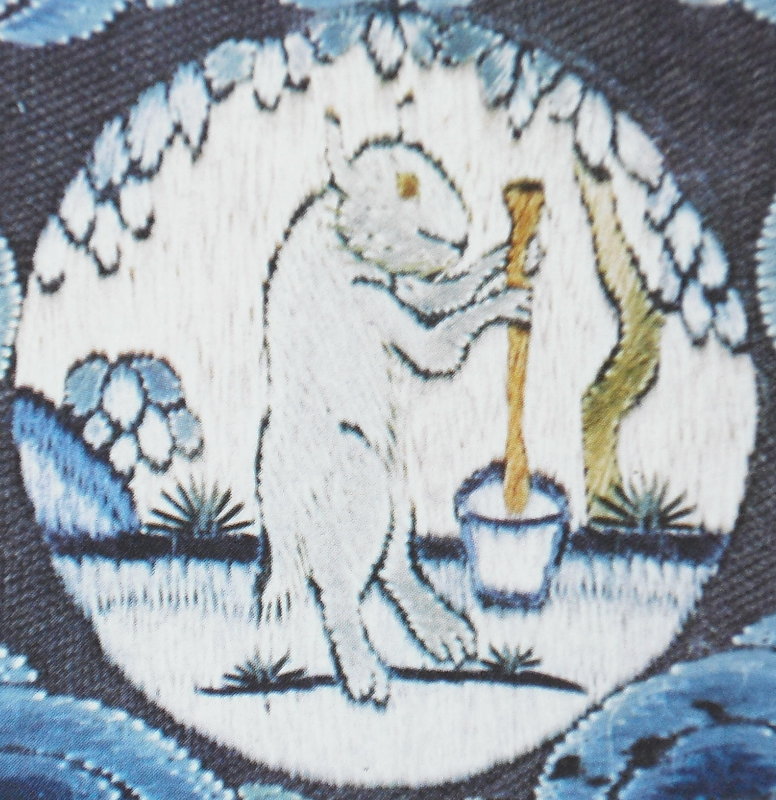 🇨🇳 China and 5 moreMoon rabbit月兔 (yuètù)
A mythical figure seen in lunar markings, pounding elixirs or rice cakes across Asia and the Americas.Being · Wonder and entertainment Living
🇨🇳 China and 5 moreMoon rabbit月兔 (yuètù)
A mythical figure seen in lunar markings, pounding elixirs or rice cakes across Asia and the Americas.Being · Wonder and entertainment Living
 🇯🇵 JapanNamazu鯰
A giant catfish myth believed to cause earthquakes in JapanBeing Legendary
🇯🇵 JapanNamazu鯰
A giant catfish myth believed to cause earthquakes in JapanBeing Legendary
 🇯🇵 JapanAbura-sumashi油すまし
A mountain spirit from Amakusa folklore said to be a thief turned yōkaiBeing Legendary
🇯🇵 JapanAbura-sumashi油すまし
A mountain spirit from Amakusa folklore said to be a thief turned yōkaiBeing Legendary
 🇯🇵 JapanNurikabe塗り壁
A spirit that manifests as an invisible wall to block travelers at nightBeing · Cursing and harm Historical
🇯🇵 JapanNurikabe塗り壁
A spirit that manifests as an invisible wall to block travelers at nightBeing · Cursing and harm Historical
 🇯🇵 JapanGashadokuroがしゃどくろ
A giant skeleton spirit born from the bones of those who died in war or famine.Being · Cursing and harm Legendary
🇯🇵 JapanRaijū雷獣
A Japanese lightning creature that sleeps in navels and falls from stormsBeing · Cursing and harm Legendary
🇯🇵 JapanGashadokuroがしゃどくろ
A giant skeleton spirit born from the bones of those who died in war or famine.Being · Cursing and harm Legendary
🇯🇵 JapanRaijū雷獣
A Japanese lightning creature that sleeps in navels and falls from stormsBeing · Cursing and harm Legendary
Photo credits on this page
The small pictures above come from Wikimedia Commons under free licences. Some are cropped to fit.
- Elemental: No machine-readable author provided. Ragesoss assumed (based on copyri, Public domain, source
- Guanyin: JL Cogburn, CC BY-SA 2.0, source
- Jin Chan: Tristanb, CC BY-SA 3.0, source
- Lan Caihe: Internet Archive Book Images, No restrictions, source
- Gazu Hyakki Yagyō: Toriyama Sekien, Public domain, source
- Eight Immortals: Fanghong, CC BY-SA 3.0, source
- Tennin: Unknown author, Public domain, source
- Curse: Katsushika Hokusai, Public domain, source
- Inugami: Sawaki Suushi (佐脇嵩之, Japanese, *1707, †1772), Public domain, source
- Xiezhi: Carty239 at English Wikipedia, Public domain, source
- Kikimora: Гиппиус Татьяна Николаевна (1877-1957), Public domain, source
- Fox spirit: Chen Menglei, Public domain, source
- Hundun: Oldie~commonswiki, CC BY-SA 3.0, source
- Fenghuang: Supremo Editor, CC BY-SA 4.0, source
- Tsukumogami: Unknown author, Public domain, source
- Rokurokubi: Unknown author, CC BY 4.0, source
- Nurarihyon: Brigham Young University, CC BY-SA 4.0, source
- Jiangshi: Dick Thomas Johnson, CC BY 2.0, source
- Ong Yah: Suzuki1314 at Chinese Wikipedia, Public domain, source
- Kami: Bernard Gagnon, CC BY-SA 3.0, source
- Miko: Chris Gladis, Flickr user MShades, CC BY 2.0, source
- Kitsune: Yoshitoshi, Public domain, source
- Kappa: Unknown author, CC0, source
- Yōkai: Kyosai Kawanabe (河鍋 暁斎), Public domain, source
- Rusalka: Andrey Shishkin, CC BY 3.0, source
- Yue Lao: 仔仔好帥, CC BY-SA 4.0, source
- Ōkuninushi: Yashima Gakutei, CC0, source
- Qilin: Unknown author, Public domain, source
- Moon rabbit: An artist, Public domain, source
- Oni: Katsushika Hokusai 葛飾北斎 (1760-1849), Public domain, source
- Namazu: Anonymous Unknown author, Public domain, source
- Abura-sumashi: Triton, CC BY 3.0, source
- Nurikabe: Anonymous Unknown author, Public domain, source
- Gashadokuro: Unknown author, Public domain, source
- Noppera-bō: 芥川龍之介, Public domain, source
- Baku: Momotarou2012, CC BY-SA 3.0, source
- Chinese dragon: Unknown author, CC0, source
- Dongyue Dadi: H2v5o68z, CC0, source
- Jeoseung Saja: National Folk Museum of Korea, CC BY 4.0, source