
Elf
from Old English ælf, from a Germanic root probably meaning 'white being'
A supernatural person of Germanic lore, linked to illness, beauty and magic
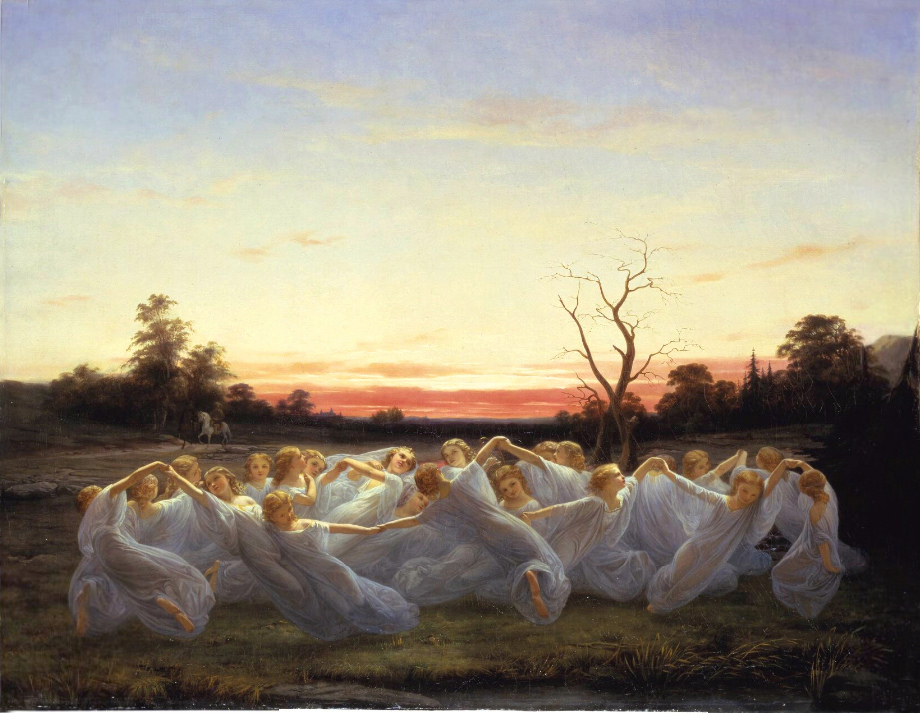
Elves are supernatural people in Germanic folklore, especially in North Germanic myth recorded in Iceland. Medieval tales treat them as beautiful, powerful beings who may help or harm people, cause illness, or seduce humans; belief varied by place and declined after the Middle Ages, with some continued popular belief claimed in Iceland.
- Old English medical texts link elves to sharp pain and mental illness.
- The term elf-shot is first recorded around 1500 in a Scots poem.
- Iceland is said to have some continuing popular belief in elves.
- Shakespeare's A Midsummer Night's Dream shaped tiny, playful literary elves.
- Tolkien's works helped make elves human-sized in modern fantasy.
What it is
An elf is a kind of supernatural person in Germanic folklore. The idea is found across Germanic-speaking cultures, and elves are named in Old Norse texts from Iceland, including the Poetic Edda and the Prose Edda. Medieval writers describe them as beautiful and powerful, with magic, and as ambivalent toward ordinary people: they might help, but they might also harm. Beliefs changed greatly over time and place, and existed in both pre-Christian and Christian settings. Old English medical texts link elves to sharp internal pain and mental illness. Later Scottish and Scandinavian sources treat them as hidden people living alongside rural communities, and as figures who could seduce or abduct humans.
Where it comes from
The word and the belief are old in the Germanic languages. Old English ælf, Old Norse alfr and Old High German alp point back to a reconstructed Germanic root that seems to have meant 'white being'. Much of the early picture comes from Christian writers, so the older idea is hard to rebuild. Elves appear in medieval medical texts, in Norse myth, in personal names and in place names. After the Middle Ages the word lost ground to fairy, Zwerg and huldra, but belief continued in Scotland and Scandinavia. In Iceland some popular belief is said to survive.
Tools and materials
Old English medical texts say elves could cause illness, sometimes with projectiles. The term elf-shot is first recorded around 1500 in a Scots poem, where it appears in a list of curses. In early modern Scotland, elf-schot and elf-arrowhead were used for Neolithic stone arrowheads, which were thought to have been made by elves. A few witchcraft trial accounts say such arrowheads were used in healing rituals, and sometimes that witches or elves used them to injure people and cattle.
Elf, drawn and placed
- Living
- Revived
- Fading
- Historical
- Legendary
- Performed
- Lineage
- Germanic folklore and Norse mythology
Peoples and places
Elves belong to Germanic-speaking cultures, and the clearest early manuscripts come from Anglo-Saxon England. Norse sources place them in North Germanic myth, especially in Icelandic texts. In early modern Scotland, people described elves as powerful hidden neighbours, and elves appear in witchcraft trial testimony. Scandinavian ballads and tales also name them. In Iceland, belief in elves has been said to continue in popular custom. The word elf itself spread through the Germanic languages, while related terms such as alfr, alp and ælf name the being in Old Norse, Old High German and Old English.
At a glance: who, where and when


What people believe
Behind the stories is a world of hidden people. Elves are held to have magic and striking beauty. They are not simply kind or cruel: medieval sources call them ambivalent, able to assist or obstruct ordinary folk. They are linked with the Norse gods, with illness, with magic and with seduction. Old English charms treat them as causes of sudden pain, while Scottish trial accounts treat them as invisible neighbours with power over health.
How scholars and sceptics see it
Twentieth-century scholars often pictured Anglo-Saxon elves as small, invisible, demonic beings who shot illness into people. That picture leaned on the term elf-shot and on an image in the Eadwine Psalter. Work from the 1990s onward found the medieval evidence for projectile-causing elves thin, and the psalter image is now read as a conventional scene of divine arrows and demons. Twenty-first-century scholarship instead treats Anglo-Saxon elves more like people, comparable to Scandinavian álfar or the Irish Aos Sí. The debate continues.
Cautions and what is closed
Belief in elves named dangers. Old English medical texts say elves afflicted people and livestock with sharp internal pain and mental disorders. Middle English and early modern sources increasingly describe elves as seducers or abductors, and from around the fifteenth century comes the belief that they might steal babies and leave changelings. In early modern Scotland, elves were mentioned in witchcraft trials, where witnesses spoke of healing powers or of people and animals made sick by elves. These are reports of belief, not medical explanation.
Compare and confuse
Elf was largely replaced in English by fairy, a French loan, by the end of the Middle Ages. In German, Zwerg ('dwarf') took over some of its ground, and in North Germanic languages huldra ('hidden being') did the same. Old Norse alfr, Old English ælf and Old High German alp are cognates, sharing a Germanic root. The being also overlaps with the Irish Aos Sí and with changeling lore.
Today
Belief in elves fell sharply with urbanisation and industrialisation, though Iceland is said to have some continuing popular belief. From the early modern period, educated writers and artists made elves into literary figures. Shakespeare's A Midsummer Night's Dream helped shape tiny, playful elves; German Romantic writers took up the English word; and Christmas elves were popularised in the late nineteenth-century United States. Tolkien's twentieth-century fantasy gave new life to human-sized elves, and elves remain common in fantasy media.
Questions people ask about Elf
What is an elf?
An elf is a supernatural person in Germanic folklore, especially North Germanic myth. Medieval sources describe beautiful, powerful beings who may help or harm people, cause illness, or seduce humans. Belief varied widely and declined after the Middle Ages.
Where do elves come from?
The word and belief are Germanic. Old English ælf and Old Norse alfr point to a root probably meaning 'white being'. The earliest surviving manuscripts are from Anglo-Saxon England, and Norse texts from Iceland also describe them.
Do elves cause illness?
In belief, yes. Old English medical texts say elves could afflict people and livestock with sharp internal pain and mental disorders. The term elf-shot names this idea, though scholars now find the medieval evidence for projectile-causing elves thin.
What is elf-shot?
Elf-shot is first recorded around 1500, in a Scots poem listing curses. In early modern Scotland the term and elf-arrowhead were used for Neolithic stone arrowheads, thought to have been made by elves. Some trial accounts say such arrowheads were used in healing rituals.
Why did the word elf decline?
After the Middle Ages, fairy and other terms replaced elf in many contexts, including Zwerg in German and huldra in North Germanic languages. Belief declined with urbanisation and industrialisation, though Iceland is said to have some continuing popular belief and elves remained strong in literature and fantasy.
Good reading and sources
- Encyclopaedia BritannicaArticle
- Elves & Dwarves in Norse MythologyWorld History Encyclopedia, Article
- Elf on WikipediaEncyclopedia
- More photos on Wikimedia CommonsPhotos and video
- Wikidata recordOpen data
The facts on this page come from the Wikipedia article "Elf", written by its contributors and used under the CC BY-SA 4.0 licence, and from its Wikidata record (CC0). EveryJaadu rewrote the text in its own words, with AI assistance, and compares every page with the article to make sure no passage is copied. It may be reused under the same CC BY-SA 4.0 licence with a link back.
It may contain mistakes. Names and customs differ from one community to the next, and some knowledge is closed to outsiders and left out here. This page describes belief and practice. It does not say that any of it works, it is not a how-to, and it is not medical advice. If something is wrong, tell us. Last refreshed 2026-10-18.
More from Iceland
All the entries from Iceland 🇮🇸 Iceland and 3 moreDraugr
A malevolent undead revenant from Nordic folklore, often guarding buried treasure.Being · Cursing and harm · Luck and prosperity Legendary
🇮🇸 Iceland and 3 moreDraugr
A malevolent undead revenant from Nordic folklore, often guarding buried treasure.Being · Cursing and harm · Luck and prosperity Legendary
 🇸🇪 Sweden and 2 moreMjölnirMjǫllnir
The hammer of the Norse thunder god Thor, used as a weapon and for blessingsBeing · Cursing and harm · Protection Historical
🇸🇪 Sweden and 2 moreMjölnirMjǫllnir
The hammer of the Norse thunder god Thor, used as a weapon and for blessingsBeing · Cursing and harm · Protection Historical
 🇮🇸 Iceland and 1 moreHidden-folkhuldufólk
Supernatural beings in Nordic folklore who live in a parallel world within the landscape.Being · Protection · Luck and prosperity Living
🇮🇸 Iceland and 1 moreHidden-folkhuldufólk
Supernatural beings in Nordic folklore who live in a parallel world within the landscape.Being · Protection · Luck and prosperity Living
 🇩🇪 Germany and 3 moreMare
A spirit that sits on sleepers to cause nightmares and physical distressBeing · Cursing and harm Historical
🇩🇪 Germany and 3 moreMare
A spirit that sits on sleepers to cause nightmares and physical distressBeing · Cursing and harm Historical
Related elsewhere
All being 🇺🇸 United States and 5 moreSatanism
A modern set of beliefs using the figure of Satan as a symbol or deity.Tradition · Power and authority · Cursing and harm Living
🇺🇸 United States and 5 moreSatanism
A modern set of beliefs using the figure of Satan as a symbol or deity.Tradition · Power and authority · Cursing and harm Living
 🇪🇬 Egypt and 1 moreLilithלִילִית
A feminine figure from Mesopotamian and Jewish mythology, often depicted as a night demon or spirit.Being · Cursing and harm Legendary
🇪🇬 Egypt and 1 moreLilithלִילִית
A feminine figure from Mesopotamian and Jewish mythology, often depicted as a night demon or spirit.Being · Cursing and harm Legendary
 🇪🇬 EgyptCurse
A spoken wish for harm, often backed by ritual or divine authorityBelief · Cursing and harm · Protection Historical
🇪🇬 EgyptCurse
A spoken wish for harm, often backed by ritual or divine authorityBelief · Cursing and harm · Protection Historical
 🇹🇷 Turkey and 5 moreEvil eye
A curse caused by an envious look and the charms used to block itBelief · Protection · Cursing and harm Living
🇹🇷 Turkey and 5 moreEvil eye
A curse caused by an envious look and the charms used to block itBelief · Protection · Cursing and harm Living