
Hachiman
In its own language: 八幡神
From the title Hirohata no Yawata no Ōkami, linked to Empress Jingū's dedication of flags.
A Japanese deity of war and the imperial family, worshipped as both kami and bodhisattva.
Hachiman is a Japanese deity identified with Emperor Ōjin. He serves as an ancestral spirit for the imperial house and a guardian for warriors. His worship blends Shinto and Buddhist traditions across Japan.
- Identified with Emperor Ōjin and Empress Jingū
- Worshipped as both kami and Great Bodhisattva
- Guardian deity of the Minamoto samurai clan
- Over 2,500 shrines dedicated to him in Japan
- Emblem is the three-pronged mitsudomoe swirl
What it is
Hachiman is a major figure in Japanese religious practice. He is viewed as the divine spirit of Emperor Ōjin. This semi-legendary ruler is also seen as an ancestor of the current imperial line. Worship often includes his mother, Empress Jingū, and a female companion. Together they form a trio known as Hachiman Mikami. The deity holds a unique position by merging two belief systems. He is treated as a native kami while also being accepted into Buddhism. In this dual role, he acts as a protector of the state and a guide for spiritual practice.
Where it comes from
Legends say Hachiman appeared in the Usa region during the sixth century. He revealed himself as a young boy to a local man. He claimed to be Emperor Ōjin. Historical records link him to the founding of shrines after military conflicts. One story involves atoning for deaths in a rebellion. Another tale describes a divine warning that stopped a political plot. These events helped establish his reputation as a powerful guardian. Over time, his identity merged with various local spirits and historical figures.
How it is done
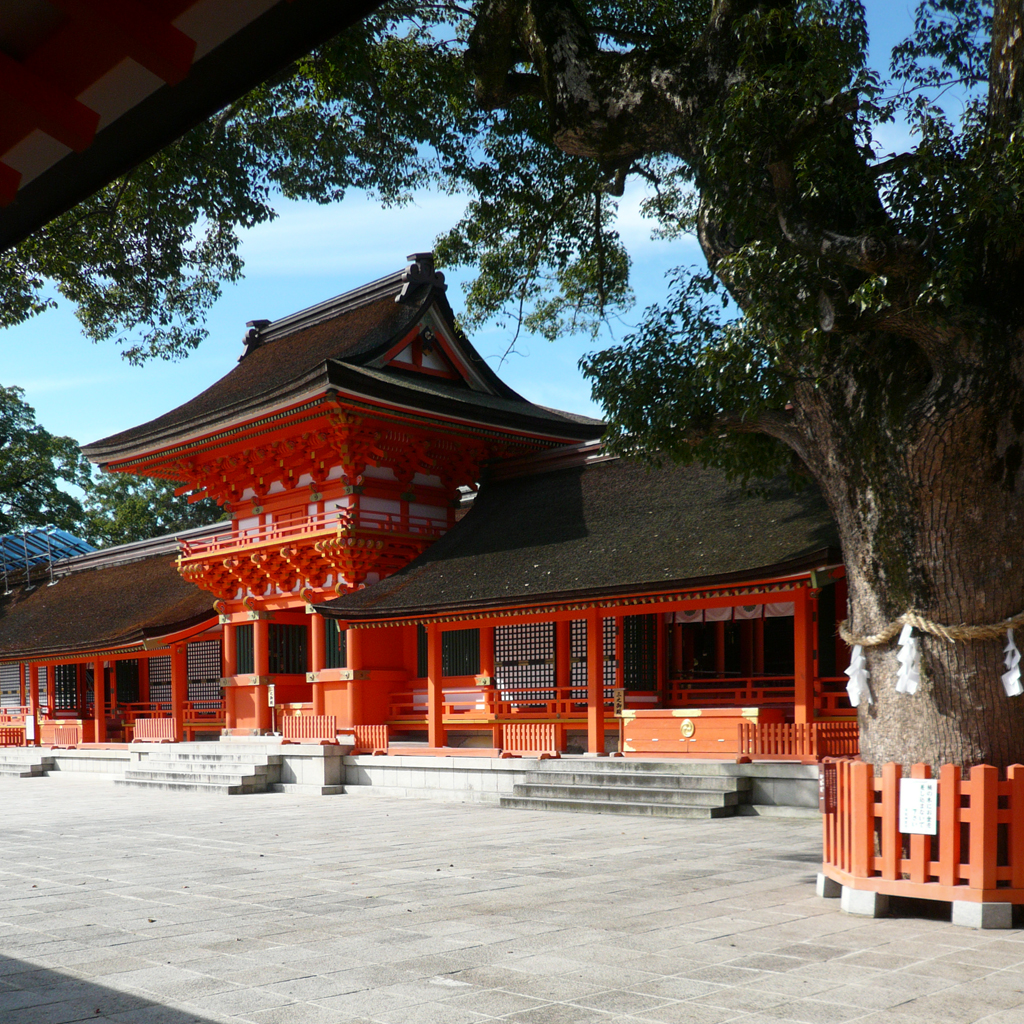
Devotees visit shrines to offer prayers and gifts. Rituals often involve purification and chanting. Priests perform ceremonies to seek protection or guidance. The deity is sometimes represented by objects like bows or stirrups. These items symbolize martial strength and readiness. Pilgrims travel to major sites to pay respects. Offerings are made to honor his dual nature. The practices vary between Shinto temples and Buddhist halls.
Tools and materials
The shrine emblem is a mitsudomoe, a three-pronged swirl. This symbol appears on samurai armor and banners. Physical representations include bows and horse stirrups. These tools reflect his connection to warfare. Incense and candles are used in Buddhist rites. Shinto rituals may use sacred ropes and mirrors. The materials chosen highlight his role as a warrior and a spiritual leader.
Hachiman, drawn and placed
- Living
- Revived
- Fading
- Historical
- Legendary
- Performed
- Lineage
- Shinto-Buddhist syncretism
What it is for
People pray to Hachiman for victory in battle. Warriors seek his blessing for success in combat. The imperial family views him as a protective ancestor. Farmers and townspeople ask for general safety. He is also called upon for help in childbirth. His influence extends beyond the battlefield. He is seen as a stabilizing force for the community and the state.
Who does it
Shinto priests and Buddhist monks both serve Hachiman. Samurai clans adopted him as their personal guardian. Leaders took names linking them to the deity. This practice honored their lineage and martial skills. Training involved mastering both spiritual duties and combat. The status of practitioners rose with the growth of the warrior class. Women also played roles in early legends and temple service.
Peoples and places
Hachiman worship is central to Japanese culture. Shrines exist throughout the country, second only to Inari. The Minamoto clan heavily promoted his cult. Other families and regions adopted his worship later. The tradition spread from Kyushu to the capital and beyond. Different areas may emphasize different aspects of his myth. Some focus on his imperial ties, others on his martial power.
At a glance: who, where and when
Who does it
Peoples
Belief worlds



What people believe
The deity embodies the fusion of kami and buddhas. He is considered a manifestation of Amitābha Buddha by some. Others link him to Gautama Buddha. This syncretism allows him to bridge native and imported beliefs. He is believed to possess the power to protect the nation. His presence is felt in both religious and secular spheres. Devotees believe he intervenes in human affairs to maintain order.
When it is done
Festivals are held at major shrines throughout the year. Specific dates mark historical events in his legend. New Year celebrations often include prayers for safety. Warrior ceremonies may occur before campaigns. Life events like births also invoke his name. The calendar reflects both agricultural cycles and military history.
How scholars and sceptics see it
Researchers study Hachiman as a case of religious blending. Historians trace how his cult supported political power. Anthropologists examine the social role of warrior deities. Scholars note the shift from imperial to military patronage. Analysis of texts reveals changing interpretations over centuries. The deity’s image evolved to meet the needs of different eras.
Compare and confuse
Hachiman shares traits with other warrior deities. Bishamon is another figure combining martial and spiritual roles. Unlike purely Buddhist gods, he retains native kami features. His syncretic nature distinguishes him from single-tradition figures. He is often compared to Inari due to the number of shrines.
Law and persecution
Worship is protected under modern religious freedom laws. Shrines operate freely as cultural and religious sites. No persecution is recorded in contemporary times. Historical suppression occurred during the separation of Shinto and Buddhism. Current practice faces no legal restrictions.
Questions people ask about Hachiman
Who is Hachiman?
Hachiman is a Japanese deity identified with Emperor Ōjin. He is revered as an ancestral spirit of the imperial family and a guardian of warriors. His worship combines Shinto and Buddhist elements.
Where does Hachiman come from?
He originates from Japanese legends about Emperor Ōjin. His cult grew from the Usa region in Kyushu. It spread nationwide through support by the samurai class.
Why is he important to samurai?
Samurai viewed him as a tutelary god of their clan. The Minamoto family claimed descent from Emperor Ōjin. They sought his protection in battle and legitimacy in rule.
How is he worshipped today?
Devotees visit shrines to offer prayers for safety and victory. Both Shinto and Buddhist rituals are performed. He remains a significant figure in Japanese religious life.
Good reading and sources
- Encyclopaedia BritannicaArticle
- Hachiman: Origin of the Kamikaze WindWorld History Encyclopedia, Article
- Hachiman on WikipediaEncyclopedia
- More photos on Wikimedia CommonsPhotos and video
- Wikidata recordOpen data
The facts on this page come from the Wikipedia article "Hachiman", written by its contributors and used under the CC BY-SA 4.0 licence, and from its Wikidata record (CC0). EveryJaadu rewrote the text in its own words, with AI assistance, and compares every page with the article to make sure no passage is copied. It may be reused under the same CC BY-SA 4.0 licence with a link back.
It may contain mistakes. Names and customs differ from one community to the next, and some knowledge is closed to outsiders and left out here. This page describes belief and practice. It does not say that any of it works, it is not a how-to, and it is not medical advice. If something is wrong, tell us. Last refreshed 2026-10-15.
More from Japan
All the entries from Japan 🇯🇵 JapanOni鬼(おに)
A horned demon of Japanese folklore known for strength and evil deedsBeing · Cursing and harm · Luck and prosperity Legendary
🇯🇵 JapanKuda-gitsune管狐 (kuda-gitsune)
A small spirit kept in a tube or sleeve to aid fortune-telling and cursing in Japanese folklore.Being · Seeing and foretelling · Cursing and harm Legendary
🇯🇵 JapanOni鬼(おに)
A horned demon of Japanese folklore known for strength and evil deedsBeing · Cursing and harm · Luck and prosperity Legendary
🇯🇵 JapanKuda-gitsune管狐 (kuda-gitsune)
A small spirit kept in a tube or sleeve to aid fortune-telling and cursing in Japanese folklore.Being · Seeing and foretelling · Cursing and harm Legendary
 🇯🇵 JapanBaku獏
A Japanese spirit said to eat bad dreams and protect sleepersBeing · Protection Living
🇯🇵 JapanBaku獏
A Japanese spirit said to eat bad dreams and protect sleepersBeing · Protection Living
 🇯🇵 JapanInugami犬神
A Japanese spirit of dog possession and folk sorceryBelief · Cursing and harm · Power and authority Historical
🇯🇵 JapanInugami犬神
A Japanese spirit of dog possession and folk sorceryBelief · Cursing and harm · Power and authority Historical
Related elsewhere
All being 🇮🇳 India and 2 moreYantraयन्त्र
A geometric diagram from Indian traditions used for worship and meditationTradition · Protection · Speaking with spirits and the dead Living
🇮🇳 India and 2 moreYantraयन्त्र
A geometric diagram from Indian traditions used for worship and meditationTradition · Protection · Speaking with spirits and the dead Living
 🇮🇳 India and 4 moreBonབོན།
The indigenous religion of Tibet and the Himalayas, preserving ancient rituals alongside Buddhist teachings.Tradition · Protection · Speaking with spirits and the dead Living
🇮🇳 India and 4 moreBonབོན།
The indigenous religion of Tibet and the Himalayas, preserving ancient rituals alongside Buddhist teachings.Tradition · Protection · Speaking with spirits and the dead Living
 🇮🇶 Iraq and 5 moreGrimoire
A textbook containing instructions for spells, rituals, and the creation of magical objects.Text · Protection · Healing Historical
🇮🇶 Iraq and 5 moreGrimoire
A textbook containing instructions for spells, rituals, and the creation of magical objects.Text · Protection · Healing Historical
 🇮🇳 IndiaMahakaleshwar JyotirlingaMahākāleśvara
A sacred Shiva shrine in Ujjain, India, known for its south-facing idol and ancient origins.Tradition · Protection · Power and authority Living
🇮🇳 IndiaMahakaleshwar JyotirlingaMahākāleśvara
A sacred Shiva shrine in Ujjain, India, known for its south-facing idol and ancient origins.Tradition · Protection · Power and authority Living