Households and ordinary people
Grandmothers, parents and neighbours doing the small things: the knot, the salt, the red thread.
Households and ordinary people do most of the world's magic: the grandmother who ties a thread on a baby's wrist, the neighbour who throws salt, the shopkeeper who hangs a lemon and chillies, the family that burns incense before a photograph. These people are not specialists and often do not call it magic. This page looks at the domestic side of the subject, which is the commonest and least written about.
Everyday customs
Household practice is woven into daily life: sweeping at new year, a bead on a cradle, a horseshoe over a door, a charm in a car. It tends to be practical, brief and handed down within the family. Many people say they do it because their mother did, or to be safe. It rarely needs a priest, a text or a fee. The hands that do it are those of mothers and grandmothers, who also cook, clean and care, so the magic is part of the labour of the home.
Women and the home
Women are the principal keepers of household custom in many societies, as mothers, grandmothers and aunts. Their knowledge covers birth, child care, food, illness, marriage and death. That knowledge is often undervalued by the formal religion and by scholars, and was also the source of accusations in the witch trials, in which women who were midwives or healers were prominent. A household custom is learned by watching and may never be explained, since the practitioner does not see it as special.
Faith and the home
Religious leaders have seen household custom as faith, as superstition or as a nuisance. Reformers in Protestant Europe, Salafi Islam and some Hindu and Buddhist movements have told people to give up such practices. Many people keep them regardless. In the diaspora, the home customs are sometimes the part of heritage that lasts longest, and are carried to new countries in suitcases. In cities, small shrines, protective charms and everyday rituals often survive in apartments, taxis and shops.
Why scholars care
Anthropologists of everyday religion and folklorists record these customs as evidence of how people manage risk. They show how belief and practice differ, since people may say they do not believe and still knock on wood. Household magic is also the easiest to commercialise, in shops selling charms and kits that detach customs from their homes. A new student or visitor may find that families who say they do not believe still follow such customs carefully, and this gap is one of the more interesting findings.
Households and ordinary people on EveryJaadu
The entries written up so far, best known first.
 🇯🇵 Japan and 2 moreTanabataたなばた (七夕)
A Japanese celebration of star-crossed lovers and written wishesTradition · Luck and prosperity · Wonder and entertainment Living
🇯🇵 Japan and 2 moreTanabataたなばた (七夕)
A Japanese celebration of star-crossed lovers and written wishesTradition · Luck and prosperity · Wonder and entertainment Living
 🇨🇳 China and 5 moreGuanyin觀音 (Guānyīn)
The Bodhisattva of compassion, worshipped across East Asia as a listener to human sufferingBeing · Protection · Healing Living
🇨🇳 China and 5 moreGuanyin觀音 (Guānyīn)
The Bodhisattva of compassion, worshipped across East Asia as a listener to human sufferingBeing · Protection · Healing Living
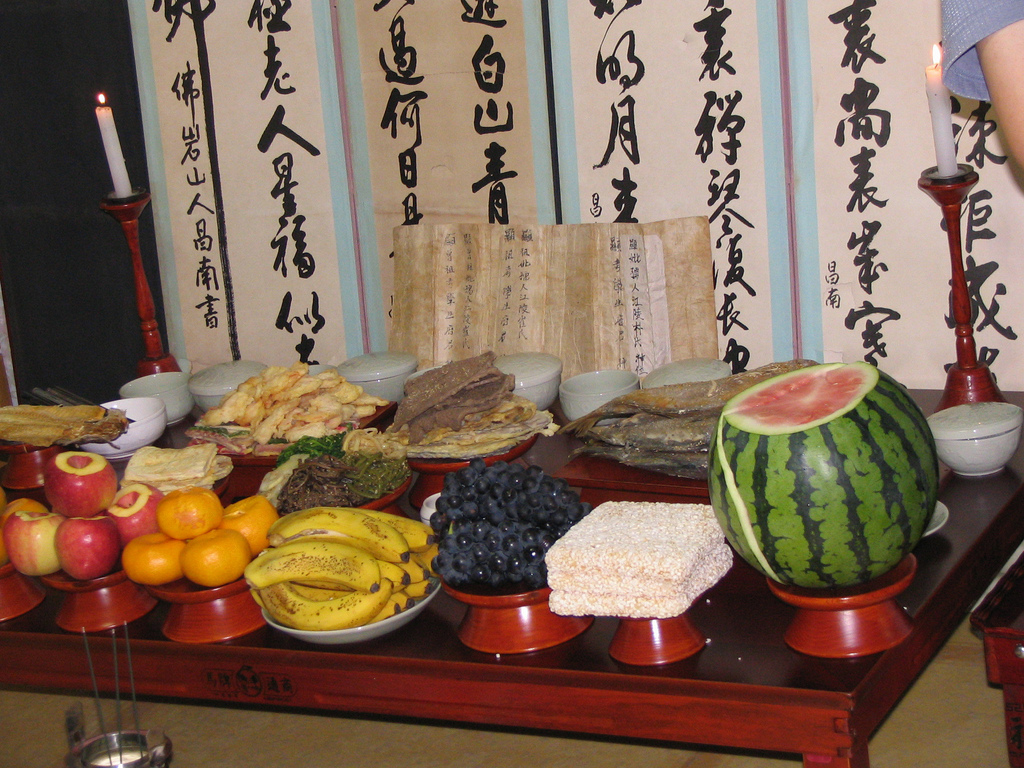 🇰🇷 South Korea and 1 moreChuseok추석 (Chuseok), 한가위 (Hangawi)
A Korean autumn harvest festival marked by ancestral rites and feasting on the full moon.Tradition · Speaking with spirits and the dead · Luck and prosperity Living
🇨🇳 China and 4 moreKitchen God灶君
The Chinese hearth deity who reports domestic conduct to the Jade EmperorBeing · Protection · Luck and prosperity Living
🇰🇷 South Korea and 1 moreChuseok추석 (Chuseok), 한가위 (Hangawi)
A Korean autumn harvest festival marked by ancestral rites and feasting on the full moon.Tradition · Speaking with spirits and the dead · Luck and prosperity Living
🇨🇳 China and 4 moreKitchen God灶君
The Chinese hearth deity who reports domestic conduct to the Jade EmperorBeing · Protection · Luck and prosperity Living
 🇨🇳 China and 5 moreQingming Festival清明节
A spring day for sweeping graves, feeding the dead and honouring ancestorsTradition · Speaking with spirits and the dead · Protection Living
🇨🇳 China and 5 moreQingming Festival清明节
A spring day for sweeping graves, feeding the dead and honouring ancestorsTradition · Speaking with spirits and the dead · Protection Living
 🇨🇳 China and 5 moreJoss paper金紙
Paper burned as money and goods for ancestors, gods and the deadCharm · Speaking with spirits and the dead · Luck and prosperity Living
🇨🇳 China and 5 moreJoss paper金紙
Paper burned as money and goods for ancestors, gods and the deadCharm · Speaking with spirits and the dead · Luck and prosperity Living
 🇯🇵 JapanDaruma doll達磨
A round Japanese talisman that rights itself when knocked overCharm · Luck and prosperity · Power and authority Living
🇯🇵 JapanDaruma doll達磨
A round Japanese talisman that rights itself when knocked overCharm · Luck and prosperity · Power and authority Living
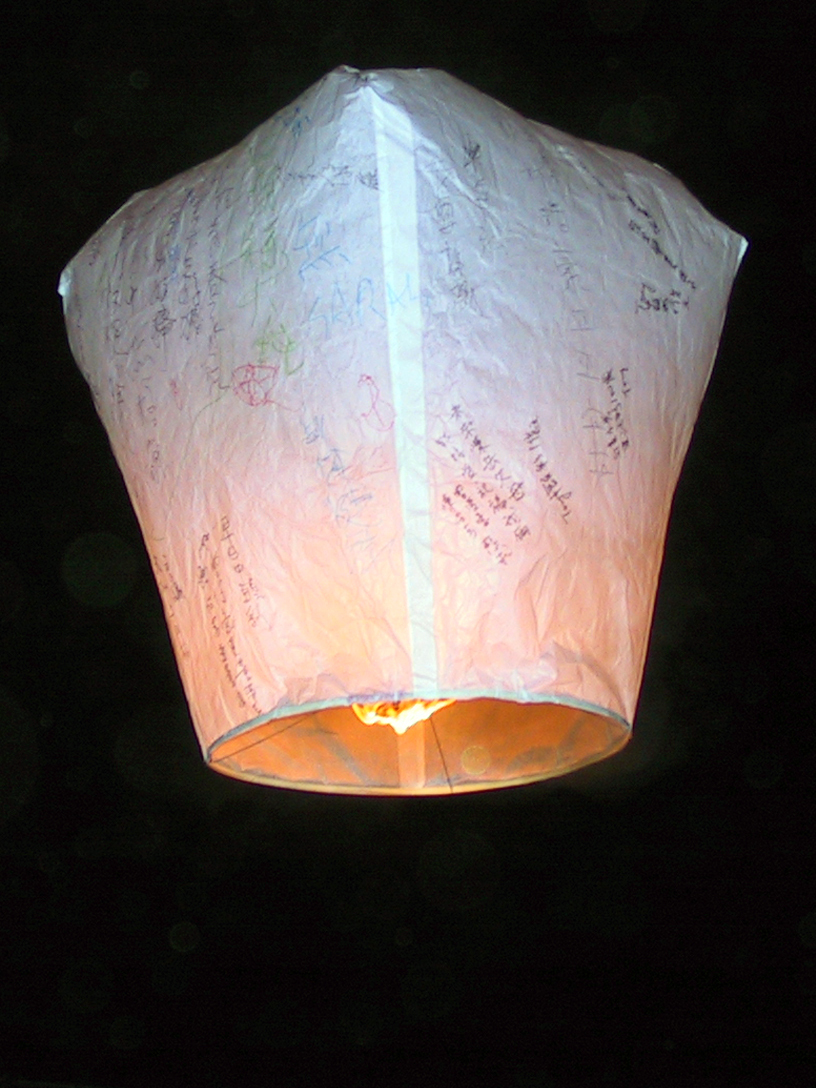 🇨🇳 China and 5 moreSky lantern天燈
A paper hot air balloon lifted by flame to carry wishes and blessingsRite · Luck and prosperity · Protection Living
🇨🇳 China and 5 moreSky lantern天燈
A paper hot air balloon lifted by flame to carry wishes and blessingsRite · Luck and prosperity · Protection Living
 🇨🇳 China and 2 moreEight Immortals八仙
Eight legendary Taoist figures of China, each with a power and a vesselFigure · Protection · Healing Living
🇨🇳 China and 2 moreEight Immortals八仙
Eight legendary Taoist figures of China, each with a power and a vesselFigure · Protection · Healing Living
 🇰🇷 South Korea and 1 moreDaeboreum대보름
A Korean lunar holiday marking the first full moon with nut-cracking and field firesTradition · Protection · Luck and prosperity Living
🇰🇷 South Korea and 1 moreDaeboreum대보름
A Korean lunar holiday marking the first full moon with nut-cracking and field firesTradition · Protection · Luck and prosperity Living
 🇲🇳 Mongolia and 1 moreTsagaan SarЦагаан сар
A Mongol lunisolar new year marked by white clothes and dairy feastsTradition · Luck and prosperity · Speaking with spirits and the dead Living
🇲🇳 Mongolia and 1 moreTsagaan SarЦагаан сар
A Mongol lunisolar new year marked by white clothes and dairy feastsTradition · Luck and prosperity · Speaking with spirits and the dead Living
 🇯🇵 JapanOmamori御守/お守り
Japanese amulets from shrines and temples for luck and protectionCharm · Protection · Luck and prosperity Living
🇯🇵 JapanOmamori御守/お守り
Japanese amulets from shrines and temples for luck and protectionCharm · Protection · Luck and prosperity Living
 🇨🇳 ChinaPixiu貔貅
A winged Chinese creature that guards wealth and wards off evil spiritsFigure · Protection · Luck and prosperity Living
🇨🇳 ChinaPixiu貔貅
A winged Chinese creature that guards wealth and wards off evil spiritsFigure · Protection · Luck and prosperity Living
 🇨🇳 China and 5 moreChinese guardian lions石獅 (shíshī)
Stone lion pairs placed at entrances to ward off harm and welcome fortuneCharm · Protection · Luck and prosperity Living
🇰🇷 South KoreaJesa제사
A Korean ancestral memorial rite involving food offerings and ritual bowsRite · Speaking with spirits and the dead · Luck and prosperity Living
🇨🇳 China and 5 moreChinese guardian lions石獅 (shíshī)
Stone lion pairs placed at entrances to ward off harm and welcome fortuneCharm · Protection · Luck and prosperity Living
🇰🇷 South KoreaJesa제사
A Korean ancestral memorial rite involving food offerings and ritual bowsRite · Speaking with spirits and the dead · Luck and prosperity Living
 🇯🇵 JapanOmikujiおみくじ
Paper fortunes drawn at Japanese shrines and temples to reveal luck and life adviceOracle · Seeing and foretelling · Luck and prosperity Living
🇯🇵 JapanOmikujiおみくじ
Paper fortunes drawn at Japanese shrines and temples to reveal luck and life adviceOracle · Seeing and foretelling · Luck and prosperity Living
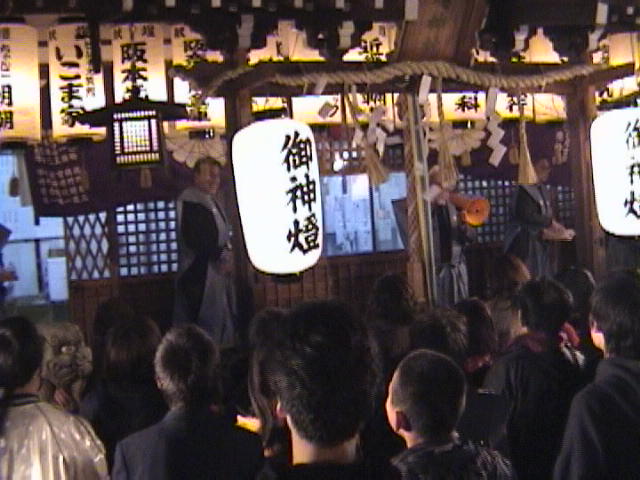 🇯🇵 JapanSetsubun節分
A Japanese seasonal rite to drive away bad luck and welcome spring with roasted beansRite · Protection · Luck and prosperity Living
🇯🇵 JapanSetsubun節分
A Japanese seasonal rite to drive away bad luck and welcome spring with roasted beansRite · Protection · Luck and prosperity Living
 🇯🇵 JapanShinto shrine神社 (jinja)
A structure housing kami deities within the Shinto tradition of JapanTradition · Protection · Speaking with spirits and the dead Living
🇯🇵 JapanShinto shrine神社 (jinja)
A structure housing kami deities within the Shinto tradition of JapanTradition · Protection · Speaking with spirits and the dead Living
 🇨🇳 China and 5 moreTetraphobia
The avoidance of the number four due to its similarity to the word for death in East Asian languagesBelief · Luck and prosperity Living
🇨🇳 China and 5 moreTetraphobia
The avoidance of the number four due to its similarity to the word for death in East Asian languagesBelief · Luck and prosperity Living
 🇯🇵 Japan and 3 moreManeki-neko招き猫
A Japanese figurine of a beckoning cat believed to bring luck and prosperityCharm · Luck and prosperity · Protection Living
🇯🇵 JapanZashiki-warashi座敷童子
A parlor spirit from northern Japan that brings fortune or ruin to a household.Being · Luck and prosperity · Protection Living
🇯🇵 Japan and 3 moreManeki-neko招き猫
A Japanese figurine of a beckoning cat believed to bring luck and prosperityCharm · Luck and prosperity · Protection Living
🇯🇵 JapanZashiki-warashi座敷童子
A parlor spirit from northern Japan that brings fortune or ruin to a household.Being · Luck and prosperity · Protection Living
 🇯🇵 Japan and 3 moreObonお盆
A Japanese Buddhist festival honoring the spirits of ancestors through dance and offeringsTradition · Speaking with spirits and the dead · Luck and prosperity Living
🇯🇵 Japan and 3 moreObonお盆
A Japanese Buddhist festival honoring the spirits of ancestors through dance and offeringsTradition · Speaking with spirits and the dead · Luck and prosperity Living
 🇯🇵 JapanKami神
Spirits and deities of Shinto, found in nature, ancestors, and placesBeing · Protection · Luck and prosperity Living
🇯🇵 JapanKami神
Spirits and deities of Shinto, found in nature, ancestors, and placesBeing · Protection · Luck and prosperity Living
 🇨🇳 China and 2 moreMenshen門神
Guardian figures pasted to doors in Chinese folk religion to protect homes from evil.Belief · Protection · Luck and prosperity Living
🇯🇵 JapanOmamori (sample)お守り
A small shrine charm in a brocade pouch.Charm · Protection · Luck and prosperity Living
🇨🇳 China and 2 moreMenshen門神
Guardian figures pasted to doors in Chinese folk religion to protect homes from evil.Belief · Protection · Luck and prosperity Living
🇯🇵 JapanOmamori (sample)お守り
A small shrine charm in a brocade pouch.Charm · Protection · Luck and prosperity Living
 🇯🇵 JapanTeru teru bōzuてるてる坊主
A white paper doll hung outside to ask for sunny weatherCharm · Luck and prosperity Living
🇯🇵 JapanTeru teru bōzuてるてる坊主
A white paper doll hung outside to ask for sunny weatherCharm · Luck and prosperity Living
 🇨🇳 ChinaJin Chan金蟾
A three-legged toad charm used in feng shui to attract wealth and guard against bad luckBeing · Luck and prosperity · Protection Living
🇨🇳 ChinaJin Chan金蟾
A three-legged toad charm used in feng shui to attract wealth and guard against bad luckBeing · Luck and prosperity · Protection Living
 🇯🇵 JapanHatsuyume初夢
The first dream of the new year and its traditional omensBelief · Seeing and foretelling · Luck and prosperity Living
🇯🇵 JapanHatsuyume初夢
The first dream of the new year and its traditional omensBelief · Seeing and foretelling · Luck and prosperity Living
 🇯🇵 JapanSaruboboさるぼぼ
A faceless red doll from Japan, given as a charm for family and fortuneCharm · Luck and prosperity · Protection Living
🇯🇵 JapanSaruboboさるぼぼ
A faceless red doll from Japan, given as a charm for family and fortuneCharm · Luck and prosperity · Protection Living
 🇯🇵 JapanCurse of the Colonelカーネルサンダースの呪い
A Japanese sports superstition blaming a baseball team's losses on an offended fast-food mascot.Belief · Luck and prosperity Historical
🇯🇵 JapanCurse of the Colonelカーネルサンダースの呪い
A Japanese sports superstition blaming a baseball team's losses on an offended fast-food mascot.Belief · Luck and prosperity Historical
 🇯🇵 JapanKin no unko金のうんこ
A Japanese charm shaped like faeces that is believed to bring good fortuneCharm · Luck and prosperity Living
🇯🇵 JapanKin no unko金のうんこ
A Japanese charm shaped like faeces that is believed to bring good fortuneCharm · Luck and prosperity Living
 🇯🇵 Japan and 1 moreGood Luck Flag寄せ書き日の丸 (yosegaki hinomaru)
A Japanese national flag signed by loved ones to wish a soldier safety and victory.Charm · Protection · Luck and prosperity Living
🇯🇵 Japan and 1 moreGood Luck Flag寄せ書き日の丸 (yosegaki hinomaru)
A Japanese national flag signed by loved ones to wish a soldier safety and victory.Charm · Protection · Luck and prosperity Living
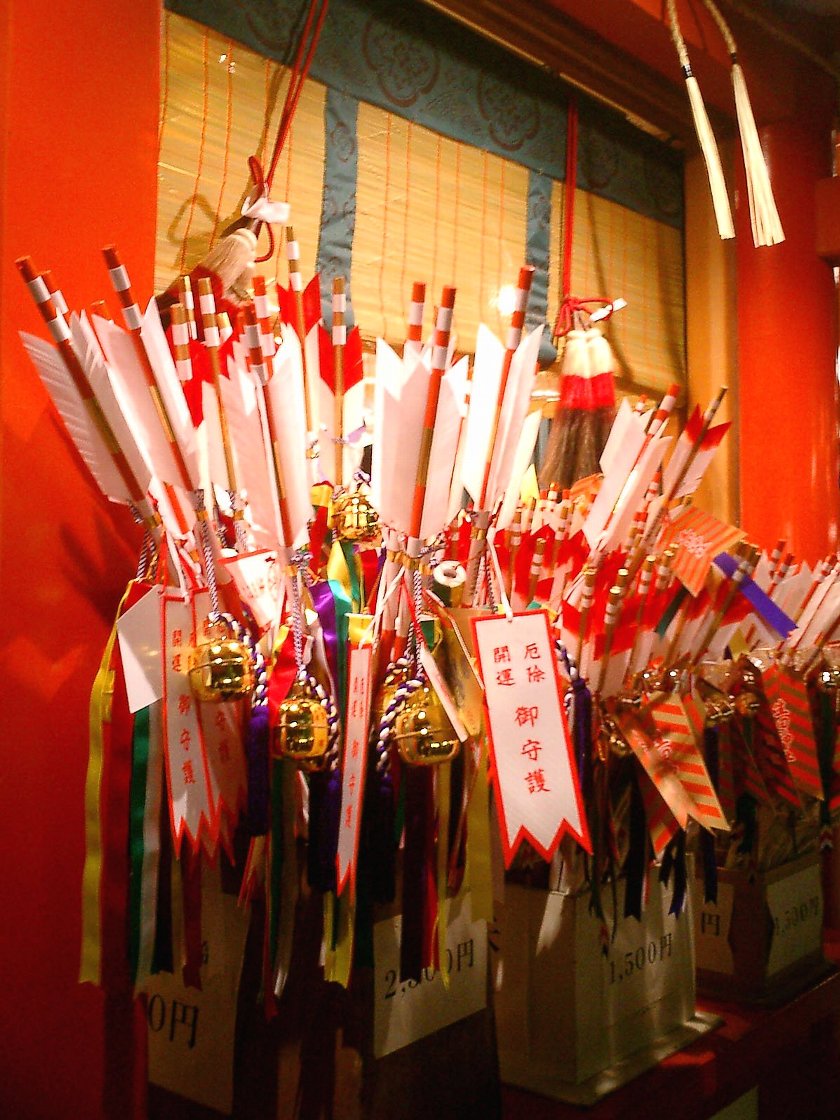 🇯🇵 JapanHamaya破魔矢
A blunt arrow given at shrines to ward off evil and secure good luck for the new yearCharm · Protection · Luck and prosperity Living
🇯🇵 JapanHamaya破魔矢
A blunt arrow given at shrines to ward off evil and secure good luck for the new yearCharm · Protection · Luck and prosperity Living
 🇯🇵 JapanFukusuke福助
A kneeling Japanese doll believed to bring wealth and honorCharm · Luck and prosperity · Power and authority Living
🇯🇵 JapanFukusuke福助
A kneeling Japanese doll believed to bring wealth and honorCharm · Luck and prosperity · Power and authority Living
 🇹🇼 Taiwan and 1 moreOng Yah王爺 (Ông-iâ)
Royal Lord deities of Fujian and Taiwan who tour the land, driving out diseaseBeing · Protection · Healing Living
🇹🇼 Taiwan and 1 moreOng Yah王爺 (Ông-iâ)
Royal Lord deities of Fujian and Taiwan who tour the land, driving out diseaseBeing · Protection · Healing Living
 🇨🇳 China and 2 moreChinese burial money瘞錢 (yì qián)
Imitations of currency placed in Chinese graves to serve the deceased in the afterlife.Charm · Protection · Luck and prosperity Historical
🇯🇵 JapanJapanese superstitions
Common beliefs in Japan about luck, numbers, and omens rooted in language and customBelief · Luck and prosperity · Protection Living
🇨🇳 China and 2 moreChinese burial money瘞錢 (yì qián)
Imitations of currency placed in Chinese graves to serve the deceased in the afterlife.Charm · Protection · Luck and prosperity Historical
🇯🇵 JapanJapanese superstitions
Common beliefs in Japan about luck, numbers, and omens rooted in language and customBelief · Luck and prosperity · Protection Living
 🇰🇷 South Korea and 3 moreKorean numismatic charm열쇠패
Coin-shaped objects used as protective and decorative charms in Korean cultureCharm · Protection · Luck and prosperity Historical
🇯🇵 Japan and 2 moreJapanese numismatic charm絵銭
Coin-shaped charms from Japan used for protection, luck, and blessings.Charm · Protection · Luck and prosperity Living
🇰🇷 South Korea and 3 moreKorean numismatic charm열쇠패
Coin-shaped objects used as protective and decorative charms in Korean cultureCharm · Protection · Luck and prosperity Historical
🇯🇵 Japan and 2 moreJapanese numismatic charm絵銭
Coin-shaped charms from Japan used for protection, luck, and blessings.Charm · Protection · Luck and prosperity Living
 🇨🇳 China and 1 moreLock charms家锁 / 锁片 (jiā suǒ / suǒ piàn)
A Chinese metal pendant shaped like a lock to protect children from harm and death.Charm · Protection · Luck and prosperity Historical
🇨🇳 China and 1 moreLock charms家锁 / 锁片 (jiā suǒ / suǒ piàn)
A Chinese metal pendant shaped like a lock to protect children from harm and death.Charm · Protection · Luck and prosperity Historical
 🇨🇳 China and 1 moreTaoist coin charm道教品壓生錢
Chinese and Vietnamese numismatic charms used for protection and feng shuiCharm · Protection · Cursing and harm Historical
🇯🇵 JapanDōbutsu uranai動物占い
A Japanese divination system that sorts people into animal types based on birthdate and personality axes.Oracle · Luck and prosperity Living
🇨🇳 China and 1 moreZhengde Tongbao正德通寶
A fantasy cash coin used as a Chinese and Vietnamese amulet for luck and protection.Charm · Luck and prosperity · Protection Living
🇨🇳 China and 1 moreTaoist coin charm道教品壓生錢
Chinese and Vietnamese numismatic charms used for protection and feng shuiCharm · Protection · Cursing and harm Historical
🇯🇵 JapanDōbutsu uranai動物占い
A Japanese divination system that sorts people into animal types based on birthdate and personality axes.Oracle · Luck and prosperity Living
🇨🇳 China and 1 moreZhengde Tongbao正德通寶
A fantasy cash coin used as a Chinese and Vietnamese amulet for luck and protection.Charm · Luck and prosperity · Protection Living
 🇨🇳 China and 2 moreBuddhist coin charm佛教品壓勝錢
Amulets shaped like coins that bear Buddhist symbols and prayers for protection.Charm · Protection · Luck and prosperity Historical
🇨🇳 China and 2 moreBuddhist coin charm佛教品壓勝錢
Amulets shaped like coins that bear Buddhist symbols and prayers for protection.Charm · Protection · Luck and prosperity Historical
 🇨🇳 China and 3 moreMarriage coin charm夫婦和合花錢
Coin-shaped amulets from East Asia that celebrate marriage, fertility, and conjugal harmonyCharm · Protection · Luck and prosperity Historical
🇨🇳 China and 3 moreMarriage coin charm夫婦和合花錢
Coin-shaped amulets from East Asia that celebrate marriage, fertility, and conjugal harmonyCharm · Protection · Luck and prosperity Historical
 🇨🇳 China and 1 moreConfucian coin charms
Amulets bearing Confucian moral teachings and historical storiesCharm · Protection · Luck and prosperity Historical
🇨🇳 China and 1 moreConfucian coin charms
Amulets bearing Confucian moral teachings and historical storiesCharm · Protection · Luck and prosperity Historical
 🇨🇳 ChinaBenzhuism本主教
The indigenous patron worship of the Bai people in Yunnan, ChinaTradition · Protection · Healing Living
🇨🇳 ChinaBenzhuism本主教
The indigenous patron worship of the Bai people in Yunnan, ChinaTradition · Protection · Healing Living
 🇨🇳 ChinaPixiu貔貅
A winged lion-like creature from Chinese lore that guards wealth and wards off evil spirits.Being · Protection · Luck and prosperity Living
🇨🇳 ChinaPixiu貔貅
A winged lion-like creature from Chinese lore that guards wealth and wards off evil spirits.Being · Protection · Luck and prosperity Living
Photo credits on this page
The small pictures above come from Wikimedia Commons under free licences. Some are cropped to fit.
- Guanyin: JL Cogburn, CC BY-SA 2.0, source
- Jin Chan: Tristanb, CC BY-SA 3.0, source
- Sarubobo: Unknown author, CC BY-SA 3.0, source
- Hatsuyume: Takeuchi Seihō, Public domain, source
- Good Luck Flag: takato marui, CC BY-SA 2.0, source
- Daruma doll: Crisco 1492, Public domain, source
- Eight Immortals: Fanghong, CC BY-SA 3.0, source
- Curse of the Colonel: Ogiyoshisan, CC BY-SA 3.0, source
- Tsagaan Sar: User:Chinneeb, CC BY-SA 3.0, source
- Chinese burial money: Gary Todd, CC0, source
- Kin no unko: enmoto, CC BY 2.0, source
- Hamaya: Tomomarusan, CC BY 2.5, source
- Omikuji: C121749n, Public domain, source
- Setsubun: Unknown author, CC BY-SA 3.0, source
- Shinto shrine: No machine-readable author provided. Fg2 assumed (based on copyright c, Public domain, source
- Tetraphobia: Halowand, CC BY-SA 3.0, source
- Fukusuke: Nesnad, CC BY-SA 3.0, source
- Obon: Batholith, Public domain, source
- Ong Yah: Suzuki1314 at Chinese Wikipedia, Public domain, source
- Menshen: Taiwankengo, CC BY-SA 3.0, source
- Tanabata: Laika ac, CC BY-SA 2.0, source
- Daeboreum: hojusaram, CC BY-SA 2.0, source
- Kami: Bernard Gagnon, CC BY-SA 3.0, source
- Maneki-neko: Su--May, CC BY 2.0, source
- Jesa: by Joseph Steinberg (Baltimoron in Korea) at Flickr, CC BY-SA 2.0, source
- Chinese guardian lions: Pvt pauline, CC BY-SA 3.0, source
- Pixiu: Sol lc, CC BY-SA 4.0, source
- Omamori: Leongboy1, Public domain, source
- Taoist coin charm: Etnografiska Museet, CC BY 2.5, source
- Buddhist coin charm: Scott Semans, CC BY 3.0, source
- Confucian coin charms: Jean-Michel Moullec, CC BY 2.0, source
- Marriage coin charm: Scott Semans, CC BY 3.0, source
- Benzhuism: G41rn8, CC BY-SA 4.0, source
- Pixiu: N509FZ, CC BY-SA 4.0, source
- Sky lantern: Richy, CC BY-SA 3.0, source
- Korean numismatic charm: Unknown author(s)., Public domain, source
- Joss paper: Vmenkov, CC BY-SA 3.0, source
- Lock charms: Scott Semans World Coins (CoinCoin.com)., CC BY 3.0, source
- Qingming Festival: Jacklee ., CC BY-SA 3.0, source
- Teru teru bōzu: Novaric at English Wikipedia, CC BY-SA 3.0, source