
Eight Immortals
In its own language: 八仙
from Chinese 八仙, bā xiān, eight xian, a xian being an immortal
Eight legendary Taoist figures of China, each with a power and a vessel
Eight legendary immortals, or xian, of Chinese mythology, honoured by Taoists and familiar in wider Chinese culture. Each one's power is thought to pass into a vessel that can give life or undo evil, and the group is said to live on five islands in the Bohai Sea.
- Each immortal's power is thought to pass into a vessel that can give life or destroy evil
- The eight vessels together are named the Covert Eight Immortals (暗八仙)
- They are said to live on five islands in the Bohai Sea, including Mount Penglai
- The Xi'an Eight Immortals Palace was built, by legend, to protect the region from divine thunder
- A Ming novel tells how each immortal crossed the Bohai Sea using his or her own power
What it is
These are eight legendary figures of Chinese mythology, called xian, which means immortal. Taoists honour them, and they belong to everyday Chinese culture as well. Tradition gives each of them a personal power, and holds that this power can pass into a vessel, a ritual object. A vessel of this kind is believed to give life or to destroy evil. Art and story usually show the eight as a set, and sometimes alone when one figure is being honoured. When the eight vessels stand for the whole group, they are called the Covert Eight Immortals. Their names and emblems are known well beyond Taoist circles.
Where it comes from
Taoist immortals were already honoured in the Han dynasty, but this particular group is later. It appears in the Jin dynasty, and wall paintings and sculptures in Jin tombs of the twelfth and thirteenth centuries show eight Taoist immortals together. The phrase Eight Immortals spread more widely once the Taoist writers and artists known as Complete Realization (Quanshen) became popular. The group is first described in the Yuan dynasty, and one suggestion is that the name came from the Eight Immortal Scholars of the Han. Yuan, Ming and Qing writers returned to the eight again and again, in plays, novels and poems.
Tools and materials
Each immortal is tied to an object called a vessel (法器). Belief holds that the owner's power passes into it, and that such a vessel can give life or destroy evil. Taken as a set, the eight vessels are named the Covert Eight Immortals (暗八仙), and artists use them as a shorthand for the whole group. Paintings also give each figure a personal emblem: a lotus flower for He Xiangu, an iron crutch and a calabash bottle for Li Tieguai, a fan for Zhongli Quan, a flute for Han Xiangzi.
Eight Immortals, drawn and placed
- Living
- Revived
- Fading
- Historical
- Legendary
- Performed
- Lineage
- Chinese mythology and the Taoist immortal tradition
What it is for
People read the eight as signs of prosperity and long life, which is why they appear so often in art. Li Tieguai is linked with medicine and with easing the distress of the sick and the poor. Zhongli Quan is connected with death and with making silver and gold. The vessels are held to give life or to undo evil. By legend, the temple in Xi'an was built to shield its region from divine thunder. Some martial arts and qigong exercises take their names and their training ideas from the group.
Who does it
Taoists revere the eight, and temples keep images of them. The Eight Immortals Palace in Xi'an, once called the Eight Immortals Nunnery, holds a set of statues in its Hall of Eight Immortals. Shrines to them stand in many parts of China and in Taiwan, and the Xian'gu Temple in Singapore centres its devotion on He Xiangu, the woman of the group. Outside the temples, most people who venerate them treat them less as gods and more as folk heroes and saints.
Peoples and places
The group belongs to the Chinese-speaking world, often called the Sinosphere. China is the home of the stories and of the temples, among them the Eight Immortals Palace in Xi'an and the Eternal Joy Temple at Ruicheng, whose wall painting is the best known early image of the eight. Shrines also stand in Taiwan, and Singapore has a temple devoted to He Xiangu. Written and staged versions travelled too, from Yuan plays to a Singapore television series of the late 1990s.
At a glance: who, where and when
Peoples
Belief worlds


What people believe
The eight are xian, immortals, and Taoist tradition places them among its sacred figures. Across the Sinosphere they are shown as deities, yet many of those who honour them do not quite see them that way, and for such people they are closer to folk heroes and saints. In some branches of Chinese folk religion they stand for the link between the living and the dead, since the spirits of the dead are thought to be near whenever help is wanted, and their existence is likened to that of ghosts. The Queen Mother of the West is popularly believed to have granted them their powers.
Compare and confuse
The same eight appear under several names. English writing before the 1970s sometimes called them the Eight Genies. Stories that show them fond of wine gave the joking title Eight Drunken Immortals, or Jiu-zhong Ba Xian. The set of their eight vessels is the Covert Eight Immortals. In Vietnamese they are Bát Tiên, and the group has Korean and Japanese names as well.
Today
Veneration continues. Shrines in China and Taiwan keep the group in view, and in Singapore the Xian'gu Temple is given to He Xiangu. The eight also live on in entertainment: Jackie Chan's Drunken Master films use eight drunken forms credited to them, a Singapore television series of 1998 and 1999 drew on the novel Dong You Ji, and they appear in games, graphic novels and an animated show. A 2026 film was to be based on the story of their crossing of the sea. Qigong sets and martial arts styles still carry their names.
Questions people ask about Eight Immortals
What are the Eight Immortals?
A set of eight legendary immortals, called xian, in Chinese mythology. Taoists revere them, and they are a familiar part of everyday Chinese culture. Each figure has a personal power and an object linked to it.
Where do they come from?
From Chinese myth and Taoist tradition. The group appears in Jin dynasty art and tombs, the term spread with the Complete Realization school, and the earliest description in writing comes from the Yuan dynasty.
Are they gods?
Views differ. In the Sinosphere they are shown as deities, but many who venerate them treat them as folk heroes and saints rather than gods, and some branches of Chinese folk religion liken them to ghosts.
What is the Covert Eight Immortals?
It is the name for their eight vessels taken together. Belief holds that each immortal's power passes into that person's vessel, and that the vessel can give life or destroy evil.
Do people still honour them today?
Yes. Shrines stand in China and Taiwan, and Singapore's Xian'gu Temple is devoted to He Xiangu. They also appear in qigong, martial arts, films, television and games.
Good reading and sources
- Eight Immortals on WikipediaEncyclopedia
- More photos on Wikimedia CommonsPhotos and video
- Wikidata recordOpen data
The facts on this page come from the Wikipedia article "Eight Immortals", written by its contributors and used under the CC BY-SA 4.0 licence, and from its Wikidata record (CC0). EveryJaadu rewrote the text in its own words, with AI assistance, and compares every page with the article to make sure no passage is copied. It may be reused under the same CC BY-SA 4.0 licence with a link back.
It may contain mistakes. Names and customs differ from one community to the next, and some knowledge is closed to outsiders and left out here. This page describes belief and practice. It does not say that any of it works, it is not a how-to, and it is not medical advice. If something is wrong, tell us. Last refreshed 2026-10-05.
More from China
All the entries from China 🇨🇳 China and 3 moreChinese dragon龍
A legendary water deity and imperial symbol in East Asian cultureBeing · Protection · Luck and prosperity Historical
🇨🇳 ChinaGu蛊
A venom-based poison and black magic practice from south ChinaSubstance · Cursing and harm · Luck and prosperity Historical
🇨🇳 China and 3 moreChinese dragon龍
A legendary water deity and imperial symbol in East Asian cultureBeing · Protection · Luck and prosperity Historical
🇨🇳 ChinaGu蛊
A venom-based poison and black magic practice from south ChinaSubstance · Cursing and harm · Luck and prosperity Historical
 🇨🇳 China and 1 moreLuoshu Square洛書
An ancient Chinese three-by-three magic square linked to geomancy and numerologyTradition · Power and authority · Wonder and entertainment Historical
🇨🇳 China and 1 moreLuoshu Square洛書
An ancient Chinese three-by-three magic square linked to geomancy and numerologyTradition · Power and authority · Wonder and entertainment Historical
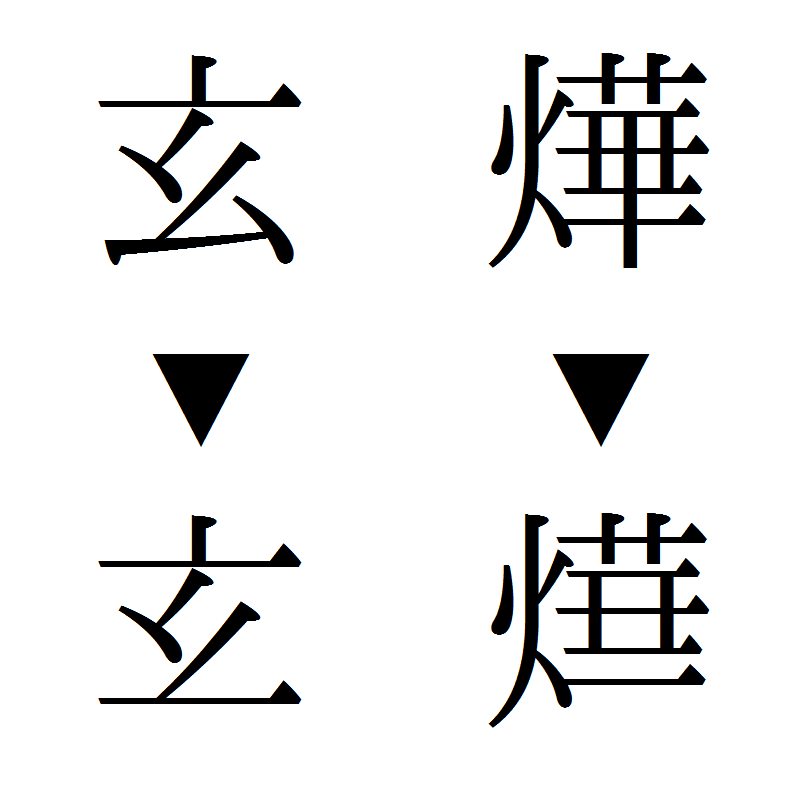 🇨🇳 China and 2 moreNaming taboo避諱
A cultural rule against speaking or writing the names of rulers and ancestors in East AsiaBelief · Protection Historical
🇨🇳 China and 2 moreNaming taboo避諱
A cultural rule against speaking or writing the names of rulers and ancestors in East AsiaBelief · Protection Historical
Related elsewhere
All figure 🇫🇷 FranceHoly GrailSaint Graal
A cup or stone from Arthurian tales that grants healing and eternal lifeFigure · Healing · Luck and prosperity Legendary
🇫🇷 FranceHoly GrailSaint Graal
A cup or stone from Arthurian tales that grants healing and eternal lifeFigure · Healing · Luck and prosperity Legendary
 🇮🇹 Italy and 5 morePrecious coral
A marine skeleton harvested for jewelry and worn as a protective charm in several culturesSubstance · Protection · Healing Living
🇮🇹 Italy and 5 morePrecious coral
A marine skeleton harvested for jewelry and worn as a protective charm in several culturesSubstance · Protection · Healing Living
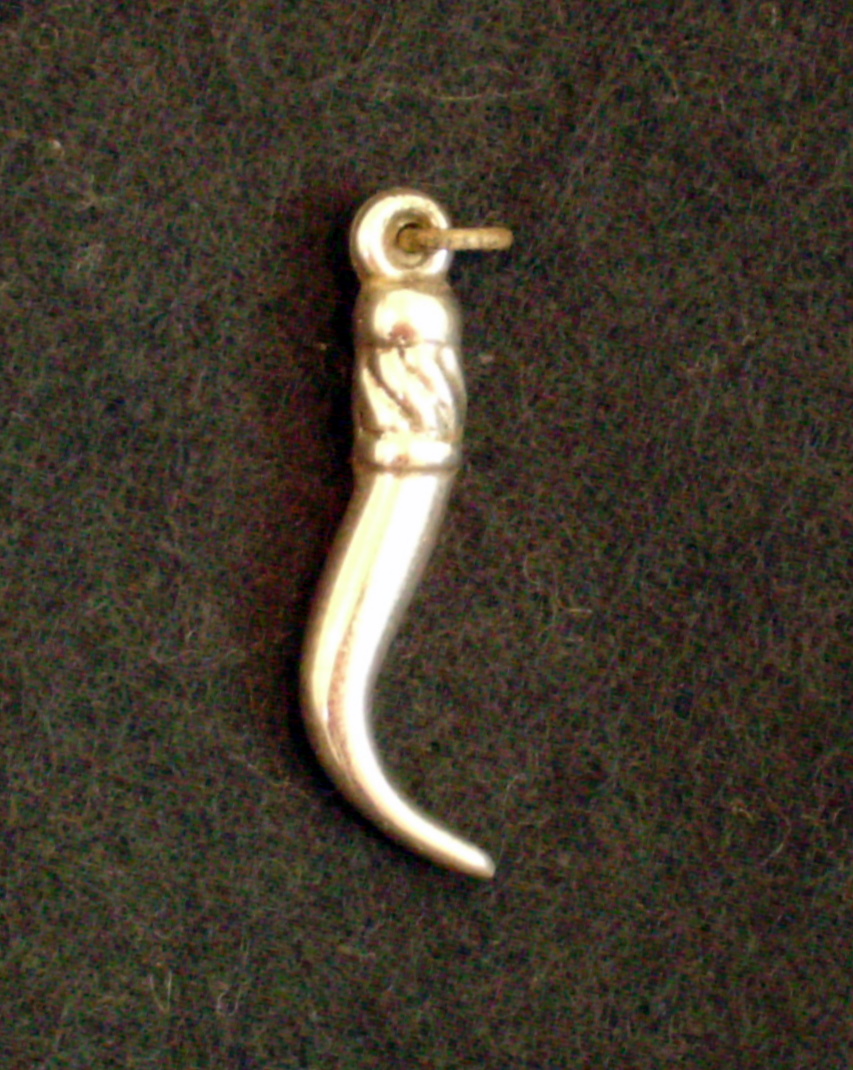 🇮🇹 ItalyCornicello
A twisted horn charm worn in Italy to ward off the evil eye and invite luck.Charm · Protection · Luck and prosperity Living
🇮🇹 ItalyCornicello
A twisted horn charm worn in Italy to ward off the evil eye and invite luck.Charm · Protection · Luck and prosperity Living
 🇪🇬 Egypt and 2 moreIsisꜣst (Egyptian)
Egyptian goddess of magic, mourning and kingship, mother of HorusBeing · Protection · Healing Historical
🇪🇬 Egypt and 2 moreIsisꜣst (Egyptian)
Egyptian goddess of magic, mourning and kingship, mother of HorusBeing · Protection · Healing Historical