Protection
Warding off the evil eye, spirits, illness and bad luck: amulets, wards and thresholds.
Protection is the most widespread aim of magic. People hang, wear, bury, burn and recite things to keep out the evil eye, harmful spirits, illness and bad luck. The blue nazar, the hamsa, the horseshoe, the red thread, the Japanese omamori and the Ethiopian protective scroll all serve it. This page covers what is guarded, who is thought to need guarding, and how different societies see the practice. It is a good place to start with the subject.
What is guarded
The most guarded are the vulnerable and the valued: newborns, brides, pregnant women, livestock, new houses and travellers. Doorways, windows and crossroads get special care, since they are where inside meets outside. Practices include hanging a lemon and chillies in India, a horseshoe in Britain and Ireland, an eye-bead in Turkey, a mezuzah on Jewish doorposts and a spirit house in Thailand. Beyond doors, people protect journeys, wells, boats and herds, and the guarded thing is usually whatever the family can least afford to lose.
Against what
The danger named varies. In the Middle East and Mediterranean it is the evil eye, a harm said to come from envy or praise. In sub-Saharan Africa it is often witchcraft or a rival's sorcery. In Europe it was witches, fairies and the devil, and in East Asia hungry ghosts and ill-fortune. Protective practice therefore tells a researcher what a community fears and who it suspects. Some marks are drawn in chalk, paint or henna and renewed each year, and others are made once and left to fade.
Faith and the objects
Religions deal with protective objects in different ways. Many Muslim scholars accept verses of the Quran recited for protection and disapprove of beads or knots believed to work by themselves. Catholic Christians use blessed medals, holy water and the sign of the cross. Sikhism rejects talismans, while Buddhist monks bless protective threads and tattoos in Thailand and Cambodia. Official teaching often differs from practice in the village, where one household may wear a charm quietly and say a prayer at the same time.
Scholars and the market
Psychologists suggest protective objects ease anxiety and give a sense of control. Sceptics note that no test has shown them to prevent harm. Commerce is large: charms are mass-produced, and some sellers charge heavily for items promised to ward off disaster. Anyone in real danger or illness should turn to practical help first. Believers usually say the protection is a matter of trust and care, and many say the object matters less than the intention and the community that stands behind it.
Protection on EveryJaadu
The entries written up so far, best known first.
 🇯🇵 JapanAbe no Seimei安倍 晴明
A historical court official turned legendary Japanese onmyōji and folk heroFigure · Protection · Seeing and foretelling Legendary
 🇮🇳 India and 1 moreYoginiयोगिनी
A female master of yoga and tantra, or a fierce goddess aspect worshipped in open-air shrines.Tradition · Power and authority · Protection Historical
 🇸🇳 Senegal and 5 moreMaraboutmurābiṭ
A Muslim religious leader and teacher in West Africa, often linked to Sufi brotherhoods.Tradition · Protection · Speaking with spirits and the dead Living
 🇫🇷 FranceLady of the LakeDame du Lac
A water spirit who raises knights and captures wizards in Arthurian talesFigure · Protection · Cursing and harm Legendary
 🇨🇳 ChinaTaotie饕餮
A zoomorphic mask on ancient Chinese bronzes and a mythological creature of gluttonyFigure · Protection · Cursing and harm Legendary
 🇺🇸 United States and 1 moreMarie Laveau
A New Orleans priestess and herbalist who led Louisiana Voodoo in the nineteenth centuryTradition · Healing · Protection Historical
 🇲🇽 MexicoNagualnāhualli
A Mesoamerican belief in humans who shapeshift into animal counterparts.Belief · Power and authority · Cursing and harm Living
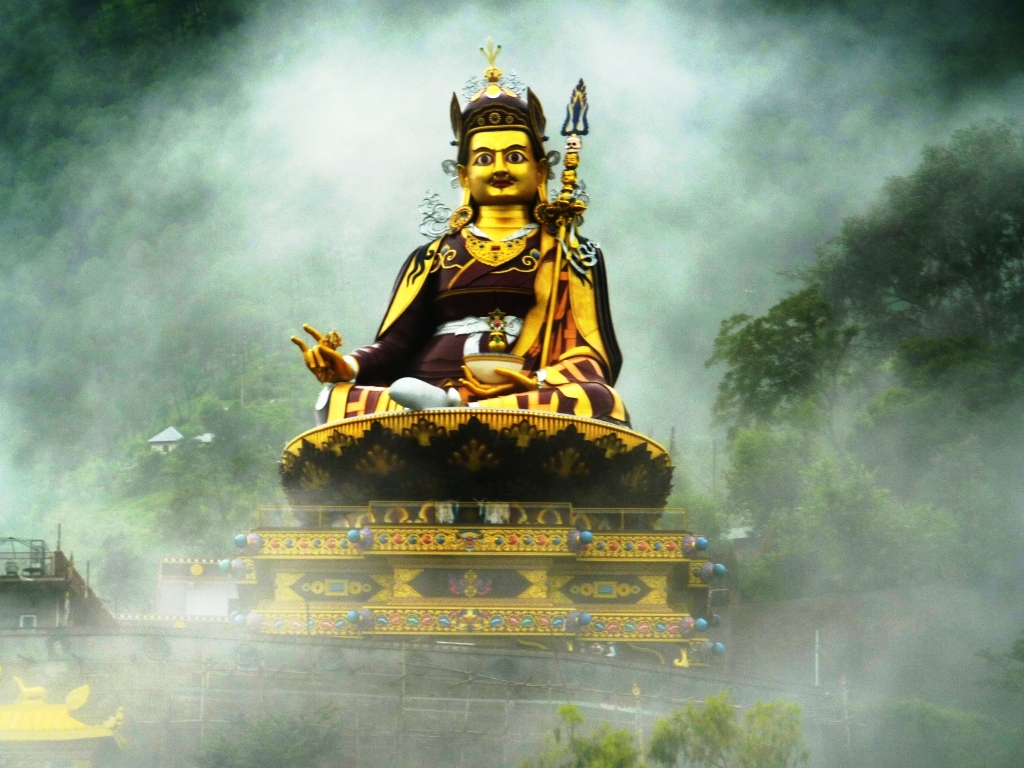 🇮🇳 India and 2 morePadmasambhavaཔདྨ་འབྱུང་གནས།
A tantric master credited with establishing Buddhism in Tibet and founding the Nyingma school.Figure · Protection · Power and authority Living
 🇨🇳 ChinaPixiu貔貅
A winged Chinese creature that guards wealth and wards off evil spiritsFigure · Protection · Luck and prosperity Living
 🇨🇳 China and 2 moreEight Immortals八仙
Eight legendary Taoist figures of China, each with a power and a vesselFigure · Protection · Healing Living
 🇯🇵 JapanEn no Gyōja役小角
A legendary Japanese ascetic and founder of Shugendō mountain practiceFigure · Power and authority · Protection Historical
 🇷🇺 Russia and 4 moreBaba Yaga
A complex Slavic witch figure who lives in a moving hut and flies in a mortar.Figure · Cursing and harm · Protection Legendary
 🇨🇳 China and 1 moreDongyue Dadi東嶽大帝
The Chinese mountain god of Mount Tai who rules lifespans and underworld recordsBeing · Speaking with spirits and the dead · Power and authority Living
 🇨🇱 Chile and 1 moreMachi
Mapuche spiritual authorities and healers who bridge herbal knowledge and spirit realmsTradition · Healing · Speaking with spirits and the dead Living
🇷🇺 RussiaMagic tablecloth
A cloth that produces food and meals when spread out in fairy talesFigure · Luck and prosperity · Protection Legendary
 🇷🇸 Serbia and 5 moreWolves in folklore, religion and mythology
A global survey of how cultures view the wolf as symbol, spirit or threatBelief · Power and authority · Cursing and harm Historical
 🇺🇸 United States and 1 moreSpider GrandmotherKokyangwuti
An ancestral spirit and creator who guides mortals, protects homes, and teaches weavingFigure · Protection · Healing Legendary
 🇷🇺 Russia and 12 moreOgnyena MariaОгнена Марија
A Slavic fire goddess linked to lightning, rain, and seasonal fire bansFigure · Protection · Healing Living
 🇪🇪 EstoniaThe Dragon of the NorthPõhja konn
A legendary frog-like monster from Estonian folklore, later reimagined as a cultural guardian.Figure · Cursing and harm · Protection Legendary
🇦🇷 Argentina and 1 moreSan Baltasar
A folk saint of African origin, honoured in Argentina with drums and dance on 6 JanuaryFigure · Protection · Speaking with spirits and the dead Living
 🇮🇳 India and 1 moreIravanஅரவான்
A Hindu deity worshipped as a severed head for healing and protectionFigure · Healing · Protection Living
 🇮🇳 IndiaJakh Botera
Seventy-two horsemen deities honoured in Kutch, IndiaBeing · Protection · Healing Living
 🇮🇳 IndiaPulimaranja Thondachan
A theyyam deity of North Malabar, born from a shapeshifter who became a leopard.Figure · Protection · Power and authority Living
 🇵🇰 PakistanPir Pithoro
A Sufi saint revered by the Meghwar community in Sindh, Pakistan.Figure · Protection Living
🇬🇧 United KingdomJoan the Wad
A Cornish pixie queen linked to fire and fortuneFigure · Luck and prosperity · Protection Legendary
🇮🇳 India and 1 moreRani Bhatiyani
A Rajput princess said to have become a guardian goddess of Rajasthan and SindhBeing · Protection · Speaking with spirits and the dead Living
🇫🇷 FranceTempestarii
Medieval figures accused of controlling storms and the beliefs surrounding them.Belief · Cursing and harm · Protection Historical
 🇮🇷 Iran and 5 moreKhidrالخضر
A Qur'anic guide and saint believed to hold hidden wisdom and aid those in need.Being · Seeing and foretelling · Power and authority Living
 🇳🇵 NepalLakheyलाखे (Lākhe)
A masked demon figure from Newar folklore, performed in festivals across Nepal.Figure · Protection · Wonder and entertainment Living
 🇨🇳 China and 1 moreFangxiangshi方相氏
An official Chinese exorcist who cleared demons from houses and tombsRite · Protection · Cleansing and purification Living
 🇯🇵 JapanMomiji Legend紅葉伝説
A Japanese tale of a demoness defeated by a warrior on Mount TogakushiFigure · Cursing and harm · Protection Historical
🇮🇪 IrelandGoibniuGaibhne
The smith of Irish myth who forged weapons and a silver armBeing · Protection · Healing Legendary
🇸🇻 El SalvadorChasca
A spirit of the water in Salvadoran folklore who blesses respectful fishermenFigure · Protection · Luck and prosperity Living
 🇯🇵 Japan and 4 moreKṣitigarbhaक्षितिगर्भ
A bodhisattva vowed to empty the hells and guard children, shown with a staff and jewel.Being · Protection · Speaking with spirits and the dead Living
🇯🇵 JapanHashihime橋姫
A Japanese bridge spirit linked to jealousy and demonic transformation in folklore and Noh theatre.Being · Protection · Cursing and harm Historical
 🇫🇷 FranceLou DrapéLo drapet
A legendary white horse from southern France that abducts wandering children.Figure · Cursing and harm · Protection Historical
🇬🇧 United KingdomNine sorceressesnaw chwaer
A group of nine magical women in Welsh and Arthurian legendFigure · Cursing and harm · Protection Historical
 🇮🇶 IraqWinged genie
Winged guardians of Assyrian palace walls, read as the apkallu sagesBeing · Protection · Luck and prosperity Legendary
 🇩🇪 Germany and 1 moreNis PukNiß Puk
A legendary household spirit from Northern Germany and Denmark that helps or torments its owner.Being · Luck and prosperity · Protection Legendary
 🇫🇮 Finland and 2 moreTietäjä
A traditional Finnic healer and sage whose power came from memorised spells and deep knowledge.Figure · Healing · Protection Historical
🇧🇷 BrazilMãe-do-Ouro
A Brazilian spirit that appears as a woman or fireball to mark forbidden gold sitesFigure · Protection Legendary
 🇦🇹 Austria and 3 moreSalige Frau
A blissful Alpine spirit who guides farmers and guards mountain gameFigure · Protection · Healing Legendary
 🇩🇪 GermanyLohengrin
A Grail knight who arrives by swan boat and forbids one questionFigure · Protection Legendary
🇮🇷 Iran and 1 moreBabr-e Bayanبَبْرِ بَیان
A legendary armor worn by the Iranian hero Rostam, said to be made from a dragon's skin.Figure · Protection · Power and authority Legendary
 🇮🇪 IrelandBoannBoand
Irish goddess of the River Boyne, mother of Aengus in the old talesFigure · Protection Legendary
 🇻🇳 VietnamNghêNghê (猊)
A mythical guardian creature in Vietnamese architecture and art, blending lion and dog traitsFigure · Protection Historical
🇺🇸 United StatesTsul 'KaluᏧᏓᎦᎳ
A Cherokee hunting deity and legendary giant of the Appalachian mountainsFigure · Cursing and harm · Protection Legendary
Photo credits on this page
The small pictures above come from Wikimedia Commons under free licences. Some are cropped to fit.
- Wolves in folklore, religion and mythology: Unknown author, CC0, source
- Kṣitigarbha: སངས་རྒྱས་བཅོམ་ལྡན་འདས།, Public domain, source
- Marie Laveau: E. W. Kemble, Public domain, source
- Abe no Seimei: Unknown author, Public domain, source
- Lou Drapé: Morburre, CC BY-SA 3.0, source
- Dongyue Dadi: H2v5o68z, CC0, source
- Taotie: anonymous, CC0, source
- Winged genie: James Spurrier, CC BY-SA 2.0, source
- Nis Puk: R2D3LA, CC BY-SA 4.0, source
- Ognyena Maria: Unknown author, Public domain, source
- Tietäjä: Robert Wilhelm Ekman, Public domain, source
- Salige Frau: various, Public domain, source
- Lohengrin: Gaston Bussière, Public domain, source
- Boann: Yvonne Ní Mhuiregán, CC BY-SA 4.0, source
- Yogini: Soumendra Barik, CC BY-SA 3.0, source
- Marabout: Jan Broekhuijse, CC BY-SA 3.0, source
- Nghê: Phương Huy, CC BY-SA 4.0, source
- The Dragon of the North: Ivo Kruusamägi, CC BY-SA 4.0, source
- Spider Grandmother: Navajo artist, Public domain, source
- Baba Yaga: Ivan Bilibin, Public domain, source
- Nagual: Unknown author, Public domain, source
- Iravan: Chainwit., CC BY-SA 4.0, source
- Jakh Botera: Nizil Shah and Bhavya Shah, CC BY-SA 4.0, source
- Pulimaranja Thondachan: Uajith, CC BY-SA 4.0, source
- Pir Pithoro: Missbaloch, CC BY-SA 4.0, source
- Pixiu: Sol lc, CC BY-SA 4.0, source
- Eight Immortals: Fanghong, CC BY-SA 3.0, source
- En no Gyōja: Wmpearl, CC0, source
- Khidr: Unknown author, Public domain, source
- Machi: Unknown author, Public domain, source
- Lady of the Lake: Internet Archive Book Images, No restrictions, source
- Lakhey: Less than 3, CC BY 2.0, source
- Fangxiangshi: Gary Todd, CC0, source
- Momiji Legend: Tengoro, CC BY-SA 3.0, source
- Padmasambhava: John Hill, CC BY-SA 3.0, source