
Nghê
In its own language: Nghê (猊)
From Sino-Vietnamese toan nghê, meaning lion, possibly loaned from Central Asian languages
A mythical guardian creature in Vietnamese architecture and art, blending lion and dog traits
The Nghê is a mythical animal from Vietnamese culture, depicted as a hybrid of a lion and a dog. It serves as a protective mascot for communal temples, pagodas, and imperial structures across Vietnam.
- Derived from Sino-Vietnamese toan nghê, meaning lion
- Hybrid of lion and dog, common in Vietnamese architecture
- Found at village gates, temples, and imperial sites
- Elaborate carvings include flames, feathers, and clouds
- Depicted in stone, ceramic, and colored enamelware
What it is
The Nghê is a mythical figure in Vietnamese culture, described as a combination of a lion and a dog. It is commonly placed as a mascot in front of communal temples, pagodas, and shrines throughout Vietnam. The creature serves as a symbolic guardian, reflecting both foreign influences and local artistic traditions.
Where it comes from
The word derives from the Sino-Vietnamese term toan nghê, meaning lion. This term may have been borrowed from Central Asian languages. Like Chinese guardian lions, the Nghê evolved stylistically because lions are not native to Vietnam. Artists incorporated features of local animals, particularly dogs, into its depiction over time.
How it is done
In rural areas, stone statues of the Nghê are often found at village gates or communal temple entrances. Individual homes may display smaller stone or ceramic figures. At the Imperial City of Huế, grander pairs of stone Nghê guard specific gates and temples, featuring elaborate carvings such as twisted feathers, flames on legs, and cloud motifs.
Tools and materials
The Nghê appears in various materials including stone, ceramic, clay, and enamel. Artifacts include lampstands, wine vessels, jars, and altar lids. Common colors in enamelware are ivory white, moss green, blue, and brown. Decorative elements often include clouds, lotus flowers, tigers, and dragons.
Nghê, drawn and placed
- Living
- Revived
- Fading
- Historical
- Legendary
- Performed
- Lineage
- Vietnamese mythology
What it is for
The primary purpose of the Nghê is protection. It stands guard at sacred sites, village entrances, and imperial halls. In the Nguyễn dynasty, Nghê figures were placed under imperial thrones in Thái Hòa Hall, symbolizing authority and state ceremonial significance.
Who does it
The Nghê is studied by scholars of Vietnamese history and art. It is not a living practice performed by specific ritual specialists but rather a subject of archaeological and historical analysis. Artisans historically crafted these figures for architectural and decorative purposes.
Peoples and places
The Nghê is central to Vietnamese cultural identity. While it shares origins with Chinese guardian lions, it has developed distinct Vietnamese characteristics. Variations exist between northern Red River Delta village styles and the more ornate imperial versions found in Huế.
At a glance: who, where and when


What people believe
As a mythical figure, the Nghê represents a blend of power and local adaptation. It is believed to ward off negative influences through its presence at entry points of significant buildings. Its hybrid nature reflects the integration of external mythological concepts into indigenous Vietnamese aesthetics.
How scholars and sceptics see it
Researchers examine Nghê artifacts in museums such as the Guimet Museum in Paris and the Vietnam History Museum in Hanoi. Studies focus on dating techniques, such as identifying reign periods like Vĩnh Hựu or Gia Long through inscriptions and stylistic analysis of enamel cracks and forms.
Compare and confuse
The Nghê is related to other Asian guardian figures such as Chinese guardian lions, Japanese Komainu, Burmese Chinthe, and Korean Nio. Unlike some counterparts, the Vietnamese Nghê distinctly incorporates canine features due to the absence of native lions.
Questions people ask about Nghê
What is a Nghê?
A Nghê is a mythical animal in Vietnamese culture, depicted as a combination of a lion and a dog. It serves as a protective figure for temples, shrines, and imperial structures.
Where does the name come from?
The name comes from the Sino-Vietnamese term toan nghê, meaning lion. It may have been loaned from Central Asian languages before being adapted into Vietnamese tradition.
Why does it look different from a real lion?
Since lions are not indigenous to Vietnam, artists incorporated features of local animals, especially dogs, into the Nghê's depiction over time, creating a unique stylistic evolution.
Where can I see Nghê statues?
Stone Nghê statues are found at village gates, communal temples, and the Imperial City of Huế. Enamel and ceramic examples are held in museums like the Vietnam History Museum.
Good reading and sources
- Nghê on WikipediaEncyclopedia
- More photos on Wikimedia CommonsPhotos and video
- Wikidata recordOpen data
The facts on this page come from the Wikipedia article "Nghê", written by its contributors and used under the CC BY-SA 4.0 licence, and from its Wikidata record (CC0). EveryJaadu rewrote the text in its own words, with AI assistance, and compares every page with the article to make sure no passage is copied. It may be reused under the same CC BY-SA 4.0 licence with a link back.
It may contain mistakes. Names and customs differ from one community to the next, and some knowledge is closed to outsiders and left out here. This page describes belief and practice. It does not say that any of it works, it is not a how-to, and it is not medical advice. If something is wrong, tell us. Last refreshed 2026-10-07.
More from Vietnam
All the entries from Vietnam 🇹🇭 Thailand and 7 moreSpirit house
A small roofed shrine that shelters a place's protective spiritCharm · Protection Living
🇹🇭 Thailand and 7 moreSpirit house
A small roofed shrine that shelters a place's protective spiritCharm · Protection Living
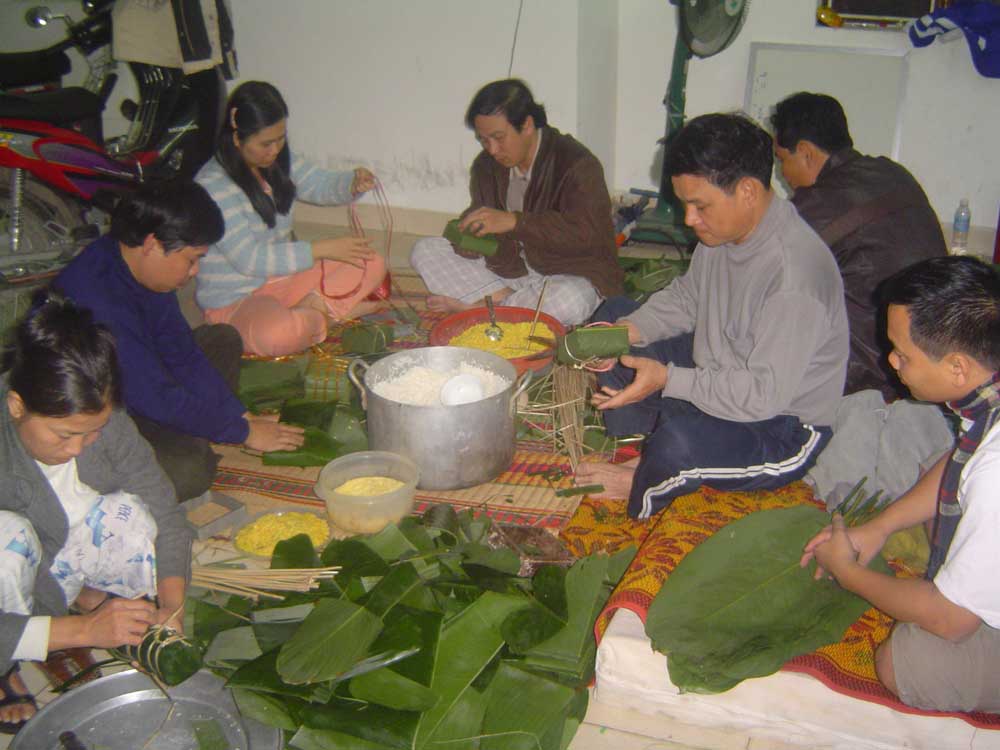 🇻🇳 Vietnam and 5 moreTếtTết Nguyên Đán
The Vietnamese lunisolar new year and the most important annual celebration in VietnamTradition · Luck and prosperity · Speaking with spirits and the dead Living
🇻🇳 Vietnam and 5 moreTếtTết Nguyên Đán
The Vietnamese lunisolar new year and the most important annual celebration in VietnamTradition · Luck and prosperity · Speaking with spirits and the dead Living
 🇲🇾 Malaysia and 5 morePenanggalan
A floating head with trailing organs from Malay folklore, said to hunt pregnant women and newborns.Being · Cursing and harm Legendary
🇲🇾 Malaysia and 5 morePenanggalan
A floating head with trailing organs from Malay folklore, said to hunt pregnant women and newborns.Being · Cursing and harm Legendary
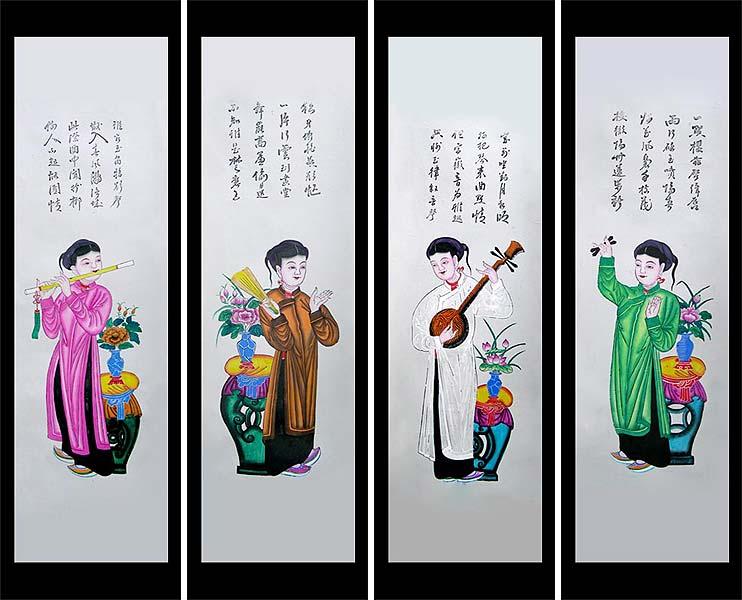 🇻🇳 Vietnam and 1 moreVietnamese folk religiontín ngưỡng dân gian Việt Nam
A collection of local spirit worship and ancestral veneration in VietnamTradition · Protection · Healing Living
🇻🇳 Vietnam and 1 moreVietnamese folk religiontín ngưỡng dân gian Việt Nam
A collection of local spirit worship and ancestral veneration in VietnamTradition · Protection · Healing Living
Related elsewhere
All figure 🇪🇬 Egypt and 1 moreSphinx
A mythical hybrid with a human head and lion body, serving as guardian or riddler in Egyptian and Greek traditions.Being · Protection · Wonder and entertainment Legendary
🇪🇬 Egypt and 1 moreSphinx
A mythical hybrid with a human head and lion body, serving as guardian or riddler in Egyptian and Greek traditions.Being · Protection · Wonder and entertainment Legendary
 🇧🇪 Belgium and 2 moreHorseshoe
A metal shoe for a horse's hoof and a talisman of good fortuneCharm · Protection · Luck and prosperity Living
🇧🇪 Belgium and 2 moreHorseshoe
A metal shoe for a horse's hoof and a talisman of good fortuneCharm · Protection · Luck and prosperity Living
 🇪🇬 Egypt and 3 moreAmulet
A portable object worn or carried to ward off harm and invite fortuneCharm · Protection · Luck and prosperity Living
🇪🇬 Egypt and 3 moreAmulet
A portable object worn or carried to ward off harm and invite fortuneCharm · Protection · Luck and prosperity Living
 🇹🇷 Turkey and 5 moreEvil eye
A curse believed to be cast by a jealous glare and the charms used to stop itBelief · Protection Living
🇹🇷 Turkey and 5 moreEvil eye
A curse believed to be cast by a jealous glare and the charms used to stop itBelief · Protection Living