
Ognyena Maria
In its own language: Огнена Марија
from Slavic words meaning Fiery Mary
A Slavic fire goddess linked to lightning, rain, and seasonal fire bans
Ognyena Maria is a fire deity in Slavic mythology, often viewed as the sister of the thunder god Perun or Saint Elijah. She originates from a blending of Christian figures like the Virgin Mary and Margaret the Virgin with older pagan traditions.
- Ognyena Maria means Fiery Mary in Slavic languages
- She is the sister of thunder god Perun or Saint Elijah
- Feast day is July 17 on the Julian calendar
- Bulgarians extinguish all fires for three days in her honor
- Lightning on her day predicts rain for Ukrainian farmers
What it is
Ognyena Maria, or Fiery Mary, is a figure in Slavic mythology associated with fire and lightning. She is typically described as the sister and assistant of Perun, the thunder god, or sometimes as the sister of Saint Elijah. Her identity blends elements of the Virgin Mary and Margaret the Virgin, who were both regarded in some traditions as sisters of Saint Elias. She appears across southern and eastern Slavic cultures, where she is linked to rain, the sea, and azure flashes of lightning. In some regions, she is known as Marina Lazorevaya, connecting her to blue lightning effects.
Where it comes from
The figure of Ognyena Maria emerged from the conflation of Christian saints with pre-Christian Slavic deities. She is derived from Margaret the Virgin and the Virgin Mary, both of whom were considered sisters of Saint Elias in certain folk traditions. This blending allowed older nature spirits to persist under Christian names. The association with fire and lightning suggests roots in earlier storm god mythology, particularly linked to Perun, the chief deity of the Slavic pantheon.
How it is done
Practitioners observe specific days in the summer calendar to honor Ognyena Maria. On her feast day, which falls around July 17 on the Julian calendar (late July), people avoid housework to prevent accidental fires. In Bulgaria, all fires are extinguished at the start of the Goreshtnitsi festival and relit later to celebrate her power. People also avoid using ropes or threads, believing snakes hide in the underworld during this time. In Russia, individuals use crosses, garlic, and wormwood to ward off mermaids before Trinity Week.
Tools and materials
The figure is associated with natural elements like fire, lightning, and water. Tools mentioned include ropes and threads, which are avoided on her feast days due to their connection to snakes. Protective items such as crosses, garlic, and wormwood are used against aquatic spirits. Lightning serves as both a symbol of her brother’s power and an omen for rain or blindness, depending on the region.
Ognyena Maria, drawn and placed
- Living
- Revived
- Fading
- Historical
- Legendary
- Performed
- Lineage
- Slavic folk calendar
- Timing
- summer festivals and daily weather observation
What it is for
People pray to Ognyena Maria for healing from ailments, as seen in Belarusian traditions where health is requested through specific verses. Farmers watch for lightning on her day to predict rain for crops. Families celebrating her as their Slava believe they will receive abundant harvests. The fire bans aim to protect households from destructive flames, reflecting a belief that disobedience invites disaster.
Who does it
The practice involves ordinary households observing folk calendar rules. No specialized priesthood is mentioned; instead, community members follow taboos related to work, fire, and water. In Serbia and Bosnia, families with Ognyena Maria as their Slava name day perform required celebratory work while others refrain from labor. Gender roles are not explicitly detailed, but the practices involve general household management and agricultural concerns.
Peoples and places
Ognyena Maria is recognized across multiple Slavic nations. In Bulgaria, she prevents fires and is linked to the Goreshtnitsi festival. Russians view her as a sea king’s daughter who fled land, associating her with Trinity Week. Ukrainians read lightning as a sign of divine rain. Belarussians seek healing through her. Serbs and Bosnian Serbs classify her among fiery saints alongside Saint Elijah, enforcing strict work bans to avoid crop destruction.
At a glance: who, where and when
Who does it
Belief worlds
Occasions

What people believe
The worldview places Ognyena Maria within a dualistic framework of fire and water, controlled by sibling deities. She hides from Saint Elijah to limit his destructive thunder. Lightning is seen as either a blessing for rain or a curse causing blindness. Snakes are believed to retreat underground during her feast, making ropes taboo. Mermaids drown swimmers near Trinity Week, requiring magical protection. These beliefs reflect a deep engagement with seasonal weather patterns and natural dangers.
When it is done
Her main feast occurs on July 17 (Julian) or late July. In Bulgaria, celebrations span July 15–22, culminating in the Goreshtnitsi festival (July 28–30). Trinity Week, also called Rusalka Week, coincides with her birthday in Russia. St. Elias’ Day is another key date, linked to thunder and her avoidance of him. These dates align with mid-summer heat, when fire risks are highest and rains are needed for crops.
Questions people ask about Ognyena Maria
Who is Ognyena Maria?
She is a fire goddess in Slavic mythology, often seen as the sister of the thunder god Perun or Saint Elijah. Her name translates to Fiery Mary.
Where does the tradition come from?
It originates in Slavic folk religion, blending pre-Christian storm deities with Christian figures like the Virgin Mary and Margaret the Virgin.
What happens on her feast day?
People avoid housework and fire-making to prevent disasters. In Bulgaria, fires are extinguished and relit to honor her power over flames.
Why are ropes forbidden?
On her feast days, snakes are believed to hide in the underworld. Using ropes or threads might accidentally trap or harm them, inviting bad luck.
Good reading and sources
- Ognyena Maria on WikipediaEncyclopedia
- More photos on Wikimedia CommonsPhotos and video
- Wikidata recordOpen data
The facts on this page come from the Wikipedia article "Ognyena Maria", written by its contributors and used under the CC BY-SA 4.0 licence, and from its Wikidata record (CC0). EveryJaadu rewrote the text in its own words, with AI assistance, and compares every page with the article to make sure no passage is copied. It may be reused under the same CC BY-SA 4.0 licence with a link back.
It may contain mistakes. Names and customs differ from one community to the next, and some knowledge is closed to outsiders and left out here. This page describes belief and practice. It does not say that any of it works, it is not a how-to, and it is not medical advice. If something is wrong, tell us. Last refreshed 2026-10-06.
More from Russia
All the entries from Russia 🇷🇸 Serbia and 5 moreVampire
An undead creature from folklore that feeds on the blood or life force of the livingBeing · Cursing and harm · Luck and prosperity Legendary
🇷🇸 Serbia and 5 moreVampire
An undead creature from folklore that feeds on the blood or life force of the livingBeing · Cursing and harm · Luck and prosperity Legendary
 🇷🇺 Russia and 3 moreFirebird
A glowing bird of Slavic folklore that brings both fortune and peril to those who seek itFigure · Wonder and entertainment · Luck and prosperity Legendary
🇷🇺 Russia and 3 moreFirebird
A glowing bird of Slavic folklore that brings both fortune and peril to those who seek itFigure · Wonder and entertainment · Luck and prosperity Legendary
 🇷🇺 Russia and 5 moreBaba YagaБаба Яга
A Slavic witch who lives in a turning hut and flies in a mortarFigure · Cursing and harm · Protection Legendary
🇷🇺 Russia and 5 moreBaba YagaБаба Яга
A Slavic witch who lives in a turning hut and flies in a mortarFigure · Cursing and harm · Protection Legendary
 🇷🇺 RussiaGolden apple
A mythical fruit that sparks quests, wars, and linguistic confusion across culturesFigure · Cursing and harm · Luck and prosperity Legendary
🇷🇺 RussiaGolden apple
A mythical fruit that sparks quests, wars, and linguistic confusion across culturesFigure · Cursing and harm · Luck and prosperity Legendary
Related elsewhere
All figure 🇨🇺 Cuba and 2 moreSanteríaRegla de Ocha
An Afro-Cuban religion blending Yoruba beliefs with Catholicism and SpiritismTradition · Protection · Healing Living
🇨🇺 Cuba and 2 moreSanteríaRegla de Ocha
An Afro-Cuban religion blending Yoruba beliefs with Catholicism and SpiritismTradition · Protection · Healing Living
 🇨🇳 China and 1 moreBagua八卦
A set of eight trigram symbols from China used in divination, cosmology, and feng shui.Tradition · Seeing and foretelling · Protection Living
🇨🇳 China and 1 moreBagua八卦
A set of eight trigram symbols from China used in divination, cosmology, and feng shui.Tradition · Seeing and foretelling · Protection Living
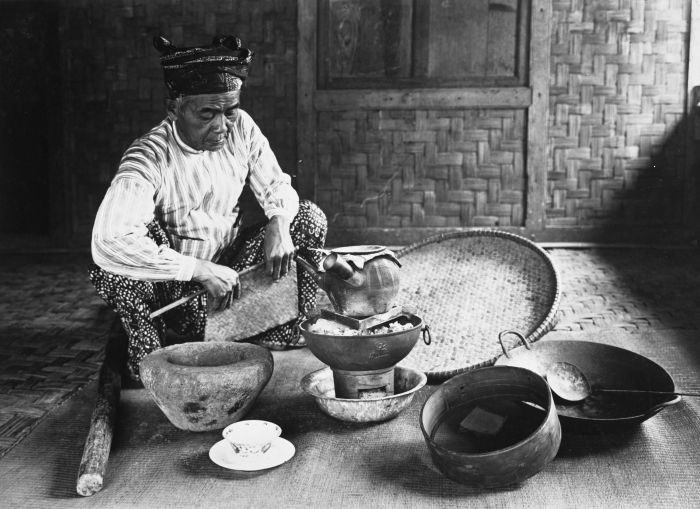 🇮🇩 Indonesia and 2 moreDukun
A traditional healer and spirit medium in Indonesian folk practiceTradition · Healing · Seeing and foretelling Living
🇮🇩 Indonesia and 2 moreDukun
A traditional healer and spirit medium in Indonesian folk practiceTradition · Healing · Seeing and foretelling Living
 🇺🇸 United StatesKahuna
A Hawaiian expert or priest, keeper of hidden knowledge in craft and spiritTradition · Healing · Seeing and foretelling Living
🇺🇸 United StatesKahuna
A Hawaiian expert or priest, keeper of hidden knowledge in craft and spiritTradition · Healing · Seeing and foretelling Living