Luck and prosperity
Charms for fortune, success, a good harvest and a safe journey.
Luck magic aims at fortune, success, wealth and a safe passage. People keep lucky charms, perform money rites, pour offerings to a god of wealth, and avoid unlucky days. Examples include the Chinese lucky cat and the red packet, the Japanese daruma doll, the Indian worship of Lakshmi at Diwali, the European four-leaf clover and horseshoe, and the Hoodoo mojo bag. This page looks at what luck means and who profits from it.
Ideas of luck
Cultures differ on what luck is. In China, fortune is tied to fate, timing and the placement of objects, giving rise to feng shui and the choice of lucky numbers. In West Africa, success is linked to a person's destiny and the help of the orisha or ancestors. In Europe, luck came to be seen as chance, with charms to tilt it. Many societies see wealth as shared and fear that good fortune attracts envy. Merchants, farmers, gamblers and students are the usual customers, and the amounts asked of them range from a coin to a lifetime of savings.
Customs
Customs are domestic and mostly small. Merchants in Taiwan and China burn paper offerings and put out fruit at the start of the month. Fishers and sailors keep charms and avoid certain words. Gamblers, students and athletes have habits they will not break. Many rites involve giving something away, since reciprocity is thought to keep fortune moving. Lucky days are often chosen by calendar or astrologer, so that a shop opens, a wedding is held or a journey begins on a favourable date.
Schemes and scams
Luck is easy to sell. Lottery charms, gemstone bracelets and sellers who promise riches for a fee make money from hope. Fraud involving fake spiritualists who say a client's money is cursed and must be handed over is documented in many countries. Playing games of chance with charms may feel harmless, but anyone struggling with gambling should seek real help. Some wealth rites are public and religious, as with Diwali lamps for Lakshmi and the Lunar New Year offerings to the god of wealth, and some are private and quiet.
Scholars and sceptics
Psychologists have found that carrying a lucky charm can raise confidence and performance in some tasks, without changing the odds of chance. Economists study the role of luck in success. Religious authorities differ: some see lucky objects as idolatry, others as harmless custom, and prosperity churches around the world teach a faith-based version of the same hope. Those who struggle with debt or gambling harm should look for practical advice, since a charm does not change the odds or pay the bills.
Luck and prosperity on EveryJaadu
The entries written up so far, best known first.
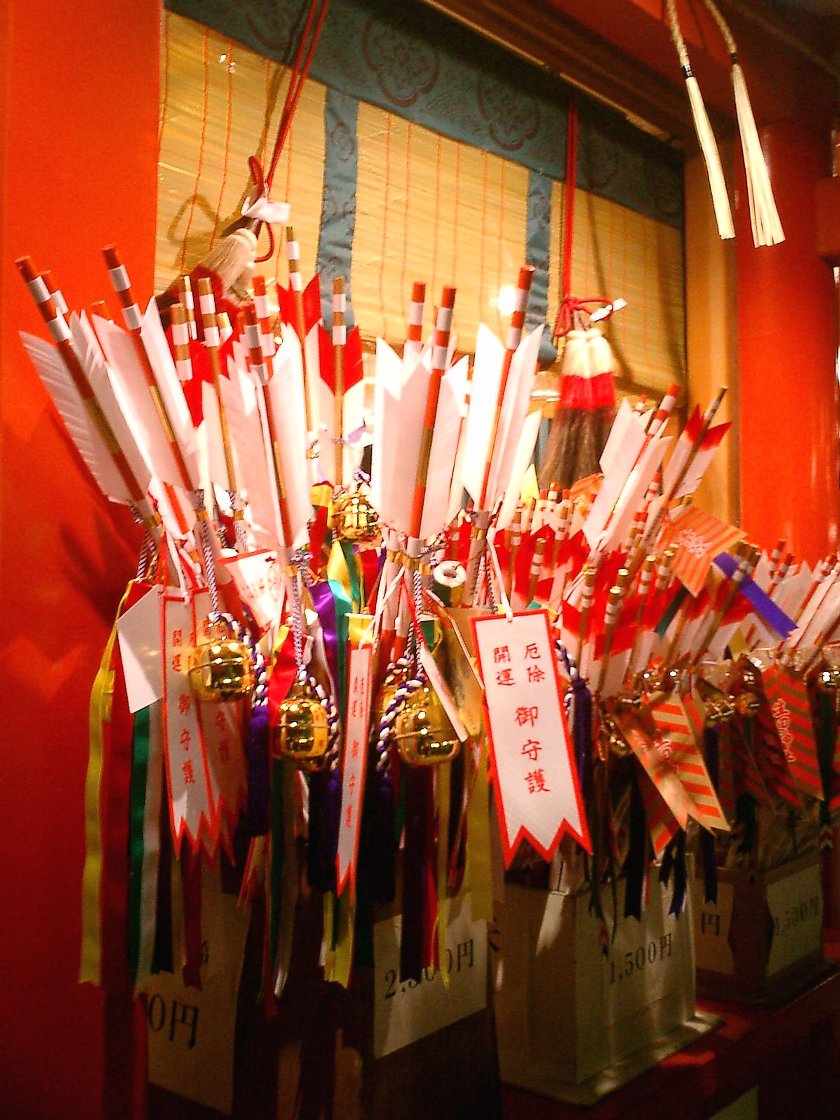 🇯🇵 JapanHamaya破魔矢
A blunt arrow given at shrines to ward off evil and secure good luck for the new yearCharm · Protection · Luck and prosperity Living
 🇹🇭 Thailand and 1 morePalad khikปลัดขิก
A Thai phallic amulet believed to bring luck and protectionCharm · Protection · Luck and prosperity Living
 🇯🇵 JapanFukusuke福助
A kneeling Japanese doll believed to bring wealth and honorCharm · Luck and prosperity · Power and authority Living
 🇪🇬 Egypt and 4 moreScarab
An ancient Egyptian amulet and seal shaped like a dung beetleCharm · Protection · Luck and prosperity Historical
🇮🇩 IndonesiaIndonesian numismatic charmUang Gobog
Coin-like amulets from Indonesia used for protection and ritual offerings.Charm · Protection · Luck and prosperity Living
 🇪🇬 Egypt and 5 moreAmulet
A portable object worn or carried to ward off harm and invite protection.Charm · Protection · Healing Living
 🇹🇭 Thailand and 1 morePra Jiadประเจียด
A Muay Thai armband worn for luck and confidenceCharm · Luck and prosperity · Protection Living
 🇻🇳 Vietnam and 2 moreVietnamese numismatic charmsBùa Việt Nam
Coin-shaped charms used for protection, luck, and ritual in Vietnamese cultureCharm · Protection · Luck and prosperity Historical
 🇨🇳 China and 2 moreBuddhist coin charm佛教品壓勝錢
Amulets shaped like coins that bear Buddhist symbols and prayers for protection.Charm · Protection · Luck and prosperity Historical
🇯🇵 Japan and 2 moreJapanese numismatic charm絵銭
Coin-shaped charms from Japan used for protection, luck, and blessings.Charm · Protection · Luck and prosperity Living
🇨🇳 China and 1 moreZhengde Tongbao正德通寶
A fantasy cash coin used as a Chinese and Vietnamese amulet for luck and protection.Charm · Luck and prosperity · Protection Living
 🇨🇳 China and 1 moreTaoist coin charm道教品壓生錢
Chinese and Vietnamese numismatic charms used for protection and feng shuiCharm · Protection · Cursing and harm Historical
 🇨🇳 China and 1 moreLock charms家锁 / 锁片 (jiā suǒ / suǒ piàn)
A Chinese metal pendant shaped like a lock to protect children from harm and death.Charm · Protection · Luck and prosperity Historical
 🇰🇷 South Korea and 3 moreKorean numismatic charm열쇠패
Coin-shaped objects used as protective and decorative charms in Korean cultureCharm · Protection · Luck and prosperity Historical
 🇨🇳 China and 2 moreChinese burial money瘞錢 (yì qián)
Imitations of currency placed in Chinese graves to serve the deceased in the afterlife.Charm · Protection · Luck and prosperity Historical
 🇨🇳 China and 1 moreHorse coin馬錢 (mǎ qián)
A Chinese numismatic charm depicting horses, used as game pieces or gambling tokensCharm · Luck and prosperity · Wonder and entertainment Historical
🇹🇭 ThailandTakrutตะกรุด
A Thai tubular amulet inscribed with sacred texts for protection and powerCharm · Protection · Luck and prosperity Living
 🇺🇸 United StatesLemon pig
A carved fruit figure made for amusement and later linked to New Year luckCharm · Luck and prosperity Living
🇮🇱 IsraelSegulaסגולה
A Jewish charm or ritual believed to bring protection, healing, or blessings.Charm · Protection · Healing Living
 🇨🇳 China and 1 moreVault protector coin鎮庫錢 (zhèn kù qián)
Large Chinese numismatic charms cast to guard mint treasuries and attract wealth.Charm · Protection · Luck and prosperity Historical
 🇨🇳 China and 3 moreMarriage coin charm夫婦和合花錢
Coin-shaped amulets from East Asia that celebrate marriage, fertility, and conjugal harmonyCharm · Protection · Luck and prosperity Historical
 🇨🇳 China and 1 moreConfucian coin charms
Amulets bearing Confucian moral teachings and historical storiesCharm · Protection · Luck and prosperity Historical
🇬🇧 United KingdomFumsup
A small figurine charm believed to bring good luck, popular in the late 19th and early 20th centuries.Charm · Luck and prosperity Historical
 🇮🇷 Iran and 1 moreDerafsh Kavianiدرفش کاویانی
A legendary royal standard of pre-Islamic Iran, later adopted as a symbol of national identity.Charm · Power and authority · Luck and prosperity Historical
 🇮🇳 India and 2 moreEndless knotདཔལ་བེའུ།
A knotted sign of good fortune in Buddhist, Hindu and Jain artCharm · Luck and prosperity Living
 🇮🇱 Israel and 4 moreChaiחי
A Hebrew word and symbol meaning 'alive', used as an amulet and in Jewish culture.Charm · Protection · Luck and prosperity Living
 🇩🇪 Germany and 1 moreNutcracker doll
A carved wooden figurine of a soldier used to crack nuts and now a popular Christmas decorationCharm · Luck and prosperity Living
 🇪🇬 Egypt and 2 moreAnra scarab
Ancient Egyptian-style seals bearing an undeciphered glyph sequence found across the Levant and Egypt.Charm · Protection · Luck and prosperity Historical
 🇵🇱 PolandLucky JewŻyd z pieniążkiem
A Polish figurine of a Jewish man with a coin, used as a talisman for financial fortune.Charm · Luck and prosperity Living
 🇹🇷 Turkey and 5 moreRelics of Muhammad
Objects linked to Muhammad, kept and venerated for blessingCharm · Luck and prosperity · Power and authority Living
 🇮🇹 ItalyFascinusfascinum
A Roman phallus image and charm, kept to turn away envyBeing · Protection · Luck and prosperity Historical
 🇬🇷 Greece and 1 moreCaduceus
A herald's staff entwined with two serpents and wings, linked to commerce and peace.Charm · Luck and prosperity · Speaking with spirits and the dead Historical
 🇨🇳 China and 1 moreCash coins in feng shui古銅錢的風水
Old Chinese square-holed coins, hung or carried to draw luck and bar harmCharm · Luck and prosperity · Protection Living
 🇨🇳 ChinaDragon turtle龍龜 (Lóngguī)
A Chinese mythic creature with a dragon body and turtle shell, used as a Feng Shui charm.Figure · Luck and prosperity · Power and authority Living
 🇯🇵 JapanOmamori御守/お守り
Japanese amulets from shrines and temples for luck and protectionCharm · Protection · Luck and prosperity Living
 🇹🇭 ThailandPla taphianปลาตะเพียนสาน
A woven palm leaf fish mobile hung as a blessing for health and plentyCharm · Protection · Luck and prosperity Living
 🇪🇬 EgyptMenatmnj.t
A beaded necklace and rattle linked to Hathor for protection and luck in ancient EgyptCharm · Protection · Luck and prosperity Historical
🇷🇴 Romania and 5 moreMărțișor
A red and white string charm worn in early spring to welcome the seasonTradition · Protection · Luck and prosperity Living
 🇬🇧 United Kingdom and 1 moreDried cat
A dried feline body hidden in walls to protect a home from harmCharm · Protection · Luck and prosperity Historical
🇫🇮 Finland and 1 moreFrog coffin
A Finnish folk magic burial of a frog in a tiny coffin to steal luck or reflect harmRite · Protection · Cursing and harm Historical
 🇪🇸 SpainIndalo
A Bronze Age pictograph used as a protective house charm and lucky symbol in Almería, SpainCharm · Protection · Luck and prosperity Living
 🇮🇱 IsraelMatzevahמַצֵּבָה
A standing stone used as a sacred marker or grave monument in ancient and Jewish traditionCharm · Speaking with spirits and the dead · Protection Living
 🇮🇳 India and 5 moreNavaratnaनवरत्न
A nine-gem talisman set in gold or silver, linked to Hindu astrology and planetary worshipCharm · Protection · Healing Living
🇻🇪 VenezuelaDjucu
A warm sea nut used as a lucky charm in the CaribbeanCharm · Luck and prosperity Living
 🇮🇩 IndonesiaTaiganja
A bronze amulet of Central Sulawesi shaped like a keyhole, worn for status and protectionCharm · Protection · Luck and prosperity Living
 🇬🇷 GreeceThyrsusθύρσος
Dionysus's fennel staff, wreathed in ivy and crowned with a pine coneCharm · Love and attraction · Luck and prosperity Historical
 🇯🇵 JapanOkiagari-koboshi起き上がり小法師
A Japanese roly-poly doll that rights itself when knocked overCharm · Luck and prosperity · Power and authority Living
 🇨🇳 China and 3 moreCash方孔錢
A round copper coin with a square hole used in China and East Asia for two millennia.Charm · Luck and prosperity · Speaking with spirits and the dead Living
Photo credits on this page
The small pictures above come from Wikimedia Commons under free licences. Some are cropped to fit.
- Chai: BASWIM, CC BY 3.0, source
- Nutcracker doll: Raul654, CC BY-SA 3.0, source
- Anra scarab: Temerarius, CC BY-SA 4.0, source
- Lemon pig: GenesisNZ, CC0, source
- Vietnamese numismatic charms: Jean-Michel Moullec, CC BY 2.0, source
- Fukusuke: Nesnad, CC BY-SA 3.0, source
- Amulet: Anonymous ( Egypt ) Unknown author, Public domain, source
- Korean numismatic charm: Unknown author(s)., Public domain, source
- Lucky Jew: Silar, CC BY-SA 3.0, source
- Relics of Muhammad: Georges Jansoone ( JoJan, CC BY 3.0, source
- Buddhist coin charm: Scott Semans, CC BY 3.0, source
- Omamori: Leongboy1, Public domain, source
- Fascinus: Vassil, Public domain, source
- Hamaya: Tomomarusan, CC BY 2.5, source
- Lock charms: Scott Semans World Coins (CoinCoin.com)., CC BY 3.0, source
- Caduceus: Providence Painter, Public domain, source
- Cash coins in feng shui: No machine-readable author provided. Galopin~commonswiki assumed (base, CC BY-SA 3.0, source
- Dragon turtle: Jonathan O'Donnell, CC BY 2.0, source
- Pra Jiad: Samy Sana, CC BY-SA 3.0, source
- Chinese burial money: Gary Todd, CC0, source
- Marriage coin charm: Scott Semans, CC BY 3.0, source
- Derafsh Kaviani: CNG Coins, CC BY-SA 3.0, source
- Pla taphian: Mr.Peerapong Prasutr, CC BY-SA 4.0, source
- Menat: Anagoria, CC BY 3.0, source
- Palad khik: deror_avi, CC BY-SA 3.0, source
- Dried cat: The Voice of Hassocks, CC0, source
- Confucian coin charms: Jean-Michel Moullec, CC BY 2.0, source
- Indalo: Ismael Olea, Public domain, source
- Scarab: Rama, CC BY-SA 2.0 fr, source
- Matzevah: Gilslovik, CC BY-SA 4.0, source
- Navaratna: Pradeep717, CC BY-SA 4.0, source
- Taoist coin charm: Etnografiska Museet, CC BY 2.5, source
- Taiganja: sailko, CC BY-SA 3.0, source
- Thyrsus: ArchaiOptix, CC BY-SA 4.0, source
- Okiagari-koboshi: Unknown author, CC BY-SA 3.0, source
- Cash: User 冷玉 on zh.wikipedia, CC BY-SA 3.0, source
- Vault protector coin: 风之清扬, CC BY-SA 3.0, source
- Horse coin: Etnografiska museet, CC BY 2.5, source
- Endless knot: Unknown author, CC BY 4.0, source