
A lemon pig is a lemon carved and decorated to resemble a pig. It began as a parlor trick in the late nineteenth century before becoming a symbol of good fortune for the New Year in parts of the English-speaking world.
- First mentioned in an 1865 American book as a child's amusement
- Carved from a lemon with matchstick legs and spice eyes
- Associated with good luck and New Year traditions since the 1970s
- A coin is often placed inside the mouth for fortune
- Displayed at the Hayes Presidential Center and Jimmy Carter Library
What it is
A lemon pig is a piece of table decoration created by carving a lemon to look like a pig. It serves as a lucky symbol in some English-speaking cultures. The object is typically kept through the New Year season to bring good fortune.
Where it comes from
The first known mention dates to 1865 in Frank Bellew's book The Art of Amusing. Early examples were simple amusements without detailed instructions. By 1895, George Henry described making them as dinnertable tricks alongside other food crafts. Their association with luck likely grew after appearing in 1970s party idea books that included foil tails and coins.
How it is done
The maker slices a lemon to form ears and a mouth. Four matchsticks are inserted to serve as legs. Cloves or peppercorns act as eyes. A tail is added using twisted foil, parsley, or twine. A coin is often placed inside the mouth to complete the charm.
Tools and materials
The primary material is a fresh lemon. Construction uses wooden matchsticks for limbs. Eyes are made from spices like cloves or peppercorns. Tails vary between aluminium foil, herbs, or string. A metal coin is frequently used as an internal component.
Lemon pig, drawn and placed
- Living
- Revived
- Fading
- Historical
- Legendary
- Performed
- Timing
- at New Year
What it is for
People create these figures to celebrate the New Year. They are believed to attract good luck for the coming months. The tradition involves keeping the pig until the year ends, then transferring the coin to a new lemon pig to continue the cycle of fortune.
Who does it
Households make these items for personal tables. No special training is required. The craft is accessible to anyone who can carve fruit. Chefs have also featured the technique in recipe books, bringing it to wider audiences.
Peoples and places
The practice is found in English-speaking countries, particularly in the United States. Historical records show its use in American households and publications. Some presidents received them as gifts, indicating their presence in formal settings during the late nineteenth and twentieth centuries.
At a glance: who, where and when
What people believe
The lemon pig is held to be a vessel for good luck. Practitioners believe the coin inside carries prosperity. The custom requires replacing the coin annually to maintain the charm's power. This ritual marks the transition between years.
When it is done
The object is most prominent during the New Year period. Families prepare them in late December. They remain on display throughout January. The coin transfer happens at the end of the year to signal the start of the next cycle.
How scholars and sceptics see it
Food historians note the shift from entertainment to superstition. Anna Pallai highlighted the modern resurgence in digital spaces. Researchers trace the popularity spike to mid-twentieth-century party guides that standardized the foil tail design.
Cautions and what is closed
No significant harms are associated with the practice. The main risk is minor cuts from carving tools. The objects are safe for general consumption contexts, though they are not eaten. There are no legal restrictions on making or displaying them.
Compare and confuse
It resembles other food carvings like marzipan pigs. Unlike serious religious charms, it lacks deep spiritual roots. It is closer to a parlor game than a folk remedy. The coin element links it loosely to other luck-bringing tokens.
Law and persecution
There are no laws governing the creation or display of lemon pigs. They are considered harmless household decorations. No persecution or suppression has been recorded. The practice remains fully legal and unregulated.
Today
The tradition persists in American homes and media. Social media accounts help revive interest among younger generations. Chefs continue to include recipes in cookbooks. The object remains a popular seasonal decoration for New Year celebrations.
Questions people ask about Lemon pig
What is a lemon pig?
It is a lemon carved to look like a pig, used as a table decoration and lucky charm in English-speaking cultures.
Where did the lemon pig originate?
It first appeared in 1865 as a parlor game in the United States before evolving into a New Year luck symbol.
How do you make one?
Slice a lemon for features, add matchstick legs, use cloves for eyes, and attach a foil or herb tail.
Why is there a coin inside?
The coin represents wealth and is transferred to a new lemon pig each New Year to carry good luck forward.
Good reading and sources
- Lemon pig on WikipediaEncyclopedia
- More photos on Wikimedia CommonsPhotos and video
- Wikidata recordOpen data
The facts on this page come from the Wikipedia article "Lemon pig", written by its contributors and used under the CC BY-SA 4.0 licence, and from its Wikidata record (CC0). EveryJaadu rewrote the text in its own words, with AI assistance, and compares every page with the article to make sure no passage is copied. It may be reused under the same CC BY-SA 4.0 licence with a link back.
It may contain mistakes. Names and customs differ from one community to the next, and some knowledge is closed to outsiders and left out here. This page describes belief and practice. It does not say that any of it works, it is not a how-to, and it is not medical advice. If something is wrong, tell us. Last refreshed 2026-10-06.
More from the United States
All the entries from the United States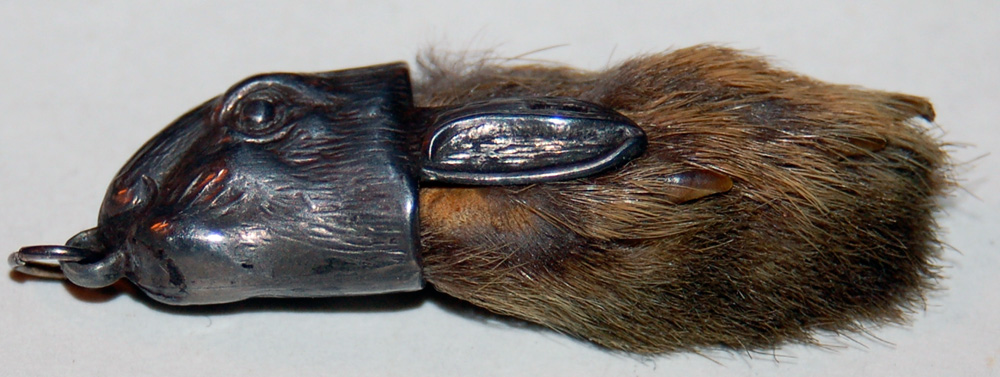 🇺🇸 United States and 2 moreRabbit's foot
A charm carried for luck, often linked to graveyards and strict folk rulesCharm · Luck and prosperity Historical
🇺🇸 United States and 2 moreRabbit's foot
A charm carried for luck, often linked to graveyards and strict folk rulesCharm · Luck and prosperity Historical
 🇮🇪 Ireland and 2 moreJack-o'-lantern
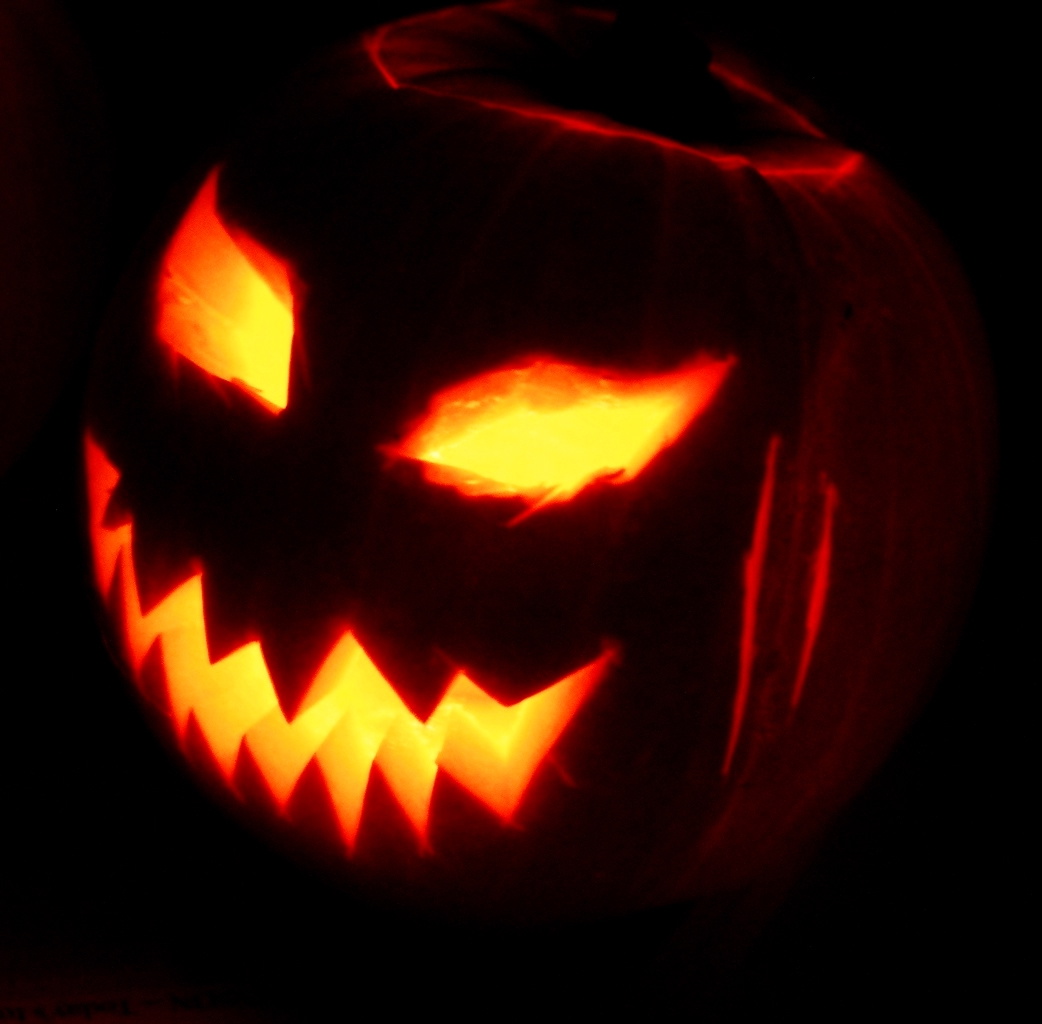
A hollowed vegetable carved with a face and lit from within, worn as a Halloween symbolCharm · Protection · Wonder and entertainment Living
🇮🇪 Ireland and 2 moreJack-o'-lantern
A hollowed vegetable carved with a face and lit from within, worn as a Halloween symbolCharm · Protection · Wonder and entertainment Living
 🇺🇸 United States and 5 moreMojo bag
A cloth pouch holding charms for protection, luck, or love in the Hoodoo tradition.Charm · Protection · Healing Living
🇺🇸 United States and 5 moreMojo bag
A cloth pouch holding charms for protection, luck, or love in the Hoodoo tradition.Charm · Protection · Healing Living
 🇺🇸 United StatesHex sign
Pennsylvania Dutch barn symbols that range from folk art to talismansCharm · Protection · Wonder and entertainment Living
🇺🇸 United StatesHex sign
Pennsylvania Dutch barn symbols that range from folk art to talismansCharm · Protection · Wonder and entertainment Living
Related elsewhere
All charm 🇮🇳 India and 5 moreAstrology
A divinatory practice that reads human fate through the positions of celestial bodies.Belief · Seeing and foretelling · Luck and prosperity Living
🇮🇳 India and 5 moreAstrology
A divinatory practice that reads human fate through the positions of celestial bodies.Belief · Seeing and foretelling · Luck and prosperity Living
 🇷🇸 Serbia and 5 moreVampire
An undead creature from folklore that feeds on the blood or life force of the livingBeing · Cursing and harm · Luck and prosperity Legendary
🇷🇸 Serbia and 5 moreVampire
An undead creature from folklore that feeds on the blood or life force of the livingBeing · Cursing and harm · Luck and prosperity Legendary
 🇪🇬 EgyptCurse
A spoken wish for misfortune to befall a person or placeBelief · Cursing and harm · Luck and prosperity Historical
🇪🇬 EgyptCurse
A spoken wish for misfortune to befall a person or placeBelief · Cursing and harm · Luck and prosperity Historical
 🇧🇪 Belgium and 2 moreHorseshoe
A metal shoe for a horse's hoof and a talisman of good fortuneCharm · Protection · Luck and prosperity Living
🇧🇪 Belgium and 2 moreHorseshoe
A metal shoe for a horse's hoof and a talisman of good fortuneCharm · Protection · Luck and prosperity Living