
Nutcracker doll
A carved wooden figurine of a soldier used to crack nuts and now a popular Christmas decoration
Originating in late-17th-century Germany, the nutcracker doll is a carved wooden figure traditionally shaped like a toy soldier. It began as a functional tool for cracking nuts and a symbol of political satire before becoming a widely recognized seasonal decoration.
- Originated in late-17th-century Germany's Ore Mountains
- Friedrich Wilhelm Füchtner began mass production in 1872
- American soldiers introduced them to the US after WWII
- Tchaikovsky's ballet boosted popularity in the West
- Made from about 60 separate wooden pieces
What it is
The nutcracker doll is a carved wooden figurine that resembles a toy soldier or royal figure. In German tradition, these dolls served as representatives of the ruling class, such as kings and soldiers. The act of cracking nuts with their teeth was originally a form of political critique and satire. While early versions were functional tools, modern iterations are primarily decorative items used as festive ornaments during the holiday season.
Where it comes from
These dolls originated in late-17th-century Germany, specifically in the Ore Mountains region. One story credits a craftsman from Seiffen with creating the first example. They were initially given as gifts and later associated with the Christmas season. Friedrich Wilhelm Füchtner started mass production in 1872 using a lathe at his workshop in Saxony. This industrial approach helped spread the design across Europe and eventually to other continents.
How it is done
Handcrafted nutcrackers are assembled from approximately sixty separate wooden pieces. Artisans paint them in bright colors to highlight their military or royal attire. The figure features a hinged jaw designed to grip and split hard shells. Early designs included miners and policemen, while contemporary versions depict historical figures or pop-culture icons. The construction relies on traditional woodworking techniques passed down through generations in specific German towns.
Tools and materials
The primary material is wood, shaped into roughly sixty individual components. Paint adds color and detail to the uniform or clothing. The mechanical jaw uses a simple hinge mechanism to function as a nutcracker. Some modern variations incorporate different materials or themes, but the core structure remains a carved wooden soldier. The craftsmanship involves precise cutting and assembly to ensure the jaw moves correctly.
Nutcracker doll, drawn and placed
- Living
- Revived
- Fading
- Historical
- Legendary
- Performed
- Timing
- Christmas season
What it is for
Originally, the doll served a practical purpose by helping households open nuts. It also acted as a satirical commentary on authority figures. Today, it functions as a seasonal decoration that brings festive cheer. Many people display them on mantels or tables during winter holidays. The association with Christmas has grown stronger over time, making it a staple of holiday decor in Western culture.
Who does it
German craftsmen in the Ore Mountains region traditionally make these dolls. Friedrich Wilhelm Füchtner pioneered mass production methods in the late nineteenth century. Skilled artisans still create handcrafted versions using lathes and carving tools. The work requires precision to assemble the many wooden parts. Families often pass down these dolls as heirlooms or gift them during the holidays.
Peoples and places
The tradition is deeply rooted in German culture, particularly in the Erzgebirge area. American soldiers stationed in Germany after World War II introduced the dolls to the United States as souvenirs. Tchaikovsky's ballet further cemented its popularity in America. The doll has become a shared cultural icon across Western societies. Different regions may produce slight variations in style and design.
At a glance: who, where and when
Who does it
Peoples
Belief worlds
Occasions

What people believe
No specific magical beliefs are attached to the nutcracker doll in the provided sources. It is viewed as a decorative object rather than a talisman. The original political satire aspect suggests it was meant to mock power structures. Its current role is purely aesthetic and festive. People enjoy its colorful appearance and connection to holiday traditions without attributing supernatural properties to it.
When it is done
The doll is most prominently displayed during the Christmas season. Its association with the holiday grew throughout the twentieth century. Tchaikovsky's ballet, introduced to America in the mid-twentieth century, reinforced this timing. Families often set them out alongside other festive decorations. The tradition continues to thrive during winter holidays in both Germany and the United States.
How scholars and sceptics see it
Scholars note the doll's evolution from a functional tool to a mass-produced commodity. Historical records highlight Friedrich Wilhelm Füchtner's role in industrializing production. Cultural historians trace its spread through military occupation and artistic influence. The connection to Hoffmann's story and Tchaikovsky's ballet is well-documented. Researchers examine how political satire transformed into commercial holiday merchandise.
Cautions and what is closed
Modern nutcrackers are often fragile and not intended for actual nut-cracking. Collectors must handle them carefully to avoid breaking the painted surfaces. Some older models may contain lead paint, posing health risks if disturbed. Children should be supervised around small wooden parts. The transition from functional tool to decorative item means they lack durability for heavy use.
Compare and confuse
The nutcracker differs from other wooden toys by its specific hinged jaw mechanism. It shares similarities with marionettes and puppet figures in its construction. Unlike amulets, it lacks protective symbolism in modern contexts. It is distinct from general Christmas ornaments due to its detailed sculpting. The doll's history as a satirical figure sets it apart from purely decorative items.
Questions people ask about Nutcracker doll
What is a nutcracker doll?
It is a carved wooden figurine resembling a toy soldier or royal figure. Originally made in Germany to crack nuts and satirize rulers, it is now a popular Christmas decoration.
Where did nutcracker dolls come from?
They originated in late-17th-century Germany, especially in the Ore Mountains region. A craftsman from Seiffen is credited with creating the first one as a gift.
Why are nutcrackers associated with Christmas?
They became linked to the holiday season in Germany and gained global fame through Tchaikovsky's ballet. American soldiers brought them home as souvenirs after WWII.
Are nutcracker dolls still made by hand?
Yes, skilled artisans in Germany still craft them by hand using about sixty wooden pieces. Mass production also exists, but traditional workshops preserve the craft.
Good reading and sources
- Nutcracker doll on WikipediaEncyclopedia
- More photos on Wikimedia CommonsPhotos and video
- Wikidata recordOpen data
The facts on this page come from the Wikipedia article "Nutcracker doll", written by its contributors and used under the CC BY-SA 4.0 licence, and from its Wikidata record (CC0). EveryJaadu rewrote the text in its own words, with AI assistance, and compares every page with the article to make sure no passage is copied. It may be reused under the same CC BY-SA 4.0 licence with a link back.
It may contain mistakes. Names and customs differ from one community to the next, and some knowledge is closed to outsiders and left out here. This page describes belief and practice. It does not say that any of it works, it is not a how-to, and it is not medical advice. If something is wrong, tell us. Last refreshed 2026-10-12.
More from Germany
All the entries from Germany 🇬🇧 United Kingdom and 5 moreConcealed shoes
Shoes hidden in building structures as folk charms for protection and fertilityCharm · Protection · Speaking with spirits and the dead Historical
🇬🇧 United Kingdom and 5 moreConcealed shoes
Shoes hidden in building structures as folk charms for protection and fertilityCharm · Protection · Speaking with spirits and the dead Historical
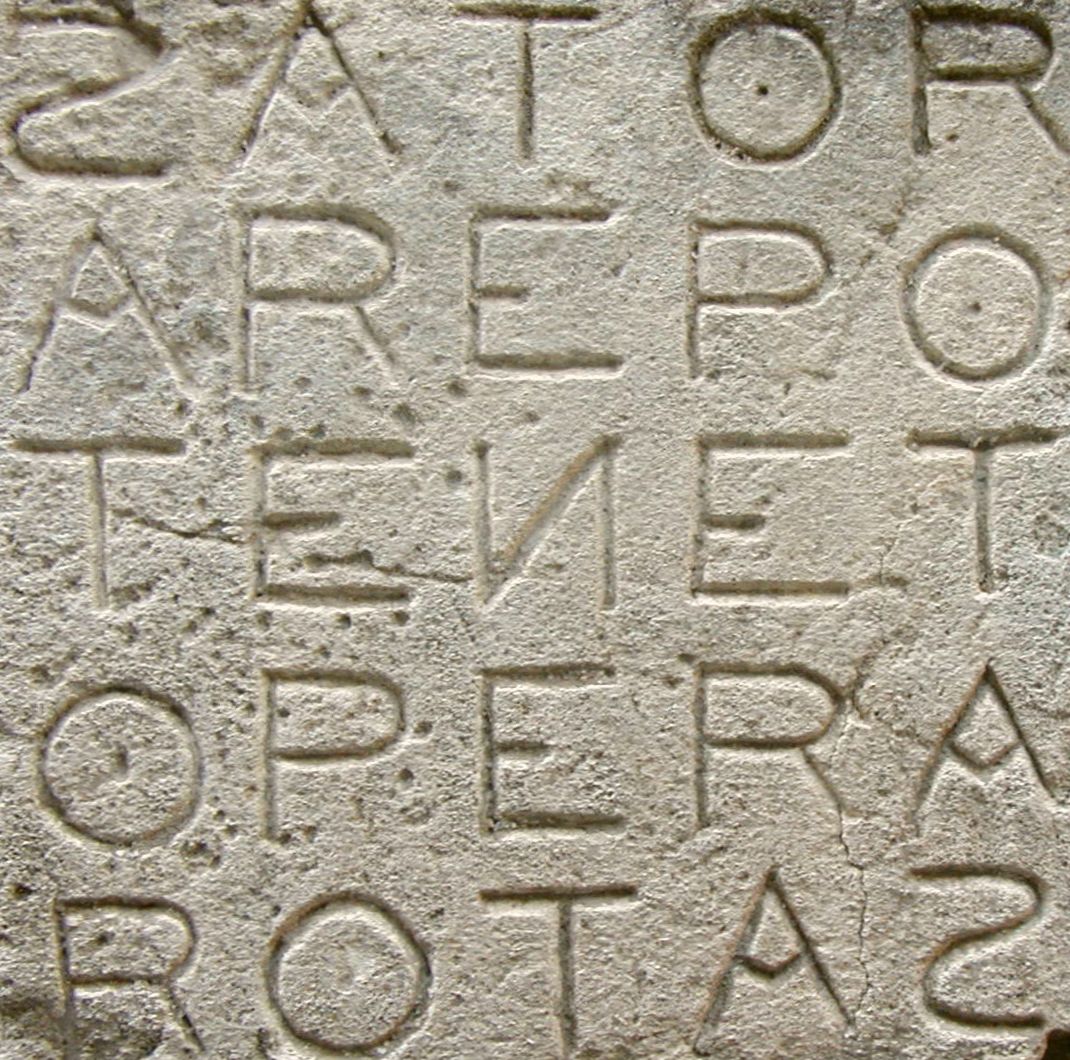 🇮🇹 Italy and 5 moreSator Square
A five-word Latin palindrome found in Roman ruins and medieval churchesCharm · Protection · Healing Historical
🇮🇹 Italy and 5 moreSator Square
A five-word Latin palindrome found in Roman ruins and medieval churchesCharm · Protection · Healing Historical
 🇮🇹 Italy and 5 moreRelic
An object or body part kept to honor a holy person and mark their connection to the divineCharm · Protection · Healing Living
🇮🇹 Italy and 5 moreRelic
An object or body part kept to honor a holy person and mark their connection to the divineCharm · Protection · Healing Living
 🇬🇧 United Kingdom and 2 moreAdder stone
A naturally perforated stone used as a protective talisman in European folkloreCharm · Protection · Luck and prosperity Historical
🇬🇧 United Kingdom and 2 moreAdder stone
A naturally perforated stone used as a protective talisman in European folkloreCharm · Protection · Luck and prosperity Historical
Related elsewhere
All charm 🇮🇶 Iraq and 4 moreAstrology
A system of divination that links human affairs to the positions of celestial bodiesTradition · Seeing and foretelling · Luck and prosperity Living
🇮🇶 Iraq and 4 moreAstrology
A system of divination that links human affairs to the positions of celestial bodiesTradition · Seeing and foretelling · Luck and prosperity Living
 🇪🇬 EgyptCurse
A spoken wish for misfortune to befall a person or placeBelief · Cursing and harm · Luck and prosperity Historical
🇪🇬 EgyptCurse
A spoken wish for misfortune to befall a person or placeBelief · Cursing and harm · Luck and prosperity Historical
 🇪🇬 Egypt and 3 moreAmulet
A portable object worn or carried to ward off harm and invite fortuneCharm · Protection · Luck and prosperity Living
🇪🇬 Egypt and 3 moreAmulet
A portable object worn or carried to ward off harm and invite fortuneCharm · Protection · Luck and prosperity Living
 🇨🇳 China and 3 moreChinese dragon龍
A legendary water deity and imperial symbol in East Asian cultureBeing · Protection · Luck and prosperity Historical
🇨🇳 China and 3 moreChinese dragon龍
A legendary water deity and imperial symbol in East Asian cultureBeing · Protection · Luck and prosperity Historical