Cursing and harm
Curses, hexes and sorcery as people describe and fear them, with the counter-magic against them.
Cursing and harm are the part of magic that societies fear most. This page describes curses and sorcery as beliefs, and the social role of fear and accusation, and does not give instructions. The evil eye, the curse tablets of the Greek and Roman world, Hebrew and Arabic writings on harmful magic, sorcery in Melanesia and Africa, and the European witch are all part of this subject. Most of the harm recorded is that done to people accused.
What is believed
Many cultures hold that envy, anger or hostile ritual can bring illness, loss or death to a victim. The beliefs differ: in the Mediterranean, the evil eye needs no intent. In Azande society, studied by Evans-Pritchard, witchcraft was an inherited substance that explained why misfortune struck one person and not another. Greek and Roman lead curse tablets, often addressed to gods of the underworld, show the belief was written down in antiquity.
Accusation as social force
Where harm is feared, accusation follows. Anthropologists have shown that charges of witchcraft often follow tension inside a family or village, such as inheritance, jealousy or a sudden death. Accusers are usually in conflict with the accused, who is more likely to be old, poor, widowed or marginal. The belief can enforce norms and also destroy people. People also fear being accused, since an accusation can arrive without warning and can follow a family for generations.
Persecution and its present
European and colonial American witch trials, from the fifteenth to the eighteenth century, put tens of thousands to death, including the Salem trials of 1692. The practice has not ended. Mobs and families still attack accused people in parts of Africa, India, Papua New Guinea and elsewhere, and Saudi Arabia has executed people for sorcery. Albino people have been killed for body parts in East Africa. Several states are drafting or enforcing laws against accusation itself.
Counter-magic and scholarship
Where harm is feared, so is protection: amulets, cleansing, and a specialist who can say who sent it. Scholars see curses as a language of grievance, and psychologists have documented the nocebo effect, in which belief in harm can bring on real distress. A person who is afraid should seek medical and social help, and talk to someone they trust. People who believe they have been cursed should be helped to find practical support, including from health services, and not left alone with fear.
Cursing and harm on EveryJaadu
The entries written up so far, best known first.
 🇺🇸 United States and 5 moreSatanism
A modern set of beliefs using the figure of Satan as a symbol or deity.Tradition · Power and authority · Cursing and harm Living
🇷🇴 Romania and 2 moreStrigoi
A Romanian undead spirit linked to witchcraft and vampirismBeing · Cursing and harm Historical
🇬🇧 United KingdomWiccan Rede
A moral guideline for Wiccans stating that actions should cause no harm.Text · Cursing and harm Living
 🇮🇱 IsraelNumber of the beastἈριθμὸς τοῦ θηρίου
A biblical number linked to a prophetic figure and interpreted through ancient letter-value systems.Belief · Cursing and harm Historical
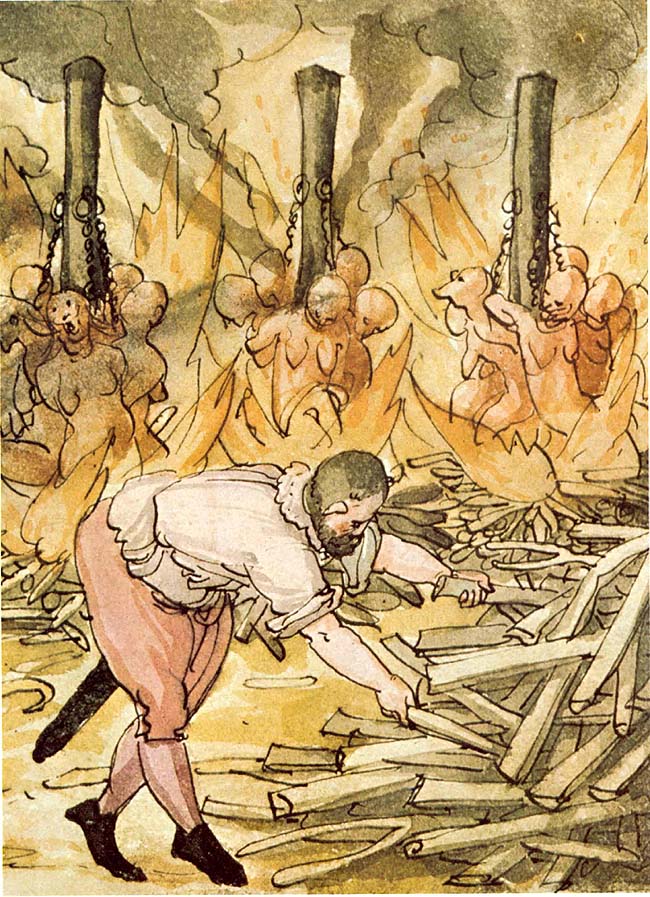 🇸🇦 Saudi Arabia and 5 moreWitch hunt
A campaign to find and punish people accused of using magic for harmBelief · Cursing and harm Historical
🇭🇺 Hungary and 2 moreWitch trials in Hungary
A long-running series of legal persecutions for sorcery across Central Europe.Belief · Cursing and harm Historical
🇮🇹 ItalyWitch trials in Italy
Historic legal proceedings against alleged witches across Italian states from the 14th to 18th centuries.Belief · Cursing and harm Historical
 🇷🇴 Romania and 5 moreVampire folklore
Global legends of blood-drinking spirits and undead revenantsBelief · Cursing and harm · Protection Historical
 🇮🇳 IndiaLeft-Hand and Right-Hand Paths
Two distinct orientations in occult magic, dividing taboo-breaking from orthodoxy.Tradition · Change and initiation · Power and authority Living
 🇬🇧 United KingdomMatthew Hopkins
The English witch-hunter who led the deadliest wave of executions in Britain.Figure · Cursing and harm Historical
🇫🇮 Finland and 1 moreWitch trials in Finland
A historical record of sorcery prosecutions in Finland under Swedish rule.Belief · Cursing and harm Historical
 🇪🇸 SpainDirectorium Inquisitorum
A 14th-century manual for inquisitors on heresy, magic, and trial procedureText · Cursing and harm · Power and authority Historical
 🇺🇸 United States and 5 moreSatanic panic
A moral panic of unsubstantiated claims about occult child abuse that spread globally in the late twentieth centuryBelief · Cursing and harm Historical
🇮🇹 Italy and 1 moreAradia
A figure of Italian folklore and modern pagan witchcraft, seen as a teacher of magic and liberation.Figure · Cursing and harm · Power and authority Revived
 🇪🇸 SpainBasque witch trials
A seventeenth-century Inquisition campaign against alleged witches in the Basque Country.Belief · Cursing and harm Historical
 🇨🇭 SwitzerlandValais witch trials
The first systematic European witch-hunt, beginning in the Valais region of Switzerland in 1428.Belief · Cursing and harm Historical
 🇸🇪 SwedenWitch trials in Denmark
A record of legal executions and local panics for sorcery in early modern DenmarkBelief · Cursing and harm Historical
 🇮🇱 Israel and 2 moreLeviathanלִוְיָתָן (Livyaṯān)
A primordial sea monster from ancient Near Eastern myth and biblical textBeing · Cursing and harm · Power and authority Historical
 🇪🇬 Egypt and 1 moreMyomancy
Divination by reading the omens of mice and ratsOracle · Seeing and foretelling · Cursing and harm Historical
🇯🇵 JapanKamo no Yasunori賀茂 保憲
A Heian-era onmyōji and teacher of Abe no Seimei in Japanese esoteric artsFigure · Seeing and foretelling · Cursing and harm Historical
 🇲🇽 Mexico and 5 moreObsidian
Volcanic glass used for sharp tools and mirrors in ancient trade and ritualSubstance · Seeing and foretelling · Cursing and harm Historical
 🇬🇧 United Kingdom and 2 moreWitchcraft Acts
A series of British laws that shifted from punishing witchcraft to punishing those who claimed to practice it.Text · Cursing and harm Historical
 🇬🇧 United Kingdom and 3 moreJack
A trickster hero from English folklore who outwits giants and oppressorsFigure · Cursing and harm · Luck and prosperity Living
 🇨🇦 CanadaNanabozhoᓇᓇᐳᔓ
A shapeshifting spirit and trickster in Anishinaabe storytelling from North AmericaBeing · Cursing and harm · Power and authority Living
 🇮🇸 Iceland and 1 moreNornsnornir
Fate-weaving figures from Norse myth who shape human destiny and tend the world tree.Being · Cursing and harm · Luck and prosperity Historical
 🇬🇧 United KingdomEnglish folklore
The myths, legends, and customs of England passed down through generations.Tradition · Protection · Cursing and harm Living
 🇫🇷 France and 1 moreDruiddruides
A learned priestly class of the ancient Celts in Gaul and BritainTradition · Cursing and harm · Protection Historical
 🇩🇪 Germany and 3 moreMare
A spirit that sits on sleepers to cause nightmares and physical distressBeing · Cursing and harm Historical
 🇯🇵 JapanTsukumogami付喪神
Household objects that gain a spirit after reaching their hundredth year in Japanese folklore.Being · Cursing and harm Historical
 🇪🇬 EgyptLucifer
A Latin name for the planet Venus that became an epithet for the Devil in Christian traditionFigure · Cursing and harm Historical
🇮🇪 IrelandBodach
A Gaelic trickster figure used to frighten children and warn of deathFigure · Cursing and harm · Seeing and foretelling Historical
 🇯🇵 JapanYōkai妖怪
A vast class of supernatural spirits and entities in Japanese folkloreBeing · Cursing and harm · Luck and prosperity Historical
🇬🇧 United KingdomSpectral evidence
Court testimony based on visions of spirits during historical witch trialsBelief · Cursing and harm Historical
 🇬🇧 United KingdomWitch trials in England
Historical legal proceedings against alleged witches in England from the 15th to 18th centuries.Belief · Cursing and harm Historical
 🇮🇪 Ireland and 4 moreTrial by combat
A medieval legal practice where two disputants fought to settle a caseRite · Cursing and harm Historical
 🇬🇧 United KingdomPricking
A method used during European witch trials to locate a supposed insensitive mark on an accused person.Rite · Cursing and harm Historical
 🇮🇶 Iraq and 1 moreRabisu
A wind spirit in Akkadian myth sent to correct human transgressionsBeing · Cursing and harm · Cleansing and purification Historical
 🇩🇪 GermanyWürzburg witch trials
A mass execution of hundreds in a German Catholic principality during the Thirty Years WarBelief · Cursing and harm Historical
 🇸🇪 Sweden and 3 moreSilver bullet
A projectile of silver said to pierce supernatural armor, and a metaphor for a simple fix.Charm · Cursing and harm · Luck and prosperity Historical
 🇦🇺 AustraliaRainbow Serpent
A creator spirit of water and land in Aboriginal Australian mythologyBeing · Healing · Cursing and harm Living
🇪🇹 EthiopiaPlanetary hours
A system assigning celestial rulers to each hour of the day and weekTradition · Power and authority · Cursing and harm Historical
🇫🇷 France and 3 moreChristian Kabbalah
A Renaissance effort to read Christian theology into Jewish mysticismTradition · Speaking with spirits and the dead · Cursing and harm Historical
 🇸🇪 SwedenTorsåker witch trials
The largest recorded execution of accused witches in Sweden, carried out in a single day in 1675.Belief · Cursing and harm Historical
🇵🇱 Poland and 4 moreWitch trials in Poland
A historical record of sorcery prosecutions and executions in Poland from the 15th to the 19th century.Belief · Cursing and harm Historical
 🇨🇳 China and 2 moreJiang Ziya姜子牙
A historical strategist and war god who helped establish the Zhou dynastyFigure · Power and authority · Cursing and harm Historical
 🇫🇷 FranceWitch trials in France
A fragmented history of judicial persecution across French regions from the fourteenth to the eighteenth centuryBelief · Cursing and harm Historical
🇩🇪 GermanyPhilipp Adolf von Ehrenberg
A German prince-bishop who directed a massive witch-hunt in the 1620sFigure · Cursing and harm Historical
 🇩🇪 GermanyTrier witch trials
A series of mass executions in the Holy Roman Empire between 1581 and 1593.Belief · Cursing and harm Historical
Photo credits on this page
The small pictures above come from Wikimedia Commons under free licences. Some are cropped to fit.
- Directorium Inquisitorum: Nicolás Eymerich, Public domain, source
- Mare: Henry Fuseli, Public domain, source
- Vampire folklore: Dick Thomas Johnson, CC BY 2.0, source
- Silver bullet: Smithsonian Institution, CC0, source
- Ancient Mesopotamian religion: editor Austen Henry Layard , drawing by L. Gruner, Public domain, source
- Jiang Ziya: Wang Qi, Public domain, source
- English folklore: J. R. Skelton, Public domain, source
- Tsukumogami: Unknown author, Public domain, source
- Valais witch trials: Dagalia2, CC BY-SA 4.0, source
- Theistic Satanism: Alexandre Cabanel, Public domain, source
- Witch trials in Denmark: Rigsarkivet - Danish National Archives, CC BY-SA 2.0, source
- Leviathan: Gustave Doré, Public domain, source
- Torsåker witch trials: Y-näsmannen, CC0, source
- Nanabozho: D. Gordon E. Robertson, CC BY-SA 3.0, source
- Norns: file: James Steakley ; artwork: Gustav Heidenreich, Public domain, source
- Druid: Bernard de Montfaucon, Public domain, source
- Lucifer: Gustave Doré, Public domain, source
- Yōkai: Kyosai Kawanabe (河鍋 暁斎), Public domain, source
- Witch trials in England: Totnesmartin, Public domain, source
- Witchcraft Act 1735: Richard van Bleeck, Public domain, source
- Trial by combat: Jörg Breu der Jüngere (died 1547), Paulus Hector Mair (died 1579), Public domain, source
- Pricking: Heinrichkramer, CC BY-SA 3.0, source
- Würzburg witch trials: Sweet Chily, Public domain, source
- Rainbow Serpent: unknown (as drawn by an Aboriginal), Public domain, source
- Witch trials in France: Unknown author, CC BY 4.0, source
- Jack: Internet Archive Book Images, No restrictions, source
- Trier witch trials: Unknown author, Public domain, source
- Basque witch trials: Alberto-g-rovi, CC BY 3.0, source
- Myomancy: Rasbak, CC BY-SA 3.0, source
- Obsidian: Krassotkin, CC0, source
- Satanic panic: Hartmann Schedel (1440-1514), Public domain, source
- Witch hunt: Johann Jakob Wick, Public domain, source
- Matthew Hopkins: Unknown author, CC BY 4.0, source
- Baphomet: Eliphas Levi, Public domain, source
- Number of the beast: William Blake, Public domain, source