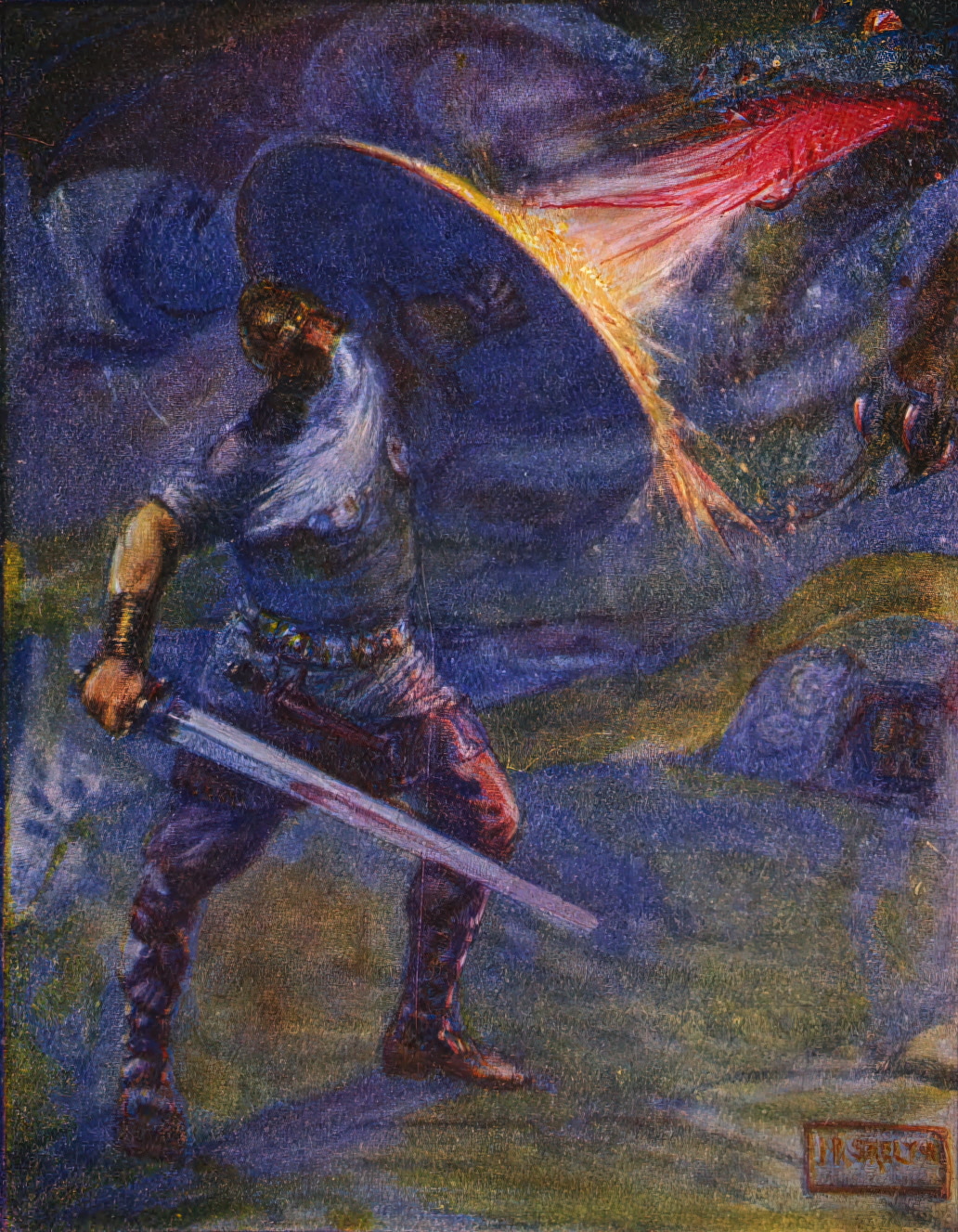
English folklore encompasses the stories, creatures, and traditions of England, shaped by Celtic, Roman, Anglo-Saxon, Norse, and Norman influences. It includes heroic tales, supernatural beliefs, and seasonal festivals that reflect the country's cultural heritage and moral values.
- Includes heroes like Robin Hood and King Arthur.
- Features creatures like dragons, boggarts, and black dogs.
- Influenced by Celtic, Roman, Anglo-Saxon, Norse, and Norman cultures.
- Celebrated through festivals like May Day and Bonfire Night.
- Transmitted through oral tradition and written records.
What it is
English folklore is the collection of myths, legends, and customs that define the cultural identity of England. It includes stories of heroes like Robin Hood and King Arthur, as well as tales of mythical creatures such as dragons and boggarts. These narratives have been passed down through oral tradition and written records, reflecting the historical experiences of the English people. The folklore encompasses a wide range of elements, including proverbs, superstitions, dance, balladry, and folktales. It serves to entertain, instruct, and preserve the moral and social values of the community.
Where it comes from
The roots of English folklore lie in the diverse cultures that have settled in England over centuries. Before the formation of England in 927, the region was influenced by Celtic, Roman, Anglo-Saxon, Norse, and Norman peoples. The Viking invasions, particularly under King Guthrum, introduced Norse elements into English language and iconography. During the Renaissance, artists and writers began to document these customs, creating a national identity through literature. The 19th century saw a revival of interest in folklore, with scholars compiling traditional songs and stories to shape an English cultural narrative.
How it is done
Folklore is transmitted primarily through oral storytelling, where tales are shared between generations. This includes the recitation of ballads, the performance of folk dances like Morris dancing, and the celebration of seasonal festivals. Written records also play a significant role, from medieval manuscripts to modern publications. The practice involves the preservation of specific motifs and character types, which are adapted to local contexts. Rituals and customs, such as well-dressing or horn dances, are performed according to traditional patterns, often tied to agricultural cycles or religious observances.
Tools and materials
The tools of English folklore are not physical objects but rather the mediums of transmission: language, song, and ritual action. Ballads are sung using traditional melodies and meters, while dances involve specific movements and costumes. Festivals may use symbolic items like maypoles, holly, or horns. The stories themselves rely on archetypal characters and settings, such as forests, castles, and magical creatures. The 'tools' are the narrative structures and motifs that allow stories to be recognized and retold across different regions and time periods.
English folklore, drawn and placed
- Living
- Revived
- Fading
- Historical
- Legendary
- Performed
- Lineage
- British folklore
What it is for
English folklore serves multiple purposes: to entertain, to educate, and to reinforce social norms. Stories often convey moral lessons about justice, loyalty, and bravery, reflecting Christian values and societal expectations. They provide a framework for understanding the natural world and the supernatural, offering explanations for phenomena like strange lights or unexplained events. Folklore also acts as a form of escapism, allowing listeners to engage with imaginative worlds. Additionally, it preserves historical memories and local identities, connecting communities to their past.
Who does it
The practitioners of English folklore are the people of England, who pass down traditions within families and communities. Scholars and folklorists also play a crucial role in collecting, documenting, and analyzing these stories. Historically, storytellers, bards, and performers were responsible for keeping the oral tradition alive. In modern times, enthusiasts and cultural organizations work to preserve and revitalize folk practices. The knowledge is held collectively, though some aspects may be restricted to specific groups or regions.
Peoples and places
English folklore is practiced and cherished by the English people, with variations found across different regions of the country. While there are shared national themes, local traditions differ based on history and geography. For example, stories of King Arthur are prominent in the southwest, while tales of Robin Hood are associated with Nottinghamshire. The influence of neighboring cultures, such as Welsh and Scottish folklore, can also be seen in border regions. The diaspora has spread English folklore globally, where it continues to evolve and adapt.
At a glance: who, where and when
Who does it
Peoples
Belief worlds
Occasions


What people believe
At its core, English folklore reflects a worldview that blends Christian theology with older pagan and mythological beliefs. It acknowledges the presence of supernatural forces, spirits, and magic in the everyday world. Beliefs in omens, curses, and protective charms are common, reflecting a sense of vulnerability to unseen powers. The folklore often personifies nature, with figures like the Green Man representing the wildness of the landscape.
When it is done
Many English folk traditions are tied to the calendar and seasonal cycles. May Day celebrates the arrival of spring with maypole dancing and flower crowns. Plough Monday marks the beginning of the agricultural year. Bonfire Night, or Guy Fawkes Night, commemorates the failed Gunpowder Plot with fireworks and bonfires. Allhallowtide honors the dead, leading into Halloween and All Saints' Day. Harvest festival gives thanks for the autumn crop. Christmas practices, such as decorating trees and caroling, blend Christian and pre-winter solstice customs.
How scholars and sceptics see it
Scholars view English folklore as a vital component of national identity and cultural history. Anthropologists and historians study how these stories reflect social structures, power dynamics, and historical events. Literary critics analyze the evolution of folktales in literature, from medieval romances to modern adaptations. Folklorists use classification systems like the Aarne-Thompson-Uther index to categorize and compare stories across cultures. Skeptics may view some beliefs as superstitions, but researchers generally treat them as meaningful expressions of cultural values and human experience.
Cautions and what is closed
Some aspects of English folklore involve beliefs in harmful magic, curses, and malevolent spirits, which can cause fear and anxiety. Historical witch trials reflect the persecution of individuals accused of practicing sorcery, highlighting the dangers of superstition and social suspicion. Modern interpretations sometimes exploit these beliefs for commercial gain or sensationalism. It is important to approach folklore with respect and critical thinking, recognizing its cultural significance without endorsing potentially harmful practices or beliefs.
Compare and confuse
English folklore shares similarities with other European traditions, particularly those of Celtic, Germanic, and Norse origin. Figures like the Wild Hunt and Herne the Hunter have counterparts in wider European mythology. However, English folklore has distinct characteristics, such as the prominence of Robin Hood and King Arthur, which reflect specific English historical and literary contexts. Comparisons with American or Australian folklore reveal differences in themes and settings, shaped by colonial histories and indigenous influences.
Law and persecution
There are no specific laws governing the practice of English folklore, as it is a cultural tradition rather than a regulated activity. However, historical laws against witchcraft and heresy impacted the practice of folk magic. Today, folklore is protected as part of the intangible cultural heritage, with efforts to preserve traditional songs, dances, and stories. Intellectual property laws may apply to modern adaptations of folktales, but traditional stories remain in the public domain.
Days linked to English folklore
Questions people ask about English folklore
What is English folklore?
It is the collection of myths, legends, customs, and traditions of England, passed down through generations. It includes stories of heroes, mythical creatures, and seasonal festivals that reflect the country's cultural heritage.
Where does English folklore come from?
It originates from the diverse cultures that have settled in England, including Celtic, Roman, Anglo-Saxon, Norse, and Norman peoples. These influences merged over centuries to form a unique English cultural identity.
What are some famous characters in English folklore?
Famous characters include King Arthur, the legendary king of the Britons; Robin Hood, the outlaw who stole from the rich; and mythical creatures like the Green Man, Black Shuck, and dragons.
How is English folklore celebrated today?
It is celebrated through traditional festivals like May Day, Plough Monday, Bonfire Night, and Harvest festival. People also enjoy Morris dancing, Mummers' plays, and retelling folktales in literature and media.
Good reading and sources
- English folklore on WikipediaEncyclopedia
- More photos on Wikimedia CommonsPhotos and video
- Wikidata recordOpen data
The facts on this page come from the Wikipedia article "English folklore", written by its contributors and used under the CC BY-SA 4.0 licence, and from its Wikidata record (CC0). EveryJaadu rewrote the text in its own words, with AI assistance, and compares every page with the article to make sure no passage is copied. It may be reused under the same CC BY-SA 4.0 licence with a link back.
It may contain mistakes. Names and customs differ from one community to the next, and some knowledge is closed to outsiders and left out here. This page describes belief and practice. It does not say that any of it works, it is not a how-to, and it is not medical advice. If something is wrong, tell us. Last refreshed 2026-10-05.
More from the United Kingdom
All the entries from the United Kingdom 🇬🇧 United Kingdom and 2 moreKing ArthurBrenin Arthur
A legendary British king and folk hero of medieval literature and Welsh mythologyFigure · Power and authority · Wonder and entertainment Legendary
🇬🇧 United Kingdom and 2 moreKing ArthurBrenin Arthur
A legendary British king and folk hero of medieval literature and Welsh mythologyFigure · Power and authority · Wonder and entertainment Legendary
 🇬🇧 United KingdomSamlesbury witches
Three Lancashire women acquitted in a 1612 trial linked to anti-Catholic propagandaBelief · Cursing and harm Historical
🇬🇧 United KingdomSamlesbury witches
Three Lancashire women acquitted in a 1612 trial linked to anti-Catholic propagandaBelief · Cursing and harm Historical
 🇬🇧 United KingdomWitch trials in early modern Scotland
A period of judicial persecution where thousands were executed for alleged sorcery and diabolic pactsBelief · Cursing and harm Historical
🇬🇧 United KingdomWitch trials in early modern Scotland
A period of judicial persecution where thousands were executed for alleged sorcery and diabolic pactsBelief · Cursing and harm Historical
 🇬🇧 United Kingdom and 5 moreAleister Crowley
English occultist and founder of the religion of ThelemaText · Power and authority · Change and initiation Living
🇬🇧 United Kingdom and 5 moreAleister Crowley
English occultist and founder of the religion of ThelemaText · Power and authority · Change and initiation Living
Related elsewhere
All tradition 🇮🇳 India and 5 moreBhairavaभैरव
A fierce manifestation of Shiva and a Buddhist protector deity worshipped across South and East Asia.Being · Protection · Cursing and harm Living
🇮🇳 India and 5 moreBhairavaभैरव
A fierce manifestation of Shiva and a Buddhist protector deity worshipped across South and East Asia.Being · Protection · Cursing and harm Living
 🇹🇭 Thailand and 1 moreGhosts in Thai cultureผี (phi)
A wide range of spirits and ghosts found in Thai folklore and popular belief.Belief · Protection · Cursing and harm Living
🇹🇭 Thailand and 1 moreGhosts in Thai cultureผี (phi)
A wide range of spirits and ghosts found in Thai folklore and popular belief.Belief · Protection · Cursing and harm Living
 🇮🇳 India and 1 moreNavagrahaनवग्रह
A group of nine celestial deities in Hinduism that govern fate and astrologyTradition · Protection · Luck and prosperity Living
🇳🇿 New ZealandKarakia
Māori recitations used for spiritual guidance, protection, and formal greetingsTradition · Protection · Speaking with spirits and the dead Living
🇮🇳 India and 1 moreNavagrahaनवग्रह
A group of nine celestial deities in Hinduism that govern fate and astrologyTradition · Protection · Luck and prosperity Living
🇳🇿 New ZealandKarakia
Māori recitations used for spiritual guidance, protection, and formal greetingsTradition · Protection · Speaking with spirits and the dead Living