
Würzburg witch trials
A mass execution of hundreds in a German Catholic principality during the Thirty Years War
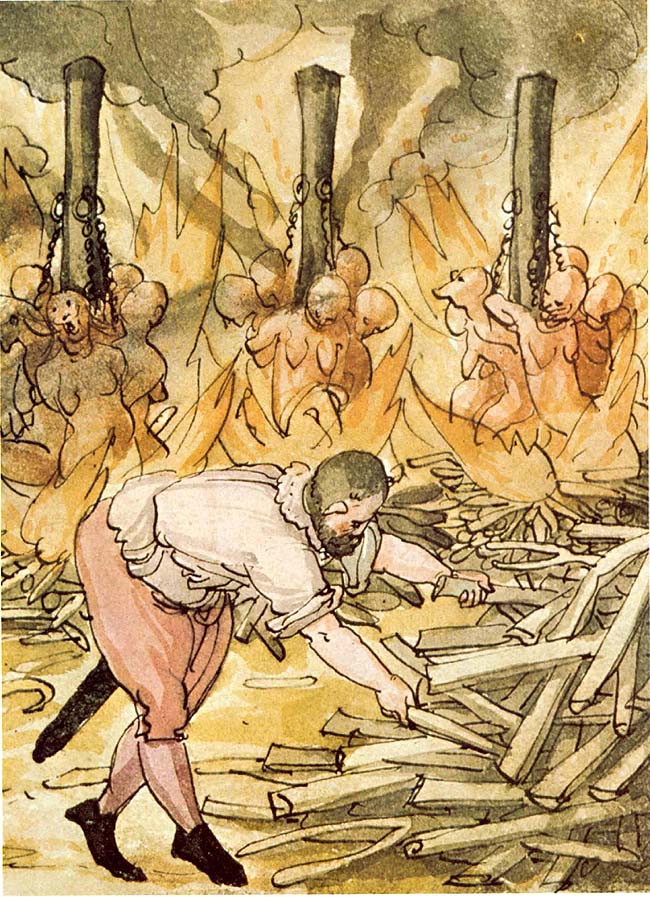
The Würzburg witch trials were a series of mass executions between 1625 and 1631 in the Prince-Bishopric of Würzburg. Conducted by Catholic authorities to enforce religious conformity, they resulted in the deaths of nearly nine hundred people across all social classes.
- Executed nearly 900 people between 1625 and 1631
- Conducted by Catholic Prince-Bishops during the Thirty Years War
- Included executions of children, priests, and the Prince-Bishop's nephew
- Triggered by rumors that frost destroying the harvest was caused by magic
- Ended when Swedish troops occupied the city in 1631
What it is
The Würzburg witch trials refer to a massive campaign of persecution that occurred between 1625 and 1631. This event took place within the self-governing Catholic Prince-Bishopric of Würzburg, located in the Holy Roman Empire. It stands as one of the largest recorded instances of mass execution for witchcraft in European history. The proceedings were driven by a desire to eliminate heresy and consolidate political power during a time of intense religious conflict. Authorities targeted individuals accused of sorcery, resulting in widespread death sentences carried out by burning at the stake.
Where it comes from
The persecutions began under Prince-Bishop Julius Echter von Mespelbrunn, who initiated trials in 1612 following the incorporation of Protestant territories. A major wave occurred between 1616 and 1617 before pausing due to the start of the Thirty Years War. The subsequent and larger phase started in 1625 under his successor, Philipp Adolf von Ehrenberg. The immediate trigger was a frost that destroyed the vine grape harvest in 1626. Rumors spread that this agricultural failure was caused by magic, leading to arrests and confessions extracted through torture.
How it is done
A special Witch Commission handled the cases, operating outside standard legal restrictions. Accused individuals were tortured to force confessions regarding their own guilt and to name accomplices. These names led to further arrests, creating a rapid expansion of the trial network. The process did not distinguish between social classes, genders, or ages. Victims included working-class women, men, children as young as seven, and high-ranking clergy. Executions typically involved burning at the stake, though some victims were beheaded or strangled first.
Tools and materials
The primary instrument of the trials was the judicial commission established by the Prince-Bishop. Torture served as the main tool for extracting information and identifying alleged members of a Witches' Sabbath. Authorities maintained a so-called black book of Satan, which supposedly listed those who had attended these gatherings. The physical tools used for punishment included stakes for burning, blades for beheading, and ropes for strangulation. No specific magical artifacts were used by the accusers; the focus was on legal coercion and public execution.
Würzburg witch trials, drawn and placed
- Living
- Revived
- Fading
- Historical
- Legendary
- Performed
- Lineage
- Witch trials in the Early Modern period
What it is for
The trials aimed to enforce religious conformity and establish a godly state aligned with Counter-Reformation ideals. Prince-Bishop Philipp Adolf von Ehrenberg sought to extirpate Protestantism and make the population devoutly Catholic. The persecution also served to consolidate the Prince-Bishop's authority and maintain social order. By targeting suspected witches, the authorities intended to remove perceived threats to the spiritual and political stability of the region during the ongoing Thirty Years War.
Who does it
The trials were directed by Catholic Prince-Bishops, specifically Julius Echter von Mespelbrunn and Philipp Adolf von Ehrenberg. A dedicated Witch Commission conducted the investigations and trials. The accused included a wide range of people: poor working-class women, wealthy elites, university students, priests, and children from orphanages. Notably, the nephew of the Prince-Bishop himself was among those executed. The process eventually implicated a significant portion of the city's population, including influential figures whose relatives could appeal to higher authorities.
Peoples and places
The events are identified with Germany, specifically the region of Franconia. Würzburg was the central location, but executions also occurred in surrounding areas under the Prince-Bishop's authority. The trials influenced other German cities like Wertheim and Mergentheim, which adopted similar methods known as 'Würzburgisch work'. The context involves the broader religious divide in Germany between Catholic and Protestant territories during the Thirty Years War. The scale of the persecution made it one of the four largest such series in Germany, alongside Trier, Fulda, and Bamberg.
At a glance: who, where and when
What people believe
The underlying belief system held that witches formed a conspiracy against Christianity, attending Sabbaths and making pacts with the Devil. Accusers believed that sorcery could cause natural disasters, such as the frost that ruined the harvest. The authorities operated on the premise that a third of the population might be involved in satanic practices. Confessions often described sexual relations with demons and participation in ritual dances. The concept of a hidden network of witches justified the indiscriminate arrest of anyone who could be named by a tortured suspect.
When it is done
The main phase of the trials lasted from 1625 to 1631. An earlier wave occurred between 1616 and 1617. The escalation in 1626 followed the destruction of the vine grape harvest by frost. The trials ended abruptly in 1631 when the Swedish Army occupied the city under King Gustavus Adolphus. The death of Prince-Bishop Philipp Adolf von Ehrenberg on July 16, 1631, also contributed to the cessation of the persecutions. Public condemnation from the Emperor in 1630 marked a turning point in the legal acceptance of the trials.
How scholars and sceptics see it
Historians view the Würzburg witch trials as a product of the religious tensions during the Thirty Years War. Scholars note that the trials were used as a political tool to enforce Catholic dominance and suppress Protestant influence. The use of torture without legal restriction highlights the breakdown of judicial norms during this period. The inclusion of high-status individuals and children in the accusations suggests the process became detached from rational evidence. The trials serve as a case study in how fear and religious zeal can lead to mass hysteria and systemic injustice.
Cautions and what is closed
The trials resulted in the execution of approximately nine hundred people, including many children and clergy. The use of torture led to false confessions and the wrongful accusation of innocent individuals. The process violated standard legal protections, allowing for arbitrary arrests based on coerced testimony. The persecution created an atmosphere of terror where neighbors accused neighbors, and social bonds were broken. The legacy includes the suffering of hundreds of victims and the disruption of communities across the Prince-Bishopric.
Compare and confuse
The Würzburg trials are often compared to the Trier, Fulda, and Bamberg witch trials, which were similarly large-scale events in Germany. Unlike some other regions where witch hunts declined earlier, Würzburg continued until military intervention stopped them. The method of using torture to generate new names is common to many early modern witch trials, but the scale in Würzburg was exceptional. The involvement of the Prince-Bishop's own family and high clergy distinguishes it from cases where only lower-class individuals were targeted.
Law and persecution
The trials operated outside the normal legal framework, ignoring the restrictions of the Constitutio Criminalis Carolina. The Witch Commission had broad powers to arrest and torture suspects without clear evidence. Legal challenges were raised by relatives of the accused, reaching the Imperial Chamber Court in Speyer. The Emperor issued a public condemnation of the persecutions in 1630. The trials ended when the Swedish occupation forced the Prince-Bishop to cease operations. No formal rehabilitation of the victims occurred at the time.
Questions people ask about Würzburg witch trials
What were the Würzburg witch trials?
They were a series of mass executions for witchcraft that took place in the Prince-Bishopric of Würzburg between 1625 and 1631. The trials resulted in the deaths of hundreds of people across all social classes.
Why did the trials happen?
The trials were driven by Catholic authorities seeking to enforce religious conformity and eliminate Protestantism during the Thirty Years War. A frost that destroyed the harvest fueled fears of sorcery, leading to arrests.
Who was targeted in the trials?
Victims included men, women, and children of all ages and social classes. Notable targets included university students, high-ranking clergy, and even the nephew of the ruling Prince-Bishop.
How were the accused treated?
Suspects were arrested and tortured to extract confessions and name accomplices. This led to a rapid expansion of arrests. Many were burned at the stake, while others were beheaded or strangled.
When did the trials end?
The trials ended in 1631 after the Swedish Army occupied the city. The death of Prince-Bishop Philipp Adolf von Ehrenberg and pressure from the Emperor also contributed to stopping the persecutions.
Good reading and sources
The facts on this page come from the Wikipedia article "Würzburg witch trials", written by its contributors and used under the CC BY-SA 4.0 licence, and from its Wikidata record (CC0). EveryJaadu rewrote the text in its own words, with AI assistance, and compares every page with the article to make sure no passage is copied. It may be reused under the same CC BY-SA 4.0 licence with a link back.
It may contain mistakes. Names and customs differ from one community to the next, and some knowledge is closed to outsiders and left out here. This page describes belief and practice. It does not say that any of it works, it is not a how-to, and it is not medical advice. If something is wrong, tell us. Last refreshed 2026-10-06.
More from Germany
All the entries from Germany 🇺🇦 Ukraine and 5 moreMugwortчорнобиль (chornóbyl')
An aromatic herb used in folk medicine, cooking, and magical protection across Eurasia.Substance · Protection · Healing Living
🇺🇦 Ukraine and 5 moreMugwortчорнобиль (chornóbyl')
An aromatic herb used in folk medicine, cooking, and magical protection across Eurasia.Substance · Protection · Healing Living
 🇩🇪 GermanyPied Piper of Hamelinder Rattenfänger von Hameln
A medieval legend about a piper who leads children away from the town of HamelinFigure · Cursing and harm · Luck and prosperity Legendary
🇩🇪 GermanyPied Piper of Hamelinder Rattenfänger von Hameln
A medieval legend about a piper who leads children away from the town of HamelinFigure · Cursing and harm · Luck and prosperity Legendary
 🇩🇪 Germany and 5 moreWitch trials in the Holy Roman Empire
A wave of executions across Central Europe between the fifteenth and eighteenth centuries.Belief · Cursing and harm Historical
🇩🇪 Germany and 5 moreWitch trials in the Holy Roman Empire
A wave of executions across Central Europe between the fifteenth and eighteenth centuries.Belief · Cursing and harm Historical
 🇩🇪 Germany and 7 moreWalpurgis NightWalpurgisnacht
A spring vigil marking the eve of Saint Walpurga's feast day with bonfires and student festivalsRite · Protection · Speaking with spirits and the dead Living
🇩🇪 Germany and 7 moreWalpurgis NightWalpurgisnacht
A spring vigil marking the eve of Saint Walpurga's feast day with bonfires and student festivalsRite · Protection · Speaking with spirits and the dead Living
Related elsewhere
All belief 🇪🇬 Egypt and 1 moreLilithלִילִית
A feminine figure from Mesopotamian and Jewish mythology, often depicted as a night demon or spirit.Being · Cursing and harm Legendary
🇪🇬 Egypt and 1 moreLilithלִילִית
A feminine figure from Mesopotamian and Jewish mythology, often depicted as a night demon or spirit.Being · Cursing and harm Legendary
 🇪🇬 EgyptCurse
A spoken wish for misfortune to befall a person or placeBelief · Cursing and harm · Luck and prosperity Historical
🇪🇬 EgyptCurse
A spoken wish for misfortune to befall a person or placeBelief · Cursing and harm · Luck and prosperity Historical
 🇺🇸 United StatesSalem Witch Trials
A colonial legal crisis where over two hundred people faced accusations of sorcery in Massachusetts.Belief · Cursing and harm Historical
🇺🇸 United StatesSalem Witch Trials
A colonial legal crisis where over two hundred people faced accusations of sorcery in Massachusetts.Belief · Cursing and harm Historical
 🇮🇳 India and 5 moreHoliहोली
A Hindu spring festival marked by coloured powders and bonfires to celebrate love and virtue.Tradition · Love and attraction · Cursing and harm Living
🇮🇳 India and 5 moreHoliहोली
A Hindu spring festival marked by coloured powders and bonfires to celebrate love and virtue.Tradition · Love and attraction · Cursing and harm Living