Cursing and harm
Curses, hexes and sorcery as people describe and fear them, with the counter-magic against them.
Cursing and harm are the part of magic that societies fear most. This page describes curses and sorcery as beliefs, and the social role of fear and accusation, and does not give instructions. The evil eye, the curse tablets of the Greek and Roman world, Hebrew and Arabic writings on harmful magic, sorcery in Melanesia and Africa, and the European witch are all part of this subject. Most of the harm recorded is that done to people accused.
What is believed
Many cultures hold that envy, anger or hostile ritual can bring illness, loss or death to a victim. The beliefs differ: in the Mediterranean, the evil eye needs no intent. In Azande society, studied by Evans-Pritchard, witchcraft was an inherited substance that explained why misfortune struck one person and not another. Greek and Roman lead curse tablets, often addressed to gods of the underworld, show the belief was written down in antiquity.
Accusation as social force
Where harm is feared, accusation follows. Anthropologists have shown that charges of witchcraft often follow tension inside a family or village, such as inheritance, jealousy or a sudden death. Accusers are usually in conflict with the accused, who is more likely to be old, poor, widowed or marginal. The belief can enforce norms and also destroy people. People also fear being accused, since an accusation can arrive without warning and can follow a family for generations.
Persecution and its present
European and colonial American witch trials, from the fifteenth to the eighteenth century, put tens of thousands to death, including the Salem trials of 1692. The practice has not ended. Mobs and families still attack accused people in parts of Africa, India, Papua New Guinea and elsewhere, and Saudi Arabia has executed people for sorcery. Albino people have been killed for body parts in East Africa. Several states are drafting or enforcing laws against accusation itself.
Counter-magic and scholarship
Where harm is feared, so is protection: amulets, cleansing, and a specialist who can say who sent it. Scholars see curses as a language of grievance, and psychologists have documented the nocebo effect, in which belief in harm can bring on real distress. A person who is afraid should seek medical and social help, and talk to someone they trust. People who believe they have been cursed should be helped to find practical support, including from health services, and not left alone with fear.
Cursing and harm on EveryJaadu
The entries written up so far, best known first.
 🇨🇳 China and 2 moreJiang Ziya姜子牙
A historical strategist and war god who helped establish the Zhou dynastyFigure · Power and authority · Cursing and harm Historical
🇬🇧 United Kingdom and 2 moreThe Holy Blood and the Holy Grail
A 1982 book proposing Jesus had a bloodline protected by a secret societyText · Cursing and harm Historical
🇨🇳 China and 2 moreJiang Ziya姜子牙
A historical strategist and war god who helped establish the Zhou dynastyFigure · Power and authority · Cursing and harm Historical
🇬🇧 United Kingdom and 2 moreThe Holy Blood and the Holy Grail
A 1982 book proposing Jesus had a bloodline protected by a secret societyText · Cursing and harm Historical
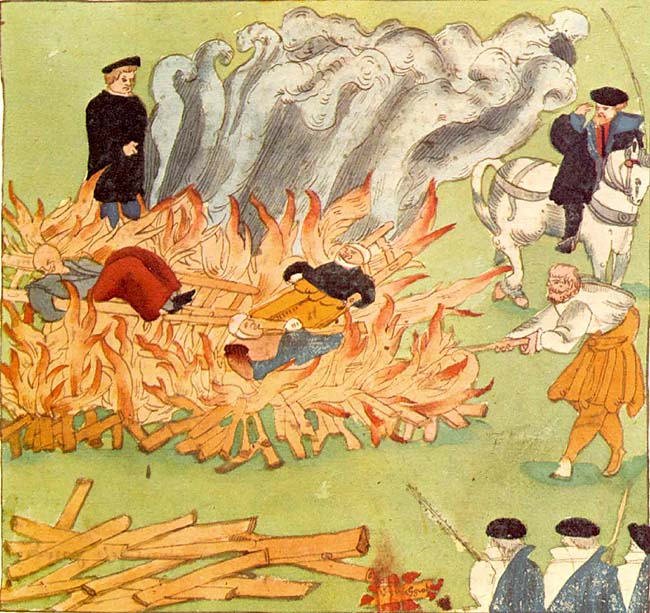 🇩🇪 GermanyMalleus Maleficarum
A 15th-century manual on witchcraft written by Heinrich KramerText · Cursing and harm · Binding and oaths Historical
🇩🇪 GermanyMalleus Maleficarum
A 15th-century manual on witchcraft written by Heinrich KramerText · Cursing and harm · Binding and oaths Historical
 🇬🇧 United Kingdom and 2 moreWitchcraft Acts
A series of British laws that shifted from punishing witchcraft to punishing those who claimed to practice it.Text · Cursing and harm Historical
🇬🇧 United Kingdom and 2 moreWitchcraft Acts
A series of British laws that shifted from punishing witchcraft to punishing those who claimed to practice it.Text · Cursing and harm Historical
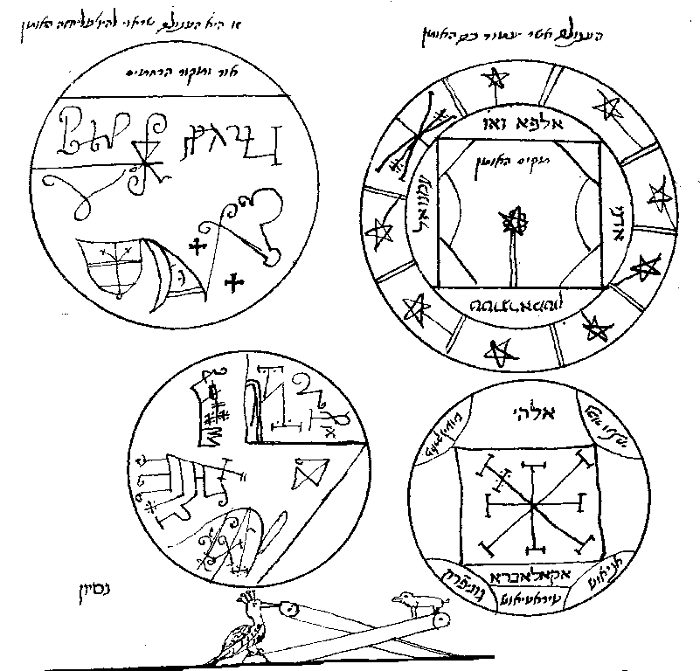 🇮🇹 Italy and 2 moreKey of SolomonClavicula Salomonis
A Renaissance grimoire attributed to King Solomon, detailing ritual preparations and invocations.Text · Cursing and harm · Love and attraction Historical
🇳🇿 New ZealandTohunga Suppression Act 1907
A New Zealand law banning traditional Māori healers and faith practitionersText · Cursing and harm · Protection Historical
🇬🇧 United KingdomWiccan Rede
A moral guideline for Wiccans stating that actions should cause no harm.Text · Cursing and harm Living
🇮🇹 Italy and 2 moreKey of SolomonClavicula Salomonis
A Renaissance grimoire attributed to King Solomon, detailing ritual preparations and invocations.Text · Cursing and harm · Love and attraction Historical
🇳🇿 New ZealandTohunga Suppression Act 1907
A New Zealand law banning traditional Māori healers and faith practitionersText · Cursing and harm · Protection Historical
🇬🇧 United KingdomWiccan Rede
A moral guideline for Wiccans stating that actions should cause no harm.Text · Cursing and harm Living
 🇮🇳 India and 4 moreTantraतन्त्र
An esoteric yogic tradition from India focusing on ritual, mantra, and body-based spiritual practices.Tradition · Power and authority · Change and initiation Living
🇮🇳 India and 4 moreTantraतन्त्र
An esoteric yogic tradition from India focusing on ritual, mantra, and body-based spiritual practices.Tradition · Power and authority · Change and initiation Living
 🇪🇸 SpainDirectorium Inquisitorum
A 14th-century manual for inquisitors on heresy, magic, and trial procedureText · Cursing and harm · Power and authority Historical
🇮🇸 IcelandGaldrabók
An Icelandic grimoire of spells and staves from around 1600Text · Protection · Cursing and harm Historical
🇾🇪 YemenDhu'l-Khalasaذُو الْخَلَصَة
A pre-Islamic shrine in Yemen destroyed by early Muslim forces.Text · Cursing and harm · Seeing and foretelling Historical
🇪🇸 SpainDirectorium Inquisitorum
A 14th-century manual for inquisitors on heresy, magic, and trial procedureText · Cursing and harm · Power and authority Historical
🇮🇸 IcelandGaldrabók
An Icelandic grimoire of spells and staves from around 1600Text · Protection · Cursing and harm Historical
🇾🇪 YemenDhu'l-Khalasaذُو الْخَلَصَة
A pre-Islamic shrine in Yemen destroyed by early Muslim forces.Text · Cursing and harm · Seeing and foretelling Historical
 🇫🇷 FranceChamalières tabletPlomb de Chamalières
A Gaulish lead tablet from a French spa, read as either a curse or a healing prayer.Text · Cursing and harm · Healing Historical
🇸🇩 SudanWitchcraft, Oracles and Magic Among the Azande
A foundational anthropological study of Azande witchcraft, oracles, and magic in southern Sudan.Text · Cursing and harm · Seeing and foretelling Historical
🇫🇷 FranceChamalières tabletPlomb de Chamalières
A Gaulish lead tablet from a French spa, read as either a curse or a healing prayer.Text · Cursing and harm · Healing Historical
🇸🇩 SudanWitchcraft, Oracles and Magic Among the Azande
A foundational anthropological study of Azande witchcraft, oracles, and magic in southern Sudan.Text · Cursing and harm · Seeing and foretelling Historical
 🇬🇧 United KingdomSaducismus Triumphatus
A 1681 English book defending witchcraft beliefs and attacking skepticsText · Cursing and harm Historical
🇮🇶 Iraq and 1 moreAramaic Uruk incantation
A Seleucid-era magical tablet written in Aramaic using cuneiform signsText · Cursing and harm · Protection Historical
🇪🇸 SpainLiber Ignium
A medieval Latin manuscript containing recipes for incendiary weapons and chemicals.Text · Cursing and harm · Power and authority Historical
🇬🇧 United KingdomSaducismus Triumphatus
A 1681 English book defending witchcraft beliefs and attacking skepticsText · Cursing and harm Historical
🇮🇶 Iraq and 1 moreAramaic Uruk incantation
A Seleucid-era magical tablet written in Aramaic using cuneiform signsText · Cursing and harm · Protection Historical
🇪🇸 SpainLiber Ignium
A medieval Latin manuscript containing recipes for incendiary weapons and chemicals.Text · Cursing and harm · Power and authority Historical
 🇮🇸 Iceland and 3 moreDeal with the Devil
A cultural trope of trading one's soul for worldly favours in exchange for demonic aidBelief · Power and authority · Cursing and harm Historical
🇮🇸 Iceland and 3 moreDeal with the Devil
A cultural trope of trading one's soul for worldly favours in exchange for demonic aidBelief · Power and authority · Cursing and harm Historical
 🇬🇧 United KingdomTam Lin
A Scottish ballad about a fairy knight rescued by his mortal lover on Hallowe'enFigure · Love and attraction · Cursing and harm Historical
🇬🇧 United KingdomTam Lin
A Scottish ballad about a fairy knight rescued by his mortal lover on Hallowe'enFigure · Love and attraction · Cursing and harm Historical
 🇸🇪 SwedenStentoften Runestone
A seventh-century Swedish stone inscribed with a curse and harvest blessings in Proto-NorseText · Cursing and harm · Luck and prosperity Historical
🇸🇪 SwedenStentoften Runestone
A seventh-century Swedish stone inscribed with a curse and harvest blessings in Proto-NorseText · Cursing and harm · Luck and prosperity Historical
 🇸🇪 SwedenGlemminge stone
A Viking Age runestone in Sweden bearing a Younger Futhark inscription and a curse.Text · Cursing and harm Historical
🇸🇪 SwedenGlemminge stone
A Viking Age runestone in Sweden bearing a Younger Futhark inscription and a curse.Text · Cursing and harm Historical
Photo credits on this page
The small pictures above come from Wikimedia Commons under free licences. Some are cropped to fit.
- Saducismus Triumphatus: unknown engraver of the 17th century, Public domain, source
- Tantra: William Clark, Public domain, source
- Witchcraft Act 1735: Richard van Bleeck, Public domain, source
- Directorium Inquisitorum: Nicolás Eymerich, Public domain, source
- Chamalières tablet: Unknown, CC BY-SA 4.0, source
- Jiang Ziya: Wang Qi, Public domain, source
- Key of Solomon: Anonymous Unknown author, Public domain, source
- Malleus Maleficarum: Johann Jakob Wick, Public domain, source
- Deal with the Devil: Christoph, Public domain, source
- Tam Lin: Richard Webb, CC BY-SA 2.0, source
- Stentoften Runestone: Sendelbach ( talk ), CC BY-SA 3.0, source
- Glemminge stone: Jorchr, CC BY-SA 3.0, source