
Witchcraft Acts
A series of British laws that shifted from punishing witchcraft to punishing those who claimed to practice it.
These statutes defined the legal status of magic in England, Scotland, Ireland and their colonies. Early versions treated witchcraft as a capital crime, while later laws punished only those who pretended to possess magical powers.
- The 1541 Act made witchcraft a felony punishable by death.
- The 1735 Act punished only those pretending to practice witchcraft.
- Matthew Hopkins enforced the 1603 Act as Witch-Finder General.
- Helen Duncan was the last person imprisoned under the 1735 Act.
- South Africa's 1957 Act was based on the British 1735 model.
What it is
The Witchcraft Acts were a sequence of laws passed by the Parliament of Great Britain and earlier English monarchies. These statutes established the legal framework for dealing with accusations of sorcery across England, Scotland, Wales, Ireland and various colonial territories. The legislation evolved significantly over time, moving from severe criminal penalties for actual magical practices to fines and imprisonment for individuals who merely claimed such abilities existed.
Where it comes from
Religious conflict in sixteenth-century England prompted the first major statute. King Henry VIII introduced the Witchcraft Act of 1541, which classified witchcraft as a felony punishable by death and property forfeiture. This initial law was repealed shortly after his death. Subsequent acts under Elizabeth I and James I refined these definitions, often expanding the scope of capital offenses to include communication with evil spirits or discovering lost items through supernatural means.
How it is done
Legal proceedings under these acts followed standard criminal procedures of the era. Accused individuals faced trials in common law courts rather than ecclesiastical ones. Convictions could result in execution by hanging or, in cases involving petty treason, burning at the stake. Later iterations of the law focused on identifying fraudsters. Authorities would prosecute individuals who advertised services such as fortune-telling or spirit summoning, treating them as vagrants or con artists rather than practitioners of real magic.
Tools and materials
The primary tools of enforcement were judicial records and statutory text. Legal documents tracked indictments for homicide suspected to be caused by witchcraft. Historical records indicate that poison was far more commonly suspected in deaths than magical intervention. Courts relied on witness testimony and confessions to determine guilt, with many accused individuals ultimately being acquitted during these proceedings.
Witchcraft Acts, drawn and placed
- Living
- Revived
- Fading
- Historical
- Legendary
- Performed
What it is for
Initially, the laws aimed to protect subjects from physical harm believed to be inflicted by sorcerers. They also sought to maintain religious orthodoxy by prohibiting the use of magic to destroy crops, provoke illicit love or uncover hidden treasures. As attitudes shifted, the purpose changed to protecting the public from deception. The later acts targeted charlatans who exploited fear of the supernatural to extract money or gain social influence.
Who does it
Justice was administered by royal judges and local magistrates. In Scotland, church assemblies lobbied for strict enforcement of these statutes. Self-styled investigators like Matthew Hopkins actively hunted suspected witches in England, operating under the authority granted by these laws. Colonial governors also utilized these statutes to adjudicate cases, such as the trial of Margaret Mattson in Pennsylvania, which ended in acquittal.
Peoples and places
These laws applied across the British Isles and extended to American colonies. Scottish statutes remained distinct until union-era reforms merged them with English law. Irish legislation mirrored English provisions but had unique prosecution histories, including the Islandmagee trial. South Africa later adopted similar suppression measures based on the British model of criminalizing pretense rather than practice.
At a glance: who, where and when
Who does it
What people believe
The early acts reflected a worldview where magic was considered a tangible threat capable of causing death or injury. Belief in the power of familiar spirits and curses drove the harsh penalties. By the eighteenth century, influential figures began viewing witchcraft as an impossibility. This intellectual shift led to the 1735 Act, which legally redefined the issue as one of fraud and superstition rather than genuine spiritual danger.
When it is done
Specific dates marked legislative changes rather than ritual occasions. Key enactments occurred in 1541, 1562, 1603, 1649 and 1735. The final repeal of the core British statute happened in 1951 with the Fraudulent Mediums Act, though related regulations persisted into the twenty-first century following European Union directives on consumer protection.
How scholars and sceptics see it
Historians note that the legal definition of witchcraft narrowed over centuries. Statistical analysis of homicide cases shows that accusations of witchcraft accounted for a small fraction of suspected murders compared to poisoning. Scholars observe that the shift toward punishing pretense reflected Enlightenment skepticism about supernatural claims, transforming witchcraft from a capital crime into a minor offense related to public order and honesty.
Cautions and what is closed
The application of these laws resulted in executions and imprisonments. Many accused individuals faced intense scrutiny and potential violence from communities. Lynching occurred outside official channels, such as the strangling of a suspect in Antrim. The legal system itself carried risks, with some convictions overturned on appeal or resulting in ambiguous sentencing outcomes that left historical records incomplete regarding final punishments.
Compare and confuse
These British statutes differ from continental European witch hunts by eventually pivoting toward anti-fraud measures. The South African Witchcraft Suppression Act of 1957 drew direct inspiration from the British 1735 model. Other colonial jurisdictions, like Massachusetts Bay, passed similar acts addressing conjuration and dealings with wicked spirits, reflecting shared legal traditions across English-speaking territories.
Questions people ask about Witchcraft Acts
What were the Witchcraft Acts?
They were a series of laws in Britain and its colonies that initially punished witchcraft as a capital crime before shifting to penalize only those who claimed to have magical powers.
When did the laws change focus?
The Witchcraft Act of 1735 marked a complete reversal, replacing penalties for practicing magic with fines and imprisonment for fraudsters who pretended to possess such abilities.
Who enforced these laws?
Royal judges and magistrates handled trials. Investigators like Matthew Hopkins actively pursued suspects under the authority of the 1603 Act, leading to numerous prosecutions.
Are these laws still in effect?
The original British acts were repealed in the twentieth century. However, South Africa retains a Witchcraft Suppression Act derived from the British 1735 model.
Good reading and sources
The facts on this page come from the Wikipedia article "Witchcraft Acts", written by its contributors and used under the CC BY-SA 4.0 licence, and from its Wikidata record (CC0). EveryJaadu rewrote the text in its own words, with AI assistance, and compares every page with the article to make sure no passage is copied. It may be reused under the same CC BY-SA 4.0 licence with a link back.
It may contain mistakes. Names and customs differ from one community to the next, and some knowledge is closed to outsiders and left out here. This page describes belief and practice. It does not say that any of it works, it is not a how-to, and it is not medical advice. If something is wrong, tell us. Last refreshed 2026-10-06.
More from the United Kingdom
All the entries from the United Kingdom 🇫🇷 France and 2 moreÉliphas Lévi
A French writer who shaped modern occult thought and ceremonial magic.Text · Power and authority · Speaking with spirits and the dead Historical
🇫🇷 France and 2 moreÉliphas Lévi
A French writer who shaped modern occult thought and ceremonial magic.Text · Power and authority · Speaking with spirits and the dead Historical
 🇬🇧 United Kingdom and 5 moreAleister Crowley
English occultist and founder of the religion of ThelemaText · Power and authority · Change and initiation Living
🇬🇧 United Kingdom and 2 moreThe Holy Blood and the Holy Grail
A 1982 book proposing Jesus had a bloodline protected by a secret societyText · Cursing and harm Historical
🇬🇧 United KingdomWiccan Rede
A moral guideline for Wiccans stating that actions should cause no harm.Text · Cursing and harm Living
🇬🇧 United Kingdom and 5 moreAleister Crowley
English occultist and founder of the religion of ThelemaText · Power and authority · Change and initiation Living
🇬🇧 United Kingdom and 2 moreThe Holy Blood and the Holy Grail
A 1982 book proposing Jesus had a bloodline protected by a secret societyText · Cursing and harm Historical
🇬🇧 United KingdomWiccan Rede
A moral guideline for Wiccans stating that actions should cause no harm.Text · Cursing and harm Living
Related elsewhere
All text 🇪🇬 Egypt and 1 moreLilithלִילִית
A feminine figure from Mesopotamian and Jewish mythology, often depicted as a night demon or spirit.Being · Cursing and harm Legendary
🇪🇬 Egypt and 1 moreLilithלִילִית
A feminine figure from Mesopotamian and Jewish mythology, often depicted as a night demon or spirit.Being · Cursing and harm Legendary
 🇪🇬 EgyptCurse
A spoken wish for misfortune to befall a person or placeBelief · Cursing and harm · Luck and prosperity Historical
🇪🇬 EgyptCurse
A spoken wish for misfortune to befall a person or placeBelief · Cursing and harm · Luck and prosperity Historical
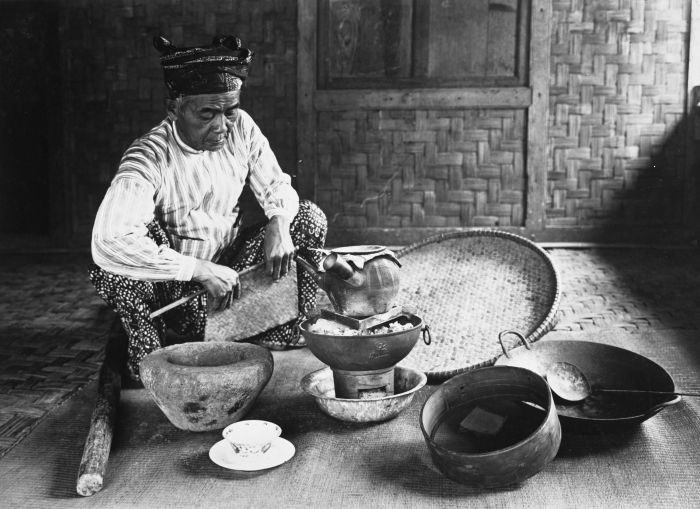 🇮🇩 Indonesia and 2 moreDukun
A traditional healer and spirit medium in Indonesian folk practiceTradition · Healing · Seeing and foretelling Living
🇮🇩 Indonesia and 2 moreDukun
A traditional healer and spirit medium in Indonesian folk practiceTradition · Healing · Seeing and foretelling Living
 🇮🇳 India and 5 moreHoliहोली
A Hindu spring festival marked by coloured powders and bonfires to celebrate love and virtue.Tradition · Love and attraction · Cursing and harm Living
🇮🇳 India and 5 moreHoliहोली
A Hindu spring festival marked by coloured powders and bonfires to celebrate love and virtue.Tradition · Love and attraction · Cursing and harm Living