
Number of the beast
In its own language: Ἀριθμὸς τοῦ θηρίου
from Koine Greek Arithmós toû thēríou
A biblical number linked to a prophetic figure and interpreted through ancient letter values.
The number of the beast is a concept from the Book of Revelation in the New Testament. It is most commonly identified as six hundred sixty-six (666) or sometimes six hundred sixteen (616). Scholars generally link it to the Roman Emperor Nero using ancient numerical letter systems.
- Most manuscripts read the number as 666.
- Some ancient texts record the number as 616.
- Gematria links 666 to the name Nero Caesar.
- The number appears in Revelation chapter thirteen.
- Papyrus 115 confirms the 616 variant exists.
What it is
The number of the beast appears in chapter thirteen of the Book of Revelation. Most English Bibles list it as six hundred sixty-six (666). Some older manuscripts record it as six hundred sixteen (616). The text calls it the number of a man. Readers are told to use understanding to count it. The number connects to a beast described in the vision. It represents a figure who opposes early Christians. The mark associated with this number controls trade. Only those with the mark can buy or sell goods.
Where it comes from
The concept originates in the first century Christian community. The Book of Revelation was likely written during the reign of Emperor Domitian around ninety-five AD. However, the number itself points to an earlier ruler. Nero persecuted Christians before his death in sixty-eight AD. A legend circulated that he had not truly died. This number served as a coded reference to him. Scribes copied the text for centuries. Variations in the numbers appeared in different manuscript traditions. These differences reflect how scribes handled the original Greek symbols.
How it is done
Scholars apply gematria to identify the figure behind the number. Gematria assigns numeric values to letters. Summing the letters of a name reveals its value. The name Nero Caesar translates to Hebrew characters. These characters add up to six hundred sixty-six. Another version drops a letter. This shorter spelling totals six hundred sixteen. Both numbers match known historical figures. This method allows readers to decode hidden identities in the text without stating them openly.
Tools and materials
The primary tools are Greek and Hebrew alphabets. Each letter holds a specific numerical value. The Greek ligature stigma represents the number six. The symbol chi stands for six hundred. The symbol xi stands for sixty. Hebrew letters function similarly in gematria calculations. Scribes used these systems to encode names. Modern researchers analyze these ancient scripts to find matches.
Number of the beast, drawn and placed
- Living
- Revived
- Fading
- Historical
- Legendary
- Performed
- Lineage
- Biblical numerology
What it is for
The number identifies a persecutor of the faith. It warns believers about a powerful enemy. The mark restricts economic activity. People without the mark cannot participate in commerce. This creates a clear division between followers and opponents. The number serves as a test of loyalty. It distinguishes those who worship the beast from others. The system enforces social and economic exclusion.
Who does it
Theological scholars study the number extensively. They examine ancient manuscripts and historical records. Preterist theologians focus on the first century context. They link the text to Nero and Domitian. Other interpreters look for modern applications. They use gematria to check current leaders. Researchers like Paul Louis Couchoud have analyzed the textual variants. They debate which number is original.
Peoples and places
The concept belongs to Christian tradition. It appears in the New Testament canon. Jewish communities influenced the gematria methods used. Early Christians in the Roman Empire faced persecution under Nero. Later European theologians applied the number to the Papacy. Protestant writers in the Reformation era used it against Catholic authorities. Various cultures have adopted these interpretations over time.
At a glance: who, where and when
Who does it
Belief worlds

![Bust of Nero at the Capitoline Museum, Rome, restored in the 17th century [ 1 ]](https://thumb.wikimedia.org/wikipedia/commons/thumb/8/89/Nero_1.JPG/960px-Nero_1.JPG)

![Putting the mark of χξς' (666) in peoples forehead as appears in the Ms. 931 of the New Testament. Revelation (Elizabeth Day McCormick Apocalypse; Greg. 2402 [Northern Greece or Balkan Peninsula? 17th century]; p. 228)](https://thumb.wikimedia.org/wikipedia/commons/thumb/6/6e/Ms._931_New_Testament._Revelation_%28Elizabeth_Day_McCormick_Apocalypse%29._Greg._2402_p_228_%CF%87%CE%BE%CF%82.png/960px-Ms._931_New_Testament._Revelation_%28Elizabeth_Day_McCormick_Apocalypse%29._Greg._2402_p_228_%CF%87%CE%BE%CF%82.png)
What people believe
Christians believe the Book of Revelation contains divine prophecy. The beast represents ultimate evil or opposition to God. The number marks allegiance to this force. Some view it as a past historical event. Others see it as a future end-times scenario. The belief system relies on the idea that God reveals truth through symbols. The number acts as a seal of identity. It determines one's spiritual standing.
When it is done
The number is not tied to a specific festival. It relates to the reign of Roman emperors. Nero ruled from fifty-four to sixty-eight AD. Domitian ruled until ninety-six AD. The text references events during these periods. No annual holiday commemorates the number directly. It remains a constant theological reference point.
How scholars and sceptics see it
Historians agree the number links to Nero. They note the gematria calculation works perfectly. Manuscript evidence shows both 666 and 616. Papyrus 115 supports the sixty-six variant. Codex Ephraemi Rescriptus supports sixty-sixteen. Scholars debate which reading is original. Some suggest scribal errors caused the split. Others propose intentional changes. The consensus favors the Nero connection.
Cautions and what is closed
The number has been used to target groups. Medieval and early modern writers blamed Jews and Muslims. Some claimed Muhammad matched the number. These claims were often based on flawed translations. Such accusations fueled violence and discrimination. The mark of the beast metaphor has been weaponized. It has justified persecution of political enemies. The interpretation carries significant social risk.
Compare and confuse
The number differs from other biblical numerals. Seven represents perfection in scripture. Six falls short of seven. Eight signifies new beginnings. The beast number sits between these meanings. It contrasts with the number of Jesus, often cited as eight hundred eighty-eight. The concept shares traits with other apocalyptic symbols. It resembles warnings found in Daniel.
Questions people ask about Number of the beast
What is the number of the beast?
It is a biblical number from the Book of Revelation. Most versions list it as six hundred sixty-six. Some ancient manuscripts list it as six hundred sixteen. It identifies a figure opposed to early Christians.
Who does the number represent?
Scholars generally link it to Emperor Nero. His name in Hebrew adds up to six hundred sixty-six. This fits the historical context of Christian persecution. Some later interpretations pointed to other rulers.
How is the number calculated?
It uses gematria, a letter-value system. Each Hebrew or Greek letter has a number. Spelling out Nero Caesar yields six hundred sixty-six. Dropping a letter yields six hundred sixteen.
Why are there two different numbers?
Ancient scribes copied the text differently. Some wrote 666. Others wrote 616. Both appear in valid early manuscripts. Scholars debate which version came first.
Good reading and sources
- Encyclopaedia BritannicaArticle
- No, the COVID-19 vaccine is not linked to the mark of the beast – but a first-century Roman tyrant probably isThe Conversation, Article
- Superstitious Numbers Around the WorldNational Geographic, Article
- Library of Congress CatalogLibrary of Congress, Article
- No 666 to Hel: Polish bus route drops ‘devil’s number’ after Christian protestsThe Guardian, Article
- Number of the beast on WikipediaEncyclopedia
- More photos on Wikimedia CommonsPhotos and video
- Wikidata recordOpen data
The facts on this page come from the Wikipedia article "Number of the beast", written by its contributors and used under the CC BY-SA 4.0 licence, and from its Wikidata record (CC0). EveryJaadu rewrote the text in its own words, with AI assistance, and compares every page with the article to make sure no passage is copied. It may be reused under the same CC BY-SA 4.0 licence with a link back.
It may contain mistakes. Names and customs differ from one community to the next, and some knowledge is closed to outsiders and left out here. This page describes belief and practice. It does not say that any of it works, it is not a how-to, and it is not medical advice. If something is wrong, tell us. Last refreshed 2026-10-05.
More from Israel
All the entries from Israel 🇮🇱 Israel and 5 moreTetragrammatonיהוה
The four-letter name of God in the Hebrew Bible, written as YHWH.Belief · Speaking with spirits and the dead Living
🇮🇱 Israel and 5 moreTetragrammatonיהוה
The four-letter name of God in the Hebrew Bible, written as YHWH.Belief · Speaking with spirits and the dead Living
 🇸🇾 Syria and 5 moreBaetyl
A sacred stone, often a meteorite, believed to house a deity in ancient Near Eastern and Mediterranean traditions.Charm · Power and authority · Speaking with spirits and the dead Historical
🇸🇾 Syria and 5 moreBaetyl
A sacred stone, often a meteorite, believed to house a deity in ancient Near Eastern and Mediterranean traditions.Charm · Power and authority · Speaking with spirits and the dead Historical
 🇮🇱 Israel and 1 moreAzazelעזאזל
A desert place and fallen angel linked to the Yom Kippur scapegoat ritualFigure · Cursing and harm · Cleansing and purification Historical
🇮🇱 Israel and 1 moreAzazelעזאזל
A desert place and fallen angel linked to the Yom Kippur scapegoat ritualFigure · Cursing and harm · Cleansing and purification Historical
Related elsewhere
All belief 🇷🇸 Serbia and 5 moreVampire
An undead creature from folklore that feeds on the blood or life force of the livingBeing · Cursing and harm · Luck and prosperity Legendary
🇷🇸 Serbia and 5 moreVampire
An undead creature from folklore that feeds on the blood or life force of the livingBeing · Cursing and harm · Luck and prosperity Legendary
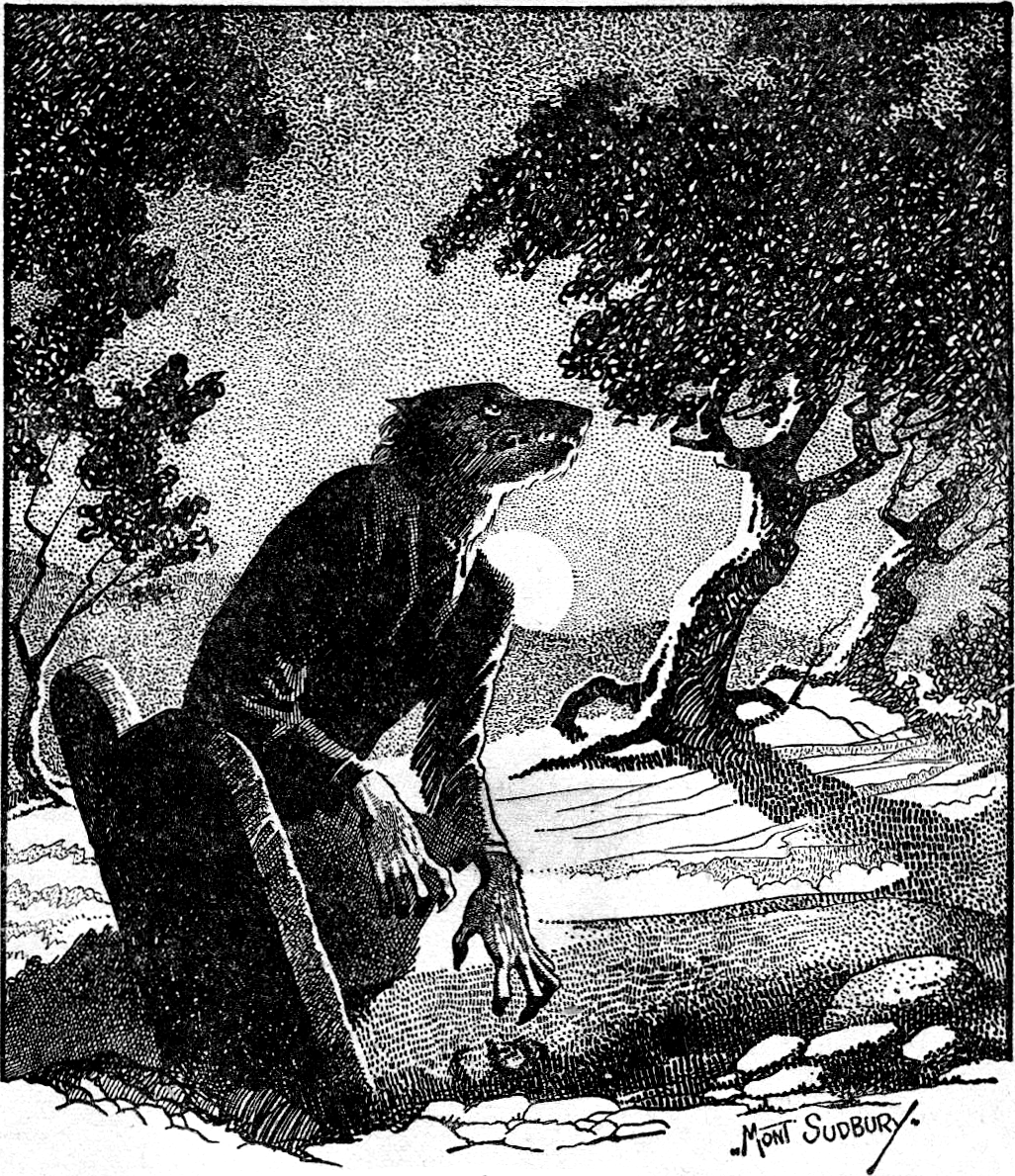 🇫🇷 France and 5 moreWerewolf
A mythical shapeshifter that turns into a wolf, central to European witch-hunts and Gothic horror.Being · Cursing and harm · Wonder and entertainment Legendary
🇫🇷 France and 5 moreWerewolf
A mythical shapeshifter that turns into a wolf, central to European witch-hunts and Gothic horror.Being · Cursing and harm · Wonder and entertainment Legendary
 🇪🇬 Egypt and 1 moreLilithלִילִית
A feminine figure from Mesopotamian and Jewish mythology, often depicted as a night demon or spirit.Being · Cursing and harm Legendary
🇪🇬 Egypt and 1 moreLilithלִילִית
A feminine figure from Mesopotamian and Jewish mythology, often depicted as a night demon or spirit.Being · Cursing and harm Legendary
 🇪🇬 EgyptCurse
A spoken wish for misfortune to befall a person or placeBelief · Cursing and harm · Luck and prosperity Historical
🇪🇬 EgyptCurse
A spoken wish for misfortune to befall a person or placeBelief · Cursing and harm · Luck and prosperity Historical