
Satanism
from Hebrew satan, meaning adversary, through French satanisme
A modern set of beliefs using the figure of Satan as a symbol or deity.
Satanism refers to religious and philosophical groups that center on the figure of Satan. It is largely an American phenomenon that emerged in the twentieth century, though accusations of devil worship date back to medieval Europe.
- The term originated in sixteenth-century religious conflicts.
- Modern Satanism began with the Church of Satan in nineteen sixty-six.
- Witch trials peaked between fifteen sixty and sixteen thirty.
- Nontheists view Satan as a metaphor for human traits.
- Accusations often served to enforce social norms in medieval times.
What it is
Satanism describes a collection of religious, ideological, and philosophical systems built around the concept of Satan. While historically used by Christians to label heretics, it now denotes self-identified groups. These range from atheistic organizations that view Satan as a metaphor for rebellion, to theistic groups that venerate him as a supernatural entity. The practice is considered a countercultural offshoot of Abrahamic traditions.
Where it comes from
The term Satanism entered English from French in the sixteenth century during religious wars. Catholics and Protestants used it to accuse rivals of serving evil. The modern movement began in nineteen sixty-six with the Church of Satan in the United States. Earlier accusations of devil worship fueled witch trials across Europe and North America between fifteen sixty and sixteen thirty.
Satanism, drawn and placed
- Living
- Revived
- Fading
- Historical
- Legendary
- Performed
- Lineage
- Abrahamic counterculture
What it is for
Practitioners use the figure of Satan to represent opposition to authority or human traits like strength. Some seek power or status through this identity. Historically, accusers used the label to enforce social norms or scapegoat individuals. Modern groups often aim to challenge mainstream Christian morality or establish alternative spiritual hierarchies.
Who does it
Modern practitioners are primarily found in the United States. Groups vary widely in structure, from organized churches to loose philosophical associations. Scholars study these movements as sociological phenomena. Historical accusations targeted various sects, including the Knights Templar and Cathars, who were forced to confess under torture.
Peoples and places
The belief system is rooted in Judeo-Christian mythology but has spread globally via the internet. It is most established in Western nations like the United States, France, and Sweden. Different cultures interpret the figure differently, sometimes blending it with local folklore or opposing colonial religious structures, such as the Diablada dance in South America.
At a glance: who, where and when
Who does it
Belief worlds

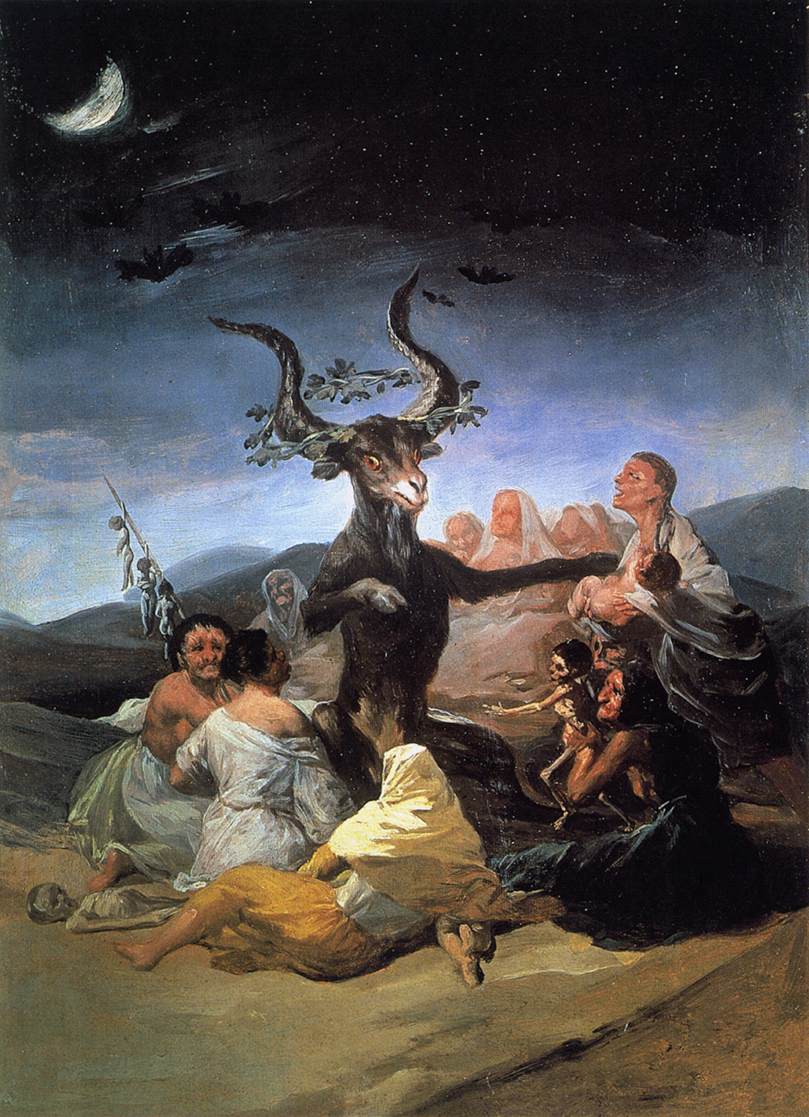


What people believe
Beliefs split into nontheistic and theistic camps. Nontheists see Satan as a symbolic Promethean figure representing vitality and resistance. Theists may view him as a patriarchal deity, though rarely omnipotent. Both sides reject the traditional Christian view of Satan as purely evil, instead embracing his role as an adversary or liberator.
How scholars and sceptics see it
Academics note that Satanism was often a polemical tool for 'othering' opponents. Religious studies scholars argue that early history consists mostly of invented accusations rather than actual practices. Anthropologists observe that allegations of devil worship serve to maintain social order by identifying internal threats, a pattern seen across many societies.
Cautions and what is closed
Historical witch trials resulted in thousands of executions based on false confessions. Modern moral panics, such as the Satanic ritual abuse scare of the late twentieth century, caused further harm through unfounded accusations. Fraudulent claims and psychological coercion have been central to the history of these allegations.
Compare and confuse
Satanism is often confused with other occult practices like Witchcraft or Santeria by outsiders. It shares family resemblances with Left Hand Path traditions involving figures like Lucifer or Hecate. Post-Satanic religions retain elements while dropping the explicit label, creating a complex web of related but distinct identities.
Law and persecution
Legal status varies by region. In some countries, Satanist groups operate openly as recognized religious or philosophical entities. Historically, accusations led to severe persecution and death. Contemporary laws in some places protect the right to practice, while others still criminalize blasphemy or idolatry associated with the figure.
Today
Globalization and the internet have allowed Satanic ideas to spread beyond their American origins. New groups emerge frequently, often debating what constitutes 'true' Satanism. Commercialization and appropriation occur, but core communities maintain distinct identities focused on either symbolic rebellion or literal veneration.
Questions people ask about Satanism
What is Satanism?
It is a group of beliefs centered on the figure of Satan. It includes both religious and philosophical approaches, ranging from literal worship to symbolic representation of rebellion against authority.
Where did Satanism originate?
The modern movement started in the United States in nineteen sixty-six. However, the term was used earlier in Europe to accuse religious rivals of heresy and devil worship during the Reformation.
Do Satanists believe in a real Devil?
Views differ. Nontheistic groups see Satan as a symbol of human potential and resistance. Theistic groups may believe in him as a supernatural being, though they often reject the idea of him being all-powerful.
Is Satanism related to Witchcraft?
They are often confused by outsiders. While both oppose traditional Christianity, they are distinct. Satanism focuses specifically on the figure of Satan, whereas Witchcraft draws on various pagan and folk traditions.
Good reading and sources
- Encyclopaedia BritannicaArticle
- United States | United StatesAl Jazeera, Article
- The devil and the deep blue sea: Navy gives blessing to sailor SatanistThe Guardian, Article
- BBC NEWS | UKBBC, Article
- Satanism on WikipediaEncyclopedia
- More photos on Wikimedia CommonsPhotos and video
- Wikidata recordOpen data
The facts on this page come from the Wikipedia article "Satanism", written by its contributors and used under the CC BY-SA 4.0 licence, and from its Wikidata record (CC0). EveryJaadu rewrote the text in its own words, with AI assistance, and compares every page with the article to make sure no passage is copied. It may be reused under the same CC BY-SA 4.0 licence with a link back.
It may contain mistakes. Names and customs differ from one community to the next, and some knowledge is closed to outsiders and left out here. This page describes belief and practice. It does not say that any of it works, it is not a how-to, and it is not medical advice. If something is wrong, tell us. Last refreshed 2026-10-05.
More from the United States
All the entries from the United States 🇺🇸 United States and 2 moreLouisiana Voodoo
An African diasporic religion practiced in Louisiana from the 18th to early 20th centuriesTradition · Healing · Protection Historical
🇺🇸 United States and 2 moreLouisiana Voodoo
An African diasporic religion practiced in Louisiana from the 18th to early 20th centuriesTradition · Healing · Protection Historical
 🇺🇸 United StatesFolk healer
An unlicensed community member who provides healing care using local plants and traditional knowledge.Tradition · Healing · Protection Historical
🇺🇸 United StatesFolk healer
An unlicensed community member who provides healing care using local plants and traditional knowledge.Tradition · Healing · Protection Historical
 🇺🇸 United States and 1 moreMedicine wheel
Circular stone formations built by Indigenous peoples of North America for ceremony and astronomy.Tradition · Speaking with spirits and the dead · Power and authority Living
🇺🇸 United States and 1 moreMedicine wheel
Circular stone formations built by Indigenous peoples of North America for ceremony and astronomy.Tradition · Speaking with spirits and the dead · Power and authority Living
 🇺🇸 United StatesSalem Witch Trials
A colonial legal crisis where over two hundred people faced accusations of sorcery in Massachusetts.Belief · Cursing and harm Historical
🇺🇸 United StatesSalem Witch Trials
A colonial legal crisis where over two hundred people faced accusations of sorcery in Massachusetts.Belief · Cursing and harm Historical
Related elsewhere
All tradition 🇿🇦 South AfricaSympathetic magic
A magical principle based on imitation and contact to influence the worldTradition · Protection · Healing Historical
🇿🇦 South AfricaSympathetic magic
A magical principle based on imitation and contact to influence the worldTradition · Protection · Healing Historical
 🇮🇸 Iceland and 2 moreSeiðr
A Norse magic of fate and spirit, practiced by seers and sorcerers in the Viking Age.Tradition · Seeing and foretelling · Cursing and harm Revived
🇮🇸 Iceland and 2 moreSeiðr
A Norse magic of fate and spirit, practiced by seers and sorcerers in the Viking Age.Tradition · Seeing and foretelling · Cursing and harm Revived
 🇮🇳 India and 4 moreTantraतन्त्र
An esoteric yogic tradition from India focusing on ritual, mantra, and body-based spiritual practices.Tradition · Power and authority · Change and initiation Living
🇿🇦 South Africa and 5 moreMurder for body parts
The killing of people to harvest body parts for traditional medicine or the illegal organ trade.Belief · Cursing and harm · Power and authority Living
🇮🇳 India and 4 moreTantraतन्त्र
An esoteric yogic tradition from India focusing on ritual, mantra, and body-based spiritual practices.Tradition · Power and authority · Change and initiation Living
🇿🇦 South Africa and 5 moreMurder for body parts
The killing of people to harvest body parts for traditional medicine or the illegal organ trade.Belief · Cursing and harm · Power and authority Living