
Left-Hand and Right-Hand Paths
From Sanskrit vāmācāra (left-hand attainment) and dakṣiṇācāra (right-hand way)
Two distinct orientations in occult magic, dividing taboo-breaking from orthodoxy.
In Western esotericism, the left-hand and right-hand paths represent contrasting approaches to magic and spiritual practice. Emerging from Tantric terms translated in the nineteenth century, they distinguish between self-directed taboo-breaking and conventional ethical devotion.
- Madame Blavatsky introduced the terms in 1877, adapting the Sanskrit words vamachara and dakshinachara.
- Right-hand magic emphasizes moral codes, karma, and alignment with external divinities.
- Left-hand magic utilizes taboo-breaking, sex magic, and self-deification to attain personal liberation.
- Aleister Crowley used the term for an adept who refuses to surrender the ego when crossing the Abyss.
What it is
In Western esoteric traditions, the left-hand path and right-hand path describe two contrary ways of working with magic. Everyday occult discourse often reduces this division to benevolent white magic on the right versus harmful black magic on the left. Other practitioners view the pair as distinct spiritual strategies rather than moral opposites. The right-hand path typically aims for union with external deities, adherence to social rules, and strict moral codes such as karma. In contrast, the left-hand path emphasizes individual deification, personal independence, and the deliberate violation of conventional social taboos to achieve spiritual liberation.
Where it comes from
The distinction entered Western occultism through Madame Helena Blavatsky, who founded the Theosophical Society in New York in 1875. During her journeys across southern Asia, including India and Tibet, she encountered Indian Tantric traditions. She translated the Sanskrit term vamachara, meaning the left-handed way, into English as the left-hand path. Blavatsky introduced these terms in her 1877 book Isis Unveiled. She claimed allegiance to the right-hand path while describing the left-hand way as dangerous black magic. Her formulation built upon existing European cultural attitudes that associated the left side with ill fortune, Catholic minorities, or male homosexuality.
How it is done
Left-hand practitioners seek spiritual freedom by engaging in acts normally forbidden by mainstream culture. In Indian Tantra, this historically included gathering in cemeteries, drinking liquor, eating meat within vegetarian societies, and ritual sexual intercourse. Modern Western left-hand workings incorporate sex magic, personal anarchism, and provocative Satanic symbolism. Right-hand methods, by contrast, focus on self-discipline, ethical rules, and the division of the self into distinct elements of body, mind, and spirit. Certain twentieth-century figures, such as Kenneth Grant, proposed combining both left and right techniques to reach spiritual equilibrium.
Left-Hand and Right-Hand Paths, drawn and placed
- Living
- Revived
- Fading
- Historical
- Legendary
- Performed
- Lineage
- Western esotericism and Tantra
What it is for
Those following the right-hand path seek connection with higher powers while honouring communal moral standards and universal accountability, such as the Threefold Law. Followers of the left-hand path pursue self-deification and liberation from religious dogma. Writers within the tradition suggest that crossing cultural boundaries releases concentrated magical energy, allowing the individual to break through psychological limits and gain personal autonomy.
Who does it
Several prominent occultists defined these paths differently across modern history. Dion Fortune aligned herself with the right-hand path, categorizing Abrahamic religions within it while treating left-hand workings with deep suspicion. Aleister Crowley redefined the left-hand path in his magical system: an adept crossing the spiritual Abyss who clings to their ego instead of surrendering completely becomes encysted as a "brother of the left-hand path." In later decades, esoteric authors like Kenneth Grant embraced the left-hand label directly without treating it as malicious sorcery.
At a glance: who, where and when
What people believe
The two paths rest on opposing views of the self and the cosmos. The right-hand orientation presumes an overarching moral order, divine judgment, and a separation between physical, mental, and spiritual parts of the person. The left-hand viewpoint rejects external moral authority in favour of personal autonomy. It regards the destruction of social constraints as a way to awaken latent magical power and expand consciousness, treating the practitioner rather than an outside deity as the centre of spiritual transformation.
How scholars and sceptics see it
Historian Dave Evans examined modern practitioners of the left-hand path, noting their rejection of conventional norms, their interest in sex magic, and their embrace of personal anarchism. Evans also documented how nineteenth-century writers mapped the newly borrowed Eastern terminology onto older European prejudices. Popular fiction, particularly the novels of Dennis Wheatley, further shaped public perception by equating left-hand occultism with Satanism, black magic, and political subversion.
Compare and confuse
The dual paths are frequently confused with a simple division between good and evil magic. Occultist Arthur Edward Waite disputed this equation, arguing that left and right paths were distinct from the concepts of white and black magic. While popular culture often equates the left-hand path with hostile witchcraft or Satanism, many modern practitioners define it simply as a path of self-directed spiritual realization.
Today
From the late twentieth century onward, diverse esoteric groups openly adopted the left-hand path label. Rather than practicing harmful magic, groups such as the Typhonian Order reinterpreted the tradition through the lens of Eastern Tantra. Contemporary practitioners focus on personal liberation, unorthodox ritual techniques, and the integration of transgressive symbols into modern ceremonial magic.
Questions people ask about Left-Hand and Right-Hand Paths
What are the left-hand and right-hand paths?
They are two contrasting approaches to magical practice in Western esotericism. The right-hand path emphasizes moral codes and devotion to deities, whereas the left-hand path focuses on personal freedom, self-deification, and breaking conventional taboos.
Where did these terms come from?
Occultist Madame Blavatsky introduced them in 1877 in her book Isis Unveiled. She derived them from the Sanskrit terms vamachara and dakshinachara, which describe heterodox and orthodox branches of Indian Tantra.
Is the left-hand path the same as black magic?
Early occultists and popular fiction often equated the left-hand path with malicious black magic. However, many esoteric practitioners and scholars define it instead as an unorthodox method of self-transformation that challenges social and religious taboos.
How did Aleister Crowley define the left-hand path?
In Crowley's system, an adept crossing the Abyss must surrender their ego entirely. Those who fear the crossing or cling to their identity become isolated as "brothers of the left-hand path," doomed to involuntary disintegration.
Good reading and sources
The facts on this page come from the Wikipedia article "Left-hand path and right-hand path", written by its contributors and used under the CC BY-SA 4.0 licence, and from its Wikidata record (CC0). EveryJaadu rewrote the text in its own words, with AI assistance, and compares every page with the article to make sure no passage is copied. It may be reused under the same CC BY-SA 4.0 licence with a link back.
It may contain mistakes. Names and customs differ from one community to the next, and some knowledge is closed to outsiders and left out here. This page describes belief and practice. It does not say that any of it works, it is not a how-to, and it is not medical advice. If something is wrong, tell us. Last refreshed 2026-10-05.
More from India
All the entries from India 🇹🇷 Turkey and 5 moreEvil eye
A curse believed to be cast by a jealous glare and the charms used to stop itBelief · Protection Living
🇹🇷 Turkey and 5 moreEvil eye
A curse believed to be cast by a jealous glare and the charms used to stop itBelief · Protection Living
 🇬🇷 Greece and 2 moreAstragalomancy
Divination by casting marked bones, carved rods, or numbered diceOracle · Seeing and foretelling · Speaking with spirits and the dead Living
🇬🇷 Greece and 2 moreAstragalomancy
Divination by casting marked bones, carved rods, or numbered diceOracle · Seeing and foretelling · Speaking with spirits and the dead Living
 🇷🇴 Romania and 5 moreVampire folklore
Global legends of blood-drinking spirits and undead revenantsBelief · Cursing and harm · Protection Historical
🇷🇴 Romania and 5 moreVampire folklore
Global legends of blood-drinking spirits and undead revenantsBelief · Cursing and harm · Protection Historical
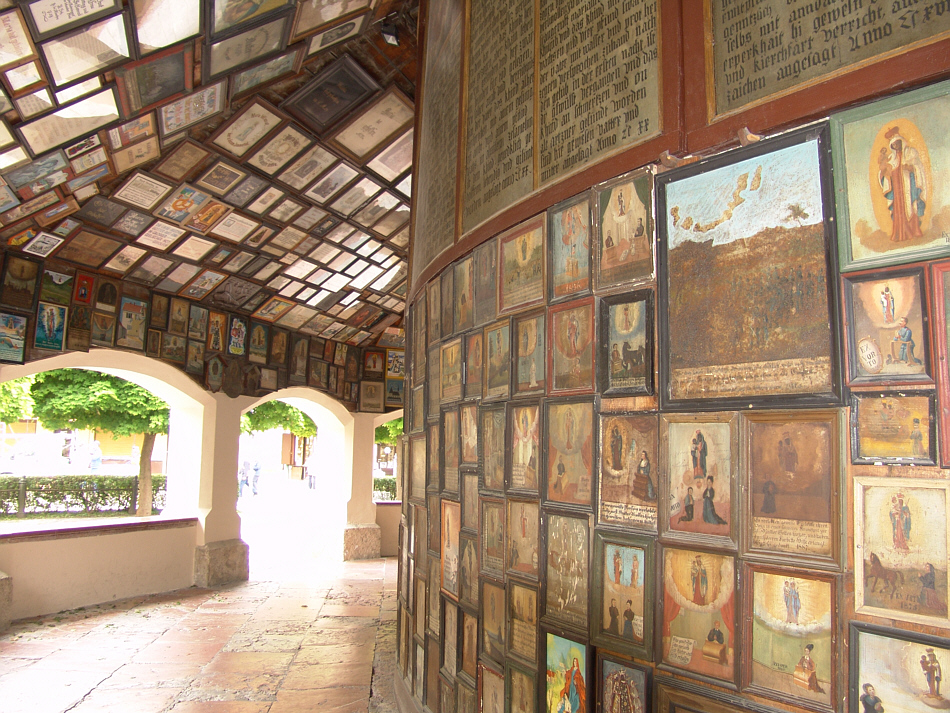 🇬🇷 Greece and 5 moreVotive offering
Objects left in sacred places to honor a deity or fulfill a vow, never to be recovered.Tradition · Protection · Healing Living
🇬🇷 Greece and 5 moreVotive offering
Objects left in sacred places to honor a deity or fulfill a vow, never to be recovered.Tradition · Protection · Healing Living
Related elsewhere
All tradition 🇮🇳 India and 4 moreTantraतन्त्र
An esoteric yogic tradition from India focusing on ritual, mantra, and body-based spiritual practices.Tradition · Power and authority · Change and initiation Living
🇿🇦 South Africa and 5 moreMurder for body parts
The killing of people to harvest body parts for traditional medicine or the illegal organ trade.Belief · Cursing and harm · Power and authority Living
🇮🇳 India and 4 moreTantraतन्त्र
An esoteric yogic tradition from India focusing on ritual, mantra, and body-based spiritual practices.Tradition · Power and authority · Change and initiation Living
🇿🇦 South Africa and 5 moreMurder for body parts
The killing of people to harvest body parts for traditional medicine or the illegal organ trade.Belief · Cursing and harm · Power and authority Living
 🇿🇦 South AfricaSympathetic magic
A magical principle based on imitation and contact to influence the worldTradition · Protection · Healing Historical
🇿🇦 South AfricaSympathetic magic
A magical principle based on imitation and contact to influence the worldTradition · Protection · Healing Historical
 🇮🇳 India and 5 moreSpirit possession
A global belief that spirits or demons can take control of a person's body and mindBelief · Cursing and harm · Power and authority Living
🇮🇳 India and 5 moreSpirit possession
A global belief that spirits or demons can take control of a person's body and mindBelief · Cursing and harm · Power and authority Living