
Legends of blood-drinking entities exist across many cultures. The modern vampire concept emerged from early eighteenth-century Central Europe. Ancient civilizations held tales of demonic spirits that consumed flesh or blood.
- Modern vampire folklore originated in early eighteenth-century Central Europe.
- Ancient Mesopotamian demons like Lamashtu preyed on newborns and blood.
- Chinese jiangshi are reanimated corpses controlled by sorcerers with spells.
- Malaysian penanggalan detach their heads to fly and seek blood at night.
- Indonesian corpses use glass beads and needles to prevent becoming undead.
What it is
Legends of vampires span millennia and continents. Ancient Mesopotamians, Hebrews, Greeks, and Romans told stories of demonic entities and blood-drinking spirits. These tales are seen as precursors to the modern vampire. The specific entity known today as a vampire originated in early eighteenth-century Central Europe. Most accounts describe vampires as evil beings, suicide victims, or witches who return from death. They can also be created by malevolent spirits possessing corpses or living people bitten by another vampire.
Where it comes from
Tales of the undead consuming blood or flesh appear in nearly every culture worldwide. The term vampire did not exist in ancient times. Blood-drinking activities were attributed to demons or spirits. Some scholars suggest these global legends influenced European folklore. However, historians do not strictly classify all such creatures as vampires under modern definitions. The word itself became common only after verbal traditions from Central Europe were recorded and published.
How it is done
In Chinese tradition, sorcerers reanimate corpses called jiangshi using spell-papers stuck to their faces. These hopping corpses follow the sorcerer back to their hometown for burial. If the paper falls off, the corpse becomes dangerous and attacks living creatures to absorb life essence. In Malaysia, families hang thorny plants around doors to stop the penanggalan. Its detached head fears the thorns because it might catch its intestines on them. Corpses in Indonesia are prepared with glass beads, eggs, and needles to prevent them from becoming undead.
Tools and materials
Amulets hung around children's cradles protected Jewish families from Lilith. Spell-papers containing names and birthdates controlled jiangshi corpses. Glass beads, eggs under armpits, and needles in palms prevented Indonesian corpses from rising. Earth stuffed into a vampire's mouth after death prevented it from becoming a demon. Thorns placed at doorways deterred flying heads seeking blood.
Vampire folklore, drawn and placed
- Living
- Revived
- Fading
- Historical
- Legendary
- Performed
What it is for
These beliefs often served to explain sudden deaths or epidemics. Mass hysteria led to public executions of people believed to be vampires in some areas. Parents used amulets to protect infants from child-stealing demons. Sorcerers used jiangshi to transport bodies home when families lacked funds for carts. Communities performed rituals to ensure the dead remained buried and did not harm the living.
Who does it
Scholars study these legends as part of global folklore history. In traditional contexts, sorcerers acted as specialists who could control undead corpses. Families hired these experts to manage deceased relatives. Religious texts like Sefer Hasidim describe how communities understood and feared these entities. Practitioners relied on specific rituals and objects to ward off or control supernatural threats.
Peoples and places
The Hmong people in Laos reported an epidemic where victims died with terrified faces. Indian folklore includes bhūta souls and the Brahmarākṣasa, a creature drinking blood from a skull. Japanese cinema introduced vampire themes in the late nineteen fifties, though native legends are scarce. Chinese jiangshi legends inspired a popular film genre in Hong Kong during the nineteen eighties. Southeast Asian cultures feature the penanggalan and pontianak, female spirits seeking revenge or blood.
At a glance: who, where and when
Who does it
Belief worlds
What people believe
Ancient Mesopotamian demons like Lamashtu preyed on newborns and pregnant women. She was described as a flesh-eating, blood-sucking monster. Jewish tradition viewed Lilith as a threat to women and children who drank blood. Hebrew law forbade eating human flesh or drinking blood, making her actions exceptionally evil. Chinese belief held that jiangshi formed when a soul failed to leave the body. They absorbed qi from victims rather than just drinking blood.
How scholars and sceptics see it
Anthropologists and historians trace vampire-like figures to ancient civilizations. Researchers note that almost every nation associated blood-drinking with a revenant or demon. Scholars distinguish between ancient demonic tales and the specific European vampire archetype. They analyze how colonial records and publications shaped the modern understanding of these creatures. Studies show how local folklore evolved into broader cultural myths over centuries.
Cautions and what is closed
Belief in vampires caused mass hysteria and public executions in some regions. People accused of being vampires faced lethal violence from their communities. The Mandurugo in the Philippines takes the form of an attractive girl before attacking. These legends often targeted vulnerable groups, including pregnant women and infants. Fear of these entities drove extreme protective measures and ritual preparations.
Compare and confuse
The Hebrew Alukah translates literally to leech and is synonymous with vampirism. Motetz Dam means blood sucker in Hebrew. The Babylonian lilu and lilitu gave rise to Lilith in Hebrew demonology. Gallu influenced the Graeco-Byzantine myth of Gello. Westerners often call jiangshi Chinese vampires, though they differ significantly from European types. The Penanggalan resembles the Leyak from Balinese folklore.
Questions people ask about Vampire folklore
What is vampire folklore?
It refers to global legends of blood-drinking spirits and undead revenants. The modern concept emerged from early eighteenth-century Central Europe. Ancient cultures held tales of demonic entities that consumed flesh or blood.
Where did vampire legends originate?
Tales of blood-drinking entities exist in nearly every culture worldwide. The specific term and entity known as a vampire originated in Central Europe. Ancient Mesopotamians, Hebrews, Greeks, and Romans had precursor stories.
What are jiangshi?
Jiangshi are Chinese corpses reanimated by sorcerers using spell-papers. They hop and follow the sorcerer to their hometown for burial. If the spell fails, they become dangerous and attack living creatures to absorb life essence.
Good reading and sources
The facts on this page come from the Wikipedia article "Vampire folklore by region", written by its contributors and used under the CC BY-SA 4.0 licence, and from its Wikidata record (CC0). EveryJaadu rewrote the text in its own words, with AI assistance, and compares every page with the article to make sure no passage is copied. It may be reused under the same CC BY-SA 4.0 licence with a link back.
It may contain mistakes. Names and customs differ from one community to the next, and some knowledge is closed to outsiders and left out here. This page describes belief and practice. It does not say that any of it works, it is not a how-to, and it is not medical advice. If something is wrong, tell us. Last refreshed 2026-10-05.
More from Romania
All the entries from Romania 🇮🇹 Italy and 5 moreTarottarocchi
A set of playing cards used for games and divinationTradition · Seeing and foretelling · Luck and prosperity Living
🇮🇹 Italy and 5 moreTarottarocchi
A set of playing cards used for games and divinationTradition · Seeing and foretelling · Luck and prosperity Living
 🇮🇷 Iran and 5 moreKnocking on wood
A gesture of tapping wood to ward off bad luck or prevent tempting fateBelief · Protection · Luck and prosperity Living
🇮🇷 Iran and 5 moreKnocking on wood
A gesture of tapping wood to ward off bad luck or prevent tempting fateBelief · Protection · Luck and prosperity Living
 🇷🇺 Russia and 2 moreCaul
A birth membrane kept as a talisman for luck and protection from drowningCharm · Protection · Luck and prosperity Historical
🇷🇺 Russia and 2 moreCaul
A birth membrane kept as a talisman for luck and protection from drowningCharm · Protection · Luck and prosperity Historical
 🇬🇷 Greece and 5 moreCrossroads (folklore)
A junction between worlds where spirits are met and deals are madeBelief · Speaking with spirits and the dead · Cursing and harm Living
🇬🇷 Greece and 5 moreCrossroads (folklore)
A junction between worlds where spirits are met and deals are madeBelief · Speaking with spirits and the dead · Cursing and harm Living
Related elsewhere
All belief 🇨🇳 ChinaTaotie饕餮
A zoomorphic mask on ancient Chinese bronzes and a mythological creature of gluttonyFigure · Protection · Cursing and harm Legendary
🇨🇳 ChinaTaotie饕餮
A zoomorphic mask on ancient Chinese bronzes and a mythological creature of gluttonyFigure · Protection · Cursing and harm Legendary
 🇮🇷 Iran and 1 moreJinnجِنّ
Supernatural beings in Islamic and pre-Islamic Arabian belief, created from smokeless fire.Being · Protection · Cursing and harm Living
🇮🇷 Iran and 1 moreJinnجِنّ
Supernatural beings in Islamic and pre-Islamic Arabian belief, created from smokeless fire.Being · Protection · Cursing and harm Living
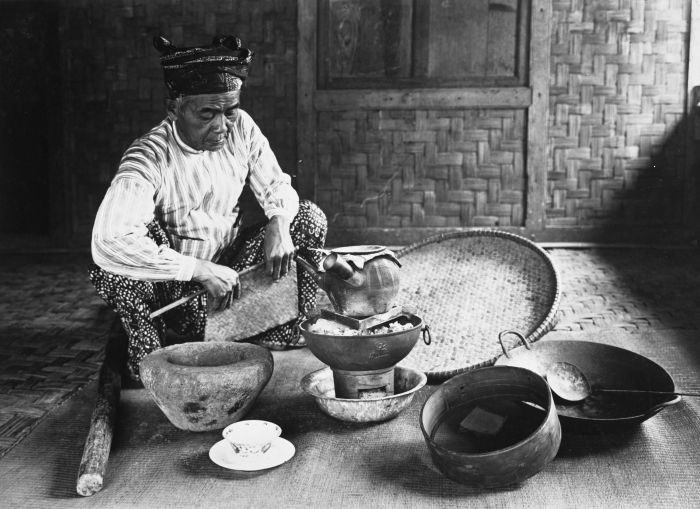 🇮🇩 Indonesia and 2 moreDukun
A traditional healer and spirit medium in Indonesian folk practiceTradition · Healing · Seeing and foretelling Living
🇮🇩 Indonesia and 2 moreDukun
A traditional healer and spirit medium in Indonesian folk practiceTradition · Healing · Seeing and foretelling Living
 🇨🇬 Republic of the CongoNkisi
Spirit containers and power figures from the Congo Basin used for justice and healingCharm · Protection · Healing Living
🇨🇬 Republic of the CongoNkisi
Spirit containers and power figures from the Congo Basin used for justice and healingCharm · Protection · Healing Living