
Ōkuninushi
In its own language: 大国主神
From Japanese Ōkuninushi, meaning 'Master of the Great Land' or 'Great Master of the Land'
A Japanese kami of the earth, nation-building, and protective magic.
Ōkuninushi is a central deity in Japanese mythology, originally ruling the terrestrial world before yielding power to heavenly gods. He is revered as a patron of agriculture, medicine, and protective magic, with his worship centered at Izumo Taisha.
- Central kami in Kojiki and Nihon Shoki myths
- God of nation-building, agriculture, and medicine
- Enshrined at Izumo Taisha in Shimane Prefecture
- Syncretized with Buddhist deity Daikokuten
- Ruled Ashihara no Nakatsukuni before kuni-yuzuri
What it is
Ōkuninushi stands as one of the most significant figures in Japanese mythology, serving as a divine ruler and a guardian spirit. He is identified as the head of the kunitsukami, the group of deities associated with the earth and local regions. Historically, he was viewed as the original sovereign of Ashihara no Nakatsukuni, the lush terrestrial realm that preceded the current age. His domain extends beyond territorial rule to include practical human concerns. He is worshipped as a god of nation-building, overseeing the formation of society and land. He is also credited with bringing agriculture and medicine to humanity, making him a vital figure for health and prosperity. In later traditions, he became associated with protective magic, shielding communities from harm and misfortune.
Where it comes from
The deity appears in Japan's oldest historical records, the Kojiki and the Nihon Shoki, compiled in the early eighth century. These texts place him as a central character in the myth cycle involving the sun goddess Amaterasu and the storm god Susanoo. Genealogies vary between sources; the Kojiki lists him as a descendant of Susanoo, while the Nihon Shoki names Susanoo as his direct father. His origins are deeply tied to the Izumo region in western Japan. Scholars suggest his prominence reflects the political history of the area, possibly symbolizing the absorption of the powerful Izumo province by the Yamato court. The Izumo Fudoki, a regional gazetteer, contains extensive myths about him under the name Ōanamochi, highlighting his ancient local roots.
How it is done
Worship of Ōkuninushi is conducted at shrines dedicated to him, with the Izumo Taisha being the primary center. Rituals involve offerings and prayers for health, safe travel, and successful endeavors. The deity is often syncretized with Buddhist figures, particularly Daikokuten, blending Shinto and Buddhist practices. Devotees seek his aid through traditional rites performed by priests. The mythology describes his actions as archetypal examples of wisdom and resilience, such as healing the White Hare of Inaba or enduring trials set by Susanoo. These stories serve as moral and spiritual guides rather than instructional manuals.
Tools and materials
Mythological narratives describe Ōkuninushi using specific items to overcome obstacles. A magical scarf provided by Suseribime protected him from snakes and insects during trials. He utilized a bow and arrows taken from Susanoo to defeat his rivals. A musical instrument called a koto was carried during his escape, its sound inadvertently revealing his location. In folk tradition, he is linked to black coloration and various amulets used for protection. The white hare serves as a symbolic companion representing gratitude and divine favor.
Ōkuninushi, drawn and placed
- Living
- Revived
- Fading
- Historical
- Legendary
- Performed
- Lineage
- Japanese mythology
What it is for
Devotees turn to Ōkuninushi for assistance in building stable lives and communities. He is invoked for agricultural success, ensuring good harvests and fertile land. As a god of medicine, he is sought after for healing and physical well-being. His role in protective magic makes him a target for prayers against evil influences and accidents. Families may pray for his blessing on new ventures or marriages. The deity is also associated with luck and fortune, particularly through his identification with Daikokuten, who is popularly regarded as a god of wealth and business success.
Who does it
Priests at shrines like Izumo Taisha lead formal worship and ceremonies. The sectarian group Izumo-taishakyo centers its beliefs around Ōkuninushi, with clergy maintaining traditional rituals. Historically, local shamans or mediums may have interacted with his spirit in Izumo. The deity's mythic persona includes romantic liaisons with various goddesses, resulting in numerous divine offspring. This aspect highlights his role in lineage and family continuity. Modern practitioners view him as a benevolent elder statesman of the spirit world.
Peoples and places
Ōkuninushi is primarily venerated in Japan, with strong historical ties to the Izumo region. The Izumo Province, now Shimane Prefecture, remains the heart of his cult. Other provinces, such as Harima, contain local variants of his myths in their Fudoki records. The deity's influence spread throughout Japan via state-sponsored shrine networks. His syncretism with Daikokuten made him accessible to common people across different social classes. Today, his worship continues among Japanese communities both domestically and in diaspora.
At a glance: who, where and when

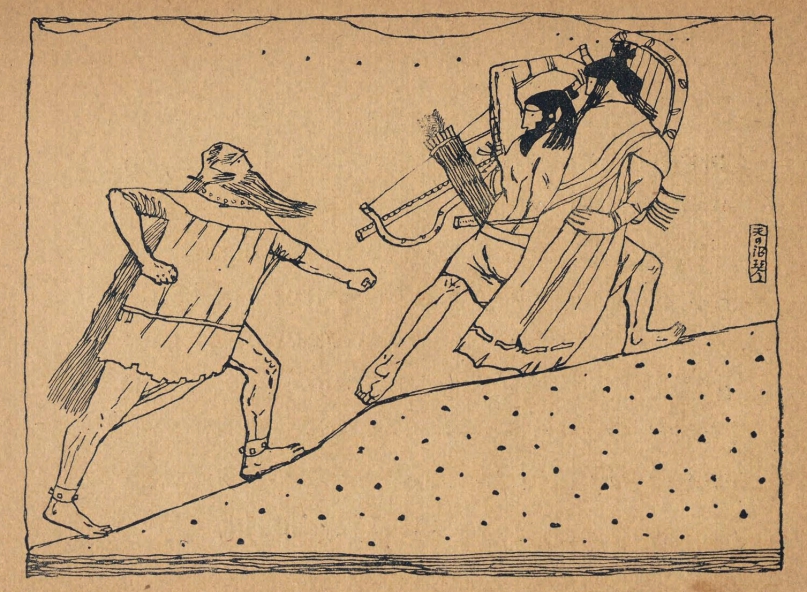


What people believe
In Shinto cosmology, Ōkuninushi represents the earthly counterpart to heavenly authority. He embodies the concept of kuni-yuzuri, the peaceful transfer of power from earth gods to heavenly descendants. This transition established the current cosmic order. He is believed to possess a dual nature, ruling both the visible world and the netherworld, kakuriyo. His spirit, or mitama, is considered distinct yet integral to his identity. The belief system emphasizes harmony, wisdom, and the resolution of conflict through cleverness rather than brute force.
How scholars and sceptics see it
Academics analyze Ōkuninushi through historical and literary lenses. Researchers note that his myths reflect the political unification of Japan under the Yamato dynasty. Anthropologists study his role in local community cohesion and ritual life. The comparison between his name and the Buddhist Daikokuten illustrates the complex interaction between Shinto and Buddhism before the Meiji era. Scholars also examine the gender dynamics in his myths, particularly his relationships with female deities. Skeptics view the stories as cultural narratives explaining natural phenomena and social structures.
Cautions and what is closed
No specific dangers or taboos are widely documented in standard sources regarding Ōkuninushi worship. However, respectful conduct is expected at sacred sites like Izumo Taisha. Misuse of religious symbols or disrespect toward shrine protocols can be considered offensive. There are no known reports of fraud or harmful practices directly associated with his mainstream worship. The deity's association with the underworld does not imply malevolence but rather a comprehensive jurisdiction over all realms.
Compare and confuse
Ōkuninushi is sometimes confused with other earth deities due to name variations and regional differences. He is equated with Ōmononushi, a deity of Mount Miwa, in some texts. His fusion with Daikokuten creates a hybrid figure combining Shinto and Buddhist attributes. Unlike Amaterasu, who represents heavenly order, Ōkuninushi grounds spirituality in the physical world. His narrative shares themes with other trickster or wise hero figures in global mythology, though his specific traits remain unique to Japanese tradition.
Law and persecution
Shrines dedicated to Ōkuninushi operate freely within Japan's legal framework protecting religious freedom. The Izumo Taisha maintains its status as a major religious institution. Historical suppression of Shinto during certain periods did not eliminate his worship but altered its public expression. Current laws do not restrict devotion to Ōkuninushi, and his festivals are celebrated openly. The separation of Shinto and Buddhism in the Meiji era led to the formal distinction of his identity from Daikokuten, though popular practice often retains the blend.
Questions people ask about Ōkuninushi
Who is Ōkuninushi?
He is a major kami in Japanese mythology, originally the ruler of the earthly realm. He is now worshipped as a god of agriculture, medicine, and protective magic, guiding communities toward prosperity and safety.
Where is Ōkuninushi from?
He originates from Japanese mythology, specifically associated with the Izumo region in western Japan. His myths are recorded in ancient texts like the Kojiki and the Nihon Shoki from the eighth century.
What is Ōkuninushi known for?
He is known for yielding his kingdom to heavenly gods, healing the White Hare of Inaba, and enduring trials set by Susanoo. He is revered for bringing civilization, medicine, and stability to Japan.
Is Ōkuninushi the same as Daikokuten?
They were syncretized in the past, with Ōkuninushi conflated with the Buddhist god Daikokuten. While distinct in strict theology, popular culture often treats them as related figures of wealth and protection.
How is Ōkuninushi worshipped today?
He is worshipped at shrines like Izumo Taisha, where priests perform rituals for health and national peace. Devotees pray to him for good harvests, medical recovery, and protection from misfortune.
Good reading and sources
- Ōkuninushi on WikipediaEncyclopedia
- More photos on Wikimedia CommonsPhotos and video
- Wikidata recordOpen data
The facts on this page come from the Wikipedia article "Ōkuninushi", written by its contributors and used under the CC BY-SA 4.0 licence, and from its Wikidata record (CC0). EveryJaadu rewrote the text in its own words, with AI assistance, and compares every page with the article to make sure no passage is copied. It may be reused under the same CC BY-SA 4.0 licence with a link back.
It may contain mistakes. Names and customs differ from one community to the next, and some knowledge is closed to outsiders and left out here. This page describes belief and practice. It does not say that any of it works, it is not a how-to, and it is not medical advice. If something is wrong, tell us. Last refreshed 2026-10-06.
More from Japan
All the entries from Japan 🇨🇳 China and 3 moreChinese dragon龍
A legendary water deity and imperial symbol in East Asian cultureBeing · Protection · Luck and prosperity Historical
🇨🇳 China and 3 moreChinese dragon龍
A legendary water deity and imperial symbol in East Asian cultureBeing · Protection · Luck and prosperity Historical
 🇯🇵 JapanOni鬼(おに)
A horned demon of Japanese folklore known for strength and evil deedsBeing · Cursing and harm · Luck and prosperity Legendary
🇯🇵 JapanOni鬼(おに)
A horned demon of Japanese folklore known for strength and evil deedsBeing · Cursing and harm · Luck and prosperity Legendary
 🇯🇵 JapanBaku獏
A Japanese spirit said to eat bad dreams and protect sleepersBeing · Protection Living
🇯🇵 JapanKuda-gitsune管狐 (kuda-gitsune)
A small spirit kept in a tube or sleeve to aid fortune-telling and cursing in Japanese folklore.Being · Seeing and foretelling · Cursing and harm Legendary
🇯🇵 JapanBaku獏
A Japanese spirit said to eat bad dreams and protect sleepersBeing · Protection Living
🇯🇵 JapanKuda-gitsune管狐 (kuda-gitsune)
A small spirit kept in a tube or sleeve to aid fortune-telling and cursing in Japanese folklore.Being · Seeing and foretelling · Cursing and harm Legendary
Related elsewhere
All being 🇮🇹 Italy and 5 morePrecious coral
A marine skeleton harvested for jewelry and worn as a protective charm in several culturesSubstance · Protection · Healing Living
🇮🇹 Italy and 5 morePrecious coral
A marine skeleton harvested for jewelry and worn as a protective charm in several culturesSubstance · Protection · Healing Living
 🇺🇸 United States and 2 moreLouisiana Voodoo
An African diasporic religion practiced in Louisiana from the 18th to early 20th centuriesTradition · Healing · Protection Historical
🇺🇸 United States and 2 moreLouisiana Voodoo
An African diasporic religion practiced in Louisiana from the 18th to early 20th centuriesTradition · Healing · Protection Historical
 🇹🇭 Thailand and 3 moreThai Buddha amuletsพระเครื่อง (phrakhrueang)
Sacred Buddhist images and relics worn for protection, merit, and fortune in Thailand.Charm · Protection · Luck and prosperity Living
🇹🇭 Thailand and 3 moreThai Buddha amuletsพระเครื่อง (phrakhrueang)
Sacred Buddhist images and relics worn for protection, merit, and fortune in Thailand.Charm · Protection · Luck and prosperity Living
 🇷🇺 Russia and 5 moreAmber
Fossilized tree resin used in jewelry and folk healing traditionsSubstance · Protection · Healing Living
🇷🇺 Russia and 5 moreAmber
Fossilized tree resin used in jewelry and folk healing traditionsSubstance · Protection · Healing Living