🇯🇵 Magic in Japan
362 entries from Japan, best known first, across 80 places of magic.
Onmyōdō is a Japanese system of divination and ritual magic rooted in the Chinese philosophies of yin-yang and the five elements. It evolved from astronomical and calendrical knowledge into a court institution that blended with Shinto beliefs to manage fortune, health, and spiritual protection.
- Abe no Seimei is the most famous onmyoji, active in the Heian period
- Shikigami are spirit servants summoned and controlled by practitioners
- Katatagae involves changing direction to avoid unlucky bearings
- The Tensha Shinto Prohibition Ordinance banned the practice in 1870
- Onmyoji handled kegare, spiritual pollution, unlike Shinto priests
Overview
This tradition began as an import from China and Korea during the sixth century, combining astronomy, calendar science, and elemental theory. Over time, it merged with indigenous Japanese beliefs, particularly Shinto and the worship of restless spirits known as goryo. The practice shifted from high-level state advisory work to include magical rites for protection and cursing. By the Heian period, it had become a distinct Japanese system that addressed both political decisions and personal well-being through the manipulation of auspicious forces.
Practices and beliefs
Practitioners used complex calculations based on celestial movements and seasonal changes to determine lucky or unlucky times and directions. They performed rituals to ward off evil influences, prevent disasters, and ensure agricultural success. A key feature was the summoning and control of shikigami, which were spirit servants used to carry out tasks or protect the practitioner. Divination helped guide major life events, such as moving capitals or choosing marriage dates, by identifying harmful energies in the environment.
Rites and charms
Rituals often involved purification and specific gestures to align with cosmic forces. Unlike Shinto priests who avoided impurity, onmyoji could handle kegare, or spiritual pollution, allowing them to perform protective ceremonies that others could not. These rites included casting talismans and conducting exorcisms to calm angry spirits. The community also observed strict rules about direction; if a person faced an unlucky bearing, they would change their path to avoid bad luck, a practice called katatagae.
Who practises
The main figures were onmyoji, civil servants appointed by the imperial court to manage these arts. They served as astronomers, diviners, and spiritual guards for the capital. Famous lineages, such as the Abe and Kamo families, dominated the field for centuries. Abe no Seimei remains the most celebrated figure, known for his exceptional skill in divination and magic. Today, while the official role has vanished, the title persists in popular culture as a symbol of occult mastery.
Regions and communities
The practice originated in the imperial capital and was centered around the court aristocracy. Its influence spread from the elite to the general public as the need for personal protection grew. The Abe and Kamo families held monopolies on the highest levels of the art within the capital region. Outside the court, local interpretations may have varied, but the core techniques remained tied to the centralized calendar and astronomical data maintained by the state.
The calendar
Daily life and major events were scheduled according to the onmyodo calendar. Specific days and hours were designated as auspicious or inauspicious for activities like starting a journey, building a house, or holding a funeral. The changing seasons dictated different types of rituals, with particular attention paid to transitional periods believed to be vulnerable to spiritual interference. Festivals and religious observances were often timed to coincide with favorable celestial alignments.
Law and the state
The system was officially part of the government structure under the Taiho Code, which defined the duties of onmyoji. In 1870, the Tensha Shinto Prohibition Ordinance banned the practice, labeling it superstition. After World War II, religious freedom allowed its revival, leading to the formation of modern organizations like Tensha Tsuchimikado Shinto in 1954. The legal status shifted from state mandate to private religious association.
Today
Modern Japan sees onmyodo primarily through popular media, including manga, anime, and novels that romanticize its history. While some groups claim continuity with the ancient traditions, the practice is largely a cultural heritage rather than a widespread religious activity. Scholars study it as a historical blend of science and magic, reflecting how pre-modern societies understood the natural world.
The facts in this overview come from the Wikipedia article "Onmyōdō", written by its contributors and used under the CC BY-SA 4.0 licence. EveryJaadu rewrote the text in its own words, with AI assistance, and compares every page with the article to make sure no passage is copied. It may be reused under the same CC BY-SA 4.0 licence with a link back.
Places of magic in Japan
 🇯🇵 Japan and 1 moreAinu religion
The animist spiritual beliefs and ritual practices of the Ainu people of Japan and RussiaTradition · Protection · Speaking with spirits and the dead Living
 🇺🇸 United States and 3 moreSandpainting
A ritual art of pouring colored sand to create temporary images for healing or spiritual teachingTradition · Healing · Speaking with spirits and the dead Living
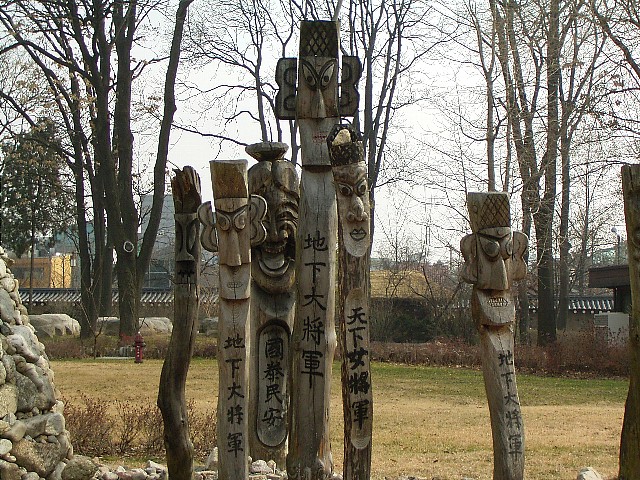 🇰🇷 South Korea and 1 moreJangseung장승
Wooden or stone poles that guard Korean villages and temples from evil spiritsTradition · Protection · Speaking with spirits and the dead Living
🇯🇵 Japan and 1 moreKuji-in九字印
A system of nine syllables and hand gestures used for protection and spiritual alignment in Japanese esoteric traditionsRite · Protection · Speaking with spirits and the dead Historical
🇯🇵 JapanYutaユタ
Okinawan folk shamans who guide families through spirits and fortune-tellingTradition · Protection · Healing Living
 🇯🇵 JapanMiko巫女
A Shinto shrine priestess and traditional female medium in JapanTradition · Speaking with spirits and the dead · Protection Living
 🇯🇵 JapanKagura神楽
A Shinto ritual dance where performers embody deities to purify and welcome spiritsTradition · Protection · Speaking with spirits and the dead Living
 🇯🇵 JapanShugendō修験道
A Japanese mountain ascetic path blending Esoteric Buddhism, Shinto, and folk ritualsTradition · Protection · Healing Living
🇯🇵 JapanShikigami式神
A conjured spirit from Japanese Onmyōdō, often bound to paper or animal form.Being · Power and authority · Cursing and harm Historical
 🇰🇷 South Korea and 3 moreKorean shamanism무속
A Korean folk religion of ritual specialists who mediate between humans and spirits.Tradition · Protection · Luck and prosperity Living
🇯🇵 JapanKitsunetsuki狐憑き
A Japanese folk belief in which a fox spirit enters and controls a human host.Belief · Cursing and harm · Speaking with spirits and the dead Historical
 🇯🇵 JapanInugami犬神
A Japanese spirit of animal possession and folk sorcery known as a curse god.Belief · Cursing and harm · Power and authority Historical
 🇯🇵 JapanFutomani太占
A Shinto divination method using heated deer shoulder blades to read future patternsOracle · Seeing and foretelling Living
 🇮🇳 India and 5 moreAsian witchcraft
A broad overview of magical practices and persecution across Asian culturesTradition · Cursing and harm · Protection Living
 🇨🇳 China and 5 moreRegional forms of shamanism
A global overview of indigenous spirit-interaction practices across Asia and the Americas.Tradition · Healing · Speaking with spirits and the dead Living
🇯🇵 JapanUkehi誓
A Japanese divination ritual using oaths and sortition to seek the will of the kamiRite · Seeing and foretelling · Cursing and harm Historical
 🇯🇵 JapanChinkon kishin鎮魂帰神
A Japanese spiritual practice combining soul calming with spirit possessionRite · Speaking with spirits and the dead · Healing Living
🇯🇵 JapanTanukitsuki狸憑き (たぬきつき)
A Japanese folk belief where a tanuki spirit possesses a human, causing illness and strange behavior.Belief · Cursing and harm Historical
 🇨🇳 China and 1 moreNuo folk religion傩 (Nuó)
A Chinese exorcistic tradition using wooden masks and ancestor worship to drive away malevolent forcesTradition · Protection · Speaking with spirits and the dead Living
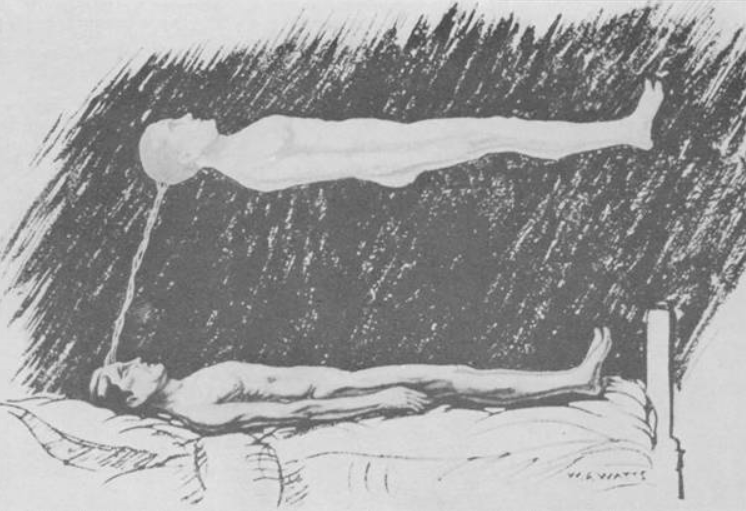 🇮🇳 India and 3 moreAstral projection
An intentional out-of-body experience where consciousness travels through the astral planeTradition · Speaking with spirits and the dead · Change and initiation Living
 🇯🇵 JapanHachiman八幡神
A Japanese deity of war and the imperial family, worshipped as both kami and bodhisattva.Being · Protection · Power and authority Living
 🇪🇬 Egypt and 1 morePsychopomp
A spirit or creature that guides the dead to the afterlifeBeing · Speaking with spirits and the dead Historical
 🇯🇵 JapanMononoke物の怪
A Japanese term for spirits believed to cause illness and misfortune through possession or curses.Being · Cursing and harm · Healing Historical
 🇨🇳 China and 1 moreFangxiangshi方相氏
An official Chinese exorcist who cleared demons from houses and tombsRite · Protection · Cleansing and purification Living
 🇳🇿 New Zealand and 4 moreFeather cloak
A garment of feathers worn by royalty and gods across cultures to signal rank or enable flightCharm · Power and authority · Wonder and entertainment Historical
 🇯🇵 JapanKabura-ya鏑矢
A Japanese arrow with a whistling tip used in ritual archery and Shinto ritesSubstance · Protection · Speaking with spirits and the dead Living
🇯🇵 JapanHashihime橋姫
A Japanese bridge spirit linked to jealousy and demonic transformation in folklore and Noh theatre.Being · Protection · Cursing and harm Historical
Photo credits on this page
The small pictures above come from Wikimedia Commons under free licences. Some are cropped to fit.
- Futomani: Miura Hiroyuki, Public domain, source
- Ainu religion: Unknown author, Public domain, source
- Shugendō: 唐山健志郎 (Kenshiro Karayama), CC BY-SA 3.0, source
- Jangseung: Yoshiaki Sano, CC BY-SA 2.0, source
- Asian witchcraft: Utagawa Kuniyoshi, Public domain, source
- Kagura: Elstner Hilton, Public domain, source
- Miko: Chris Gladis, Flickr user MShades, CC BY 2.0, source
- Feather cloak: Lusanaherandraton, CC BY-SA 4.0, source
- Hachiman: SLIMHANNYA, CC BY-SA 4.0, source
- Regional forms of shamanism: Man Sing, Public domain, source
- Chinkon kishin: Tomokiyo Yoshisane (友清歓真), also known as Tomokiyo Kyūgo (友清九吾), Public domain, source
- Korean shamanism: Steve46814, CC BY-SA 4.0, source
- Psychopomp: Unknown author, CC BY 2.5, source
- Sandpainting: Mnolf, CC BY-SA 3.0, source
- Kabura-ya: urasimaru, CC BY-SA 2.0, source
- Astral projection: Hereward Carrington, Sylvan Muldoon., Public domain, source
- Inugami: Sawaki Suushi (佐脇嵩之, Japanese, *1707, †1772), Public domain, source
- Nuo folk religion: Wikiwikiyarou, CC BY-SA 3.0, source
- Fangxiangshi: Gary Todd, CC0, source
- Mononoke: Unknown author, Public domain, source
The weekly digest
Every Monday: seven entries you may not know, what is on the calendar this week, and one rite drawn step by step.