Astral projection
from the word 'astral', promoted by nineteenth-century Theosophists
An intentional out-of-body experience where consciousness travels through the astral plane
Astral projection is a practice in esotericism where a subtle body leaves the physical form to explore other realms. It appears in Hindu and Taoist traditions, ancient Egyptian beliefs, and Western occultism.
- Term coined by nineteenth-century Theosophists
- Ancient Egyptians described the ba and ka
- Japanese ikiryō can curse enemies
- Considered a siddhi in Hindu yoga
- No scientific evidence supports objective travel
What it is
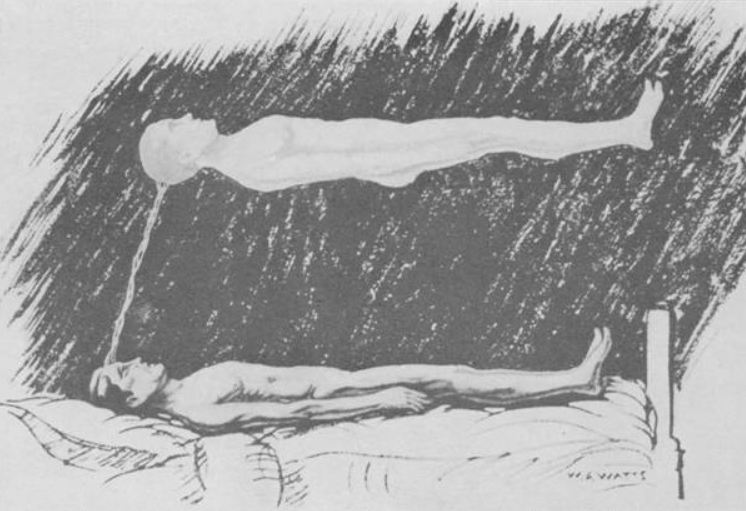
Astral projection is an intentional out-of-body experience within esoteric traditions. Practitioners believe a subtle body, often called the astral body or body of light, separates from the physical form. This subtle self then travels through the astral plane, a realm of intermediate light between Earth and Heaven. The practice is sometimes linked to dreams, meditation, or specific spiritual disciplines. It is viewed as a way to access inner worlds or gain spiritual knowledge.
Where it comes from
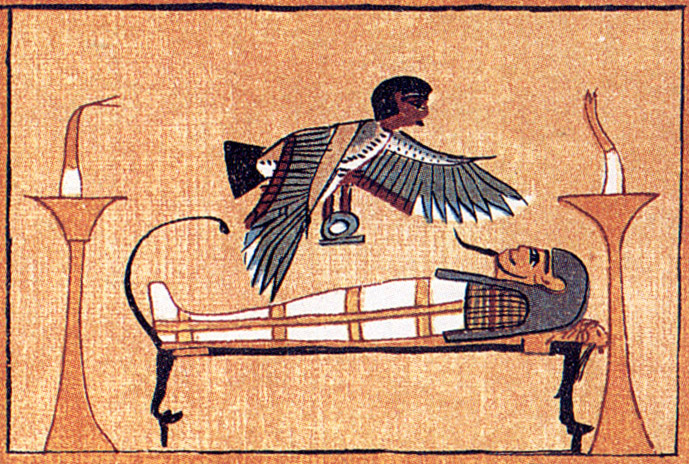
The concept of soul travel appears in many ancient cultures. Ancient Egyptian texts describe the soul (ba) hovering outside the body via the ka. In India, Hindu scriptures mention the Liṅga Śarīra. Japanese mythology describes the ikiryō, a living soul that can leave the body. The specific term 'astral projection' was coined and popularized by nineteenth-century Theosophists, who built upon earlier Hermetic and Neoplatonic ideas about subtle bodies and planetary spheres.
How it is done
Practitioners attempt to separate their consciousness from their physical body while sleeping or awake. Some use self-hypnosis or hallucinogenic substances to induce similar states. In yoga, it is considered a siddhi, or magical power, achieved through disciplined practice. Taoist alchemy uses breathing meditations to create an energy body. Inuit angakkuq are said to have innate abilities to travel to remote places for healing or consultation without formal training.
Tools and materials
The primary tool is the subtle body itself, which acts as a vehicle for consciousness. Western esotericism often describes a psychic silver cord connecting the astral body to the physical form during separation. Taoist practices may use breath control to circulate energy into a 'pearl'. Some accounts mention falling dreams as a trigger for the experience. The silver cord is sometimes interpreted metaphorically as the spine in religious texts.
Astral projection, drawn and placed
- Living
- Revived
- Fading
- Historical
- Legendary
- Performed
- Lineage
- Western esotericism
- Timing
- during sleep or wakefulness
What it is for
The practice serves various goals depending on the culture. Waiwai shamans use soul flight to heal, consult cosmological beings, or seek abundance. Inuit angakkuq travel to stop bad luck or cure illness. Hindu yogis view it as a step toward spiritual advancement and fuller control of the gross body. In Japanese belief, an ikiryō may leave to curse an enemy or appear when the body is critically ill.
Who does it
Practitioners vary widely. Inuit angakkuq are individuals with special, innate capabilities unavailable to others. Hindu yogis achieve it through rigorous self-discipline and meditation. Western esotericists, such as Theosophists, study it as part of occult philosophy. Notable figures include Emanuel Swedenborg, who wrote extensively about his experiences, and Indian teachers like Meher Baba, who described the conscious use of the astral body.
Peoples and places
The belief spans multiple regions. Ancient Egyptians viewed the ba and ka as distinct soul components. Hindus see it as a siddhi achievable through yoga. Japanese folklore describes the ikiryō, a soul manifestation often linked to strong emotions like grudge. Taoists cultivate an energy body through alchemical breathing. Theosophists and Rosicrucians developed complex systems of astral planes and subtle bodies based on Hermetic thought.
At a glance: who, where and when
What people believe
The worldview assumes a multi-layered reality. The astral plane is an intermediate world populated by angels, demons, and spirits. Neoplatonism views the individual as a microcosm reflecting the macrocosm. A silver cord is believed to link the separated bodies. Some traditions divide the astral environment into levels, including heavens, hells, and abstract states.
When it is done
The practice is not tied to specific festivals or calendar days. It is generally performed during daily life, often during sleep or moments of deep meditation. Inuit angakkuq may travel at any time to address community needs. Japanese ikiryō appear when the body is sick or when intense hatred is felt. There are no fixed seasonal or lunar requirements for the experience.
How scholars and sceptics see it
Scientific consensus characterizes astral projection as pseudoscience. Researchers note no evidence that consciousness can function separately from neural activity. Psychologists explain the experiences as delusions, hallucinations, or vivid dreams. Parapsychological experiments attempting to verify distant viewing have yielded unclear results. Scholars attribute reports to neuroanatomy, prior knowledge, and human imagination rather than objective travel.
Cautions and what is closed
Some traditions warn of risks. In Japan, an ikiryō leaving due to a grudge is seen as malevolent and harmful. Inuit beliefs classify soul wandering as a culture-specific disorder. Scientific critics argue that reliance on anecdotal testimonials can be misleading. There is no medical advice associated with the practice, but some individuals report negative or horrific experiences in the astral environment.
Compare and confuse
Astral projection is related to the out-of-body experience and near-death experiences. It differs from the Japanese ikiryō, which is often involuntary and linked to emotion. The term 'etheric travel' is sometimes used to distinguish physical-world observation from astral plane exploration. It shares similarities with shamanic soul flight found among the Waiwai and Inuit peoples.
Questions people ask about Astral projection
What is astral projection?
It is an intentional out-of-body experience where a subtle body travels through the astral plane. The term was popularized by nineteenth-century Theosophists, though similar concepts exist in ancient Egyptian and Hindu traditions.
Where does the belief originate?
It appears in many cultures. Ancient Egyptian texts describe soul travel. Hindu scriptures mention the Liṅga Śarīra. Japanese mythology features the ikiryō. The specific modern term comes from Western esotericism and Theosophy.
How is it practiced?
Practitioners attempt to separate consciousness from the physical body during sleep or wakefulness. Methods include meditation, self-hypnosis, and yoga discipline. Some indigenous groups, like the Inuit, believe certain individuals have innate abilities.
Is there scientific proof?
No. Scientists characterize it as pseudoscience. Research shows no evidence that consciousness can operate independently of brain activity. Explanations include hallucinations, dreams, and psychological factors.
Good reading and sources
- Astral projection on WikipediaEncyclopedia
- More photos on Wikimedia CommonsPhotos and video
- Wikidata recordOpen data
The facts on this page come from the Wikipedia article "Astral projection", written by its contributors and used under the CC BY-SA 4.0 licence, and from its Wikidata record (CC0). EveryJaadu rewrote the text in its own words, with AI assistance, and compares every page with the article to make sure no passage is copied. It may be reused under the same CC BY-SA 4.0 licence with a link back.
It may contain mistakes. Names and customs differ from one community to the next, and some knowledge is closed to outsiders and left out here. This page describes belief and practice. It does not say that any of it works, it is not a how-to, and it is not medical advice. If something is wrong, tell us. Last refreshed 2026-10-06.
More from India
All the entries from India 🇹🇷 Turkey and 5 moreEvil eye
A curse believed to be cast by a jealous glare and the charms used to stop itBelief · Protection Living
🇹🇷 Turkey and 5 moreEvil eye
A curse believed to be cast by a jealous glare and the charms used to stop itBelief · Protection Living
 🇬🇷 Greece and 2 moreAstragalomancy
Divination by casting marked bones, carved rods, or numbered diceOracle · Seeing and foretelling · Speaking with spirits and the dead Living
🇬🇷 Greece and 2 moreAstragalomancy
Divination by casting marked bones, carved rods, or numbered diceOracle · Seeing and foretelling · Speaking with spirits and the dead Living
 🇷🇴 Romania and 5 moreVampire folklore
Global legends of blood-drinking spirits and undead revenantsBelief · Cursing and harm · Protection Historical
🇷🇴 Romania and 5 moreVampire folklore
Global legends of blood-drinking spirits and undead revenantsBelief · Cursing and harm · Protection Historical
 🇮🇳 IndiaLeft-Hand and Right-Hand Paths
Two distinct orientations in occult magic, dividing taboo-breaking from orthodoxy.Tradition · Change and initiation · Power and authority Living
🇮🇳 IndiaLeft-Hand and Right-Hand Paths
Two distinct orientations in occult magic, dividing taboo-breaking from orthodoxy.Tradition · Change and initiation · Power and authority Living
Related elsewhere
All tradition 🇺🇸 United StatesGhost DanceNanissaanah
A circular movement seeking spiritual renewal and reunion with ancestorsRite · Speaking with spirits and the dead · Change and initiation Living
🇺🇸 United StatesGhost DanceNanissaanah
A circular movement seeking spiritual renewal and reunion with ancestorsRite · Speaking with spirits and the dead · Change and initiation Living
 🇮🇳 IndiaChakraचक्र
Meditation points in the subtle body used in Hindu and Buddhist yogaTradition · Speaking with spirits and the dead · Change and initiation Living
🇮🇳 IndiaChakraचक्र
Meditation points in the subtle body used in Hindu and Buddhist yogaTradition · Speaking with spirits and the dead · Change and initiation Living
 🇺🇸 United States and 1 moreMedicine wheel
Circular stone formations built by Indigenous peoples of North America for ceremony and astronomy.Tradition · Speaking with spirits and the dead · Power and authority Living
🇺🇸 United States and 1 moreMedicine wheel
Circular stone formations built by Indigenous peoples of North America for ceremony and astronomy.Tradition · Speaking with spirits and the dead · Power and authority Living
 🇳🇬 NigeriaOrunmilaỌ̀rúnmìlà
Yoruba deity of wisdom and the creator of the Ifá divination systemBeing · Seeing and foretelling · Speaking with spirits and the dead Living
🇳🇬 NigeriaOrunmilaỌ̀rúnmìlà
Yoruba deity of wisdom and the creator of the Ifá divination systemBeing · Seeing and foretelling · Speaking with spirits and the dead Living