
Psychopomp
from Greek psychopompós, meaning 'guide of souls'
A spirit or creature that guides the dead to the afterlife
A psychopomp is a being found in many religions and mythologies whose duty is to escort souls from the world of the living to the next realm. These figures appear across cultures as gods, animals, or spirits, serving as neutral conductors rather than judges of the deceased.
- The word comes from Greek for 'guide of souls'
- Anubis guided souls in ancient Egypt
- Charon ferried souls in Greek mythology
- Shamans guide souls in many indigenous traditions
- Birds like ravens and owls often serve as psychopomps
What it is
A psychopomp is a supernatural entity tasked with leading the recently departed from Earth into the afterlife. This role is strictly one of guidance, without any power to judge the soul's worthiness. Such beings are depicted across history as deities, angels, demons, or animals like birds and horses. They frequently appear in funerary art, symbolizing the transition between life and death.
Where it comes from
The concept spans ancient civilizations. In Egypt, Anubis performed this duty. Greeks relied on Hermes and Charon, while Romans used Mercury. Norse mythology features Valkyries, and Aztec belief includes Xolotl. Slavic traditions cite Morana, and Etruscans revered Vanth. The term itself derives from Greek roots describing a soul conductor.
How it is done
Psychopomps do not force the soul but meet it at the threshold of death. In some beliefs, they retrieve the spirit violently from the body. Others describe them waiting outside homes or at deathbeds. Figures like the Filipino anito wait at the foot of the bed to guide the soul. In Akan religion, Amokye fishes souls from a river, requiring payment for passage.
Tools and materials
Tools vary by culture. Charon uses a boat to cross waters. Zoroastrian tradition involves the Chinvat Bridge. Birds such as ravens, crows, and owls often serve as animal psychopomps, sometimes appearing in large groups. Human-like figures may use ropes or nets to extract souls from the dying.
Psychopomp, drawn and placed
- Living
- Revived
- Fading
- Historical
- Legendary
- Performed
- Lineage
- death deity
- Timing
- at death
What it is for
The primary purpose is safe transit for the deceased. Families and communities rely on these beings to ensure the soul reaches its destination. In shamanic contexts, psychopomp work also assists newborns entering the world. It provides a structured path for the soul, preventing it from becoming lost or trapped.
Who does it
Practitioners include shamans who guide souls during rituals. Deities like Hecate or Jesus are seen as divine psychopomps. In Chinese folk religion, Heibai Wuchang (Black and White Impermanence) act as official escorts. Shamans may also perform this role for the living, introducing new souls into existence.
Peoples and places
Many cultures recognize these figures. Egyptians had Anubis; Greeks had Hermes. Hindus view Pushan and Shiva in this light. Japanese mythology calls them shinigami. Filipinos believe Magwayen guides souls. Akan people trust Amokye. Zoroastrians see Daena as a self-guide. Jewish and Christian traditions include archangels like Samael and Michael.
At a glance: who, where and when
Who does it
Occasions
What people believe
Beliefs hold that death requires a guide because the soul cannot navigate alone. Some traditions say souls are ripped from bodies violently. Others depict gentle escorts. Monotheistic faiths often reject specific death gods, attributing the role to God's agents like Azrael in Islam or Samael in Judaism. Jungian psychology sees them as mediators between conscious and unconscious minds.
When it is done
These entities appear at the moment of death. They are invoked during funeral rites or when a person is dying. In some cultures, they are called upon by family members at the bedside. Their presence is tied to the immediate transition of the soul, not seasonal festivals.
How scholars and sceptics see it
Scholars view psychopomps as symbols of transition. Jungian analysts interpret them as representations of the psyche's bridge between awareness and the unconscious. Historians note their prevalence in funerary art, indicating a universal human concern for the dead's journey. Anthropologists study shamanic roles in soul retrieval.
Cautions and what is closed
Some beliefs describe the extraction of the soul as violent or traumatic. In Akan tradition, failure to pay Amokye can block entry to the afterlife. Misconduct may result in a hideous appearance of the guiding spirit, as in Zoroastrianism. These narratives reflect cultural anxieties about proper burial and moral conduct.
Compare and confuse
Psychopomps are distinct from judges of the dead, who assess morality. They differ from reapers like the Grim Reaper, who personify death itself. While similar to angels in Abrahamic faiths, psychopomps are often polytheistic figures. The term encompasses diverse beings, from animals to deities, united by their guiding function.
Questions people ask about Psychopomp
What is a psychopomp?
A psychopomp is a spirit, deity, or creature that guides newly deceased souls from Earth to the afterlife. They act as neutral conductors, not judges.
Where does the word come from?
It comes from the Greek word psychopompós, which literally means 'guide of souls'. It describes the function of escorting the dead.
Are psychopomps only humans?
No. They can be gods, angels, demons, or animals. Examples include horses, deer, dogs, and various birds like ravens, crows, and owls.
Do psychopomps judge the dead?
Their role is strictly to guide. They do not evaluate the soul's deeds or determine its fate. That task belongs to other figures in many myths.
Good reading and sources
- Psychopomp on WikipediaEncyclopedia
- More photos on Wikimedia CommonsPhotos and video
- Wikidata recordOpen data
The facts on this page come from the Wikipedia article "Psychopomp", written by its contributors and used under the CC BY-SA 4.0 licence, and from its Wikidata record (CC0). EveryJaadu rewrote the text in its own words, with AI assistance, and compares every page with the article to make sure no passage is copied. It may be reused under the same CC BY-SA 4.0 licence with a link back.
It may contain mistakes. Names and customs differ from one community to the next, and some knowledge is closed to outsiders and left out here. This page describes belief and practice. It does not say that any of it works, it is not a how-to, and it is not medical advice. If something is wrong, tell us. Last refreshed 2026-10-15.
More from Egypt
All the entries from Egypt 🇬🇷 Greece and 5 moreZeusΖεύς
Supreme king of the Greek gods and ruler of the sky and thunderBeing · Power and authority Legendary
🇬🇷 Greece and 5 moreZeusΖεύς
Supreme king of the Greek gods and ruler of the sky and thunderBeing · Power and authority Legendary
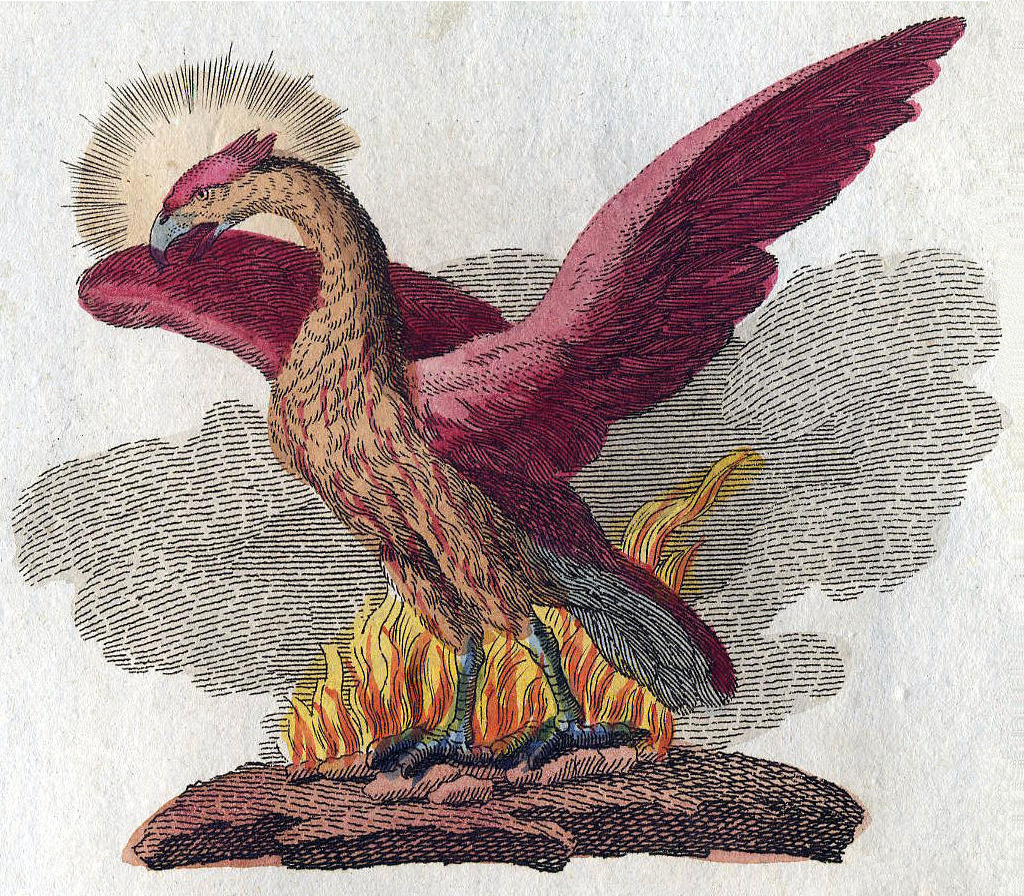 🇬🇷 Greece and 2 morePhoenix
A legendary bird that dies and is reborn from its own ashesBeing · Wonder and entertainment Legendary
🇬🇷 Greece and 2 morePhoenix
A legendary bird that dies and is reborn from its own ashesBeing · Wonder and entertainment Legendary
 🇮🇹 Italy and 5 moreSaint Michael
A Christian archangel who defends the faithful and weighs soulsBeing · Protection · Cursing and harm Living
🇮🇹 Italy and 5 moreSaint Michael
A Christian archangel who defends the faithful and weighs soulsBeing · Protection · Cursing and harm Living
 🇬🇷 Greece and 1 moreMinoan Genius
A composite creature from Bronze Age Crete, often shown as a libation bearer or sacrificial attendant.Being · Protection · Speaking with spirits and the dead Legendary
🇬🇷 Greece and 1 moreMinoan Genius
A composite creature from Bronze Age Crete, often shown as a libation bearer or sacrificial attendant.Being · Protection · Speaking with spirits and the dead Legendary
Related elsewhere
All being 🇮🇳 IndiaChakraचक्र
Meditation points in the subtle body used in Hindu and Buddhist yogaTradition · Speaking with spirits and the dead · Change and initiation Living
🇮🇳 IndiaChakraचक्र
Meditation points in the subtle body used in Hindu and Buddhist yogaTradition · Speaking with spirits and the dead · Change and initiation Living
 🇲🇳 Mongolia and 2 moreMongolian shamanismBöö mörgöl
The animistic and shamanic ethnic religion of the Mongol peoples, centered on sky worship and ancestral spirits.Tradition · Protection · Healing Living
🇮🇶 IraqKispu
An ancient Mesopotamian ritual to feed and honour the dead ancestorsRite · Speaking with spirits and the dead · Protection Historical
🇲🇳 Mongolia and 2 moreMongolian shamanismBöö mörgöl
The animistic and shamanic ethnic religion of the Mongol peoples, centered on sky worship and ancestral spirits.Tradition · Protection · Healing Living
🇮🇶 IraqKispu
An ancient Mesopotamian ritual to feed and honour the dead ancestorsRite · Speaking with spirits and the dead · Protection Historical
 🇲🇽 Mexico and 5 moreDay of the DeadDía de los Muertos
A Mexican holiday honoring the dead with altars, food, and humor during Allhallowtide.Tradition · Speaking with spirits and the dead · Luck and prosperity Living
🇲🇽 Mexico and 5 moreDay of the DeadDía de los Muertos
A Mexican holiday honoring the dead with altars, food, and humor during Allhallowtide.Tradition · Speaking with spirits and the dead · Luck and prosperity Living