All entries
2,635 entries so far, best known first. 2,304 more are on the list to be written. Narrow by region, kind, purpose, practitioner, belief world, occasion or how alive it is.
RegionSouth AsiaSoutheast AsiaEast AsiaCentral Asia and the CaucasusMiddle EastNorth AfricaSub-Saharan AfricaEuropeNorth AmericaLatin America and the CaribbeanOceania
PurposeProtectionHealingSeeing and foretellingLuck and prosperityLove and attractionCursing and harmCleansing and purificationSpeaking with spirits and the deadChange and initiationBinding and oathsPower and authorityWonder and entertainment
WhoShamansFolk healersPriests and ritual specialistsWitches, sorcerers and cunning folkDiviners and readersMediums and the possessedCeremonial magicians and alchemistsHouseholds and ordinary peopleStage magiciansScholars and sceptics
BeliefHindu and TantricBuddhistJainMuslim and SufiJewishChristianSikhZoroastrianShinto and TaoistIndigenous and shamanicAfrican and Afro-diasporicPagan and NeopaganEsoteric and occultFolk and village customSecular and stageOther traditions
 🇯🇵 JapanYōkai妖怪
A vast class of supernatural spirits and entities in Japanese folkloreBeing · Cursing and harm · Luck and prosperity Historical
🇯🇵 JapanKuda-gitsune管狐 (kuda-gitsune)
A small spirit kept in a tube or sleeve to aid fortune-telling and cursing in Japanese folklore.Being · Seeing and foretelling · Cursing and harm Legendary
 🇯🇵 JapanKitsuneきつね
A Japanese fox spirit known for shapeshifting and trickeryBeing · Cursing and harm · Protection Legendary
 🇯🇵 JapanTengu天狗
Japanese mountain spirits that evolved from ominous birds into protective forest guardians.Being · Cursing and harm · Protection Legendary
🇯🇵 JapanKitsunetsuki狐憑き
A Japanese folk belief in which a fox spirit enters and controls a human host.Belief · Cursing and harm · Speaking with spirits and the dead Historical
🇯🇵 JapanYutaユタ
Okinawan folk shamans who guide families through spirits and fortune-tellingTradition · Protection · Healing Living
 🇯🇵 JapanAbe no Seimei安倍 晴明
A historical court official turned legendary Japanese onmyōji and folk heroFigure · Protection · Seeing and foretelling Legendary
 🇨🇳 China and 5 moreJoss paper金紙
Paper burned as money and goods for ancestors, gods and the deadCharm · Speaking with spirits and the dead · Luck and prosperity Living
🇨🇳 China and 4 moreKitchen God灶君
The Chinese hearth deity who reports domestic conduct to the Jade EmperorBeing · Protection · Luck and prosperity Living
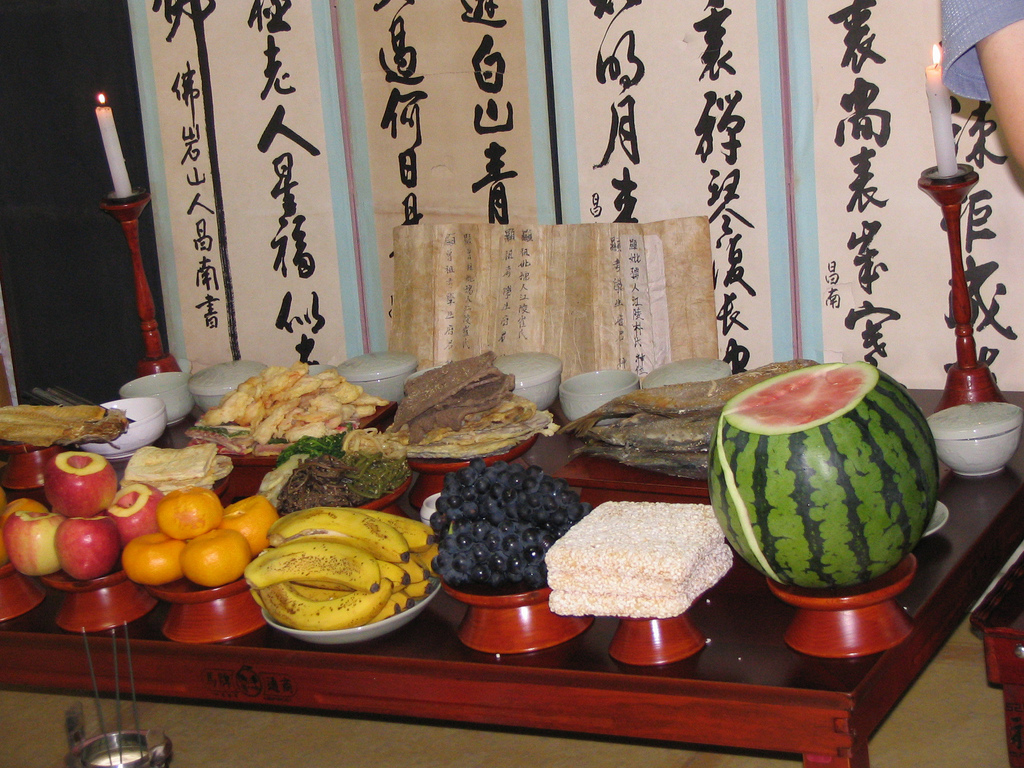 🇰🇷 South Korea and 1 moreChuseok추석 (Chuseok), 한가위 (Hangawi)
A Korean autumn harvest festival marked by ancestral rites and feasting on the full moon.Tradition · Speaking with spirits and the dead · Luck and prosperity Living
 🇯🇵 JapanKodama木霊
A tree spirit in Japanese folklore that brings misfortune if the host tree is harmedBeing · Cursing and harm Living
 🇯🇵 JapanOfudaお札/御札 (ofuda)
Paper and wooden talismans from Japanese Shinto shrines and Buddhist templesCharm · Protection · Cleansing and purification Living
🇨🇳 China and 3 moreQi氣 / 气
A vital force in Chinese philosophy and medicine, believed to flow through all living things.Substance · Healing · Power and authority Living
 🇯🇵 JapanŌkuninushi大国主神
A Japanese kami of the earth, nation-building, and protective magic.Being · Protection · Healing Living
 🇯🇵 Japan and 1 moreMisogi禊
A Shinto rite of full-body purification using cold waterRite · Cleansing and purification · Speaking with spirits and the dead Living
🇯🇵 JapanShikigami式神
A conjured spirit from Japanese Onmyōdō, often bound to paper or animal form.Being · Power and authority · Cursing and harm Historical
 🇨🇳 China and 3 moreQilin麒麟
A legendary chimerical creature from Chinese mythology that signals the arrival or death of a sage.Being · Power and authority Legendary
 🇨🇳 China and 1 moreYue Lao月下老人
The Chinese deity of marriage who binds destined couples with red cordsBeing · Love and attraction · Binding and oaths Legendary
 🇨🇳 China and 5 moreQingming Festival清明节
A spring day for sweeping graves, feeding the dead and honouring ancestorsTradition · Speaking with spirits and the dead · Protection Living
🇯🇵 JapanKamo no Yasunori賀茂 保憲
A Heian-era onmyōji and teacher of Abe no Seimei in Japanese esoteric artsFigure · Seeing and foretelling · Cursing and harm Historical
 🇯🇵 JapanTsukumogami付喪神
Household objects that gain a spirit after reaching their hundredth year in Japanese folklore.Being · Cursing and harm Historical
 🇯🇵 JapanKagura神楽
A Shinto ritual dance where performers embody deities to purify and welcome spiritsTradition · Protection · Speaking with spirits and the dead Living
 🇯🇵 JapanOmikujiおみくじ
Paper fortunes drawn at Japanese shrines and temples to reveal luck and life adviceOracle · Seeing and foretelling · Luck and prosperity Living
 🇨🇳 ChinaLan Caihe藍采和
An ambiguous Taoist immortal known for a flower basket and wandering songsBeing · Wonder and entertainment Legendary
🇨🇳 China and 3 moreZi Wei Dou Shu紫微斗數
A Chinese natal astrology system mapping stars across twelve life palacesTradition · Seeing and foretelling Living
 🇨🇳 ChinaChinese alchemy煉丹術
A Taoist pursuit of longevity through elixirs and internal cultivationTradition · Healing · Speaking with spirits and the dead Historical
 🇯🇵 JapanOmamori御守/お守り
Japanese amulets from shrines and temples for luck and protectionCharm · Protection · Luck and prosperity Living
 🇨🇳 China and 1 moreFulu符籙
Taoist talismans with cryptic symbols used for healing and protectionCharm · Healing · Protection Living
 🇨🇳 China and 2 moreJiang Ziya姜子牙
A historical strategist and war god who helped establish the Zhou dynastyFigure · Power and authority · Cursing and harm Historical
 🇨🇳 China and 1 moreJiangshi殭屍
A Chinese corpse said to rise and hop, feared for its strengthBeing · Cursing and harm Legendary
 🇯🇵 Japan and 2 moreTanabataたなばた (七夕)
A Japanese celebration of star-crossed lovers and written wishesTradition · Luck and prosperity · Wonder and entertainment Living
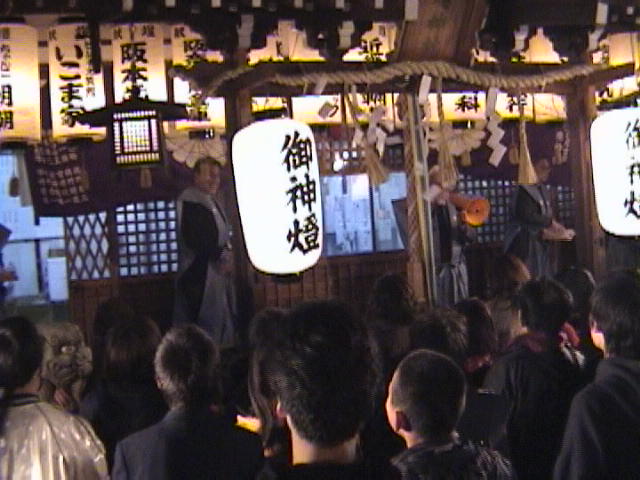 🇯🇵 JapanSetsubun節分
A Japanese seasonal rite to drive away bad luck and welcome spring with roasted beansRite · Protection · Luck and prosperity Living
 🇯🇵 JapanMiko巫女
A Shinto shrine priestess and traditional female medium in JapanTradition · Speaking with spirits and the dead · Protection Living
 🇨🇳 China and 1 moreFeng Shan封禪
An imperial rite performed at Mount Tai to honor heaven and earth and confirm the mandate of rule.Rite · Power and authority · Speaking with spirits and the dead Historical
 🇯🇵 JapanShugendō修験道
A Japanese mountain ascetic path blending Esoteric Buddhism, Shinto, and folk ritualsTradition · Protection · Healing Living
 🇯🇵 JapanItakoイタコ
Blind women in Japan who train to channel spirits and communicate with the dead.Tradition · Speaking with spirits and the dead · Seeing and foretelling Fading
🇨🇳 ChinaChen Tuan陳摶
A Chinese Taoist sage known for internal arts and sleep cultivation methodsFigure · Healing · Power and authority Historical
 🇯🇵 JapanShinto shrine神社 (jinja)
A structure housing kami deities within the Shinto tradition of JapanTradition · Protection · Speaking with spirits and the dead Living
 🇨🇳 China and 1 moreAncestor veneration in China中國傳統宗法性宗教
Rites for dead kin who are thought to watch over the familyTradition · Protection · Speaking with spirits and the dead Living
 🇨🇳 ChinaHe Xiangu何仙姑
A female immortal from Chinese Taoist legend known for divination and lotus magicFigure · Seeing and foretelling · Healing Legendary
 🇨🇳 China and 1 moreDongyue Dadi東嶽大帝
The Chinese mountain god of Mount Tai who rules lifespans and underworld recordsBeing · Speaking with spirits and the dead · Power and authority Living
 🇯🇵 JapanKami神
Spirits and deities of Shinto, found in nature, ancestors, and placesBeing · Protection · Luck and prosperity Living
🇯🇵 JapanOnmyōdō陰陽道
A Japanese system of divination and calendar science rooted in yin-yang philosophyTradition · Seeing and foretelling · Protection Revived
 🇨🇳 ChinaZhang Guolao张果老
A Taoist immortal known for his white donkey and fish drum, said to be a bat spirit.Figure · Protection · Luck and prosperity Legendary
 🇯🇵 JapanEn no Gyōja役小角
A legendary Japanese ascetic and founder of Shugendō mountain practiceFigure · Power and authority · Protection Historical
 🇨🇳 ChinaWaidan外丹
An early Chinese alchemical practice focused on compounding mineral elixirs for immortalityTradition Historical
 🇨🇳 China and 1 moreMoon blocks筊杯
Two crescent blocks thrown to a deity for a yes or noOracle · Seeing and foretelling Living
 🇨🇳 ChinaNeidan内丹
A Taoist practice using the body as a cauldron to refine inner energies for longevity and immortalityTradition · Healing · Power and authority Living
Photo credits on this page
The small pictures above come from Wikimedia Commons under free licences. Some are cropped to fit.
- Misogi: Ds13 at English Wikipedia, CC BY-SA 3.0, source
- Curse: Katsushika Hokusai, Public domain, source
- Omikuji: C121749n, Public domain, source
- Jiang Ziya: Wang Qi, Public domain, source
- Shinto shrine: No machine-readable author provided. Fg2 assumed (based on copyright c, Public domain, source
- Onmyōdō: Unknown author, Public domain, source
- Qilin: Unknown author, Public domain, source
- Qingming Festival: Jacklee ., CC BY-SA 3.0, source
- Waidan: 尹真人, Public domain, source
- Omamori: Leongboy1, Public domain, source
- Fulu: Youle26, CC BY-SA 4.0, source
- Jiangshi: Dick Thomas Johnson, CC BY 2.0, source
- Tanabata: Laika ac, CC BY-SA 2.0, source
- Setsubun: Unknown author, CC BY-SA 3.0, source
- Miko: Chris Gladis, Flickr user MShades, CC BY 2.0, source
- Shugendō: 唐山健志郎 (Kenshiro Karayama), CC BY-SA 3.0, source
- Itako: User Geomr~commonswiki self upload, CC BY-SA 3.0, source
- Ancestor veneration in China: Three huntings, CC BY-SA 4.0, source
- He Xiangu: Zhang Lu, Public domain, source
- Zhang Guolao: Hong Zicheng, Public domain, source
- En no Gyōja: Wmpearl, CC0, source
- Moon blocks: Hsiung/d6478coke, CC BY 2.0, source
- Neidan: A16898, CC BY-SA 4.0, source
- Tsukumogami: Unknown author, Public domain, source
- Feng Shan: Rolf Müller ( User:Rolfmueller ), CC BY-SA 3.0, source
- Lan Caihe: Internet Archive Book Images, No restrictions, source
- Ōkuninushi: Yashima Gakutei, CC0, source
- Kodama: Toriyama Sekien, Public domain, source
- Kami: Bernard Gagnon, CC BY-SA 3.0, source
- Chinese alchemy: 尹真人, Public domain, source
- Dongyue Dadi: H2v5o68z, CC0, source
- Yue Lao: 仔仔好帥, CC BY-SA 4.0, source
- Kagura: Elstner Hilton, Public domain, source
- Ofuda: 教派研究 (Sectarian research), CC BY-SA 3.0, source
- Joss paper: Vmenkov, CC BY-SA 3.0, source
- Jesa: by Joseph Steinberg (Baltimoron in Korea) at Flickr, CC BY-SA 2.0, source
- Kitsune: Yoshitoshi, Public domain, source
- Yōkai: Kyosai Kawanabe (河鍋 暁斎), Public domain, source