
Waidan
In its own language: 外丹
from wai meaning outside and dan meaning cinnabar or elixir
An early Chinese alchemical practice focused on compounding mineral elixirs for immortality
Waidan is an early branch of Chinese alchemy that seeks to create elixirs of immortality by heating minerals and metals in a crucible. Originating in the Han dynasty, it was practiced primarily by Daoists and court specialists until its decline following fatal poisonings in the Tang dynasty.
- Waidan means external alchemy or external elixir in Chinese
- It originated in the early Han dynasty around the second century BCE
- Practitioners heated minerals and metals in luted crucibles
- Cinnabar and mercury were primary ingredients for elixirs
- Several Tang dynasty emperors died from alchemical poisoning
What it is
Waidan refers to external alchemy, a tradition within Chinese esoteric practice dedicated to creating elixirs of immortality. Practitioners sought to compound these substances by heating minerals, metals, and natural materials in a luted crucible over fire. This method stood in contrast to later inner alchemy practices that focused on internal physiological refinement. The goal was to produce a golden fluid or pill that would grant longevity or eternal life to those who consumed it or used vessels made from the resulting gold.
Where it comes from
The belief in physical immortality began around the eighth century BCE in China. By the fourth century BCE, herbal drugs were accepted as means to achieve this state. The specific idea that alchemical transmutation could create immortality drugs emerged no later than the second century BCE. Early references link the practice to fangshi, or masters of methods, who advised emperors on rituals and substance preparation. The term itself likely developed alongside the concept of inner alchemy, with the earliest clear mentions appearing in texts from the tenth century CE.
How it is done
The core technique involved the artificial acceleration of natural geological processes. Alchemists believed nature took centuries to transform base minerals into gold through cycles of yin and yang. Waidan practitioners compressed this timeline using precise fire times and temperatures. They heated cinnabar, mercury, lead, and other substances in sealed furnaces. The process was guided by cosmological principles, aligning the chemical changes with celestial movements and the Five Phases theory to ensure the creation of a pure, potent elixir.
Tools and materials
Key materials included cinnabar, quicksilver, lead, arsenolite, and malachite. These were combined according to color correlations: yellow with jade and gold, vermillion with copper, white with silver, and black with iron. The primary vessel was a luted crucible placed in a specialized refining furnace. Texts such as the Cantong qi emphasized the use of real mercury and real lead as prime ingredients representing original yin and yang energies essential for the transmutation process.
Waidan, drawn and placed
- Living
- Revived
- Fading
- Historical
- Legendary
- Performed
- Lineage
- Chinese alchemy
- Timing
- during the Han, Jin, and Tang dynasties
What it is for
The primary intent was to achieve immortality or extreme longevity. Emperors and nobles commissioned these elixirs to prolong their lives so they could perform sacred rituals and meet immortals. Some traditions suggested that consuming the elixir or drinking from vessels made of alchemical gold would protect the body from decay. The practice was deeply tied to court politics, as rulers sought divine favor and supernatural protection through these refined substances.
Who does it
Practitioners were often fangshi, specialists in magical techniques and rituals, who served at imperial courts. Scholars like Liu Xiang attempted to compound elixirs using imperial resources and ancient texts. The tradition was closely associated with Daoist communities, particularly in the Jiangnan region. Over time, the role shifted from court advisors to Daoist monks who preserved alchemical knowledge in religious canons. Training involved mastering ritual purity, cosmological theory, and precise laboratory techniques.
Peoples and places
The practice originated among the Chinese elite during the Han dynasty. It spread through Daoist circles and remained popular until the Tang dynasty. Different regions contributed to its development, with the Taiqing tradition emerging in the south of the Yangtze River. The School of Yin-Yang provided early theoretical frameworks linking elements and colors. As the practice declined, it was largely replaced by inner alchemy, which adapted its vocabulary for internal meditation rather than external chemical processing.
At a glance: who, where and when


What people believe
Waidan rested on the belief that matter could be perfected through controlled transformation. Alchemists viewed the universe as a system of correspondences where earthly substances mirrored cosmic forces. Transmuting base metals into gold was seen as replicating the spontaneous generation of precious minerals over millennia. The elixir was not merely a chemical product but a concentrated essence of vitality. Ingesting it was thought to align the human body with the enduring nature of heaven and earth, thereby granting access to immortal realms.
When it is done
However, the timing of alchemical operations was crucial. Practitioners aligned fire heating cycles with astronomical events and seasonal changes. The Huainanzi text describes five-hundred-year intervals for natural mineral evolution, which alchemists sought to compress. Ritual offerings to the stove deity were performed to summon supernatural beings and ensure the success of the transmutation process.
How scholars and sceptics see it
Historians like Joseph Needham divided Chinese alchemy into golden and silver ages based on textual production. Fabrizio Pregadio notes that early waidan focused on rituals addressed to gods and demons before shifting toward cosmological symbolism. Nathan Sivin traces the evolution of immortality beliefs from herbalism to alchemical transmutation. Modern scholars analyze surviving texts in the Daoist Canon to understand the technical and philosophical underpinnings of the tradition, noting its influence on later internal alchemy systems.
Cautions and what is closed
The practice carried significant health risks due to the toxicity of heavy metals like mercury and lead. Several Tang dynasty emperors died from alchemical elixir poisoning, contributing to the decline of waidan. Early attempts to produce alchemical gold sometimes resulted in failure or legal trouble, as seen in the case of Liu Xiang. The illegal status of certain alchemical activities in earlier periods also posed risks to practitioners. These dangers eventually led to a shift toward safer, internal methods of cultivation.
Compare and confuse
Waidan is often compared to neidan, or inner alchemy, which adopted its terminology for internal physiological practices. While waidan focused on external furnaces and chemical reactions, neidan used allegory to describe meditation and breath control. Both traditions shared concepts of yin-yang balance and elemental correspondence. Western alchemy shares some similarities in its pursuit of transmutation and the philosopher's stone, though the cultural and philosophical contexts differ significantly. The distinction between external and internal methods marks a key evolution in Chinese esoteric thought.
Questions people ask about Waidan
What is waidan?
Waidan is an early branch of Chinese alchemy focused on creating elixirs of immortality by heating minerals and metals in a crucible. It originated in the Han dynasty and was practiced by Daoists and court specialists.
Where does the term come from?
The term combines wai, meaning outside, and dan, meaning cinnabar or elixir. It was coined to distinguish external chemical practices from later internal alchemy methods.
Why did waidan decline?
The practice declined after several Tang dynasty emperors died from alchemical elixir poisoning. The toxicity of mercury and lead made the external method dangerous, leading to a shift toward safer internal practices.
What materials were used?
Key materials included cinnabar, quicksilver, lead, arsenolite, and malachite. These were combined according to color correlations and cosmological principles to create the elixir.
Good reading and sources
The facts on this page come from the Wikipedia article "Waidan", written by its contributors and used under the CC BY-SA 4.0 licence, and from its Wikidata record (CC0). EveryJaadu rewrote the text in its own words, with AI assistance, and compares every page with the article to make sure no passage is copied. It may be reused under the same CC BY-SA 4.0 licence with a link back.
It may contain mistakes. Names and customs differ from one community to the next, and some knowledge is closed to outsiders and left out here. This page describes belief and practice. It does not say that any of it works, it is not a how-to, and it is not medical advice. If something is wrong, tell us. Last refreshed 2026-10-05.
More from China
All the entries from China 🇯🇵 Japan and 1 moreKūkai空海
Founder of Shingon Buddhism who brought Vajrayana esoteric practices from China to Japan.Text · Power and authority · Protection Historical
🇯🇵 Japan and 1 moreKūkai空海
Founder of Shingon Buddhism who brought Vajrayana esoteric practices from China to Japan.Text · Power and authority · Protection Historical
 🇨🇳 ChinaChinese alchemy煉丹術
A Taoist pursuit of longevity through elixirs and internal cultivationTradition · Healing · Speaking with spirits and the dead Historical
🇨🇳 ChinaChinese alchemy煉丹術
A Taoist pursuit of longevity through elixirs and internal cultivationTradition · Healing · Speaking with spirits and the dead Historical
 🇨🇳 China and 1 moreLuoshu Square洛書
An ancient Chinese three-by-three magic square linked to geomancy and numerologyTradition · Power and authority · Wonder and entertainment Historical
🇨🇳 China and 1 moreLuoshu Square洛書
An ancient Chinese three-by-three magic square linked to geomancy and numerologyTradition · Power and authority · Wonder and entertainment Historical
 🇨🇳 China and 1 moreGe Hong葛洪
A Jin dynasty scholar and alchemist who wrote key texts on Taoist immortality and early medicine.Text · Healing · Power and authority Historical
🇨🇳 China and 1 moreGe Hong葛洪
A Jin dynasty scholar and alchemist who wrote key texts on Taoist immortality and early medicine.Text · Healing · Power and authority Historical
Related elsewhere
All tradition 🇮🇳 India and 5 moreAstrology
A divinatory practice that reads human fate through the positions of celestial bodies.Belief · Seeing and foretelling · Luck and prosperity Living
🇮🇳 India and 5 moreAstrology
A divinatory practice that reads human fate through the positions of celestial bodies.Belief · Seeing and foretelling · Luck and prosperity Living
 🇮🇳 IndiaChakraचक्र
Meditation points in the subtle body used in Hindu and Buddhist yogaTradition · Speaking with spirits and the dead · Change and initiation Living
🇮🇳 IndiaChakraचक्र
Meditation points in the subtle body used in Hindu and Buddhist yogaTradition · Speaking with spirits and the dead · Change and initiation Living
 🇺🇸 United StatesFolk healer
An unlicensed community member who provides healing care using local plants and traditional knowledge.Tradition · Healing · Protection Historical
🇺🇸 United StatesFolk healer
An unlicensed community member who provides healing care using local plants and traditional knowledge.Tradition · Healing · Protection Historical
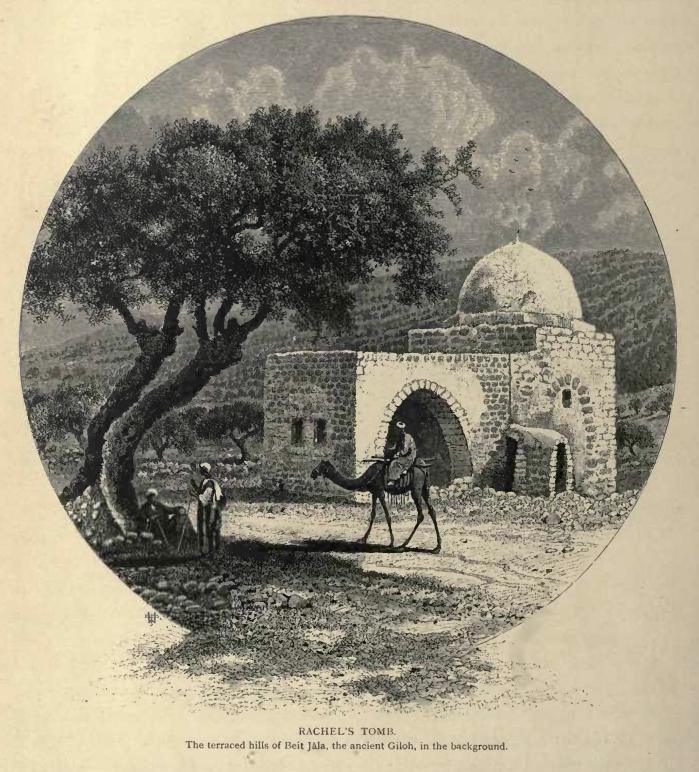 🇵🇸 Palestine and 1 moreRachel's TombQever Raḥel; Qabr Rāḥīl
A shared holy site near Bethlehem revered by Jews, Christians, and MuslimsTradition · Speaking with spirits and the dead · Protection Living
🇵🇸 Palestine and 1 moreRachel's TombQever Raḥel; Qabr Rāḥīl
A shared holy site near Bethlehem revered by Jews, Christians, and MuslimsTradition · Speaking with spirits and the dead · Protection Living