
Itako
In its own language: イタコ
possibly from eta no ko, meaning child of the eta social class
Blind women in Japan who train to channel spirits and communicate with the dead.
Itako are blind female mediums in Japan who undergo rigorous ascetic training to serve as intermediaries between the living and the spirit world. They perform rituals known as kuchiyose to contact deceased relatives and kami, a practice deeply rooted in Shinto and Buddhist traditions.
- Itako are blind women trained to channel spirits and communicate with the dead.
- Training includes three years of ascetic practices, such as exposure to ice water.
- The Meiji government banned itako rituals in 1873 as superstition.
- Itako gather annually at Mt. Osore in Aomori during the Obon festival.
- They use tools like the gehōbako box and bone necklaces for protection.
What it is
Itako are spiritual mediums in Japan who are blind or have severe vision impairment. They serve as bridges between the living and the dead, as well as with kami, the spirits of nature and deities in Shinto belief. The practice involves channeling spirits to provide messages, advice, and closure to grieving families. It is a folk religious tradition that blends elements of Shinto and Buddhism, focusing on necromancy and divination.
Where it comes from
The role likely emerged from the yamabushi, ascetic monks of the Edo era who encountered female channelers during pilgrimages. These women merged with shrine maidens (miko) in northern Japan. Historically, blindness was viewed as a sign of spiritual power or karmic debt. Families sent blind girls to training for economic survival and spiritual status. The Meiji government banned the practice in 1873, viewing it as superstition obstructing modern medicine.
How it is done
Training involves three years of ascetic practices, including exposure to ice water and memorization of sutras. A ceremony marks the marriage of the itako to her patron spirit. Rituals called kuchiyose involve scattering salt and rice, chanting in the Tsugaru dialect, and singing songs relayed by the spirit. The itako enters a trance state to allow the spirit to speak through her, answering questions about the afterlife and offering predictions.
Tools and materials
Itako carry a gehōbako, a box containing secret items like an inugami skull, believed to protect them and aid communication. They also use a black bamboo cylinder to trap harmful animal spirits and wear irataka nenju, necklaces made of beads and animal bones such as deer jawbones or bear teeth. These tools represent their connection to protective spirits and their authority to interact with the dead.
Itako, drawn and placed
- Living
- Revived
- Fading
- Historical
- Legendary
- Performed
- Lineage
- Shinto and Buddhist folk religion
- Timing
- funerals, anniversaries, Obon festival
What it is for
Families consult itako to communicate with recently deceased relatives, particularly those lost in war or at sea. They seek advice on harvests, health, and future events. The rituals provide emotional comfort and closure. Some itako also perform mizuko kuyō ceremonies for mothers who have lost children, seeking protection from the spirit Jizo. The practice addresses spiritual needs created by loss and uncertainty.
Who does it
Only blind or visually impaired women become itako. Training begins in childhood, often around age twelve. The process is rigorous and involves severe physical trials. Despite their spiritual power, itako occupy a low social stratum, often relying on community support. They are considered sacred yet marginalized figures. The number of practicing itako has declined significantly due to historical persecution and modernization.
Peoples and places
The tradition is strongest in Tohoku region, specifically Aomori, Iwate, and Akita prefectures. In southern Iwate and Miyagi, they are called ogamisama. Other regional names include miko, mogodo, and waka. The practice varies by location, with different dialects and ritual styles. Mt. Osore in Aomori is a central gathering place for itako during festivals, attracting tourists and practitioners alike.
At a glance: who, where and when
Who does it
Peoples
Belief worlds


What people believe
Itako believe in a hierarchy of spirits, ranging from kami to ghosts. They marry a patron deity who grants them the ability to channel the dead. The worldview combines Shinto animism with Buddhist concepts of karma and the afterlife. Spirits are compelled to appear through specific chants and offerings. The itako acts as a vessel, allowing the spirit to speak directly to the living, bypassing the need for human interpretation.
When it is done
Rituals are performed at funerals, death anniversaries, and during the Obon festival. Some itako claim spirits cannot be contacted until 100 days after death. The annual gathering at Mt. Osore occurs during Obon. Itako also travel in spring performing New Year Ebisu chants. The timing aligns with traditional Japanese calendar events and family mourning periods.
How scholars and sceptics see it
Anthropologists view itako as survivors of ancient shamanic traditions adapted to modern constraints. Scholars note the association of blindness with spiritual insight in pre-modern Japan. Critics and Meiji officials labeled the practice as superstition and fraud. Modern observers note the theatrical nature of some performances, suggesting itako may be conscious performers rather than unconscious vessels. Surveys show continued public reliance on these rituals for grief processing.
Cautions and what is closed
The Meiji government arrested itako for spreading superstition and obstructing medical practices. Newspaper accounts linked them to prostitution and moral corruption. Mizuko kuyō ceremonies are sometimes criticized as scams preying on grieving mothers. However, many participants view the rituals as legitimate spiritual support. The practice remains sensitive due to its association with death and the marginalized status of blind women.
Compare and confuse
Itako are similar to kamisama, another group of female shamans who are sighted and associated with shrines. Both groups marry patron spirits and follow Fudo Myoo. Unlike itako, kamisama claim prophetic powers after illness. The term itako is distinct from general miko, though historically related. Regional variations in naming reflect local adaptations of the same core tradition of spirit mediumship.
Law and persecution
The Meiji era outlawed itako rituals in 1873 to promote modern medicine. Arrests were common, with itako charged with disrupting public morals. Despite bans, public support persisted, especially after World War II. The government eventually tolerated the practice in remote areas like Aomori. Today, kuchiyose is recognized as intangible cultural heritage, though the number of practitioners continues to decline.
Days linked to Itako
Questions people ask about Itako
What is an itako?
An itako is a blind female medium in Japan who trains to communicate with spirits and the dead. They perform rituals to channel deceased relatives and offer advice to living families.
How does one become an itako?
Blind girls begin training at a young age, undergoing three years of ascetic practices. This includes exposure to ice water and memorizing sutras. A ceremony marks their marriage to a patron spirit.
Where do itako perform rituals?
Rituals often take place at Mt. Osore in Aomori prefecture, known as Mount Dread. Itako also travel to ancestral homes or shrines to conduct ceremonies for clients.
Why are itako blind?
Blindness is traditionally associated with spiritual power in Japan. It was seen as evidence of karmic debt or special insight. Families sent blind girls to training for both spiritual and economic reasons.
Is the practice still active today?
Yes, but the number of itako has declined significantly. As of 2009, only about 20 remained, mostly over forty years old. The practice is recognized as cultural heritage but faces challenges from modernization.
Good reading and sources
The facts on this page come from the Wikipedia article "Itako", written by its contributors and used under the CC BY-SA 4.0 licence, and from its Wikidata record (CC0). EveryJaadu rewrote the text in its own words, with AI assistance, and compares every page with the article to make sure no passage is copied. It may be reused under the same CC BY-SA 4.0 licence with a link back.
It may contain mistakes. Names and customs differ from one community to the next, and some knowledge is closed to outsiders and left out here. This page describes belief and practice. It does not say that any of it works, it is not a how-to, and it is not medical advice. If something is wrong, tell us. Last refreshed 2026-10-06.
More from Japan
All the entries from Japan 🇯🇵 JapanSetsubun節分
A Japanese seasonal rite to drive away bad luck and welcome spring with roasted beansRite · Protection · Luck and prosperity Living
🇯🇵 JapanSetsubun節分
A Japanese seasonal rite to drive away bad luck and welcome spring with roasted beansRite · Protection · Luck and prosperity Living
 🇨🇳 China and 5 moreGhost FestivalZhongyuan Festival; Yulanpen Festival
A festival to feed wandering spirits and guide them home during the seventh lunar month.Tradition · Speaking with spirits and the dead · Protection Living
🇨🇳 China and 5 moreGhost FestivalZhongyuan Festival; Yulanpen Festival
A festival to feed wandering spirits and guide them home during the seventh lunar month.Tradition · Speaking with spirits and the dead · Protection Living
 🇯🇵 JapanOnmyōdō陰陽道
A Japanese system of divination and calendar science rooted in yin-yang philosophyTradition · Seeing and foretelling · Protection Revived
🇯🇵 JapanOnmyōdō陰陽道
A Japanese system of divination and calendar science rooted in yin-yang philosophyTradition · Seeing and foretelling · Protection Revived
 🇯🇵 Japan and 1 moreMisogi禊
A Shinto rite of full-body purification using cold waterRite · Cleansing and purification · Speaking with spirits and the dead Living
🇯🇵 Japan and 1 moreMisogi禊
A Shinto rite of full-body purification using cold waterRite · Cleansing and purification · Speaking with spirits and the dead Living
Related elsewhere
All tradition 🇮🇹 ItalyEtruscan religion
The polytheistic beliefs and divination practices of the ancient Etruscans of ItalyTradition · Seeing and foretelling · Speaking with spirits and the dead Historical
🇮🇹 ItalyEtruscan religion
The polytheistic beliefs and divination practices of the ancient Etruscans of ItalyTradition · Seeing and foretelling · Speaking with spirits and the dead Historical
 🇮🇹 ItalyCumaean SibylSibylla Cumana
The priestess of the Apollonian oracle at Cumae, famous in Roman legend for her prophetic books and underworld guidance.Figure · Seeing and foretelling · Speaking with spirits and the dead Legendary
🇮🇹 ItalyCumaean SibylSibylla Cumana
The priestess of the Apollonian oracle at Cumae, famous in Roman legend for her prophetic books and underworld guidance.Figure · Seeing and foretelling · Speaking with spirits and the dead Legendary
 🇳🇬 NigeriaOrunmilaỌ̀rúnmìlà
Yoruba deity of wisdom and the creator of the Ifá divination systemBeing · Seeing and foretelling · Speaking with spirits and the dead Living
🇳🇬 NigeriaOrunmilaỌ̀rúnmìlà
Yoruba deity of wisdom and the creator of the Ifá divination systemBeing · Seeing and foretelling · Speaking with spirits and the dead Living
 🇸🇪 Sweden and 1 moreSoul flight
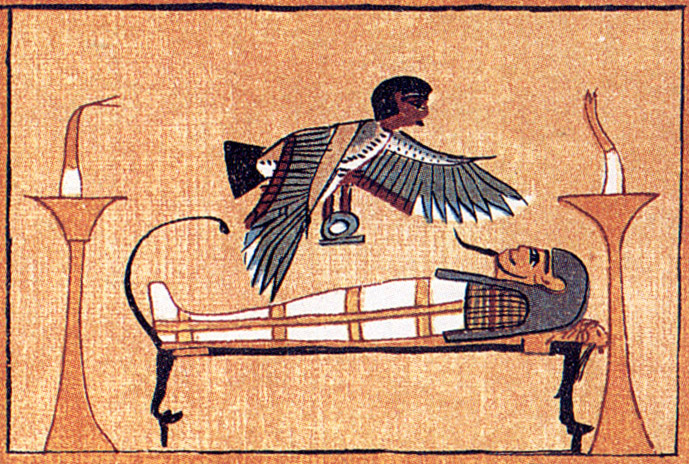
A trance practice where the spirit leaves the body to visit other realmsRite · Healing · Seeing and foretelling Historical
🇸🇪 Sweden and 1 moreSoul flight
A trance practice where the spirit leaves the body to visit other realmsRite · Healing · Seeing and foretelling Historical