Spirits, creatures and beings
Djinn, fairies, orisha, golems and the other powers that magic deals with.
Beings are the powers that magic deals with: spirits, ancestors, gods, djinn, fairies, orisha, nats, kami, demons, golems, ghosts and the many kinds of household and landscape spirit. People in most cultures have described a world shared with unseen others, who may help, trouble or ask for respect. This page covers what these beings are said to be and the very different ways communities relate to them. They are always described here as what communities believe, not as established fact.
Different kinds of beings
A being can be a god with a priesthood, such as an orisha served in Yoruba religion, Cuba and Brazil. It can be an ancestor, honoured in China, Africa and Mexico. It can belong to a place, such as the kami of Shinto, the Thai phi or the Burmese nats. It can be a trouble-maker, like the djinn of Arabic and Islamic tradition, formed from smokeless fire, or the fairies of Ireland, whom people avoided naming.
Relationship, not command
In many traditions, a person does not command a being but enters a relationship with it, through offerings, promises and respect. Possession and mediumship are forms of that relationship, as in Vodou, Candomblé, Korean mudang rites and Sufi gatherings. In ceremonial magic of the European grimoires, by contrast, the magician summons spirits by name and authority, which the Church condemned as demon-raising. The same being may be loved in one household and feared in the next, and a spirit helpful to its servant can be harmful to a stranger.
Religions and renaming
Dominant religions often absorbed beings by relabelling them. Christian missionaries called many African and Indigenous spirits demons. Islam reads the djinn as real creatures, some of whom are Muslim, and Hindu and Buddhist traditions fold local deities into their own pantheons. Pagan and fairy beliefs were sometimes recast as the devil's work, which fed witch trials in Europe. Churches and mosques have sometimes divided beings into good and evil in ways the older traditions did not, so that a neutral local spirit became a demon on the day a missionary arrived.
Harm and interpretation
Belief in harmful spirits has been used to accuse people. Children in parts of West and Central Africa have been branded as witches possessed by evil spirits, and some have been abused by pastors or families in the name of deliverance. Scholars read spirit beliefs as ways to make sense of illness, loss and conflict, and many communities see them simply as neighbours. That is why accusations tied to spirit beliefs fall hardest on children and the vulnerable, and why many agencies train local leaders to challenge them.
Being on EveryJaadu
The entries written up so far, best known first.
 🇬🇷 Greece and 1 moreScyllaΣκύλλα
A sea monster from Greek tales who guards a perilous passage and devours sailors.Being · Cursing and harm Legendary
🇵🇭 PhilippinesBal-Bal
A corpse-stealing undead of Philippine folklore that hides its theft with a banana trunkBeing · Cursing and harm Legendary
 🇬🇷 GreeceHarpyἅρπυια (hárpyia)
Half-human, half-bird creatures from Greek and Roman myth, often seen as storm winds or snatchers of food.Being · Cursing and harm · Wonder and entertainment Legendary
 🇧🇪 BelgiumLange Wapper
A shapeshifting Flemish giant and trickster from the streets of AntwerpBeing · Change and initiation · Cursing and harm Legendary
 🇧🇷 BrazilCapelobo
A Brazilian monster with a long snout that feeds on blood and brainsBeing · Cursing and harm Legendary
🇺🇸 United StatesRaven MockerᎪᎳᏅ ᎠᏰᎵᏍᎩ
Cherokee witches or spirits said to take a dying person's heart and yearsBeing · Cursing and harm Legendary
 🇹🇭 ThailandKhamotโขมด
A floating night light in Thai and Khmer folklore that misleads travelersBeing · Cursing and harm Legendary
🇯🇵 JapanMintuciミントゥチ
A water spirit of Ainu tales: bringer of the catch and the hunt, and of drownings.Being · Luck and prosperity · Protection Legendary
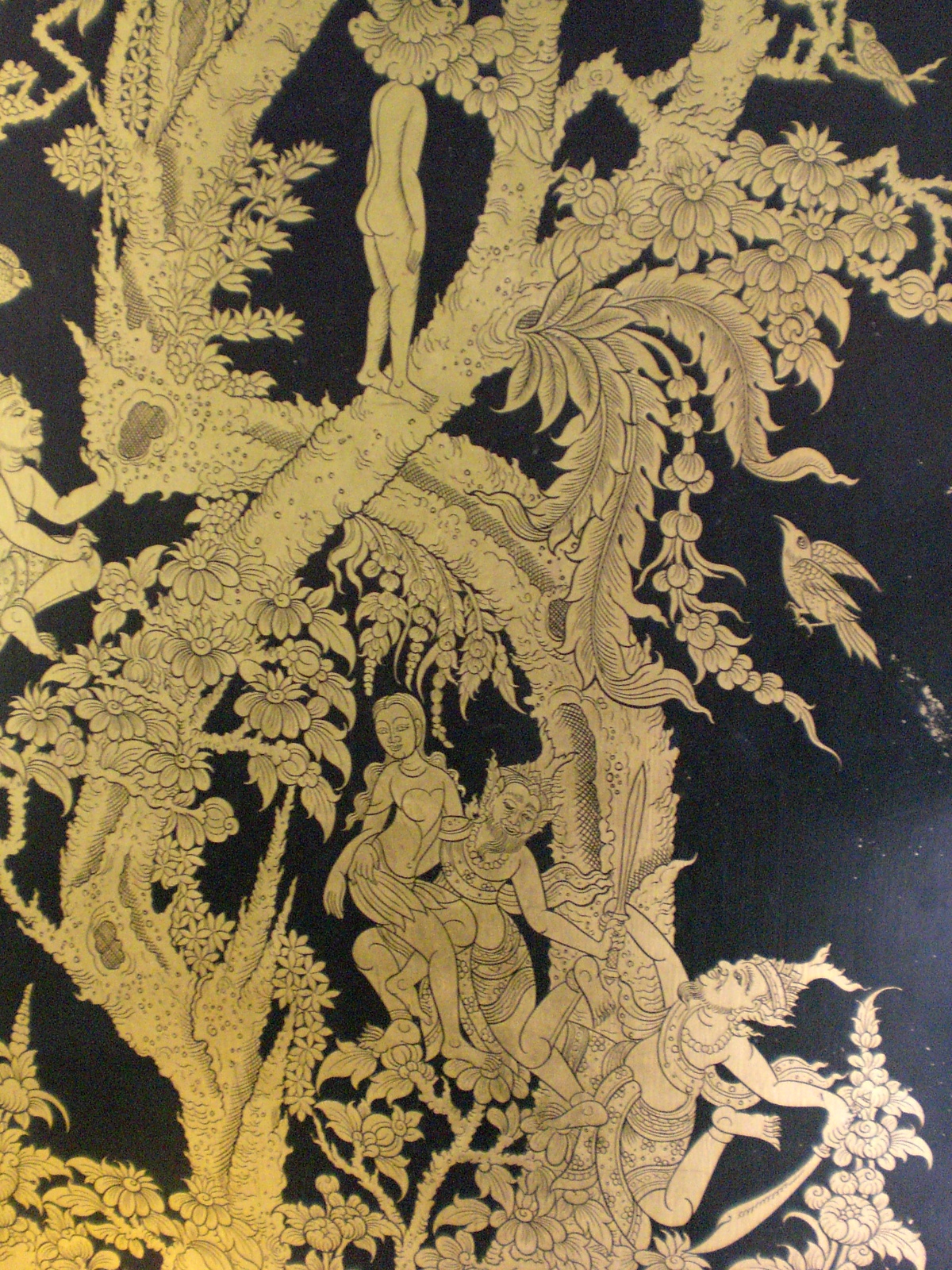 🇹🇭 Thailand and 2 moreNariphonนารีผล
A mythical tree in Buddhist lore that bears fruit shaped like young womenBeing · Cursing and harm Legendary
🇬🇷 GreecePolemosΠόλεμος
A Greek spirit of war and the personification of conflictBeing · Cursing and harm Legendary
🇸🇪 SwedenVittra
A forest spirit from northern Sweden linked to livestock and seductionBeing · Cursing and harm · Love and attraction Legendary
 🇮🇱 Israel and 2 moreTanninתַּנִּין
A sea monster of chaos in Canaanite and Hebrew myth, later a symbol for Egypt and Babylon.Being · Cursing and harm Legendary
🇬🇧 United KingdomDunnie
A border spirit that mimics horses and sings of lost treasureBeing · Cursing and harm · Wonder and entertainment Historical
 🇨🇱 ChileCamahueto
A one-horned river bull from Chilote folklore that drags people to the seaBeing · Cursing and harm Legendary
 🇯🇵 JapanFuraribiふらり火
A fire yōkai depicted as a flaming bird in classical Japanese art and legendBeing · Cursing and harm Legendary
 🇯🇵 Japan and 1 moreBake-danuki化け狸
A shape-shifting raccoon dog spirit from Japanese folklore known for pranks and illusions.Being · Cursing and harm · Luck and prosperity Legendary
🇪🇬 EgyptEn-Naddahaالنداهة
A water spirit of the Nile who lures men to their doom with a hypnotic callBeing · Cursing and harm Fading
 🇬🇷 GreeceNymphνύμφη
A nature spirit from Greek myth, tied to specific places like springs or trees, often seen as a maiden.Being · Healing · Seeing and foretelling Historical
🇯🇵 JapanAme no Ohabari天之尾羽
A legendary sword and Shinto spirit from Japanese mythBeing · Cursing and harm · Power and authority Historical
🇬🇧 United Kingdom and 1 moreBogle
A Northumbrian and Scots household spirit or ghost known for perplexing people.Being · Cursing and harm · Wonder and entertainment Historical
 🇨🇿 Czech Republic and 2 moreUhaml
A German folk spirit with horse feet and an owl-like callBeing · Cursing and harm Historical
 🇩🇪 Germany and 1 moreNis PukNiß Puk
A legendary household spirit from Northern Germany and Denmark that helps or torments its owner.Being · Luck and prosperity · Protection Legendary
 🇵🇪 PeruYachay
Peruvian Amazon phlegm said to hold a shaman's power as darts that harm or healSubstance · Cursing and harm · Healing Living
🇪🇬 Egypt and 1 moreMahalathמָחֲלַת
A queen of demons in Jewish mysticism and the mother of AgratBeing · Cursing and harm Historical
 🇸🇪 Sweden and 1 moreStalloStállu
A large, clumsy creature from Sámi folklore that eats people and is often outwitted by humans.Being · Cursing and harm · Wonder and entertainment Historical
🇩🇪 GermanyBergmönch
A giant mining spirit of German legend, helper of good miners and terror of the lazyBeing · Protection · Luck and prosperity Legendary
🇮🇳 IndiaAl-Abyad
A jinn called the White King, tied to Monday, the Moon and silverBeing · Cursing and harm Legendary
🇮🇳 IndiaBaakবাক
A shapeshifting water spirit from Assamese folklore that mimics humans and fears torn nets.Being · Cursing and harm · Wonder and entertainment Living
 🇸🇾 SyriaEchidnaΈχιδνα
A half-woman, half-snake monster in Greek myth who mothered many famous beastsBeing · Cursing and harm Legendary
🇬🇾 Guyana and 1 moreBaccoo
A half-wood spirit from Guyanese and Surinamese folklore that serves as a mercenary or a haunting presence.Being · Cursing and harm · Speaking with spirits and the dead Legendary
 🇪🇸 SpainXana
A water spirit of Asturian myth who offers treasures or madness to those who hear her song.Being · Luck and prosperity · Cursing and harm Legendary
🇷🇺 RussiaMeduzaМедуза
A Russian mythic figure with a woman's head and a serpent body, linked to trickery.Being · Cursing and harm Legendary
 🇺🇸 United StatesBell Witch
A Tennessee legend of a shapeshifting spirit that tormented the Bell family in the early nineteenth century.Being · Cursing and harm Legendary
 🇺🇸 United States and 2 moreHoop snake
A legendary rolling serpent found in North American and Australian folkloreBeing · Cursing and harm Legendary
 🇩🇪 GermanyFeldgeist
German folk creatures tied to crops, weather and harvest ritualsBeing · Cursing and harm · Luck and prosperity Historical
🇦🇱 AlbaniaLjubi
A multi-headed water demon from Albanian folklore linked to storms and sacrificeBeing · Cursing and harm Legendary
🇪🇸 SpainCuegle
A small, strong monster of Cantabrian tales, kept from cradles by oak and holly leavesBeing · Cursing and harm · Protection Legendary
🇯🇵 JapanAyakashi妖
Water spirits and ghost lights in Japanese folkloreBeing · Cursing and harm · Luck and prosperity Historical
 🇯🇵 JapanKoromodakoころもだこ
A Japanese sea yōkai that expands to sink boats and drown sailorsBeing · Cursing and harm Legendary
🇯🇵 Japan and 1 moreHiderigami日照り神
A drought spirit from Chinese and Japanese folklore that brings dry weather.Being · Cursing and harm Legendary
🇲🇳 MongoliaAlmaz
A feral forest spirit from the North Caucasus with magical hair and a split nature.Being · Cursing and harm Legendary
🇯🇵 JapanMiage-nyūdō見上入道
A yōkai on Sado Island that grows when looked up at and can be dismissed by specific chants or challenges.Being · Cursing and harm Legendary
🇯🇵 JapanFurutsubaki-no-rei古椿の霊
A spirit said to live in old camellia trees, appearing as a woman who lures or warnsBeing · Cursing and harm · Seeing and foretelling Legendary
Photo credits on this page
The small pictures above come from Wikimedia Commons under free licences. Some are cropped to fit.
- Anjana: John William Waterhouse, Public domain, source
- Scylla: Unknown artist, Public domain, source
- Harpy: Unknown, near the Tyrrhenian Group?, CC BY-SA 2.0, source
- Lange Wapper: CEphoto, Uwe Aranas, CC BY-SA 3.0, source
- Capelobo: Di (they-them), CC BY-SA 4.0, source
- Khamot: Hem Vejakorn, Public domain, source
- Nariphon: LigerCommon, Public domain, source
- Tannin: Zakariya al-Qazwini, Public domain, source
- Camahueto: Rjcastillo, CC BY 4.0, source
- Furaribi: Brigham Young University, CC BY-SA 4.0, source
- Bake-danuki: Poposhka at English Wikipedia, Public domain, source
- Nymph: Unknown author, Public domain, source
- Uhaml: Johann Friedrich Naumann, Public domain, source
- Nis Puk: R2D3LA, CC BY-SA 4.0, source
- Yachay: Veton PICQ, CC BY-SA 3.0, source
- Stallo: John Bauer, Public domain, source
- Echidna: Daderot, Public domain, source
- Bell Witch: Unknown author, Public domain, source
- Hoop snake: Fearsome Critters, Written by Henry H. Tryon • Illustrated by Margaret, CC0, source
- Feldgeist: Zwoelefant, CC BY-SA 3.0, source
- Koromodako: FITM, Public domain, source