En-Naddaha
In its own language: النداهة
from Egyptian Arabic al-naddaha, meaning "the caller"
A water spirit of the Nile who lures men to their doom with a hypnotic call
En-Naddaha is an Egyptian legend of a female water spirit who calls men by name along the Nile. She is said to lure them into a trance, leading to their disappearance or death in the water. The tale is rooted in rural Egypt and reflects fears surrounding the river.
- En-Naddaha is an Egyptian water spirit legend
- She calls men by name near the Nile at night
- Victims enter a trance and follow her to the water
- The legend is most prominent in rural Egypt
- Ahmed Khaled Tawfik wrote about the legend
What it is
En-Naddaha is a figure from Egyptian folklore, described as a naiad-like female spirit associated with water. She appears as a stunningly beautiful woman with long flowing hair, often wearing a loose, semi-transparent dress. In some accounts, her body is described as semi-transparent. She is known for calling out to men walking near the Nile or its canals at night. Her voice is soft yet loud, capable of rendering her victims speechless and obedient. Men who hear her call are drawn into a trance, following her blindly toward the water. This legend serves as a cautionary tale about the dangers lurking near the river, particularly for those who wander alone or in pairs after dark.
Where it comes from
The exact origin of the En-Naddaha legend is unknown. The story gained popularity during the 20th century, a time when Egypt was less urbanized and communities lived closer to the Nile and its irrigation canals. Children played on the shores after school, and young men gathered there at night, making these areas prime settings for encounters with the spirit. As urbanization increased, the legend became less prominent in cities but remains familiar to youth and well-known in rural agricultural areas where the connection to the water remains strong.
How it is done
En-Naddaha typically appears to men walking in pairs along the riverbanks or canals at night. She calls one man by his first name, causing him to become hypnotized and follow her voice. The companion remains unaffected and attempts to pull the victim back. If successful, the trance breaks, and both men flee while hearing her echoing call. Rarely, witnesses glimpse her standing steadily near the bank. In some variations, she calls men inside their homes near the shore, prompting them to leave eagerly. Others may experience disturbed distraction for nights before finally departing late at night to meet her.
Tools and materials
The primary tool of En-Naddaha is her voice, described as calm, soft, and hypnotizing. She is depicted wearing a loose, long, semi-transparent dress that adds to her ethereal appearance. Her physical form is sometimes described as semi-transparent, enhancing her otherworldly nature. These elements combine to create an irresistible allure that overrides rational thought in those who hear her call.
En-Naddaha, drawn and placed
- Living
- Revived
- Fading
- Historical
- Legendary
- Performed
- Lineage
- Egyptian folklore
- Timing
- at night near the Nile
What it is for
The legend functions as a warning against wandering near the Nile at night. It reflects deep-seated fears about drowning and the unknown dangers of the water. Rural Egyptians believe that a man called by En-Naddaha is doomed, and curing him is often considered impossible. Some hold that she drowns her victims, pulling them into the river. The writer Ahmed Khaled Tawfik noted in his work that preventing the victim from reaching her might result in the preventer becoming the next target, emphasizing the inescapable nature of the curse.
Who does it
Scholars and folklorists study En-Naddaha as part of Egyptian cultural heritage. The legend is passed down through oral tradition and popular media, including horror films and television series. Notable appearances include the Netflix series Paranormal and the comedic El Kabeer Awy series, which subverts the trope. The figure is not worshipped but serves as a narrative device in storytelling, reflecting societal anxieties about safety and the natural environment.
Peoples and places
The legend is specific to Egypt, particularly in rural and agriculture-based areas along the Nile and its water canals. It is deeply tied to the daily lives of Egyptians who live close to the water. While it has faded in urban centers, it remains a recognizable figure among younger generations in rural regions. The story shares thematic similarities with other water spirits like the Siren or La Llorona, though it is distinctively Egyptian in its setting and cultural context.
At a glance: who, where and when
What people believe
In Egyptian folklore, En-Naddaha represents the perilous power of the Nile. She is believed to be a real entity capable of influencing human behavior through her voice. The belief holds that once called, a man is trapped in a trance until rescued or lost forever. This reflects a worldview where the natural world is imbued with spiritual forces that demand respect and caution. The inability to cure a called individual underscores the seriousness of such encounters in local belief systems.
When it is done
Encounters with En-Naddaha are most commonly reported at night, particularly when men are walking near the Nile or its canals. The legend is more prevalent in times when people spent more time outdoors near the water, such as during the 20th century. There are no specific festivals or calendar days associated with her; rather, the timing is linked to daily routines and seasonal activities related to agriculture and river life.
How scholars and sceptics see it
Anthropologists and historians view En-Naddaha as a reflection of historical social conditions and environmental fears. The legend's peak popularity coincides with periods of higher rural population density and closer interaction with the Nile. Scholars note that the figure serves as a metaphor for the dangers of the river, including drowning and disorientation. The adaptation of the legend in modern media demonstrates its enduring cultural relevance and ability to evolve with contemporary storytelling formats.
Cautions and what is closed
The legend warns of the real danger of drowning in the Nile, especially at night. Rural communities historically used the story to discourage unsafe behavior near the water. While no instances of the spirit physically devouring victims have been recorded, many believe she drowns those she calls. The psychological impact of the fear is significant, with some considering a call from En-Naddaha a death sentence. This belief reinforces community norms around safety and vigilance near waterways.
Compare and confuse
En-Naddaha is often compared to other water spirits like the Siren from Greek mythology or La Llorona from Latin American folklore. All three figures use alluring voices to lure victims toward water, leading to their demise. However, En-Naddaha is distinct in her Egyptian context and specific association with the Nile. Unlike Sirens, who sing, En-Naddaha calls by name, adding a personal element to her threat. These comparisons highlight common themes in global folklore regarding the dangers of water and the supernatural.
Questions people ask about En-Naddaha
What is En-Naddaha?
En-Naddaha is an Egyptian legend of a female water spirit who appears near the Nile. She is described as a beautiful woman with a hypnotic voice that calls men by name, leading them into a trance toward the water.
Where does the legend come from?
The legend originates in rural Egypt, particularly in areas along the Nile and its canals. It became popular in the 20th century when communities lived closer to the river and spent more time outdoors near the water.
What happens to men called by En-Naddaha?
Men called by En-Naddaha are said to become hypnotized and follow her voice blindly. They may disappear or drown in the Nile. Companions can sometimes rescue them by breaking the trance, but the outcome is often fatal.
Is En-Naddaha still known today?
The legend is less common in urban Egypt but remains familiar to youth and well-known in rural areas. It continues to appear in modern media, including horror films and television series, keeping the story alive.
Good reading and sources
The facts on this page come from the Wikipedia article "El Naddaha", written by its contributors and used under the CC BY-SA 4.0 licence, and from its Wikidata record (CC0). EveryJaadu rewrote the text in its own words, with AI assistance, and compares every page with the article to make sure no passage is copied. It may be reused under the same CC BY-SA 4.0 licence with a link back.
It may contain mistakes. Names and customs differ from one community to the next, and some knowledge is closed to outsiders and left out here. This page describes belief and practice. It does not say that any of it works, it is not a how-to, and it is not medical advice. If something is wrong, tell us. Last refreshed 2026-10-07.
More from Egypt
All the entries from Egypt 🇪🇬 Egypt and 1 moreSphinx
A mythical hybrid with a human head and lion body, serving as guardian or riddler in Egyptian and Greek traditions.Being · Protection · Wonder and entertainment Legendary
🇪🇬 Egypt and 1 moreSphinx
A mythical hybrid with a human head and lion body, serving as guardian or riddler in Egyptian and Greek traditions.Being · Protection · Wonder and entertainment Legendary
 🇮🇱 Israel and 2 moreLeviathanלִוְיָתָן (Livyaṯān)
A primordial sea monster from ancient Near Eastern myth and biblical textBeing · Cursing and harm · Power and authority Historical
🇮🇱 Israel and 2 moreBelialבְּלִיַּעַל
A Hebrew term for worthlessness that evolved into a demon of darkness in Jewish and Christian texts.Being · Cursing and harm Historical
🇮🇱 Israel and 2 moreLeviathanלִוְיָתָן (Livyaṯān)
A primordial sea monster from ancient Near Eastern myth and biblical textBeing · Cursing and harm · Power and authority Historical
🇮🇱 Israel and 2 moreBelialבְּלִיַּעַל
A Hebrew term for worthlessness that evolved into a demon of darkness in Jewish and Christian texts.Being · Cursing and harm Historical
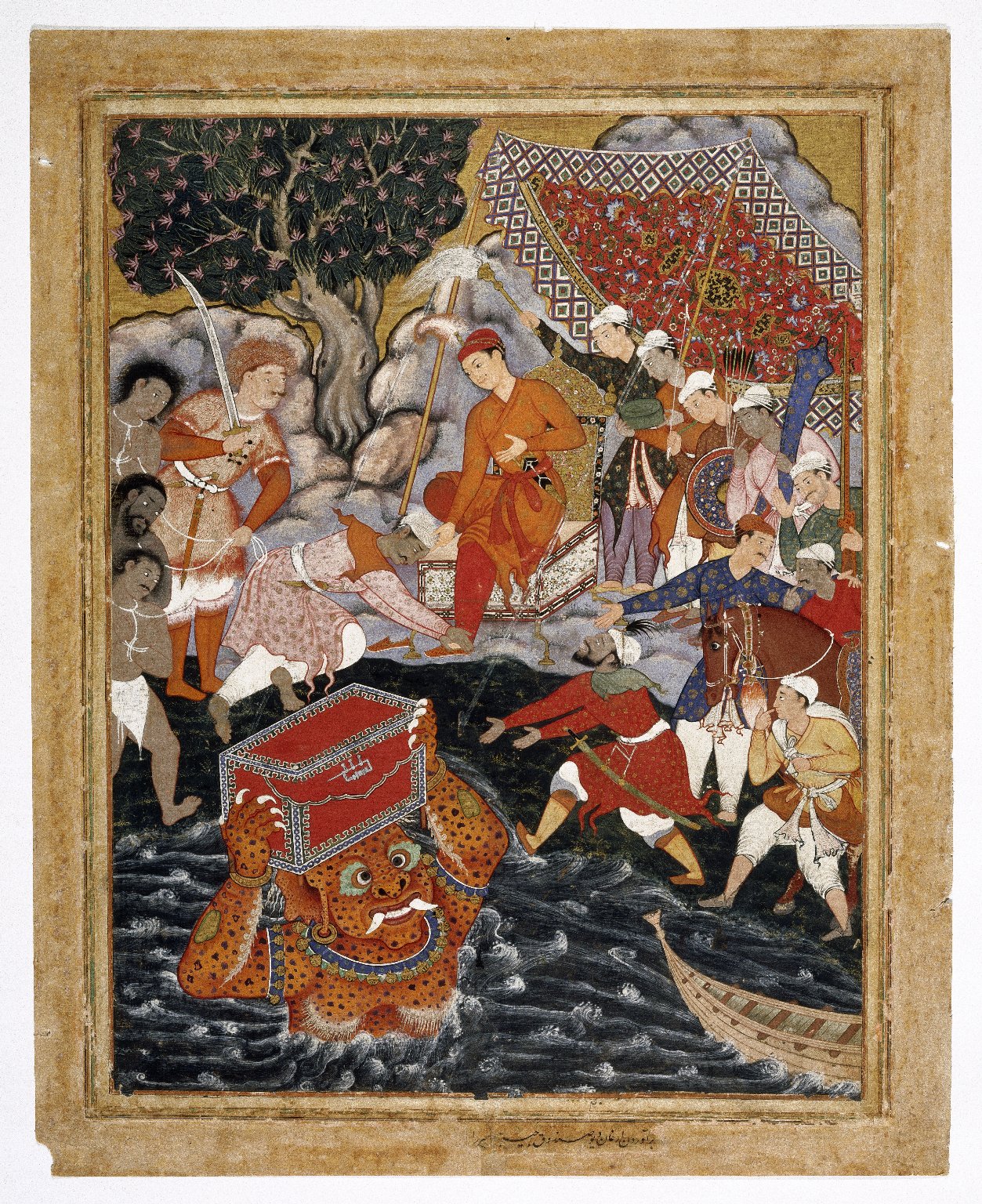 🇪🇬 Egypt and 3 moreIfritعفريت
A class of powerful chthonic spirits in Islamic tradition and folkloreBeing · Cursing and harm · Power and authority Historical
🇪🇬 Egypt and 3 moreIfritعفريت
A class of powerful chthonic spirits in Islamic tradition and folkloreBeing · Cursing and harm · Power and authority Historical
Related elsewhere
All being 🇷🇸 Serbia and 5 moreVampire
An undead creature from folklore that feeds on the blood or life force of the livingBeing · Cursing and harm · Luck and prosperity Legendary
🇷🇸 Serbia and 5 moreVampire
An undead creature from folklore that feeds on the blood or life force of the livingBeing · Cursing and harm · Luck and prosperity Legendary
 🇫🇷 France and 5 moreWerewolf
A mythical shapeshifter that turns into a wolf, central to European witch-hunts and Gothic horror.Being · Cursing and harm · Wonder and entertainment Legendary
🇫🇷 France and 5 moreWerewolf
A mythical shapeshifter that turns into a wolf, central to European witch-hunts and Gothic horror.Being · Cursing and harm · Wonder and entertainment Legendary
 🇪🇬 Egypt and 1 moreLilithלִילִית
A feminine figure from Mesopotamian and Jewish mythology, often depicted as a night demon or spirit.Being · Cursing and harm Legendary
🇪🇬 Egypt and 1 moreLilithלִילִית
A feminine figure from Mesopotamian and Jewish mythology, often depicted as a night demon or spirit.Being · Cursing and harm Legendary
 🇪🇬 EgyptCurse
A spoken wish for misfortune to befall a person or placeBelief · Cursing and harm · Luck and prosperity Historical
🇪🇬 EgyptCurse
A spoken wish for misfortune to befall a person or placeBelief · Cursing and harm · Luck and prosperity Historical