Spirits, creatures and beings
Djinn, fairies, orisha, golems and the other powers that magic deals with.
Beings are the powers that magic deals with: spirits, ancestors, gods, djinn, fairies, orisha, nats, kami, demons, golems, ghosts and the many kinds of household and landscape spirit. People in most cultures have described a world shared with unseen others, who may help, trouble or ask for respect. This page covers what these beings are said to be and the very different ways communities relate to them. They are always described here as what communities believe, not as established fact.
Different kinds of beings
A being can be a god with a priesthood, such as an orisha served in Yoruba religion, Cuba and Brazil. It can be an ancestor, honoured in China, Africa and Mexico. It can belong to a place, such as the kami of Shinto, the Thai phi or the Burmese nats. It can be a trouble-maker, like the djinn of Arabic and Islamic tradition, formed from smokeless fire, or the fairies of Ireland, whom people avoided naming.
Relationship, not command
In many traditions, a person does not command a being but enters a relationship with it, through offerings, promises and respect. Possession and mediumship are forms of that relationship, as in Vodou, Candomblé, Korean mudang rites and Sufi gatherings. In ceremonial magic of the European grimoires, by contrast, the magician summons spirits by name and authority, which the Church condemned as demon-raising. The same being may be loved in one household and feared in the next, and a spirit helpful to its servant can be harmful to a stranger.
Religions and renaming
Dominant religions often absorbed beings by relabelling them. Christian missionaries called many African and Indigenous spirits demons. Islam reads the djinn as real creatures, some of whom are Muslim, and Hindu and Buddhist traditions fold local deities into their own pantheons. Pagan and fairy beliefs were sometimes recast as the devil's work, which fed witch trials in Europe. Churches and mosques have sometimes divided beings into good and evil in ways the older traditions did not, so that a neutral local spirit became a demon on the day a missionary arrived.
Harm and interpretation
Belief in harmful spirits has been used to accuse people. Children in parts of West and Central Africa have been branded as witches possessed by evil spirits, and some have been abused by pastors or families in the name of deliverance. Scholars read spirit beliefs as ways to make sense of illness, loss and conflict, and many communities see them simply as neighbours. That is why accusations tied to spirit beliefs fall hardest on children and the vulnerable, and why many agencies train local leaders to challenge them.
Being on EveryJaadu
The entries written up so far, best known first.
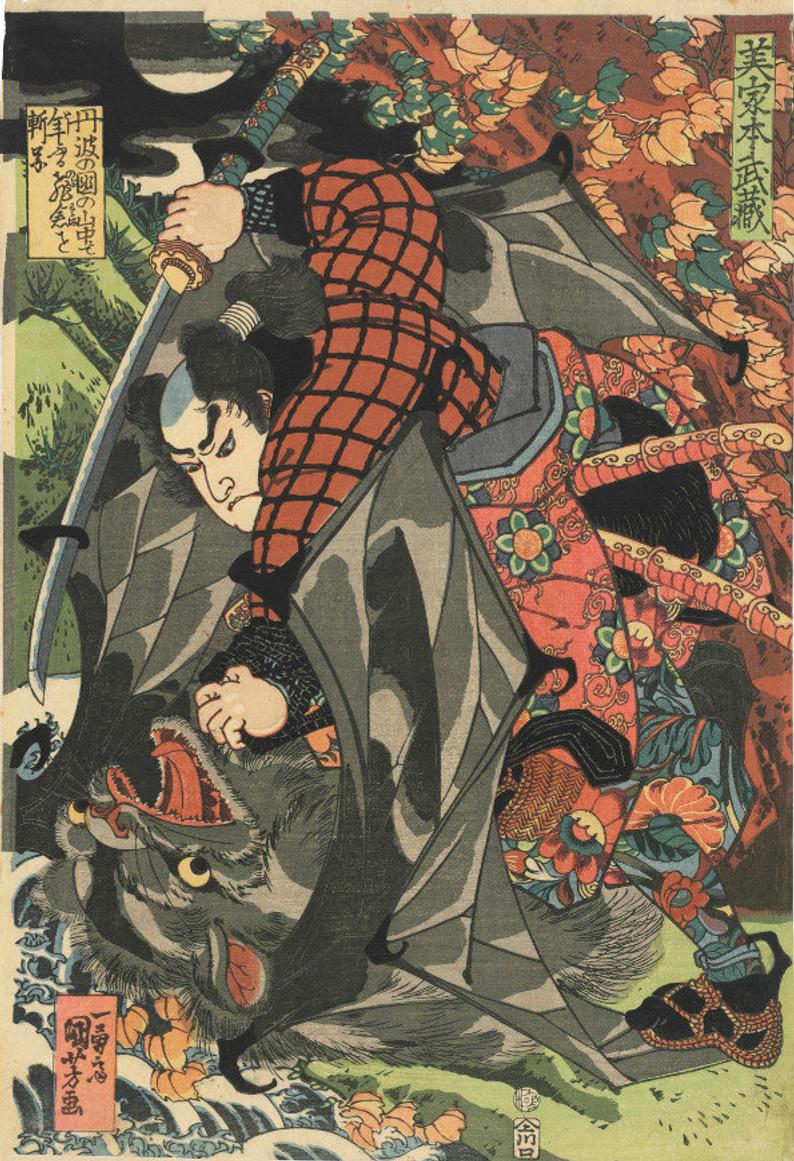 🇯🇵 JapanNobusuma野衾
A Japanese yōkai said to be a flying squirrel or bat that attacks travelers at night.Being · Cursing and harm · Luck and prosperity Legendary
 🇪🇸 SpainGuayota
Tenerife's dark god of Mount Teide, said to have stolen the sunBeing · Cursing and harm Legendary
🇬🇧 United KingdomBauchan
A Scottish domestic spirit known for its contradictory helpfulness and mischief.Being · Cursing and harm · Power and authority Historical
🇮🇳 IndiaIndus worm
A giant carnivorous river creature from ancient Greek accounts of the IndusBeing · Cursing and harm Legendary
🇯🇵 JapanJubokko樹木子
A blood-drinking yōkai tree from Japanese folklore that mimics ordinary wood.Being · Cursing and harm · Healing Legendary
 🇯🇵 JapanIbaraki-dōji茨木童子
A Japanese oni of Heian tales, servant of Shuten-dōji who loses an armBeing · Cursing and harm Legendary
 🇯🇵 Japan and 5 moreSmallpox demon疱瘡神 (Hōsōgami)
A spirit blamed for smallpox in medieval Japan and the rituals used to appease itBeing · Protection · Cursing and harm Historical
🇯🇵 JapanSazae-oni栄螺鬼
A yōkai born from an old turban snail, said to take human shape and bargain for goldBeing · Cursing and harm Legendary
🇲🇽 MexicoAlicante
A mythical Mexican snake that steals milk and hypnotizes its victimsBeing · Cursing and harm · Luck and prosperity Legendary
🇨🇱 Chile and 1 moreChonchon
A human head that flies at night in Mapuche belief, its cry warning of a death to comeBeing · Cursing and harm · Seeing and foretelling Legendary
 🇩🇪 Germany and 1 moreAufhocker
A German folklore spirit that leaps on travelers and weighs them down.Being · Cursing and harm Legendary
 🇮🇸 Iceland and 3 moreElf
A supernatural person of Germanic lore, linked to illness, beauty and magicBeing · Cursing and harm Legendary
🇮🇹 ItalyMazapégul
A mischievous elf of Romagna with a red cap that steals sleep and braids horse manesBeing · Cursing and harm · Luck and prosperity Historical
🇧🇪 Belgium and 1 moreKabouter
A tiny Dutch folklore spirit that helps with chores and punishes those who spy on them.Being · Protection · Cursing and harm Legendary
 🇯🇵 JapanKasha火車
A Japanese yōkai that steals corpses from funerals and gravesBeing · Cursing and harm Historical
 🇩🇪 Germany and 5 moreSchrat
A German and Slavic spirit of the woods, the house and the nightBeing · Cursing and harm · Protection Legendary
🇬🇱 GreenlandIdlirvirissong
A sky spirit who tests the dead with a dance and punishes laughter by disembowelling them.Being · Cursing and harm Legendary
🇮🇳 India and 5 moreWerecat
A feline shapeshifter found in global folklore and occult beliefBeing · Cursing and harm · Power and authority Legendary
🇹🇹 Trinidad and TobagoLagahoo
A shape-changing Caribbean monster said to walk at night with a coffinBeing · Cursing and harm Legendary
🇯🇵 JapanYosuzume夜雀
A Japanese mountain spirit that appears as a bird or butterfly and signals the presence of wolves.Being · Cursing and harm · Protection Historical
🇯🇵 JapanNure-onna濡女
A Japanese water spirit with a woman's face and a serpent body that lures victims with an infant.Being · Cursing and harm Legendary
🇨🇳 China and 1 moreMōryō魍魎
Spirits of nature and graves in East Asian folklore, often linked to corpse theft.Being · Cursing and harm Legendary
🇨🇱 Chile and 1 moreKalku
A Mapuche sorcerer who works with negative powers and malevolent spiritsBeing · Cursing and harm Legendary
🇲🇦 Morocco and 1 moreZuhriزوهري
A human-djinn hybrid child in North African folklore, sought for treasure ritualsBeing · Luck and prosperity · Cursing and harm Fading
🇹🇹 Trinidad and Tobago and 1 moreDouen
A faceless creature with backwards feet from Trinidad and Tobago folkloreBeing · Cursing and harm Legendary
🇦🇱 AlbaniaKukudh
An undead revenant from Albanian folklore that haunts houses and spreads sickness.Being · Cursing and harm Legendary
🇿🇲 ZambiaIlomba
A made sea snake said to kill at its owner's word and take the soulBeing · Cursing and harm Legendary
🇷🇴 RomaniaSântoaderi
Supernatural beings in Romanian folklore known for causing illness through music and danceBeing · Cursing and harm · Luck and prosperity Legendary
🇪🇸 SpainTrenti
A forest goblin from Cantabrian mythology known for pranks and mischiefBeing · Cursing and harm Legendary
🇦🇱 AlbaniaXhindi
Invisible spirits in Albanian mythology that appear at night and may help or harm.Being · Cursing and harm · Power and authority Legendary
🇦🇱 AlbaniaLugat
A shadow-dwelling vampire of Albanian folklore that attacks sleepers and hides in ruins.Being · Cursing and harm Legendary
🇮🇸 IcelandSelkolla
A seal-headed woman from Icelandic folklore who clashed with a medieval bishop.Being · Cursing and harm Historical
 🇮🇷 IranAkvan Divاکوان دیو
A shape-shifting demon from Persian mythology that disguises itself as a wild horse.Being · Cursing and harm Legendary
🇳🇪 NigerJobar
A Tuareg boogeyman beast linked to a fossil discovery in NigerBeing · Cursing and harm Legendary
🇬🇧 United KingdomBaobh-shìth
A beautiful Highland fairy woman who lures hunters, then kills themBeing · Cursing and harm Legendary
 🇷🇺 Russia and 5 moreFiredrakeognennyi zmei
A European dragon myth born from sightings of shooting stars and will-o'-the-wispsBeing · Cursing and harm · Luck and prosperity Historical
🇨🇱 Chile and 3 moreGualichu
An evil spirit feared in Mapuche and Tehuelche traditions, and a word for bad luckBeing · Cursing and harm Historical
🇵🇱 PolandPłanetnik
A Slavic storm spirit said to herd clouds and hail, and to shelter the sudden deadBeing · Protection · Cursing and harm Legendary
 🇬🇷 GreeceMares of DiomedesΔιομήδους ἵπποι
Man-eating horses from Greek myth, captured by Heracles as his eighth labourBeing · Cursing and harm Legendary
🇺🇸 United StatesWoman in Black
A spectral figure from Appalachian folklore said to punish men for moral failingsBeing · Cursing and harm · Protection Legendary
🇯🇵 JapanTenome手の目
A Japanese yōkai with eyes on its palms, known from Edo-period illustrations and tales.Being · Cursing and harm Legendary
🇮🇱 Israel and 1 moreSe'irimשעירים
Demons of Hebrew tradition linked to wild goats and ruined placesBeing · Cursing and harm Historical
🇦🇷 ArgentinaLegendary creatures of the Argentine Northwest region
Myths and spirits from the Andean highlands of ArgentinaBeing · Protection · Cursing and harm Historical
🇯🇵 JapanDodomeki百々目鬼
A Japanese yōkai woman with arms covered in bird eyes, cursed for theft.Being · Cursing and harm Legendary
🇯🇵 JapanOkuri-inu送り犬
A Japanese yōkai that follows travelers on mountain paths at nightBeing · Cursing and harm · Protection Legendary
 🇯🇵 JapanShinigami死神
A Japanese spirit or deity associated with inviting humans toward deathBeing · Cursing and harm Historical
Photo credits on this page
The small pictures above come from Wikimedia Commons under free licences. Some are cropped to fit.
- Schrat: Photo: Andreas Praefcke, Public domain, source
- Div: Unknown Calligrapher, Public domain, source
- Nobusuma: Utagawa Kuniyoshi ( 歌川国芳 , Japanese, *1798, †1861), Public domain, source
- Guayota: MPF, CC BY-SA 3.0, source
- Ibaraki-dōji: Utagawa Kunisada, CC BY-SA 4.0, source
- Smallpox demon: 佐賀県立図書館, CC0, source
- Aufhocker: Longbow4u, Public domain, source
- Elf: Martin Brandenburg, Public domain, source
- Kasha: Brigham Young University, CC BY-SA 4.0, source
- Firedrake: Ramesh Kumar R, CC BY-SA 4.0, source
- Mares of Diomedes: Unknown author, CC BY-SA 3.0, source
- Shinigami: 日: Jnn, CC BY 2.1 jp, source