Spirits, creatures and beings
Djinn, fairies, orisha, golems and the other powers that magic deals with.
Beings are the powers that magic deals with: spirits, ancestors, gods, djinn, fairies, orisha, nats, kami, demons, golems, ghosts and the many kinds of household and landscape spirit. People in most cultures have described a world shared with unseen others, who may help, trouble or ask for respect. This page covers what these beings are said to be and the very different ways communities relate to them. They are always described here as what communities believe, not as established fact.
Different kinds of beings
A being can be a god with a priesthood, such as an orisha served in Yoruba religion, Cuba and Brazil. It can be an ancestor, honoured in China, Africa and Mexico. It can belong to a place, such as the kami of Shinto, the Thai phi or the Burmese nats. It can be a trouble-maker, like the djinn of Arabic and Islamic tradition, formed from smokeless fire, or the fairies of Ireland, whom people avoided naming.
Relationship, not command
In many traditions, a person does not command a being but enters a relationship with it, through offerings, promises and respect. Possession and mediumship are forms of that relationship, as in Vodou, Candomblé, Korean mudang rites and Sufi gatherings. In ceremonial magic of the European grimoires, by contrast, the magician summons spirits by name and authority, which the Church condemned as demon-raising. The same being may be loved in one household and feared in the next, and a spirit helpful to its servant can be harmful to a stranger.
Religions and renaming
Dominant religions often absorbed beings by relabelling them. Christian missionaries called many African and Indigenous spirits demons. Islam reads the djinn as real creatures, some of whom are Muslim, and Hindu and Buddhist traditions fold local deities into their own pantheons. Pagan and fairy beliefs were sometimes recast as the devil's work, which fed witch trials in Europe. Churches and mosques have sometimes divided beings into good and evil in ways the older traditions did not, so that a neutral local spirit became a demon on the day a missionary arrived.
Harm and interpretation
Belief in harmful spirits has been used to accuse people. Children in parts of West and Central Africa have been branded as witches possessed by evil spirits, and some have been abused by pastors or families in the name of deliverance. Scholars read spirit beliefs as ways to make sense of illness, loss and conflict, and many communities see them simply as neighbours. That is why accusations tied to spirit beliefs fall hardest on children and the vulnerable, and why many agencies train local leaders to challenge them.
Being on EveryJaadu
The entries written up so far, best known first.
 🇷🇸 Serbia and 5 moreVampire
An undead being from European folklore that feeds on the life force of the living.Being · Cursing and harm Legendary
🇬🇧 United Kingdom and 1 moreFuath
A class of malevolent water spirits in Scottish and Irish folkloreBeing · Cursing and harm Legendary
 🇮🇪 Ireland and 3 moreChangeling
A substitute left by supernatural beings in place of a stolen human child or adultBeing · Cursing and harm · Luck and prosperity Legendary
 🇬🇷 Greece and 3 moreHellhound
A mythological canine that guards the underworld or serves demonic forces across global folkloreBeing · Protection · Cursing and harm Legendary
 🇵🇭 PhilippinesTikbalang
A horse-headed spirit of Philippine forests that leads travelers astrayBeing · Cursing and harm · Luck and prosperity Living
 🇦🇹 Austria and 3 morePerchtaPercht
A Alpine goddess of winter who rewards diligence and punishes laziness during the twelve days after Christmas.Being · Luck and prosperity · Cursing and harm Revived
 🇲🇽 Mexico and 5 moreLa Llorona
A vengeful ghost in Hispanic American folklore who mourns drowned children near water.Being · Cursing and harm · Seeing and foretelling Legendary
 🇯🇵 JapanNoppera-bōのっぺらぼう
A faceless spirit from Japanese folklore that mimics human appearanceBeing · Cursing and harm · Wonder and entertainment Historical
 🇷🇺 Russia and 2 moreVampire
A demonic spirit possessing a corpse, feared in Slavic folklore for drinking blood and bringing misfortune.Being · Cursing and harm Historical
🇯🇵 JapanShikigami式神
A conjured spirit from Japanese Onmyōdō, often bound to paper or animal form.Being · Power and authority · Cursing and harm Historical
 🇮🇪 IrelandPúca
A shape-shifting spirit of Celtic folklore that brings fortune or mischiefBeing · Luck and prosperity · Cursing and harm Legendary
 🇬🇧 United Kingdom and 1 moreBlue men of the Minchna fir ghorma
Mythical blue-skinned spirits of the Scottish strait who challenge sailors to poetry contestsBeing · Cursing and harm · Wonder and entertainment Legendary
 🇫🇷 France and 5 moreRevenant
An animated corpse or spirit that returns from the grave to haunt the livingBeing · Cursing and harm Legendary
🇩🇪 Germany and 1 moreNachzehrer
A German revenant believed to consume the living from beyond the graveBeing · Cursing and harm Legendary
 🇯🇵 JapanInugami犬神
A Japanese spirit of animal possession and folk sorcery known as a curse god.Belief · Cursing and harm · Power and authority Historical
 🇬🇧 United Kingdom and 1 moreEach-uisge
A fierce water spirit of the Scottish Highlands and Irish shores that takes the form of a horse.Being · Cursing and harm Legendary
🇬🇧 United KingdomBlack dog
A spectral hound from English folklore that signals death or guards the living.Being · Cursing and harm · Protection Legendary
 🇨🇳 China and 1 moreJiangshi殭屍
A Chinese corpse said to rise and hop, feared for its strengthBeing · Cursing and harm Legendary
 🇷🇺 Russia and 4 moreLady MiddayPoludnitsa
A Slavic noon spirit who watches over fields and punishes those who work during the hottest hours.Being · Cursing and harm · Protection Historical
 🇲🇾 Malaysia and 5 morePenanggalan
A floating head and trailing organs from Malay ghost mythsBeing · Cursing and harm Living
 🇮🇩 Indonesia and 2 moreDukun
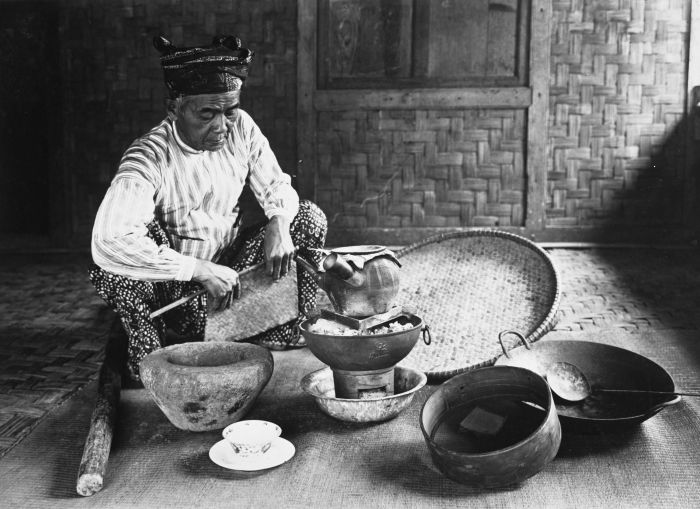
A traditional healer and spirit medium in Indonesian folk practiceTradition · Healing · Seeing and foretelling Living
🇲🇾 Malaysia and 1 moreOrang Minyak
A slippery ghost from Malay folklore that abducts women and is covered in black grease.Being · Cursing and harm Legendary
 🇯🇵 JapanKodama木霊
A tree spirit in Japanese folklore that brings misfortune if the host tree is harmedBeing · Cursing and harm Living
🇬🇧 United KingdomGlaistig
A Scottish shape-shifting spirit linked to cattle, deer, and haunted castles.Being · Protection · Cursing and harm Legendary
🇬🇧 United KingdomCŵn Annwn
Spectral hounds of the Welsh otherworld that hunt souls and signal deathBeing · Cursing and harm · Speaking with spirits and the dead Legendary
 🇷🇺 Russia and 1 moreLikhoЛихо
A Slavic spirit of bad luck and misfortune, often depicted as a one-eyed creature.Being · Cursing and harm Legendary
 🇷🇺 Russia and 3 moreVodyanoyводяной
A water spirit of Slavic folklore that dwells in rivers and lakesBeing · Cursing and harm · Luck and prosperity Legendary
 🇯🇵 JapanYōkai妖怪
A vast class of supernatural spirits and entities in Japanese folkloreBeing · Cursing and harm · Luck and prosperity Historical
 🇩🇪 GermanyAlp
A Germanic spirit that presses on sleepers and drinks milkBeing · Cursing and harm Legendary
 🇧🇷 BrazilBoitatá
A fiery serpent of Brazilian folklore that guards forests or frightens childrenBeing · Protection · Cursing and harm Living
🇬🇧 United KingdomGwyllion
Welsh spirits that lead travellers astray and are feared in mountain folkloreBeing · Cursing and harm Historical
 🇩🇪 Germany and 3 moreMare
A spirit that sits on sleepers to cause nightmares and physical distressBeing · Cursing and harm Historical
 🇯🇵 JapanTengu天狗
Japanese mountain spirits that evolved from ominous birds into protective forest guardians.Being · Cursing and harm · Protection Legendary
 🇯🇵 JapanKappa河童
A river-dwelling yōkai known for its head dish and love of cucumbersBeing · Cursing and harm · Wonder and entertainment Legendary
🇷🇸 Serbia and 1 moreDrekavacДрекавац
A South Slavic night creature born from unbaptised souls or sinnersBeing · Cursing and harm Legendary
 🇮🇶 Iraq and 1 morePazuzu𒀭𒅆𒊒𒍪𒍪 (pà.zu.zu)
A Mesopotamian wind demon and protective amulet against child-harming spiritsBeing · Protection · Cursing and harm Historical
 🇷🇺 Russia and 3 moreLeshyлеший
A forest spirit from Slavic folklore who guards the woods and misleads travelers.Being · Protection · Cursing and harm Legendary
 🇪🇸 Spain and 5 moreDuende
A humanoid spirit of Iberian and Latin American folklore, ranging from helpful to mischievous.Being · Protection · Cursing and harm Living
 🇯🇵 JapanTsukumogami付喪神
Household objects that gain a spirit after reaching their hundredth year in Japanese folklore.Being · Cursing and harm Historical
🇮🇩 Indonesia and 3 moreToyoltuyul
An undead infant spirit in Southeast Asian folklore, invoked for theft and fortune.Being · Luck and prosperity · Cursing and harm Living
🇬🇧 United KingdomBarghest
A mythical black dog from Northern England that foretells death and haunts the countryside.Being · Seeing and foretelling · Cursing and harm Legendary
 🇮🇩 IndonesiaRangdaᬭᬗ᭄ᬤ
A Balinese demon queen who leads witches in an eternal battle against good.Being · Cursing and harm · Wonder and entertainment Legendary
🇯🇵 JapanKuda-gitsune管狐 (kuda-gitsune)
A small spirit kept in a tube or sleeve, used by Japanese folk practitioners for divination and cursing.Being · Seeing and foretelling · Cursing and harm Legendary
 🇮🇩 IndonesiaNyi Roro KidulRatu Laut Selatan
The spirit queen of Java's southern coast and guardian of the Indian OceanBeing · Protection · Cursing and harm Living
🇯🇵 JapanIttan-momen一反木綿
A flying cloth yōkai from Japanese folklore that warns children to stay indoors at nightBeing · Cursing and harm Legendary
🇷🇴 Romania and 2 moreStrigoi
A Romanian undead spirit linked to witchcraft and vampirismBeing · Cursing and harm Historical
 🇯🇵 Japan and 1 moreRokurokubiろくろ首
A Japanese spirit with a stretching neck or a flying headBeing · Cursing and harm · Speaking with spirits and the dead Legendary
 🇺🇸 United States and 5 moreNight hag
A supernatural being believed to sit on sleepers and cause paralysisBeing · Cursing and harm Legendary
Photo credits on this page
The small pictures above come from Wikimedia Commons under free licences. Some are cropped to fit.
- Mare: Henry Fuseli, Public domain, source
- Vampire folklore: Dick Thomas Johnson, CC BY 2.0, source
- Changeling: Henry Fuseli, Public domain, source
- Ancient Mesopotamian religion: editor Austen Henry Layard , drawing by L. Gruner, Public domain, source
- Tsukumogami: Unknown author, Public domain, source
- Vampire: Edvard Munch, Public domain, source
- Tengu: Katsushika Hokusai, Public domain, source
- Marchosias: Louis Le Breton, Public domain, source
- Kappa: Unknown author, CC0, source
- Duende: René Mayorga, CC BY-SA 2.0, source
- Rangda: Boy Lawson, CC BY-SA 3.0, source
- Each-uisge: John Allan, CC BY-SA 2.0, source
- Gazu Hyakki Yagyō: Toriyama Sekien, Public domain, source
- Leshy: Γραφέας, CC BY-SA 4.0, source
- Night hag: Henry Fuseli, Public domain, source
- Likho: Mhapon, CC BY-SA 4.0, source
- Yōkai: Kyosai Kawanabe (河鍋 暁斎), Public domain, source
- Alp: Henry Fuseli, Public domain, source
- Penanggalan: Hi I really try my best here, CC BY-SA 4.0, source
- La Llorona: Melvin Callejas, Public domain, source
- Boitatá: The ponta cabeça, CC BY-SA 4.0, source
- Vodyanoy: Ivan Bilibin, Public domain, source
- Lady Midday: Віщун, CC BY-SA 4.0, source
- Wiedergänger: Unknown author, Public domain, source
- Blue men of the Minch: Lord P in the Commons 17:16, 17 June 2007 (UTC), CC BY-SA 3.0, source
- Nyi Roro Kidul: Gunawan Kartapranata, CC BY-SA 3.0, source
- Dukun: Unknown author, CC BY-SA 3.0, source
- Vampire: Віщун, CC BY-SA 4.0, source
- Noppera-bō: 芥川龍之介, Public domain, source
- Perchta: Holger Uwe Schmitt, CC BY-SA 4.0, source
- Inugami: Sawaki Suushi (佐脇嵩之, Japanese, *1707, †1772), Public domain, source
- Púca: Wirt Sikes, Public domain, source
- Rokurokubi: Unknown author, CC BY 4.0, source
- Tikbalang: The original uploader was Rodsan18 at English Wikipedia . ( Original t, CC BY 2.5, source