
Vodyanoy
In its own language: водяной
from Russian vodá, meaning water
A water spirit of Slavic folklore that dwells in rivers and lakes
The vodyanoy is a water spirit found across Slavic mythology. He lives in rivers, ponds, and lakes, often near mills. People believe he controls fish and can drown those who enter his waters.
- He wears a hat made of reeds and rushes.
- He rides a large sheatfish catfish.
- Czech vodníci use colored ribbons to lure people.
- He keeps drowned souls in earthenware pots.
- Millers sacrificed animals to build new mills.
What it is
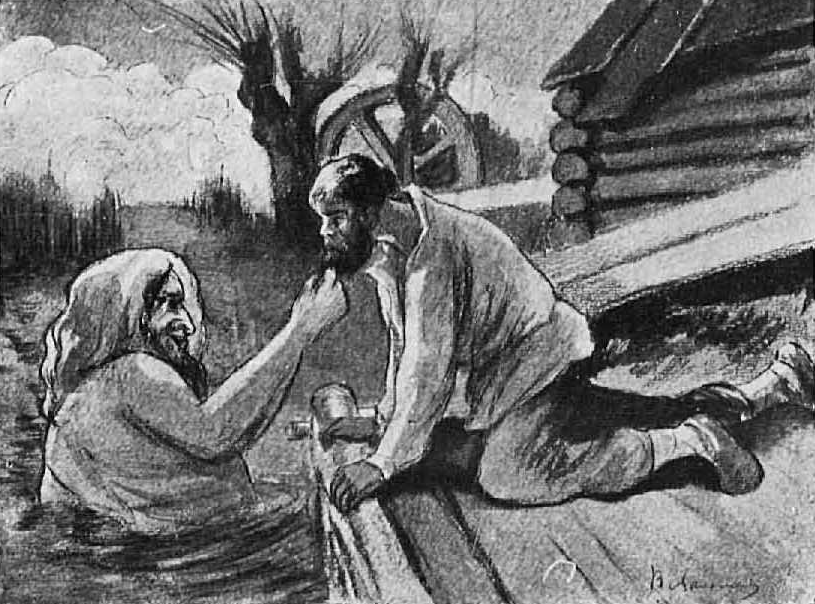
The vodyanoy is a water spirit in Slavic mythology. He lives in deep pools, whirlpools, or under watermills. He is often seen as an old man with green hair or a beard. Some stories say he looks like a frog or a giant fish. He controls the fish in his home. He can be helpful to fishermen but dangerous to people who swim in his waters.
Where it comes from
The word comes from the Russian word for water. The spirit is part of older Slavic folklore. Similar spirits exist in Czech, Slovak, Slovene, and Polish traditions. They are all water demons or men. These stories likely come from ancient beliefs about rivers and lakes before Christianity spread through the region.
How it is done
People do not perform rituals to summon him. Instead, they try to avoid angering him. Fishermen might leave offerings like butter or tobacco in the water. Mill owners sometimes sacrificed animals when building a new mill. People made the sign of the cross before swimming to stay safe. Children were told rhymes to protect them while bathing.
Tools and materials
He wears a hat and belt made of reeds or rushes. His skin is often covered in slime or weeds. He rides a sheatfish, which is a large catfish. In Czech tales, he uses colored ribbons to lure people. He keeps captured souls in earthenware pots underwater.
Vodyanoy, drawn and placed
- Living
- Revived
- Fading
- Historical
- Legendary
- Performed
- Lineage
- Slavic mythology
- Timing
- night, moonlit nights
What it is for
He is feared for drowning people and animals. He breaks dams and washes down mills if he is angry. However, he can also help fishermen catch many fish. He might foretell the harvest price by buying grain at high or low prices. Beekeepers once offered bees to him for good honey yields.
Who does it
No specific priest or shaman serves him. Ordinary people, especially fishermen and millers, interact with him. They offer sacrifices to keep him calm. Women might be taken as wives by water-nymphs or drowned girls. He has a ruler called the Tsar Vodyanik.
Peoples and places
In Russia, he is called dedushka vodyanoy. In Ukraine, he is vodyanyk. Czechs call him vodník or hastrman. Poles know him as topielec. Slovenes call him vodeni mož. Each culture has slight differences in how he looks and acts. Czech vodníci often use ribbons to trick people.
At a glance: who, where and when
Belief worlds



What people believe
He is a spirit of place, tied to specific bodies of water. He is immortal and changes with the moon. His beard turns white when the moon wanes. He can shape-shift into humans, frogs, or fish. He lives in an underwater palace where he stores souls. He is part of a larger world of water spirits and nymphs.
When it is done
He is active on moonlit nights. Millers sacrifice animals when building a new mill. Beekeepers dip honeycomb in water on feast days of Saints Zosimus and Sabbatius. He appears disguised as a human during market days to predict crop prices.
How scholars and sceptics see it
Scholars view him as a personification of dangerous water features. Whirlpools and deep pools were seen as inhabited by spirits. The stories explain why people drown or why mills fail. Anthropologists note similarities to other European water spirits. The green color links him to nature and decay.
Cautions and what is closed
He drowns people who swim in his waters. He drags victims to his underwater home. Millers risk their lives if they do not appease him. Fishermen fear saving drowning men because the spirit might claim them too. Children are warned not to swim after dark.
Compare and confuse
He is similar to the German Wassermann. The Polish topielec means drowner. The Slovene vodeni mož is a water-man. All are water spirits from Slavic roots. They share traits like controlling fish and drowning swimmers. The Czech vodník is more focused on luring people with ribbons.
Law and persecution
There are no modern laws against him. He exists in folklore and fairy tales. Some stories mention historical sacrifices at mills. Today, he is a character in children's books and movies. No legal persecution is recorded for interacting with him.
Today
He remains a popular figure in Slavic folklore. Czech and Slovak fairy tales still feature the vodník. He appears in art and literature. Modern readers see him as a mythological creature. The stories continue to be told as cultural heritage.
Questions people ask about Vodyanoy
What is a vodyanoy?
A vodyanoy is a water spirit in Slavic mythology. He lives in rivers, lakes, and ponds. He is often described as an old man with green hair or a beard. He controls the fish in his home.
Where does the vodyanoy live?
He lives in deep pools, whirlpools, or under watermills. In Czech tales, he may live in crystal palaces underwater. He is tied to specific bodies of water in each region.
Is the vodyanoy dangerous?
Yes, he can drown people who swim in his waters. He breaks dams and damages mills if angered. People make offerings to keep him calm and avoid his wrath.
How do people deal with him?
Fishermen leave butter or tobacco in the water. Millers sacrifice animals when building new mills. People make the sign of the cross before swimming to stay safe.
Good reading and sources
- Vodyanoy on WikipediaEncyclopedia
- More photos on Wikimedia CommonsPhotos and video
- Wikidata recordOpen data
The facts on this page come from the Wikipedia article "Vodyanoy", written by its contributors and used under the CC BY-SA 4.0 licence, and from its Wikidata record (CC0). EveryJaadu rewrote the text in its own words, with AI assistance, and compares every page with the article to make sure no passage is copied. It may be reused under the same CC BY-SA 4.0 licence with a link back.
It may contain mistakes. Names and customs differ from one community to the next, and some knowledge is closed to outsiders and left out here. This page describes belief and practice. It does not say that any of it works, it is not a how-to, and it is not medical advice. If something is wrong, tell us. Last refreshed 2026-10-05.
More from Russia
All the entries from Russia 🇷🇸 Serbia and 5 moreVampire
An undead creature from folklore that feeds on the blood or life force of the livingBeing · Cursing and harm · Luck and prosperity Legendary
🇷🇸 Serbia and 5 moreVampire
An undead creature from folklore that feeds on the blood or life force of the livingBeing · Cursing and harm · Luck and prosperity Legendary
 🇷🇺 Russia and 2 moreDomovoyДомовой
A household spirit in Slavic folklore that guards the family and home.Being · Protection · Seeing and foretelling Historical
🇷🇺 Russia and 2 moreDomovoyДомовой
A household spirit in Slavic folklore that guards the family and home.Being · Protection · Seeing and foretelling Historical
 🇷🇺 Russia and 2 moreUpiórупіор
A demonic spirit from Slavic and Turkic folklore that is believed to return from the dead to feed on the living.Being · Cursing and harm Historical
🇷🇺 Russia and 2 moreUpiórупіор
A demonic spirit from Slavic and Turkic folklore that is believed to return from the dead to feed on the living.Being · Cursing and harm Historical
 🇷🇺 Russia and 4 moreLady MiddayPoludnitsa
A Slavic noon spirit who watches over fields and punishes those who work during the hottest hours.Being · Cursing and harm · Protection Historical
🇷🇺 Russia and 4 moreLady MiddayPoludnitsa
A Slavic noon spirit who watches over fields and punishes those who work during the hottest hours.Being · Cursing and harm · Protection Historical
Related elsewhere
All being 🇪🇬 EgyptCurse
A spoken wish for misfortune to befall a person or placeBelief · Cursing and harm · Luck and prosperity Historical
🇧🇷 Brazil and 1 moreQuimbanda
An Afro-Brazilian religion focused on male and female street spirits for worldly mattersTradition · Protection · Luck and prosperity Living
🇪🇬 EgyptCurse
A spoken wish for misfortune to befall a person or placeBelief · Cursing and harm · Luck and prosperity Historical
🇧🇷 Brazil and 1 moreQuimbanda
An Afro-Brazilian religion focused on male and female street spirits for worldly mattersTradition · Protection · Luck and prosperity Living
 🇵🇭 PhilippinesTikbalang
A horse-headed spirit of Philippine forests that leads travelers astrayBeing · Cursing and harm · Luck and prosperity Living
🇺🇸 United StatesPukwudgie
A short forest spirit from Algonquian lore, known for mischief and danger.Being · Cursing and harm · Luck and prosperity Legendary
🇵🇭 PhilippinesTikbalang
A horse-headed spirit of Philippine forests that leads travelers astrayBeing · Cursing and harm · Luck and prosperity Living
🇺🇸 United StatesPukwudgie
A short forest spirit from Algonquian lore, known for mischief and danger.Being · Cursing and harm · Luck and prosperity Legendary