
Leshy
In its own language: леший
from the Common Slavic root *lěsъ, meaning "forest" or "woodland"
A forest spirit from Slavic folklore who guards the woods and misleads travelers.
The Leshy is a woodland guardian in pagan Slavic mythology. He rules over forests and hunting, often appearing as a shapeshifter who can change size or disguise himself as people and animals.
- Name means "one from the forest" in Slavic languages
- Can change size from blade of grass to tree height
- Wears clothes with right side fastened on left
- Has a wife named Leshachikha and children called leshonki
- Creates wind and fog to hide his tracks
What it is
The Leshy serves as a tutelary deity of the forest within pagan Slavic mythology. He acts as a guardian of wildlife and hunting grounds. Stories describe him as a powerful entity who controls the natural world. His nature is complex, ranging from protective to malevolent depending on human behavior. He is often linked to other forest spirits or deities like Porewit. The Leshy embodies the untamed essence of the woods.
Where it comes from
The name derives from the Common Slavic word for forest. Variants like Lesovik or Lesnik specify different types of woodland habitats. The concept likely evolved from ancient animistic beliefs about nature spirits. Some accounts suggest a connection to the god Porewit due to his dominion over hunting. The figure appears across various Slavic regions with local variations in name and detail.
How it is done
The Leshy interacts with humans through encounters in the deep woods. He may guide lost travelers or lead them astray. He is said to abduct children, particularly those mistreated by parents. He creates illusions using wind, fog, and sound to confuse visitors. People might hear his laughter or mimicry echoing through trees. Encounters often involve sudden changes in weather or visibility.
Tools and materials
He carries a whip or cudgel to assert authority over animals. He wears clothing made of bark, fur, or woven bast. His attire often mimics human styles but with unnatural details like reversed fastenings. He may use an invisibility cap or rely on natural camouflage. His presence is marked by strong winds that erase footprints.
Leshy, drawn and placed
- Living
- Revived
- Fading
- Historical
- Legendary
- Performed
- Lineage
- Slavic mythology
What it is for
People viewed him as a master of the forest who demanded respect. Hunters sought his favor for success. Those who entered his domain risked being misled or harmed. He was believed to protect forest resources from exploitation. Families feared he would take their children if they neglected them.
Who does it
Scholars study the Leshy as a figure of folklore and myth. No specific priesthood exists for him. Ordinary people interacted with him through superstition and caution. Storytellers passed down tales of his tricks and powers. He was respected as a dangerous force rather than worshipped directly.
Peoples and places
The belief spans Russia, Belarus, Poland, and parts of the Balkans. Russian tales often depict him as a giant or old man. Belarusian versions sometimes describe him with one eye or backward leg. Serbo-Croatian traditions call him Lešak. Polish accounts refer to him as Leszy. Each culture adds unique traits to the core forest guardian archetype.
At a glance: who, where and when
What people believe
He is seen as a spirit of place, tied to the health of the forest. He can shapeshift into animals, plants, or humans. His size varies from tiny to towering. He lives in hollows, stumps, or underground. He has a family including a wife called Leshachikha. He operates outside normal human laws and morality.
When it is done
Encounters could happen at any time. He was most active during transitional hours like dawn, dusk, or midnight. Some believed he only moved during specific "evil hours." Storms and heavy winds were considered signs of his movement through the woods.
How scholars and sceptics see it
Researchers analyze the Leshy as a reflection of human anxiety toward nature. He represents the danger of getting lost in wild spaces. Psychologists see him as a projection of fear and the unknown. Historians trace his evolution from pagan animism to Christianized folklore. He shares traits with other European forest spirits like the Korrigan or Wild Man.
Cautions and what is closed
Folklore warns against disrespecting the forest. Entering his domain without permission risks abduction or madness. Children left alone were vulnerable to his influence. The stories serve as cautionary tales for safe conduct in the wilderness. Modern readers view these as cultural metaphors rather than literal threats.
Compare and confuse
He resembles the Germanic Wild Man or the Celtic Cù Sìth. Both are wild guardians associated with nature. Unlike domesticated deities, he remains untamed. His shapeshifting abilities link him to trickster figures. He differs from demons like Chort by being more ambivalent than purely evil.
Questions people ask about Leshy
What is a Leshy?
A Leshy is a forest spirit from Slavic mythology. He guards the woods and animals. He can shapeshift into humans, animals, or plants. He is known for misleading travelers and protecting the forest.
Where does the word come from?
It comes from the Common Slavic root *lěsъ, meaning forest. Variants like Lesovik specify different wood types. The name literally translates to "one from the forest" or "woodland one."
What does he look like?
He often appears as a humanoid with green or gray hair. He may have bark-like skin or animal features. His size changes with the surroundings. He wears rustic clothing, sometimes with reversed fastenings.
Is he good or bad?
His nature is temperamental. He protects the forest but harms those who disrespect it. He might abduct mistreated children. His attitude depends on how humans treat the woods.
Good reading and sources
- Leshy on WikipediaEncyclopedia
- More photos on Wikimedia CommonsPhotos and video
- Wikidata recordOpen data
The facts on this page come from the Wikipedia article "Leshy", written by its contributors and used under the CC BY-SA 4.0 licence, and from its Wikidata record (CC0). EveryJaadu rewrote the text in its own words, with AI assistance, and compares every page with the article to make sure no passage is copied. It may be reused under the same CC BY-SA 4.0 licence with a link back.
It may contain mistakes. Names and customs differ from one community to the next, and some knowledge is closed to outsiders and left out here. This page describes belief and practice. It does not say that any of it works, it is not a how-to, and it is not medical advice. If something is wrong, tell us. Last refreshed 2026-10-05.
More from Russia
All the entries from Russia 🇷🇸 Serbia and 5 moreVampire
An undead creature from folklore that feeds on the blood or life force of the livingBeing · Cursing and harm · Luck and prosperity Legendary
🇷🇸 Serbia and 5 moreVampire
An undead creature from folklore that feeds on the blood or life force of the livingBeing · Cursing and harm · Luck and prosperity Legendary
 🇷🇺 Russia and 4 moreLady MiddayPoludnitsa
A Slavic noon spirit who watches over fields and punishes those who work during the hottest hours.Being · Cursing and harm · Protection Historical
🇷🇺 Russia and 4 moreLady MiddayPoludnitsa
A Slavic noon spirit who watches over fields and punishes those who work during the hottest hours.Being · Cursing and harm · Protection Historical
 🇷🇺 Russia and 2 moreUpiórупіор
A demonic spirit from Slavic and Turkic folklore that is believed to return from the dead to feed on the living.Being · Cursing and harm Historical
🇷🇺 Russia and 2 moreUpiórупіор
A demonic spirit from Slavic and Turkic folklore that is believed to return from the dead to feed on the living.Being · Cursing and harm Historical
 🇷🇺 Russia and 2 moreDomovoyДомовой
A household spirit in Slavic folklore that guards the family and home.Being · Protection · Seeing and foretelling Historical
🇷🇺 Russia and 2 moreDomovoyДомовой
A household spirit in Slavic folklore that guards the family and home.Being · Protection · Seeing and foretelling Historical
Related elsewhere
All being 🇨🇳 ChinaTaotie饕餮
A zoomorphic mask on ancient Chinese bronzes and a mythological creature of gluttonyFigure · Protection · Cursing and harm Legendary
🇨🇳 ChinaTaotie饕餮
A zoomorphic mask on ancient Chinese bronzes and a mythological creature of gluttonyFigure · Protection · Cursing and harm Legendary
 🇮🇷 Iran and 1 moreJinnجِنّ
Supernatural beings in Islamic and pre-Islamic Arabian belief, created from smokeless fire.Being · Protection · Cursing and harm Living
🇮🇷 Iran and 1 moreJinnجِنّ
Supernatural beings in Islamic and pre-Islamic Arabian belief, created from smokeless fire.Being · Protection · Cursing and harm Living
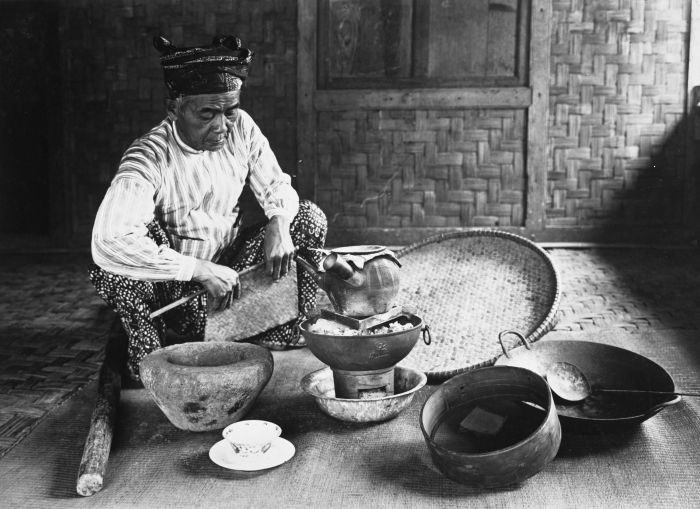 🇮🇩 Indonesia and 2 moreDukun
A traditional healer and spirit medium in Indonesian folk practiceTradition · Healing · Seeing and foretelling Living
🇮🇩 Indonesia and 2 moreDukun
A traditional healer and spirit medium in Indonesian folk practiceTradition · Healing · Seeing and foretelling Living
 🇨🇬 Republic of the CongoNkisi
Spirit containers and power figures from the Congo Basin used for justice and healingCharm · Protection · Healing Living
🇨🇬 Republic of the CongoNkisi
Spirit containers and power figures from the Congo Basin used for justice and healingCharm · Protection · Healing Living