
Rangda
In its own language: ᬭᬗ᭄ᬤ
from old Javanese for "widow"
A Balinese demon queen who leads witches in an eternal battle against good.
Rangda is the terrifying demon queen of the Leyak witches in Balinese mythology. She is said to devour children and wage war against Barong, the spirit of good, in a dance that represents the eternal struggle between opposing forces.
- Rangda is the demon queen of the Leyak witches in Bali.
- She is depicted with a fanged mask, long tongue, and claws.
- Her name means "widow" in old Javanese.
- She battles Barong in the traditional Barong dance.
- She is linked to the historical queen Mahendradatta.
What it is
Rangda is a central figure in Balinese mythology, known as the demon queen of the Leyak spirits. She is described as a terrifying, child-eating witch who commands an army of evil sorceresses. Her primary role is to oppose Barong, the leader of the forces of good. This conflict is not just a story but a living performance art. The Barong dance dramatizes their clash, symbolizing the eternal balance between positive and negative energies in the universe. While she is a figure of fear, her depiction in masks and dance makes her a popular subject of cultural tourism in Bali.
Where it comes from
The origins of Rangda are tied to both legend and history. She is often identified with Calon Arang, a legendary witch from ancient Java who practiced black magic during the reign of King Airlangga. Another interpretation links her to Mahendradatta, an 11th-century Javanese princess and queen of Bali. Mahendradatta was exiled for allegedly practicing witchcraft and later sought revenge on her former husband's court. The name itself comes from the old Javanese word for "widow," reflecting her status as a scorned or grieving woman turned powerful sorceress.
How it is done
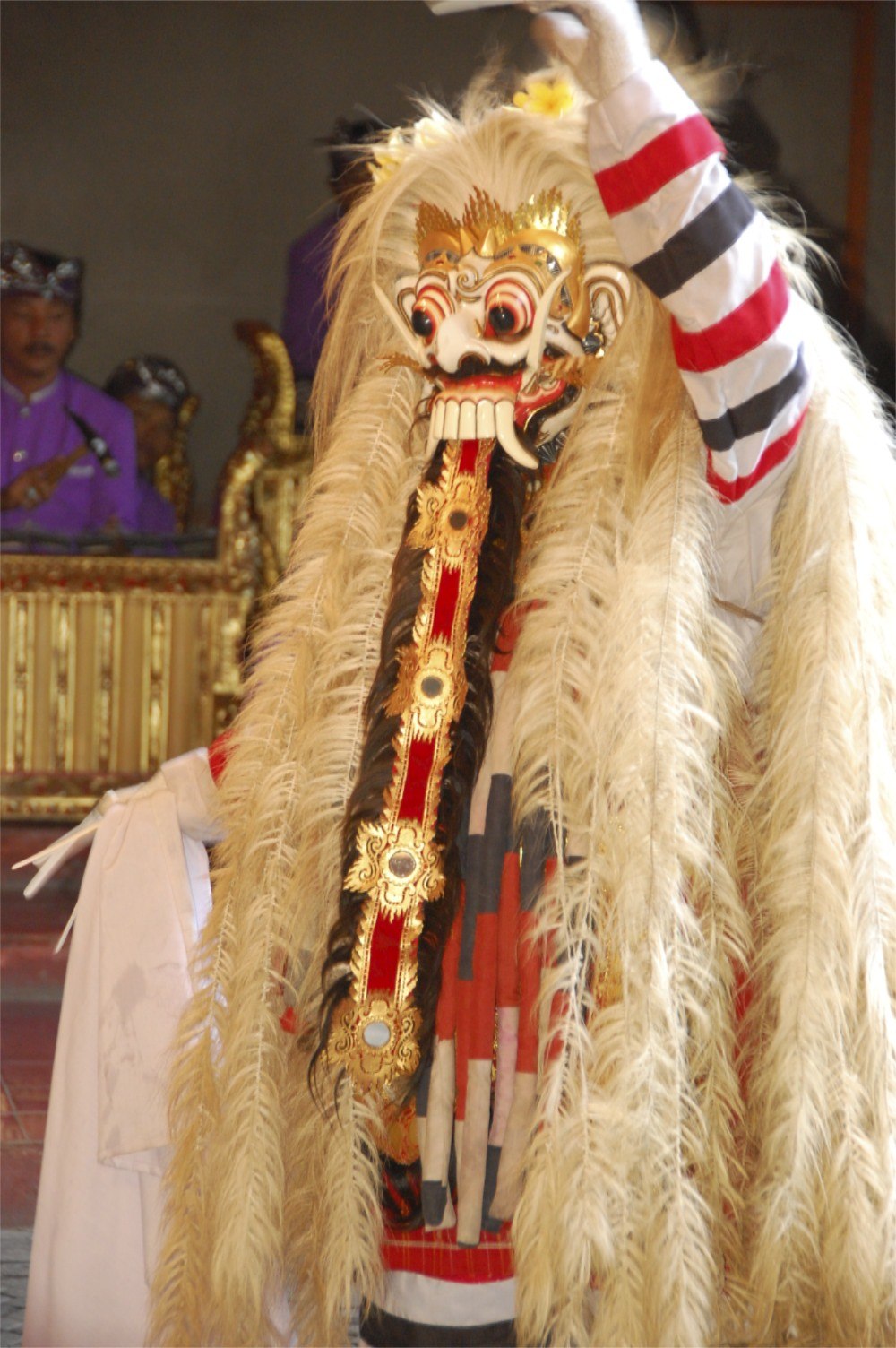
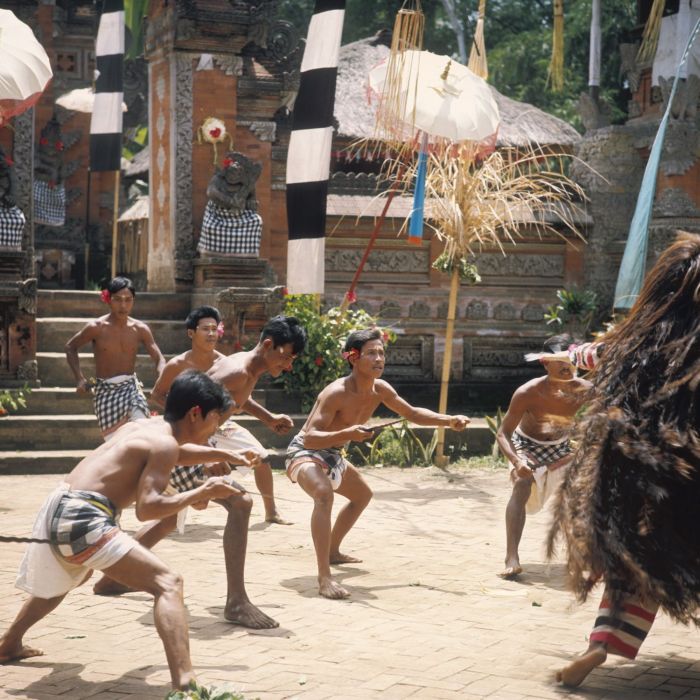
Rangda is primarily enacted through the Barong dance, a traditional Balinese performance. Dancers wear elaborate masks and costumes to portray her physical traits: a horrifying face with fangs, bulging eyes, a long protruding tongue, pendulous breasts, and claws. She appears mostly nude with long, unkempt hair. In the dance, she leads her Leyak followers in a chaotic assault against Barong and his allies. The performance is highly stylized, using movement and music to convey the supernatural power and terror associated with her character.
Tools and materials
The depiction of Rangda relies on specific visual markers. She wears a mask featuring fangs, goggle-like eyes, and a long, sticking-out tongue. Her costume includes representations of long, messy hair, large breasts, and sharp claws. These elements are designed to evoke fear and highlight her nature as a monstrous, unnatural force. The tools of her portrayal are theatrical props used in dance dramas to make the mythical figure visible to the audience.
Rangda, drawn and placed
- Living
- Revived
- Fading
- Historical
- Legendary
- Performed
- Lineage
- Balinese mythology
What it is for
In myth, Rangda seeks harm through black magic, disease, and the kidnapping of children. She is said to have caused plagues and crop failures out of anger and a desire for revenge. In performance, her purpose is symbolic. She represents the destructive aspects of the world that must be balanced by good. The dance serves to ritually enact this balance, allowing the community to witness the triumph of order over chaos. It is a way of engaging with the concept of evil without endorsing it.
Who does it
Rangda is portrayed by skilled dancers in Bali. These performers undergo training to master the movements and expressions required to embody such a powerful and frightening spirit. The role is part of the broader tradition of Balinese theater and dance. Performers do not claim to be possessed by Rangda but rather act out her story. The practice is maintained by local troupes and is also presented for tourists, keeping the tradition alive in a modern context.
Peoples and places
Rangda is specific to Balinese culture, which is Hindu-majority within Indonesia. Her stories connect Bali to the broader history of Java, where legends like Calon Arang originated. While similar figures exist in other Indonesian traditions, Rangda is distinctively Balinese. Her association with Durga and Kali shows influences from mainland Hinduism, but her role as a witch-queen is unique to the local folklore. The figure is recognized across the island as a key part of its mythological landscape.
At a glance: who, where and when
Peoples
Belief worlds


What people believe
Rangda is viewed as a personification of evil and destruction, unlike benevolent goddesses such as Durga. She is believed to wield dark magic and command spirits called Leyaks. Her power comes from her mastery of black magic and her connection to death and plague. Believers see her as a real threat that must be countered by holy men and good spirits. The belief system holds that evil exists but is ultimately contained or defeated by the forces of good, maintaining cosmic harmony.
When it is done
There are no specific calendar days dedicated solely to Rangda. However, her image appears in performances throughout the year, especially during festivals and religious ceremonies in Bali. The Barong dance is performed at various times to mark important events or to purify a space. Her presence is felt whenever the balance between good and evil is ritually acknowledged in Balinese Hindu practice.
How scholars and sceptics see it
Scholars note parallels between Rangda and other ritual masks in Asia, including Japanese traditions. Researchers view her as a complex figure who blends historical queens with mythical witches. Anthropologists study how her story reflects social anxieties about women, power, and magic. The link to Durga and Kali is analyzed as an example of how local beliefs adapt broader Hindu concepts into unique regional forms. Sceptics may view the dances as cultural entertainment, while practitioners see them as spiritually significant.
Cautions and what is closed
Rangda is feared as a source of disease and death. In stories, she causes plagues and kills children. There are no reported modern harms directly attributed to her, as she is a mythical figure. However, the belief in her power reinforces taboos against black magic and harmful sorcery. The figure serves as a warning against the dangers of unchecked anger and revenge. Outsiders are generally welcome to watch performances, but the spiritual significance of the rituals is respected by locals.
Compare and confuse
Rangda is sometimes compared to the Hindu goddess Kali due to their associations with destruction and fierce energy. However, Rangda is strictly a villain, while Kali can be a protective mother figure. She is also linked to Durga, another warrior goddess, but again, Rangda lacks the benevolent aspects. In Japan, some scholars draw parallels between Rangda and certain ritual masks used in purification ceremonies, noting similarities in how they represent chaotic forces.
Questions people ask about Rangda
Who is Rangda?
Rangda is the demon queen of the Leyak witches in Balinese mythology. She is a terrifying figure who leads an army of evil against the forces of good, represented by Barong.
What does the name Rangda mean?
The name Rangda comes from the old Javanese language and means "widow." This reflects her origin story as a scorned or exiled queen who turned to black magic.
How is Rangda connected to Hinduism?
Bali is a Hindu island, and Rangda is often compared to the goddesses Durga and Kali. However, unlike these benevolent deities, Rangda is seen as a personification of pure evil and destruction.
What is the Barong dance?
The Barong dance is a traditional Balinese performance that depicts the eternal battle between Barong (good) and Rangda (evil). It uses masks and costumes to show the clash of opposing forces.
Is Rangda based on a real person?
Some interpretations link Rangda to Mahendradatta, an 11th-century Javanese queen who was exiled for practicing witchcraft. Others see her as the mythical witch Calon Arang.
Good reading and sources
- Rangda on WikipediaEncyclopedia
- More photos on Wikimedia CommonsPhotos and video
- Wikidata recordOpen data
The facts on this page come from the Wikipedia article "Rangda", written by its contributors and used under the CC BY-SA 4.0 licence, and from its Wikidata record (CC0). EveryJaadu rewrote the text in its own words, with AI assistance, and compares every page with the article to make sure no passage is copied. It may be reused under the same CC BY-SA 4.0 licence with a link back.
It may contain mistakes. Names and customs differ from one community to the next, and some knowledge is closed to outsiders and left out here. This page describes belief and practice. It does not say that any of it works, it is not a how-to, and it is not medical advice. If something is wrong, tell us. Last refreshed 2026-10-05.
More from Indonesia
All the entries from Indonesia 🇲🇾 Malaysia and 5 morePenanggalan
A floating head with trailing organs from Malay folklore, said to hunt pregnant women and newborns.Being · Cursing and harm Legendary
🇲🇾 Malaysia and 5 morePenanggalan
A floating head with trailing organs from Malay folklore, said to hunt pregnant women and newborns.Being · Cursing and harm Legendary
 🇹🇭 Thailand and 7 moreSpirit house
A small roofed shrine that shelters a place's protective spiritCharm · Protection Living
🇹🇭 Thailand and 7 moreSpirit house
A small roofed shrine that shelters a place's protective spiritCharm · Protection Living
 🇮🇩 IndonesiaNyepiᬜᬾᬧᬶ
A Balinese day of total silence, fasting, and self-reflection to mark the new year.Rite · Cleansing and purification · Speaking with spirits and the dead Living
🇮🇩 IndonesiaNyepiᬜᬾᬧᬶ
A Balinese day of total silence, fasting, and self-reflection to mark the new year.Rite · Cleansing and purification · Speaking with spirits and the dead Living
 🇮🇩 IndonesiaOgoh-ogohᬳᭀᬕᭀᬄ ᬳᭀᬕᭀᬄ
Balinese sculptures paraded and burned to cleanse the environment before NyepiTradition · Cursing and harm · Cleansing and purification Living
🇮🇩 IndonesiaOgoh-ogohᬳᭀᬕᭀᬄ ᬳᭀᬕᭀᬄ
Balinese sculptures paraded and burned to cleanse the environment before NyepiTradition · Cursing and harm · Cleansing and purification Living
Related elsewhere
All figure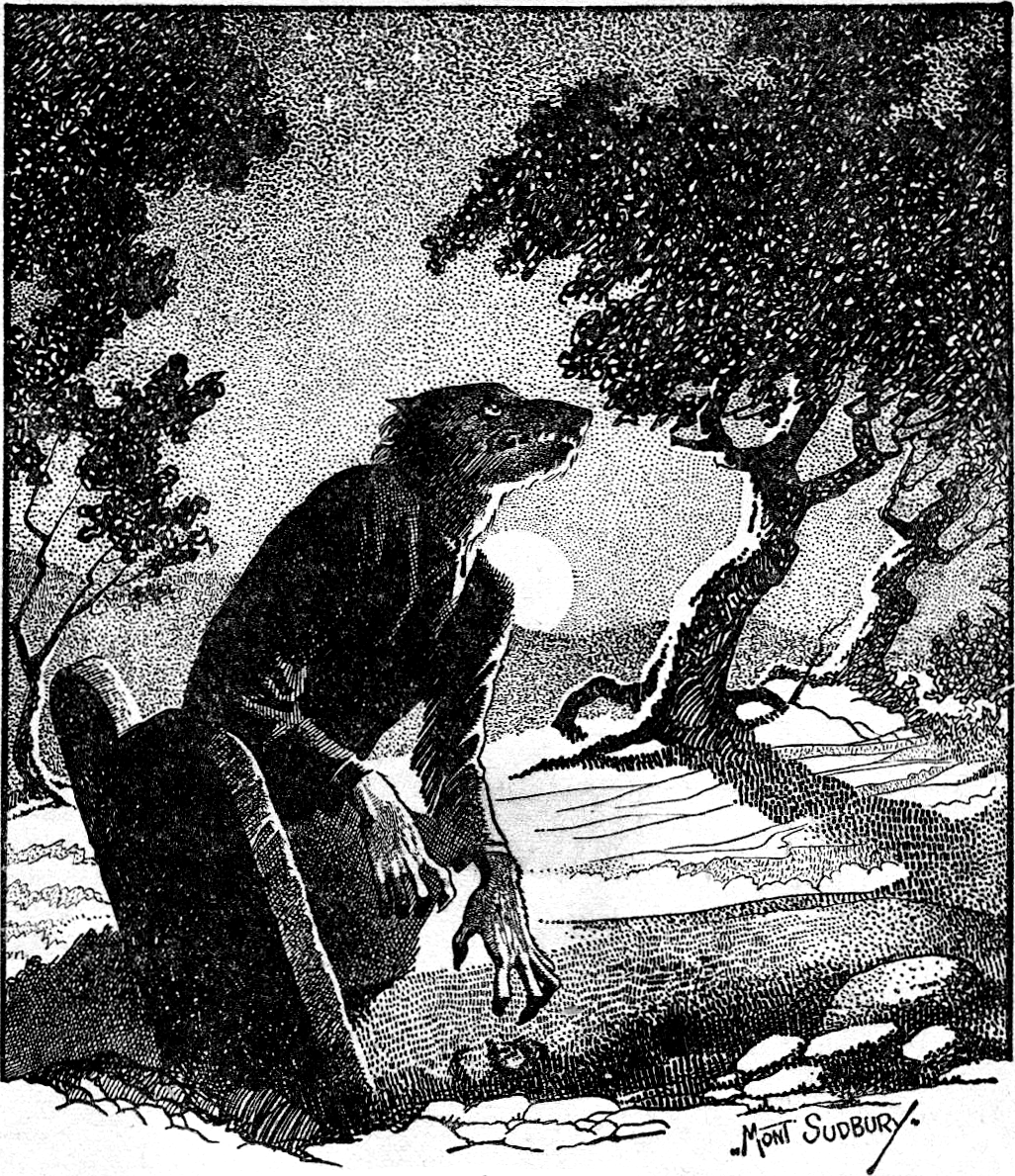 🇫🇷 France and 5 moreWerewolf
A mythical shapeshifter that turns into a wolf, central to European witch-hunts and Gothic horror.Being · Cursing and harm · Wonder and entertainment Legendary
🇫🇷 France and 5 moreWerewolf
A mythical shapeshifter that turns into a wolf, central to European witch-hunts and Gothic horror.Being · Cursing and harm · Wonder and entertainment Legendary
 🇷🇸 Serbia and 5 moreVampire
An undead creature from folklore that feeds on the blood or life force of the livingBeing · Cursing and harm · Luck and prosperity Legendary
🇷🇸 Serbia and 5 moreVampire
An undead creature from folklore that feeds on the blood or life force of the livingBeing · Cursing and harm · Luck and prosperity Legendary
 🇬🇧 United Kingdom and 2 moreKing ArthurBrenin Arthur
A legendary British king and folk hero of medieval literature and Welsh mythologyFigure · Power and authority · Wonder and entertainment Legendary
🇬🇧 United Kingdom and 2 moreKing ArthurBrenin Arthur
A legendary British king and folk hero of medieval literature and Welsh mythologyFigure · Power and authority · Wonder and entertainment Legendary
 🇪🇬 Egypt and 1 moreSphinx
A mythical hybrid with a human head and lion body, serving as guardian or riddler in Egyptian and Greek traditions.Being · Protection · Wonder and entertainment Legendary
🇪🇬 Egypt and 1 moreSphinx
A mythical hybrid with a human head and lion body, serving as guardian or riddler in Egyptian and Greek traditions.Being · Protection · Wonder and entertainment Legendary