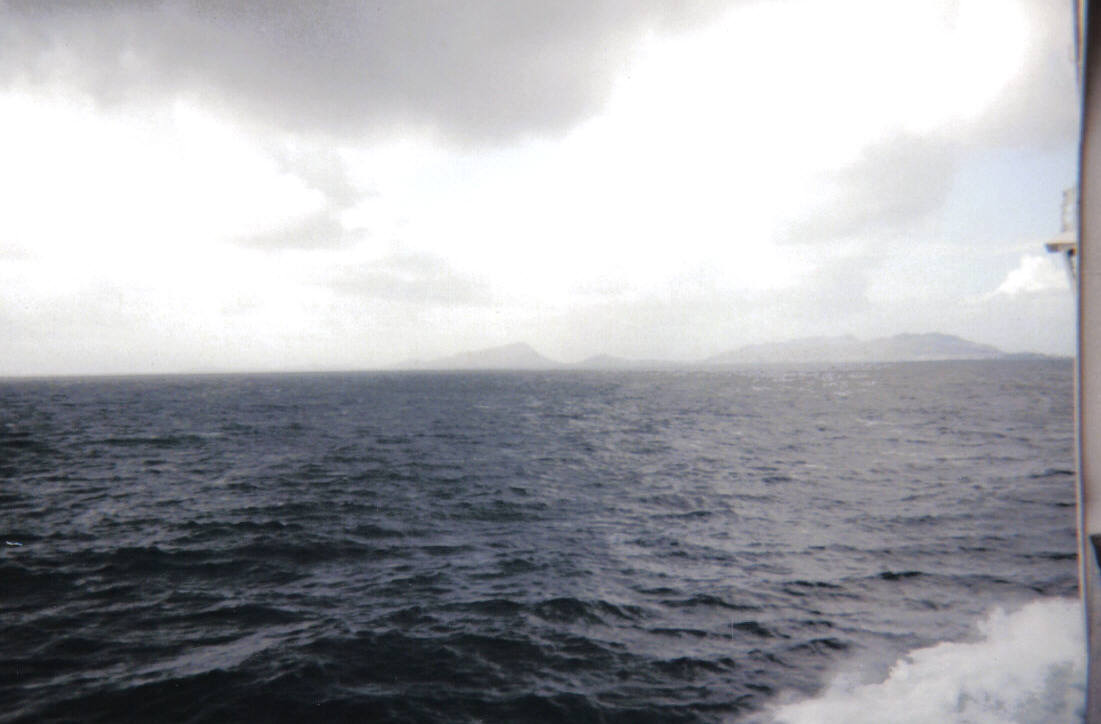
Blue men of the Minch
In its own language: na fir ghorma
from Scottish Gaelic na fir ghorma, meaning "blue men"
Mythical blue-skinned spirits of the Scottish strait who challenge sailors to poetry contests
The blue men of the Minch are mythological creatures from Scottish folklore inhabiting the waters between the northern Outer Hebrides and mainland Scotland. They are believed to create storms and drown sailors, often communicating through poetic challenges.
- They challenge sailors to poetry contests to decide their fate
- The name translates from Gaelic as "blue men" or "black men"
- They may originate from Viking-era North African slaves
- They swim with torsos raised above the water like porpoises
- Their habitat is the dangerous Minch strait between Hebrides and Scotland
What it is
The blue men of the Minch are legendary beings described as human-sized figures with blue skin. They inhabit the treacherous waters of the Minch strait in Scotland. Folklore holds that these spirits can summon violent storms to capsize ships. When the weather is calm, they are said to float just below the surface or swim with their torsos raised above the water. Their primary role in myth is to threaten mariners, either by drowning them or demanding tribute.
Where it comes from
Scholars have proposed several origins for the legend. One theory links them to the Picts, ancient painted people whose bodies might have appeared blue when seen crossing water. Another hypothesis suggests the myth arose from Viking encounters with North African slaves taken during raids on Ireland. These slaves may have been left near the Shiant Isles during winter months, leading locals to associate the dark-skinned individuals with the blue hue of the sea.
How it is done
Encounters with the blue men typically involve a direct challenge. The chief of the spirits rises from the water and recites two lines of poetry to a ship's master. The sailor must respond with two additional lines to complete the verse. If the skipper fails to match the verse, the blue men attack the vessel. In some tales, they also demand tribute from crews, threatening to raise storms if their demands are not met.
Tools and materials
The blue men use the natural elements as their tools. They manipulate wind and waves to create storms capable of sinking boats. Their physical form is described as having grey faces and long arms, sometimes wearing blue headgear. In one account, they are even said to possess wings. They also utilize language and verse as weapons, using poetry to test the worthiness of sailors before attacking.
Blue men of the Minch, drawn and placed
- Living
- Revived
- Fading
- Historical
- Legendary
- Performed
- Lineage
- Scottish folklore
- Timing
- at sea
What it is for
These spirits serve as guardians of dangerous waters, enforcing respect and wit upon those who travel the Minch. Their actions reflect the perilous nature of the sea itself. By challenging sailors, they test courage and intelligence. Failure results in disaster, while success allows safe passage. They represent the unpredictable and deadly power of the ocean to those who navigate it.
Who does it
No specific practitioners perform rituals for the blue men, as they are wild spirits rather than deities to be worshipped. Sailors and fishermen were the primary witnesses to their existence. Stories describe interactions between mariners and the spirits, highlighting the need for quick thinking and verbal skill to survive an encounter.
Peoples and places
The belief is primarily associated with Scottish coastal communities, particularly around the Outer Hebrides and Shiant Isles. Folklorists note that such spirits are rare in having such a restricted geographic range. While similar water horses exist elsewhere in Scotland, the blue men are unique to this strait. Some accounts mention parallels in Shetland, but the core legend remains local to the Minch.
At a glance: who, where and when
Belief worlds


What people believe
In Scottish folk belief, the blue men are part of a broader category of water spirits known as kelpies. They are sometimes linked to fallen angels or other supernatural tribes. Their blue coloration is interpreted as a reflection of the sea's hue. The legends emphasize their connection to the natural environment, portraying them as embodiments of the storm and the tide.
When it is done
The blue men are active year-round, appearing whenever ships traverse the Minch. They are most active during storms or rough weather. In calmer conditions, they rest or play games like shinty at night. There are no specific festivals tied to them, but their presence is felt whenever maritime travel occurs in their domain.
How scholars and sceptics see it
Folklorists and historians analyze the blue men as cultural artifacts reflecting historical events. The Norse slave theory connects the myth to Viking raids and the presence of North Africans in Scotland. The Pictish theory links them to pre-Christian painted peoples. Scholars view these explanations as attempts to rationalize mysterious disappearances at sea through familiar historical narratives.
Cautions and what is closed
The blue men pose a lethal threat to sailors in folklore. Their attacks result in drowning and shipwrecks. The stories serve as warnings about the dangers of the Minch. Navigators were advised to remain vigilant and respectful. The legends underscore the real risks faced by mariners in these turbulent waters.
Compare and confuse
The blue men are distinct from other kelpies, which are usually horse-shaped. While kelpies appear across Scotland, the blue men are confined to the Minch. They share traits with other sea spirits but are defined by their blue skin and poetic challenges. Similar beings include the Merry Dancers of the Northern Lights and ground-dwelling fairies in some tribal divisions.
Questions people ask about Blue men of the Minch
What are the blue men of the Minch?
They are mythological creatures from Scottish folklore inhabiting the Minch strait. Described as blue-skinned humans, they are believed to create storms and threaten sailors who pass through their waters.
How do the blue men interact with sailors?
They challenge ship masters to a poetry contest. The spirit chief recites two lines, and the sailor must reply with two more. Failure to complete the verse invites the blue men to capsize the vessel.
Where do the blue men come from?
Origins are debated. Some link them to the painted Picts, while others suggest they stem from North African slaves left behind by Vikings. The Gaelic term can mean both "blue" and "black".
Are the blue men related to kelpies?
Yes, they are often called storm kelpies. However, unlike typical kelpies which are horse-shaped, these are humanoid. They are unique to the Minch region, unlike other kelpie sightings.
What do the blue men look like?
They are human-sized with blue skin, grey faces, and long arms. They may wear blue headgear and have wings. They swim with their upper bodies raised above the water surface.
Good reading and sources
The facts on this page come from the Wikipedia article "Blue men of the Minch", written by its contributors and used under the CC BY-SA 4.0 licence, and from its Wikidata record (CC0). EveryJaadu rewrote the text in its own words, with AI assistance, and compares every page with the article to make sure no passage is copied. It may be reused under the same CC BY-SA 4.0 licence with a link back.
It may contain mistakes. Names and customs differ from one community to the next, and some knowledge is closed to outsiders and left out here. This page describes belief and practice. It does not say that any of it works, it is not a how-to, and it is not medical advice. If something is wrong, tell us. Last refreshed 2026-10-05.
More from the United Kingdom
All the entries from the United Kingdom 🇬🇧 United KingdomCeridwenCerridwen
A Welsh enchantress and modern goddess of poetic inspiration and transformation.Being · Change and initiation Revived
🇬🇧 United Kingdom and 1 moreFuath
A class of malevolent water spirits in Scottish and Irish folkloreBeing · Cursing and harm Legendary
🇬🇧 United KingdomCeridwenCerridwen
A Welsh enchantress and modern goddess of poetic inspiration and transformation.Being · Change and initiation Revived
🇬🇧 United Kingdom and 1 moreFuath
A class of malevolent water spirits in Scottish and Irish folkloreBeing · Cursing and harm Legendary
 🇬🇧 United Kingdom and 1 moreEach-uisge
A fierce water spirit of the Scottish Highlands and Irish shores that takes the form of a horse.Being · Cursing and harm Legendary
🇬🇧 United Kingdom and 1 moreEach-uisge
A fierce water spirit of the Scottish Highlands and Irish shores that takes the form of a horse.Being · Cursing and harm Legendary
Related elsewhere
All being 🇯🇵 JapanKappa河童
A river-dwelling yōkai known for its head dish and love of cucumbersBeing · Cursing and harm · Wonder and entertainment Legendary
🇯🇵 JapanKappa河童
A river-dwelling yōkai known for its head dish and love of cucumbersBeing · Cursing and harm · Wonder and entertainment Legendary
 🇮🇩 IndonesiaRangdaᬭᬗ᭄ᬤ
A Balinese demon queen who leads witches in an eternal battle against good.Figure · Cursing and harm · Wonder and entertainment Legendary
🇮🇩 IndonesiaRangdaᬭᬗ᭄ᬤ
A Balinese demon queen who leads witches in an eternal battle against good.Figure · Cursing and harm · Wonder and entertainment Legendary
 🇯🇵 JapanKitsuneきつね
A Japanese fox spirit known for shapeshifting and trickeryBeing · Cursing and harm · Protection Legendary
🇯🇵 JapanKitsuneきつね
A Japanese fox spirit known for shapeshifting and trickeryBeing · Cursing and harm · Protection Legendary
 🇯🇵 JapanNoppera-bōのっぺらぼう
A faceless spirit from Japanese folklore that mimics human appearanceBeing · Cursing and harm · Wonder and entertainment Historical
🇯🇵 JapanNoppera-bōのっぺらぼう
A faceless spirit from Japanese folklore that mimics human appearanceBeing · Cursing and harm · Wonder and entertainment Historical