Scholars and sceptics
Anthropologists, historians and investigators who study magic and test its claims.
Scholars and sceptics are the people who study magic from outside the practice: anthropologists, historians, folklorists, psychologists, scholars of religion and investigators who test claims. They have names such as E. E. Evans-Pritchard, Marcel Mauss, Bronislaw Malinowski, Mary Douglas, Keith Thomas and Carlo Ginzburg, and also investigators such as James Randi. This page covers what they have found, how they disagree, and what their work has cost and changed. Their work has changed how the whole subject is understood.
Early theories
Nineteenth-century writers such as James Frazer treated magic as a mistaken early science, a view now widely rejected as arrogant and inaccurate. Later anthropologists, including Evans-Pritchard in his 1937 study of the Azande, showed that magical belief can be a consistent way of reasoning about misfortune. Mauss and Malinowski stressed its social role. Fieldwork, archives, laboratory studies and surveys are their main methods, and each field has its own debates and schools.
The history of witch trials
Historians have revised their view of the witch trials. Keith Thomas and Alan Macfarlane studied English village accusations, Carlo Ginzburg found the benandanti in Friuli, and Ronald Hutton has argued about the numbers and causes, and Silvia Federici links the persecution to the rise of capitalism, a thesis historians dispute. The older figure of nine million victims has been dropped, and estimates now run to tens of thousands of executions.
Testing claims
Sceptics test whether claims hold up. James Randi offered a prize for evidence of paranormal power that was never won, and organisations such as the Committee for Skeptical Inquiry investigate fraud. Researchers study why people believe: pattern-seeking, uncertainty and the wish to control events. The best sceptics aim to understand people, not to mock them. Sceptics hold that claims should be tested, and they have a long record of exposing cases such as spirit photography and fake healers.
Ethics of study
Scholars were often colonial officials or missionaries, and their reports shaped how Indigenous religions were named. Contemporary researchers work with communities, ask consent and respect closed knowledge. Practitioners sometimes object to being explained, and sceptics sometimes to being called closed-minded. The conversation continues, and this guide aims to stay neutral on whether magic works. Their critics reply that science cannot measure everything that matters to a community, and that explaining a ritual away is not the same as understanding it.
Scholars and sceptics on EveryJaadu
The entries written up so far, best known first.
 🇨🇳 China and 3 moreChinese dragon龍
A legendary water deity and imperial symbol in East Asian cultureBeing · Protection · Luck and prosperity Historical
🇨🇳 China and 3 moreChinese dragon龍
A legendary water deity and imperial symbol in East Asian cultureBeing · Protection · Luck and prosperity Historical
 🇯🇵 JapanTsukumogami付喪神
Household objects that gain a spirit after reaching their hundredth year in Japanese folklore.Being · Cursing and harm Historical
🇯🇵 JapanTsukumogami付喪神
Household objects that gain a spirit after reaching their hundredth year in Japanese folklore.Being · Cursing and harm Historical
 🇨🇦 CanadaNanabozhoᓇᓇᐳᔓ
A shapeshifting spirit and trickster in Anishinaabe storytelling from North AmericaBeing · Cursing and harm · Power and authority Living
🇨🇦 CanadaNanabozhoᓇᓇᐳᔓ
A shapeshifting spirit and trickster in Anishinaabe storytelling from North AmericaBeing · Cursing and harm · Power and authority Living
 🇯🇵 JapanYōkai妖怪
A vast class of supernatural spirits and entities in Japanese folkloreBeing · Cursing and harm · Luck and prosperity Historical
🇯🇵 JapanYōkai妖怪
A vast class of supernatural spirits and entities in Japanese folkloreBeing · Cursing and harm · Luck and prosperity Historical
 🇮🇳 India and 3 moreDakiniḍākinī
A goddess figure in Hinduism and Buddhism, ranging from flesh-eating demoness to enlightened energy.Being · Cursing and harm · Power and authority Historical
🇮🇳 India and 3 moreDakiniḍākinī
A goddess figure in Hinduism and Buddhism, ranging from flesh-eating demoness to enlightened energy.Being · Cursing and harm · Power and authority Historical
 🇸🇪 Sweden and 2 moreMjölnirMjǫllnir
The hammer of the Norse thunder god Thor, used as a weapon and for blessingsBeing · Cursing and harm · Protection Historical
🇸🇪 Sweden and 2 moreMjölnirMjǫllnir
The hammer of the Norse thunder god Thor, used as a weapon and for blessingsBeing · Cursing and harm · Protection Historical
 🇬🇧 United Kingdom and 1 moreĒostre
An Anglo-Saxon goddess linked to spring and the dawn, whose name became Easter.Being · Luck and prosperity Historical
🇬🇧 United Kingdom and 1 moreĒostre
An Anglo-Saxon goddess linked to spring and the dawn, whose name became Easter.Being · Luck and prosperity Historical
 🇮🇳 India and 2 moreSuryaसूर्य
The sun as a Hindu deity and the source of light and knowledgeBeing · Power and authority · Healing Historical
🇮🇳 India and 2 moreSuryaसूर्य
The sun as a Hindu deity and the source of light and knowledgeBeing · Power and authority · Healing Historical
 🇮🇳 India and 1 moreYoginiयोगिनी
A female master of yoga and tantra, or a fierce goddess aspect in Indian temples.Tradition · Power and authority · Protection Historical
🇷🇴 Romania and 2 moreStrigoi
A Romanian undead spirit linked to witchcraft and vampirismBeing · Cursing and harm Historical
🇮🇳 India and 1 moreYoginiयोगिनी
A female master of yoga and tantra, or a fierce goddess aspect in Indian temples.Tradition · Power and authority · Protection Historical
🇷🇴 Romania and 2 moreStrigoi
A Romanian undead spirit linked to witchcraft and vampirismBeing · Cursing and harm Historical
 🇵🇪 Peru and 1 moreViracochaWiraqucha
The supreme creator deity of the Andes, associated with the sea and civilization.Being · Power and authority · Wonder and entertainment Historical
🇵🇪 Peru and 1 moreViracochaWiraqucha
The supreme creator deity of the Andes, associated with the sea and civilization.Being · Power and authority · Wonder and entertainment Historical
 🇬🇧 United KingdomCeridwenCerridwen
A Welsh enchantress and modern goddess of poetic inspiration and transformation.Being · Change and initiation Revived
🇬🇧 United KingdomCeridwenCerridwen
A Welsh enchantress and modern goddess of poetic inspiration and transformation.Being · Change and initiation Revived
 🇨🇳 China and 5 moreGuanyin觀音 (Guānyīn)
The Bodhisattva of compassion, worshipped across East Asia as a listener to human sufferingBeing · Protection · Healing Living
🇨🇳 China and 5 moreGuanyin觀音 (Guānyīn)
The Bodhisattva of compassion, worshipped across East Asia as a listener to human sufferingBeing · Protection · Healing Living
 🇮🇶 Iraq and 1 moreRabisu
A wind spirit in Akkadian myth sent to correct human transgressionsBeing · Cursing and harm · Cleansing and purification Historical
🇮🇶 Iraq and 1 moreRabisu
A wind spirit in Akkadian myth sent to correct human transgressionsBeing · Cursing and harm · Cleansing and purification Historical
 🇩🇪 GermanyAlp
A Germanic spirit that presses on sleepers and drinks milkBeing · Cursing and harm · Luck and prosperity Historical
🇩🇪 GermanyAlp
A Germanic spirit that presses on sleepers and drinks milkBeing · Cursing and harm · Luck and prosperity Historical
 🇮🇱 Israel and 2 moreLeviathanלִוְיָתָן (Livyaṯān)
A primordial sea monster from ancient Near Eastern myth and biblical textBeing · Cursing and harm · Power and authority Historical
🇮🇱 Israel and 2 moreLeviathanלִוְיָתָן (Livyaṯān)
A primordial sea monster from ancient Near Eastern myth and biblical textBeing · Cursing and harm · Power and authority Historical
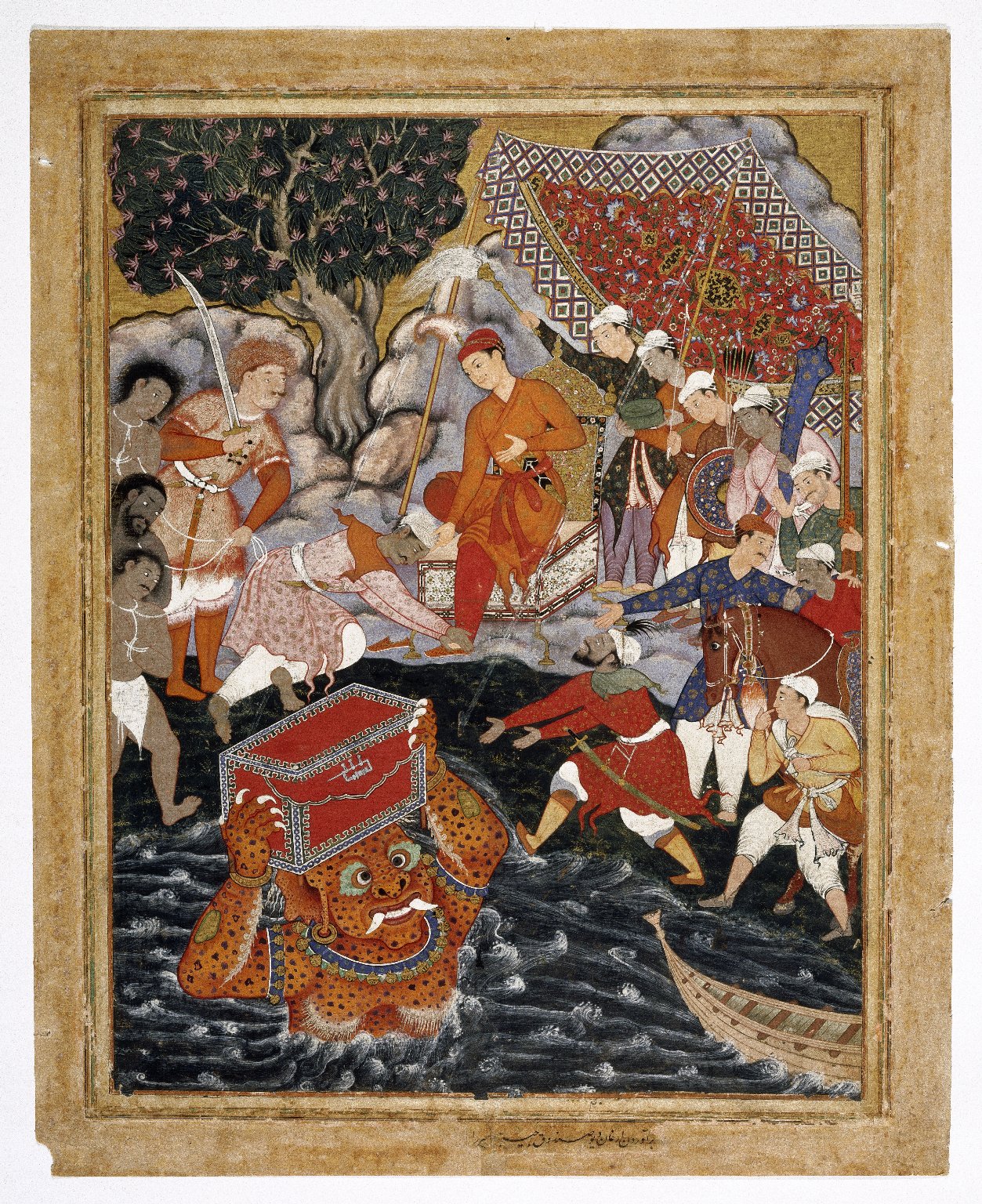 🇪🇬 Egypt and 3 moreIfritعفريت
A class of powerful chthonic spirits in Islamic tradition and folkloreBeing · Cursing and harm · Power and authority Historical
🇪🇬 Egypt and 3 moreIfritعفريت
A class of powerful chthonic spirits in Islamic tradition and folkloreBeing · Cursing and harm · Power and authority Historical
 🇩🇪 Germany and 3 moreMare
A spirit that sits on sleepers to cause nightmares and physical distressBeing · Cursing and harm Historical
🇩🇪 Germany and 3 moreMare
A spirit that sits on sleepers to cause nightmares and physical distressBeing · Cursing and harm Historical
 🇨🇱 ChileMoaimoꞌai
Monolithic ancestor statues of Rapa Nui, carved from volcanic stone between the fifteenth and sixteenth centuries.Being · Power and authority · Protection Historical
🇨🇱 ChileMoaimoꞌai
Monolithic ancestor statues of Rapa Nui, carved from volcanic stone between the fifteenth and sixteenth centuries.Being · Power and authority · Protection Historical
 🇸🇪 Sweden and 3 moreTyrTýr
A Germanic deity of war and oaths, known for sacrificing his hand to a wolfBeing · Power and authority Historical
🇸🇪 Sweden and 3 moreTyrTýr
A Germanic deity of war and oaths, known for sacrificing his hand to a wolfBeing · Power and authority Historical
 🇪🇬 EgyptAbraxasἈβράξας
A Gnostic archon and the name on ancient protective gemstonesBeing · Protection Historical
🇪🇬 EgyptAbraxasἈβράξας
A Gnostic archon and the name on ancient protective gemstonesBeing · Protection Historical
 🇰🇷 South KoreaJeoseung Saja저승사자
A Korean psychopomp who escorts the dead to the afterlife.Being · Speaking with spirits and the dead Living
🇰🇷 South KoreaJeoseung Saja저승사자
A Korean psychopomp who escorts the dead to the afterlife.Being · Speaking with spirits and the dead Living
 🇬🇷 GreeceTriple Goddess
A Neopagan deity representing three female life stages and lunar phasesBeing · Power and authority Living
🇬🇷 GreeceTriple Goddess
A Neopagan deity representing three female life stages and lunar phasesBeing · Power and authority Living
 🇪🇬 EgyptAnubis𓇋𓈖𓊪𓃣
The jackal-headed god who guides souls and oversees mummification in ancient Egypt.Being · Protection · Speaking with spirits and the dead Historical
🇪🇬 EgyptAnubis𓇋𓈖𓊪𓃣
The jackal-headed god who guides souls and oversees mummification in ancient Egypt.Being · Protection · Speaking with spirits and the dead Historical
 🇫🇷 France and 1 moreCernunnos
An antlered Celtic deity depicted with torcs and serpents, known from Roman-era Gaul.Being · Power and authority · Luck and prosperity Historical
🇮🇳 India and 1 moreDaayanदायन
A vengeful female spirit from Indian folklore, often blamed for misfortune and witchcraft accusations.Being · Cursing and harm · Luck and prosperity Living
🇮🇱 Israel and 2 moreBelialבְּלִיַּעַל
A Hebrew term for worthlessness that evolved into a demon of darkness in Jewish and Christian texts.Being · Cursing and harm Historical
🇮🇪 IrelandFetch
A spectral double of a living person, seen as an omen of death or long life.Being · Seeing and foretelling Historical
🇫🇷 France and 1 moreCernunnos
An antlered Celtic deity depicted with torcs and serpents, known from Roman-era Gaul.Being · Power and authority · Luck and prosperity Historical
🇮🇳 India and 1 moreDaayanदायन
A vengeful female spirit from Indian folklore, often blamed for misfortune and witchcraft accusations.Being · Cursing and harm · Luck and prosperity Living
🇮🇱 Israel and 2 moreBelialבְּלִיַּעַל
A Hebrew term for worthlessness that evolved into a demon of darkness in Jewish and Christian texts.Being · Cursing and harm Historical
🇮🇪 IrelandFetch
A spectral double of a living person, seen as an omen of death or long life.Being · Seeing and foretelling Historical
 🇷🇺 Russia and 2 moreUpiórупіор
A demonic spirit from Slavic and Turkic folklore that is believed to return from the dead to feed on the living.Being · Cursing and harm Historical
🇷🇺 Russia and 2 moreUpiórупіор
A demonic spirit from Slavic and Turkic folklore that is believed to return from the dead to feed on the living.Being · Cursing and harm Historical
 🇪🇬 EgyptImhotepỉỉ-m-ḥtp
An ancient Egyptian architect deified as a god of healing and wisdomBeing · Healing · Power and authority Historical
🇪🇬 EgyptImhotepỉỉ-m-ḥtp
An ancient Egyptian architect deified as a god of healing and wisdomBeing · Healing · Power and authority Historical
 🇮🇳 India and 3 moreYakshaयक्ष (Sanskrit), ยักษ์ (Thai)
Nature spirits and guardian deities in South and Southeast Asian traditionsBeing · Protection · Power and authority Living
🇮🇳 India and 3 moreYakshaयक्ष (Sanskrit), ยักษ์ (Thai)
Nature spirits and guardian deities in South and Southeast Asian traditionsBeing · Protection · Power and authority Living
 🇮🇳 IndiaTaraतारा (Sanskrit), তারা (Bengali)
A fierce Hindu goddess of protection and wisdom, central to the Mahavidya tradition.Being · Protection · Power and authority Living
🇮🇳 IndiaTaraतारा (Sanskrit), তারা (Bengali)
A fierce Hindu goddess of protection and wisdom, central to the Mahavidya tradition.Being · Protection · Power and authority Living
 🇦🇺 AustraliaRainbow Serpent
A creator spirit of water and land in Aboriginal Australian mythologyBeing · Healing · Cursing and harm Living
🇵🇪 Peru and 1 morePishtacoñañaq; kharisiri
An Andean bogeyman said to steal human fat for oil and medicineBeing · Cursing and harm · Power and authority Living
🇪🇬 EgyptHekaḥkꜣw
The ancient Egyptian deification of magic, medicine, and primordial creative powerBeing · Healing · Protection Historical
🇦🇺 AustraliaRainbow Serpent
A creator spirit of water and land in Aboriginal Australian mythologyBeing · Healing · Cursing and harm Living
🇵🇪 Peru and 1 morePishtacoñañaq; kharisiri
An Andean bogeyman said to steal human fat for oil and medicineBeing · Cursing and harm · Power and authority Living
🇪🇬 EgyptHekaḥkꜣw
The ancient Egyptian deification of magic, medicine, and primordial creative powerBeing · Healing · Protection Historical
 🇮🇸 Iceland and 1 moreNornsnornir
Fate-weaving figures from Norse myth who shape human destiny and tend the world tree.Being · Cursing and harm · Luck and prosperity Historical
🇮🇸 Iceland and 1 moreNornsnornir
Fate-weaving figures from Norse myth who shape human destiny and tend the world tree.Being · Cursing and harm · Luck and prosperity Historical
 🇬🇧 United Kingdom and 1 moreChurch grim
A guardian spirit of Christian churchyards, often appearing as a black dog or lamb.Being · Protection Historical
🇬🇧 United Kingdom and 1 moreChurch grim
A guardian spirit of Christian churchyards, often appearing as a black dog or lamb.Being · Protection Historical
 🇬🇧 United KingdomBoggart
A malevolent household spirit from northern English folkloreBeing · Cursing and harm Historical
🇬🇧 United KingdomBoggart
A malevolent household spirit from northern English folkloreBeing · Cursing and harm Historical
 🇷🇺 Russia and 4 moreLady MiddayPoludnitsa
A Slavic noon spirit who watches over fields and punishes those who work during the hottest hours.Being · Cursing and harm · Protection Historical
🇷🇺 Russia and 4 moreLady MiddayPoludnitsa
A Slavic noon spirit who watches over fields and punishes those who work during the hottest hours.Being · Cursing and harm · Protection Historical
 🇪🇬 EgyptDemon
A supernatural entity believed to cause harm or possess humansBeing · Cursing and harm · Speaking with spirits and the dead Historical
🇪🇬 EgyptDemon
A supernatural entity believed to cause harm or possess humansBeing · Cursing and harm · Speaking with spirits and the dead Historical
 🇮🇳 India and 3 moreSpirit
An invisible force or soul found in many cultures, linked to gods, humans, and nature.Being · Speaking with spirits and the dead · Power and authority Living
🇮🇳 India and 3 moreSpirit
An invisible force or soul found in many cultures, linked to gods, humans, and nature.Being · Speaking with spirits and the dead · Power and authority Living
 🇮🇷 Iran and 3 moreDaeva𐬛𐬀𐬉𐬎𐬎𐬀
A Zoroastrian entity that evolved from rejected gods to personifications of evil.Being · Cursing and harm · Power and authority Historical
🇮🇷 Iran and 3 moreDaeva𐬛𐬀𐬉𐬎𐬎𐬀
A Zoroastrian entity that evolved from rejected gods to personifications of evil.Being · Cursing and harm · Power and authority Historical
 🇨🇳 ChinaElemental
Mythic beings linked to earth, water, air, and fire in Renaissance occultism.Being · Wonder and entertainment Historical
🇨🇳 ChinaElemental
Mythic beings linked to earth, water, air, and fire in Renaissance occultism.Being · Wonder and entertainment Historical
 🇪🇬 Egypt and 1 moreQareenقرين
A spiritual companion or double assigned to every human in Islamic beliefBeing · Cursing and harm · Power and authority Living
🇪🇬 Egypt and 1 moreQareenقرين
A spiritual companion or double assigned to every human in Islamic beliefBeing · Cursing and harm · Power and authority Living
 🇷🇸 Serbia and 5 moreZduhaćздухаћ
A South Slavic belief in men who fight storms and hail to protect their cropsBeing · Protection · Cursing and harm Historical
🇷🇸 Serbia and 5 moreZduhaćздухаћ
A South Slavic belief in men who fight storms and hail to protect their cropsBeing · Protection · Cursing and harm Historical
 🇬🇧 United KingdomBrown Lady of Raynham Hall
A famous English ghost story and photograph from a Norfolk country houseBeing Historical
🇬🇧 United KingdomBrown Lady of Raynham Hall
A famous English ghost story and photograph from a Norfolk country houseBeing Historical
 🇯🇵 Japan and 1 moreTennin天人
Heavenly beings in Japanese Buddhism, often depicted as beautiful women with feathered scarves.Being · Luck and prosperity Historical
🇹🇹 Trinidad and Tobago and 5 moreSoucouyant
A shape-shifting vampire spirit of Caribbean folklore that sheds its skin to fly as a fireballBeing · Cursing and harm Living
🇯🇵 Japan and 1 moreTennin天人
Heavenly beings in Japanese Buddhism, often depicted as beautiful women with feathered scarves.Being · Luck and prosperity Historical
🇹🇹 Trinidad and Tobago and 5 moreSoucouyant
A shape-shifting vampire spirit of Caribbean folklore that sheds its skin to fly as a fireballBeing · Cursing and harm Living
Photo credits on this page
The small pictures above come from Wikimedia Commons under free licences. Some are cropped to fit.
- Elemental: No machine-readable author provided. Ragesoss assumed (based on copyri, Public domain, source
- Tara: Chore Bagan Art Studio, Public domain, source
- Guanyin: JL Cogburn, CC BY-SA 2.0, source
- Qareen: عامر شاہین, CC BY-SA 3.0, source
- Rabisu: editor Austen Henry Layard , drawing by L. Gruner, Public domain, source
- Zduhać: Bidgee, CC BY-SA 3.0, source
- Brown Lady of Raynham Hall: Hubert C. Provand e Indre Shira, CC BY-SA 4.0, source
- Alp: Henry Fuseli, Public domain, source
- Tennin: Unknown author, Public domain, source
- Cernunnos: Nationalmuseet, Roberto Fortuna og Kira Ursem, Public domain, source
- Upiór: Віщун, CC BY-SA 4.0, source
- Imhotep: Rama, CC BY-SA 3.0 fr, source
- Nanabozho: D. Gordon E. Robertson, CC BY-SA 3.0, source
- Rainbow Serpent: unknown (as drawn by an Aboriginal), Public domain, source
- Norns: file: James Steakley ; artwork: Gustav Heidenreich, Public domain, source
- Church grim: Inès Lee, CC BY-SA 4.0, source
- Boggart: Katolophyromai, CC BY-SA 4.0, source
- Tsukumogami: Unknown author, Public domain, source
- Yaksha: Gunkarta ( talk ), CC BY-SA 3.0, source
- Dakini: Didier Descouens, Public domain, source
- Div: Unknown Calligrapher, Public domain, source
- Viracocha: Pattych ( talk ), CC BY-SA 3.0, source
- Surya: Ravi Varma Press, Public domain, source
- Mare: Henry Fuseli, Public domain, source
- Ifrit: Unknown author, Public domain, source
- Yōkai: Kyosai Kawanabe (河鍋 暁斎), Public domain, source
- Abraxas: Louis Breton, M. Jarrault, Public domain, source
- Tyr: Gunnar Creutz, CC BY-SA 4.0, source
- Ēostre: Johannes Gehrts (1855–1921), Public domain, source
- Demon: Martin Schongauer, Public domain, source
- Mjölnir: Mårten Eskil Winge, Public domain, source
- Lady Midday: Віщун, CC BY-SA 4.0, source
- Anubis: Hunefer, Public domain, source
- Triple Goddess: Unknown author, Public domain, source
- Leviathan: Gustave Doré, Public domain, source
- Moai: Rivi, CC BY-SA 3.0, source
- Chinese dragon: Unknown author, CC0, source
- Ceridwen: Chris Denny, CC BY-SA 2.0, source
- Spirit: Jastrow, Public domain, source
- Jeoseung Saja: National Folk Museum of Korea, CC BY 4.0, source
- Yogini: Soumendra Barik, CC BY-SA 3.0, source