
Brown Lady of Raynham Hall
Named for the brown brocade dress worn by the apparition
A famous English ghost story and photograph from a Norfolk country house
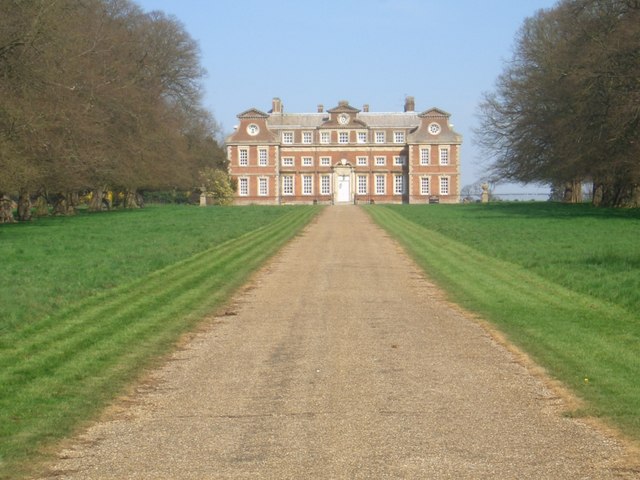
The Brown Lady is a reported apparition at Raynham Hall in Norfolk, England. Legend identifies her as Dorothy Walpole, a woman locked away by her husband in the eighteenth century. The haunting gained worldwide fame after a 1936 magazine photograph captured a figure on the main staircase.
- Photographers captured a famous image in 1936 for Country Life magazine.
- The ghost is linked to Dorothy Walpole, imprisoned in the 1700s.
- Captain Marryat reportedly fired a revolver at the apparition in 1836.
- Experts suspect the photo uses double exposure or a statue superimposition.
- The legend inspired several horror comics in the mid-twentieth century.
What it is
The Brown Lady of Raynham Hall is a spectral figure said to haunt a historic estate in Norfolk, England. She appears as a woman carrying a lamp, dressed in a distinctive brown gown. This image became iconic after a widely published photograph appeared in the mid-twentieth century. While some view her as a genuine spirit, others see her as a product of photographic trickery or mass hysteria. The legend remains a staple of British ghost lore and popular culture.
Where it comes from
The ghost is traditionally identified as Dorothy Walpole, who lived from 1686 to 1726. She was the sister of Robert Walpole and the wife of Charles Townshend, 2nd Viscount Townshend. Stories claim she was confined to the family home after accusations of infidelity. Some accounts suggest she was trapped by the Countess of Wharton rather than her husband. She died of smallpox while imprisoned in the hall during the early eighteenth century.
How it is done
Witnesses describe seeing the figure descend the grand staircase. She typically holds a lit lamp and wears a dated brown dress. Early reports mention her staring with dark, empty eye sockets. In one famous account, a visitor fired a revolver at the apparition, which then vanished instantly. The most well-known sighting occurred when photographers claimed to capture her form moving down the stairs using a flashbulb.
Tools and materials
The primary visual element is the brown brocade dress associated with Dorothy Walpole. Witnesses often report a lamp carried by the spirit. The setting is always the interior of Raynham Hall, specifically the main corridor and staircase. The famous photograph relies on camera equipment and flash technology to create the final image.
Brown Lady of Raynham Hall, drawn and placed
- Living
- Revived
- Fading
- Historical
- Legendary
- Performed
- Lineage
- English folklore
- Timing
- nighttime
What it is for
The apparition serves as a warning about past tragedies within the house. It reflects fears of domestic confinement and violent temperaments. Visitors often seek the site out of curiosity or to test their courage against the supernatural. The legend persists as a local attraction and a subject of paranormal investigation.
Who does it
No specific group practices rituals for this entity. Sightings are reported by guests, staff, and paranormal investigators. Notable figures include Captain Frederick Marryat and Harry Price, who analyzed the evidence. Photographers for Country Life magazine played a key role in cementing the legend through their published work.
Peoples and places
The legend is rooted in English aristocratic history and Norfolk local tradition. It appeals to international audiences interested in hauntings. The story has been adapted into comic books and horror anthologies in the United States. Different cultures interpret the figure either as a tragic victim or a malicious spirit.
At a glance: who, where and when
Who does it
Peoples
What people believe
Believers hold that Dorothy Walpole’s spirit remains bound to the hall due to her unjust imprisonment. They view the sightings as genuine encounters with the dead. Skeptics argue the images result from double exposures or lens grease. Some note similarities to Catholic statues, suggesting the photo superimposed a religious icon onto the stairs.
When it is done
Sightings have been reported throughout the year, but many occur during winter holidays. Early accounts mention Christmas gatherings in the nineteenth century. The famous photograph was taken in September. Modern interest spikes around Halloween and anniversaries of the original publication.
How scholars and sceptics see it
Researchers like Harry Price found the photographers' accounts difficult to dismiss initially. Later analysis by skeptics pointed to technical flaws in the negative. Experts noted pale lines on stair treads indicating superimposition. Magicians demonstrated how easily such an image could be faked using simple props and lighting.
Cautions and what is closed
The legend has been used to promote tourism and sell media products. Some visitors may feel unsafe entering the haunted rooms. There is no risk of physical harm from the ghost, only potential embarrassment for those who believe the tricks.
Questions people ask about Brown Lady of Raynham Hall
Who is the Brown Lady?
She is believed to be the spirit of Dorothy Walpole, an eighteenth-century noblewoman confined to Raynham Hall. Legends say she was trapped there due to family disputes and died of smallpox while imprisoned.
Where does the haunting take place?
The apparition is said to haunt Raynham Hall, a historic estate located in Norfolk, England. Specific sightings often occur on the main staircase and in the corridors near the bedrooms.
How did the famous photograph come to be?
In 1936, photographers for Country Life magazine claimed to capture the ghost descending the stairs. They used a flashbulb and developed the negative to reveal a vaporous female figure in a brown dress.
Is the photograph real or a hoax?
Many skeptics believe it is a fake. Critics point to evidence of double exposure and note that the figure resembles a Virgin Mary statue superimposed on the stairs. Magicians have shown how to replicate the effect.
Good reading and sources
- Brown Lady of Raynham Hall on WikipediaEncyclopedia
- More photos on Wikimedia CommonsPhotos and video
- Wikidata recordOpen data
The facts on this page come from the Wikipedia article "Brown Lady of Raynham Hall", written by its contributors and used under the CC BY-SA 4.0 licence, and from its Wikidata record (CC0). EveryJaadu rewrote the text in its own words, with AI assistance, and compares every page with the article to make sure no passage is copied. It may be reused under the same CC BY-SA 4.0 licence with a link back.
It may contain mistakes. Names and customs differ from one community to the next, and some knowledge is closed to outsiders and left out here. This page describes belief and practice. It does not say that any of it works, it is not a how-to, and it is not medical advice. If something is wrong, tell us. Last refreshed 2026-10-06.
More from the United Kingdom
All the entries from the United Kingdom 🇬🇧 United KingdomCeridwenCerridwen
A Welsh enchantress and modern goddess of poetic inspiration and transformation.Being · Change and initiation Revived
🇬🇧 United Kingdom and 1 moreFuath
A class of malevolent water spirits in Scottish and Irish folkloreBeing · Cursing and harm Legendary
🇬🇧 United KingdomCeridwenCerridwen
A Welsh enchantress and modern goddess of poetic inspiration and transformation.Being · Change and initiation Revived
🇬🇧 United Kingdom and 1 moreFuath
A class of malevolent water spirits in Scottish and Irish folkloreBeing · Cursing and harm Legendary
 🇬🇧 United Kingdom and 1 moreEach-uisge
A fierce water spirit of the Scottish Highlands and Irish shores that takes the form of a horse.Being · Cursing and harm Legendary
🇬🇧 United Kingdom and 1 moreEach-uisge
A fierce water spirit of the Scottish Highlands and Irish shores that takes the form of a horse.Being · Cursing and harm Legendary
Related elsewhere
All being 🇪🇬 Egypt and 1 moreSphinx
A mythical hybrid with a human head and lion body, serving as guardian or riddler in Egyptian and Greek traditions.Being · Protection · Wonder and entertainment Legendary
🇪🇬 Egypt and 1 moreSphinx
A mythical hybrid with a human head and lion body, serving as guardian or riddler in Egyptian and Greek traditions.Being · Protection · Wonder and entertainment Legendary
 🇪🇬 Egypt and 1 moreLilithלִילִית
A feminine figure from Mesopotamian and Jewish mythology, often depicted as a night demon or spirit.Being · Cursing and harm Legendary
🇪🇬 Egypt and 1 moreLilithלִילִית
A feminine figure from Mesopotamian and Jewish mythology, often depicted as a night demon or spirit.Being · Cursing and harm Legendary
 🇨🇳 China and 3 moreChinese dragon龍
A legendary water deity and imperial symbol in East Asian cultureBeing · Protection · Luck and prosperity Historical
🇨🇳 China and 3 moreChinese dragon龍
A legendary water deity and imperial symbol in East Asian cultureBeing · Protection · Luck and prosperity Historical
 🇨🇳 China and 5 moreGuanyin觀音 (Guānyīn)
The Bodhisattva of compassion, worshipped across East Asia as a listener to human sufferingBeing · Protection · Healing Living
🇨🇳 China and 5 moreGuanyin觀音 (Guānyīn)
The Bodhisattva of compassion, worshipped across East Asia as a listener to human sufferingBeing · Protection · Healing Living