
Tara
In its own language: तारा (Sanskrit), তারা (Bengali)
A fierce Hindu goddess of protection and wisdom, central to the Mahavidya tradition.
Tara is a major deity in Shaivism and Shaktism, revered as one of the ten Mahavidyas. She is viewed as an aspect of the supreme mother energy and is known for shielding devotees from severe peril.
- Second of the ten Mahavidyas in Hindu tradition.
- Famous center of worship is Tarapith in West Bengal.
- Considered a form of Adishakti, the supreme mother.
- Protector from dangerous situations, known as Ugratara.
- Worshipped in both Hindu and Buddhist tantric systems.
What it is
Tara stands as a powerful goddess within the Hindu traditions of Shaivism and Shaktism. She holds the second position among the ten Mahavidyas, or great wisdoms. Devotees see her as a direct manifestation of the primordial divine force known as Adishakti. While often linked with other fierce mother figures, she maintains a unique identity focused on rescue and spiritual authority. Her presence is felt across both Hindu and Buddhist tantric circles, bridging different religious landscapes through shared reverence for her protective power.
Where it comes from
Scholars trace Tara's roots to a blend of beliefs from the Oddyana region, where Buddhist and Shaivist ideas merged. Early texts like the Rudrayamala describe sages seeking her grace through complex rituals. Some legends place her origins in Tibet or Central Asia, suggesting a journey from eastern lands into India. Over time, distinct forms emerged, such as the dark-skinned Ekajata and the blue Nilasaraswati, reflecting diverse local worship styles and theological interpretations.
How it is done
Worship involves specific tantric sadhanas described in ancient manuals. Practitioners use mantras and visualizations to connect with her energy. Rituals often take place at sacred sites like Tarapith, where temples stand near cremation grounds. Devotees may offer prayers during crises or seek initiation into secret lineages. The practice emphasizes her role as a shield against danger, requiring strict adherence to ritual purity and devotion to her fierce aspects.
Tools and materials
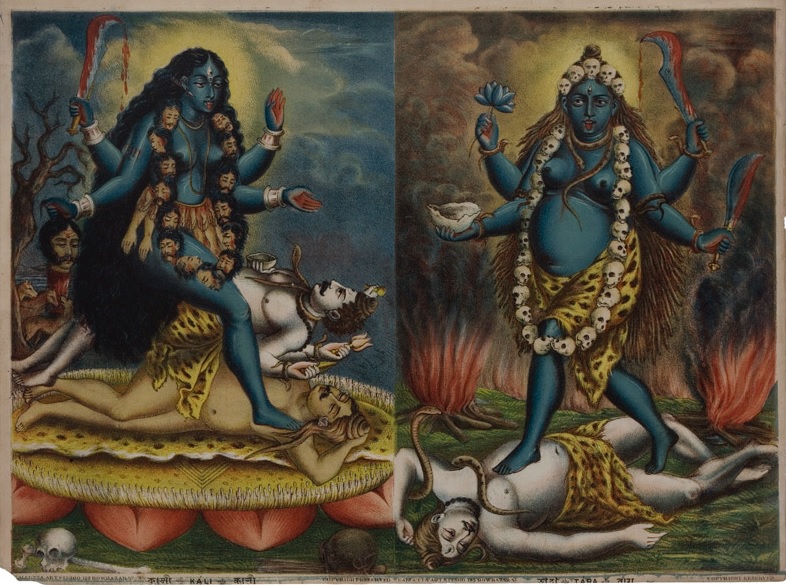
Artistic depictions show her holding a khadga sword and a flaying knife. She wears a crown made of five skulls and sits upon tiger skins. A single matted braid crowns her head, and she may hold a lotus or fly-whisk. These items symbolize her ability to cut through ignorance and protect followers. The imagery reflects her terrifying yet compassionate nature, using symbols of death and transformation to convey spiritual liberation.
Tara, drawn and placed
- Living
- Revived
- Fading
- Historical
- Legendary
- Performed
- Lineage
- Mahavidya
What it is for
Believers turn to Tara when facing extreme threats or spiritual blockages. She is called Ugratara because she rescues devotees from harsh dangers. Followers seek her wisdom and protection in daily life and during tantric practices. Her worship promises safety from enemies and obstacles. Many view her as a maternal figure who intervenes directly in worldly affairs to save those who call upon her name with sincere faith.
Who does it
Tantric priests and ascetics perform formal rituals to honor her. Historical figures like Ramprasad Sen popularized her worship through poetry, making her accessible to the public. Sadhak Bamakhepa was another renowned devotee who embodied her fierce spirit. Both male and female practitioners engage with her, though traditional tantric lines often restrict deeper knowledge to initiated members. Scholars study her texts to understand the evolution of Hindu goddess worship.
Peoples and places
Her cult thrives in West Bengal, especially around the Tarapith temple. The region blends Shaivist and Shakta practices, creating a unique devotional atmosphere. Buddhist communities in Tibet and Central Asia also revere similar forms of Tara, showing cross-cultural religious exchange. In India, her worship has evolved from secretive tantric circles to public festivals, influenced by literary works that highlight her maternal qualities alongside her fearsome power.
At a glance: who, where and when
Belief worlds

What people believe
Tara represents the dynamic energy of the universe, capable of both destruction and salvation. She is identified with the Atharvaveda, linking her to ancient Vedic knowledge. Her consort, Akshobhya, appears as a serpent, symbolizing dormant spiritual energy. Believers hold that she embodies the union of wisdom and compassion, offering a path to enlightenment through fearlessness. Her blue form connects her to infinite space and eternal truth.
When it is done
Specific festival days are not widely documented in general sources, but worship intensifies during personal crises or tantric initiations. Some traditions link her to lunar cycles or seasonal changes, though precise dates vary by lineage. Devotees may choose auspicious days for starting new practices or performing special pujas to invoke her protection. The annual celebrations at Tarapith draw large crowds seeking her blessings.
How scholars and sceptics see it
Researchers view Tara as a product of syncretism between Hindu and Buddhist traditions. Anthropologists note how her fierce iconography reflects ancient shamanic influences. Historians track her spread from Central Asia to India, mapping textual references across centuries. Critics sometimes misinterpret her violent imagery as literal harm, while scholars emphasize its symbolic meaning regarding ego dissolution. Studies highlight her role in empowering marginalized devotional movements.
Cautions and what is closed
Tantric worship of Tara requires guidance from qualified teachers to avoid misunderstanding her fierce aspects. Misuse of mantras or improper rituals is believed to invite negative consequences. Outsiders are often excluded from deeper esoteric practices to preserve their sanctity. Modern commercialization sometimes dilutes traditional meanings, leading to debates about authenticity. Practitioners must approach her with respect for the serious nature of her protective powers.
Compare and confuse
Tara is often confused with Kali due to similar standing postures and dark complexions. However, Tara is typically blue and wears a tiger-skin skirt, while Kali is black and adorned with arm garlands. Both share the motif of standing on a corpse, representing conquered ego. Unlike Kali's universal destructive role, Tara focuses more on wisdom and specific protection. Their similarities highlight shared mythological roots in Indian goddess worship.
Questions people ask about Tara
Who is Tara in Hinduism?
Tara is a major goddess in Shaivism and Shaktism, revered as one of the ten Mahavidyas. She is seen as an aspect of the supreme divine mother and is known for protecting devotees from severe danger and granting wisdom.
Where is Tara worshipped most famously?
The most famous center of worship is the Tarapith Temple in West Bengal, India. This site includes both a temple and a cremation ground, attracting devotees who seek her fierce protection and spiritual blessings.
What are Tara's main forms?
Her three most well-known forms are Ekajata, Ugratara, and Nilasaraswati. Each form represents different aspects of her power, from fierce protection to blue-skinned wisdom, appealing to various devotional needs.
Is Tara only a Hindu goddess?
No, Tara is also significant in Buddhism, particularly in Vajrayana traditions. Her worship shows historical blending between Hindu and Buddhist beliefs, with shared icons and rituals found across India, Tibet, and Central Asia.
What does Tara protect people from?
Devotees believe Tara shields them from ugra, or difficult and fierce dangers. She is invoked in times of crisis to provide safety and remove obstacles, acting as a powerful guardian for those who follow her tantric practices.
Good reading and sources
- Tara (Mahavidya) on WikipediaEncyclopedia
- More photos on Wikimedia CommonsPhotos and video
- Wikidata recordOpen data
The facts on this page come from the Wikipedia article "Tara (Mahavidya)", written by its contributors and used under the CC BY-SA 4.0 licence, and from its Wikidata record (CC0). EveryJaadu rewrote the text in its own words, with AI assistance, and compares every page with the article to make sure no passage is copied. It may be reused under the same CC BY-SA 4.0 licence with a link back.
It may contain mistakes. Names and customs differ from one community to the next, and some knowledge is closed to outsiders and left out here. This page describes belief and practice. It does not say that any of it works, it is not a how-to, and it is not medical advice. If something is wrong, tell us. Last refreshed 2026-10-06.
More from India
All the entries from India 🇮🇳 India and 1 moreLakshmiलक्ष्मी
A Hindu goddess of wealth, prosperity, and beauty, worshipped as the consort of Vishnu.Being · Luck and prosperity · Power and authority Living
🇮🇳 India and 1 moreLakshmiलक्ष्मी
A Hindu goddess of wealth, prosperity, and beauty, worshipped as the consort of Vishnu.Being · Luck and prosperity · Power and authority Living
 🇮🇳 India and 5 morePretaप्रेत
A suffering spirit of insatiable hunger found in Asian religious traditionsBeing · Speaking with spirits and the dead Living
🇮🇳 India and 5 morePretaप्रेत
A suffering spirit of insatiable hunger found in Asian religious traditionsBeing · Speaking with spirits and the dead Living
 🇮🇳 India and 1 moreYoginiयोगिनी
A female master of yoga and tantra, or a fierce goddess aspect in Indian temples.Tradition · Power and authority · Protection Historical
🇮🇳 India and 1 moreYoginiयोगिनी
A female master of yoga and tantra, or a fierce goddess aspect in Indian temples.Tradition · Power and authority · Protection Historical
Related elsewhere
All being 🇨🇳 China and 3 moreChinese dragon龍
A legendary water deity and imperial symbol in East Asian cultureBeing · Protection · Luck and prosperity Historical
🇨🇳 China and 3 moreChinese dragon龍
A legendary water deity and imperial symbol in East Asian cultureBeing · Protection · Luck and prosperity Historical
 🇵🇭 Philippines and 1 moreAgimatAnting-anting
A Filipino amulet or charm believed to grant protection, power, and supernatural abilities.Charm · Protection · Love and attraction Living
🇵🇭 Philippines and 1 moreAgimatAnting-anting
A Filipino amulet or charm believed to grant protection, power, and supernatural abilities.Charm · Protection · Love and attraction Living
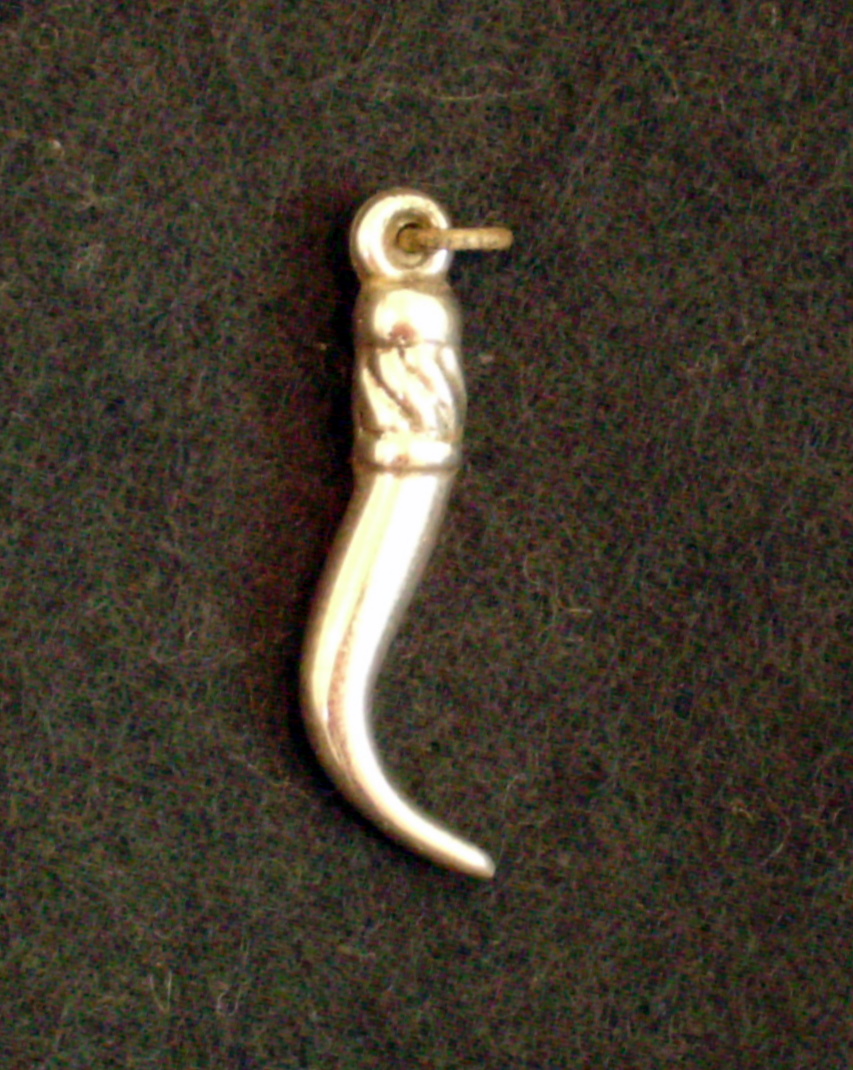 🇮🇹 ItalyCornicello
A twisted horn charm worn in Italy to ward off the evil eye and invite luck.Charm · Protection · Luck and prosperity Living
🇮🇹 ItalyCornicello
A twisted horn charm worn in Italy to ward off the evil eye and invite luck.Charm · Protection · Luck and prosperity Living
 🇫🇷 France and 5 moreYule log
A large wooden log burned in the hearth during winter festivals across Europe and North America.Tradition · Protection · Luck and prosperity Living
🇫🇷 France and 5 moreYule log
A large wooden log burned in the hearth during winter festivals across Europe and North America.Tradition · Protection · Luck and prosperity Living