All entries
2,854 entries so far, best known first. 1,903 more are on the list to be written. Narrow by region, kind, purpose, practitioner, belief world, occasion or how alive it is.
RegionSouth AsiaSoutheast AsiaEast AsiaCentral Asia and the CaucasusMiddle EastNorth AfricaSub-Saharan AfricaEuropeNorth AmericaLatin America and the CaribbeanOceania
PurposeProtectionHealingSeeing and foretellingLuck and prosperityLove and attractionCursing and harmCleansing and purificationSpeaking with spirits and the deadChange and initiationBinding and oathsPower and authorityWonder and entertainment
WhoShamansFolk healersPriests and ritual specialistsWitches, sorcerers and cunning folkDiviners and readersMediums and the possessedCeremonial magicians and alchemistsHouseholds and ordinary peopleStage magiciansScholars and sceptics
BeliefHindu and TantricBuddhistJainMuslim and SufiJewishChristianSikhZoroastrianShinto and TaoistIndigenous and shamanicAfrican and Afro-diasporicPagan and NeopaganEsoteric and occultFolk and village customSecular and stageOther traditions
 🇯🇵 JapanShinto shrine神社 (jinja)
A structure in Japan that houses kami, the deities of ShintoTradition · Speaking with spirits and the dead · Protection Living
 🇮🇳 India and 5 morePretaप्रेत
A suffering spirit of Indian and Asian belief, often called a hungry ghostBeing · Speaking with spirits and the dead · Change and initiation Living
 🇮🇳 India and 5 moreAncestor veneration
Rituals to honor the dead and maintain kinship bonds across generationsTradition · Speaking with spirits and the dead · Protection Living
🇨🇳 China and 4 moreKitchen God灶君
The Chinese hearth deity who reports domestic conduct to the Jade EmperorBeing · Protection · Luck and prosperity Living
 🇨🇳 ChinaNeidan内丹
A Taoist practice using the body as a vessel to refine inner energies for longevity and spiritual survival.Tradition · Protection · Healing Historical
🇮🇳 India and 5 moreAncestor veneration
Rituals honoring the dead to maintain kinship bonds and seek guidance from spiritsTradition · Speaking with spirits and the dead · Protection Living
 🇯🇵 JapanTorii鳥居
A traditional Japanese gate marking the boundary between the mundane and sacred spaces of Shinto shrines.Tradition · Speaking with spirits and the dead · Protection Living
🇯🇵 JapanYutaユタ
Okinawan folk shamans who guide families through spirits and fortune-tellingTradition · Protection · Healing Living
 🇸🇩 Sudan and 5 moreIncense
Aromatic plant material that releases scent when heated or burnedSubstance · Protection · Speaking with spirits and the dead Living
 🇨🇳 China and 1 moreFeng Shan封禪
An imperial rite performed at Mount Tai to honor heaven and earth and confirm the mandate of rule.Rite · Power and authority · Speaking with spirits and the dead Historical
 🇯🇵 JapanKagura神楽
A Shinto ritual dance where performers embody deities to purify and welcome spiritsTradition · Protection · Speaking with spirits and the dead Living
 🇯🇵 JapanKami神
Spirits and deities of Shinto, found in nature, ancestors, and placesBeing · Protection · Luck and prosperity Living
 🇯🇵 JapanShugendō修験道
A Japanese mountain ascetic path blending Esoteric Buddhism, Shinto, and folk ritualsTradition · Protection · Healing Living
 🇮🇳 India and 5 moreMandalaमण्डल
A sacred geometric design used in Indian religions for meditation and spiritual mapping.Tradition · Speaking with spirits and the dead · Wonder and entertainment Living
 🇯🇵 JapanMiko巫女
A Shinto shrine priestess and traditional female medium in JapanTradition · Speaking with spirits and the dead · Protection Living
 🇨🇳 China and 1 moreDongyue Dadi東嶽大帝
The Chinese mountain god of Mount Tai who rules lifespans and underworld recordsBeing · Speaking with spirits and the dead · Power and authority Living
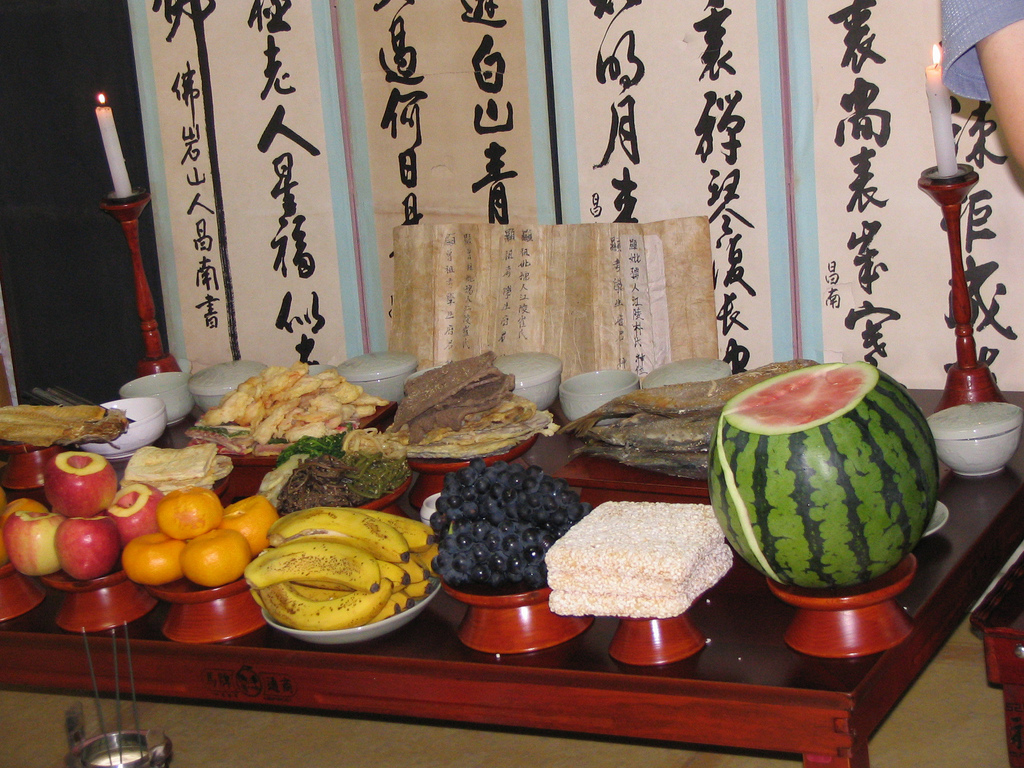 🇰🇷 South Korea and 1 moreChuseok추석 (Chuseok), 한가위 (Hangawi)
A Korean autumn harvest festival marked by ancestral rites and feasting on the full moon.Tradition · Speaking with spirits and the dead · Luck and prosperity Living
 🇨🇳 China and 1 moreAncestor veneration in China
Rites for dead kin who are thought to watch over the familyTradition · Protection · Speaking with spirits and the dead Living
🇯🇵 JapanKitsunetsuki狐憑き
A Japanese folk belief in which a fox spirit enters and controls a human host.Belief · Cursing and harm · Speaking with spirits and the dead Historical
 🇨🇳 China and 5 moreQingming Festival清明节
A spring day for sweeping graves, feeding the dead and honouring ancestorsTradition · Speaking with spirits and the dead · Protection Living
 🇯🇵 JapanItakoイタコ
Blind women in Japan who train to channel spirits and communicate with the dead.Tradition · Speaking with spirits and the dead · Seeing and foretelling Fading
 🇸🇳 Senegal and 5 moreVeneration of the dead
Rituals of respect and offerings for ancestors across global culturesTradition · Protection · Speaking with spirits and the dead Living
 🇨🇳 China and 1 moreChinese shamanism巫教 (Wūjiào)
Spirit-mediums of China who dance and trance to carry messages between people and godsTradition · Speaking with spirits and the dead · Seeing and foretelling Living
 🇨🇳 China and 4 moreFuji扶乩
Chinese planchette writing: gods and ancestors reply through a stylus on sandRite · Speaking with spirits and the dead · Seeing and foretelling Living
 🇨🇳 China and 1 moreJiaobei筊杯 (jiǎobēi)
Wooden crescent blocks thrown in pairs to ask temple deities yes or no questionsOracle · Seeing and foretelling · Speaking with spirits and the dead Living
 🇯🇵 JapanChinkon kishin鎮魂帰神
A Japanese spiritual practice combining soul calming with spirit possessionRite · Speaking with spirits and the dead · Healing Living
 🇯🇵 Japan and 4 moreHousehold deity
A spirit or minor god believed to guard a home and its family members.Being · Protection · Speaking with spirits and the dead Historical
 🇨🇳 China and 1 moreNuo folk religion傩 (Nuó)
A Chinese exorcistic tradition using wooden masks and ancestor worship to drive away malevolent forcesTradition · Protection · Speaking with spirits and the dead Living
 🇯🇵 JapanNamahage生剥げ
Masked ogre visitors who scold lazy children at New Year in northern JapanRite · Protection · Speaking with spirits and the dead Living
 🇯🇵 JapanGoryō御霊
A Japanese belief in appeasing vengeful spirits through Shinto shrinesBelief · Protection · Speaking with spirits and the dead Historical
 🇮🇷 Iran and 5 moreAxis mundi
A concept describing a central point connecting the earthly and heavenly realms.Belief · Speaking with spirits and the dead · Power and authority Historical
 🇯🇵 JapanKabura-ya鏑矢
A Japanese arrow with a whistling tip used in ritual archery and Shinto ritesSubstance · Protection · Speaking with spirits and the dead Living
 🇯🇵 JapanNyonin Kinsei女人禁制
A Japanese custom prohibiting women from sacred sites and certain cultural spaces.Tradition · Protection · Speaking with spirits and the dead Fading
 🇨🇳 ChinaSuperstition in China
A broad category for folk beliefs and rituals dismissed as backward by modern Chinese authoritiesBelief · Protection · Luck and prosperity Living
 🇻🇳 Vietnam and 1 moreÔng Trời
A sky god of Vietnamese folk religion, later linked to the Taoist Jade EmperorBeing · Protection · Power and authority Living
🇯🇵 JapanReikon霊魂
The Shinto soul: it joins the ancestors after funeral rites, or haunts as a yūreiBeing · Speaking with spirits and the dead · Cursing and harm Living
 🇯🇵 JapanMagatama勾玉
A curved Japanese bead used as jewelry, status symbol, and sacred object in Shinto.Charm · Power and authority · Speaking with spirits and the dead Living
 🇯🇵 JapanSeimei Shrine晴明神社
A Shinto shrine in Kyoto dedicated to the legendary onmyōji Abe no SeimeiTradition · Speaking with spirits and the dead Living
 🇯🇵 JapanSuzu鈴
A hollow Japanese bell with inner pellets, used in Shinto rites and shrines.Charm · Protection · Speaking with spirits and the dead Living
🇯🇵 JapanGohei御幣
A wooden wand with two paper streamers, used by Shinto priests to purify and blessCharm · Cleansing and purification · Protection Living
Photo credits on this page
The small pictures above come from Wikimedia Commons under free licences. Some are cropped to fit.
- Jesa: by Joseph Steinberg (Baltimoron in Korea) at Flickr, CC BY-SA 2.0, source
- Mandala: Marion Golsteijn, CC BY-SA 3.0, source
- Incense: nakimusi, CC BY 2.0, source
- Qingming Festival: Jacklee ., CC BY-SA 3.0, source
- Itako: User Geomr~commonswiki self upload, CC BY-SA 3.0, source
- Chinese shamanism: No machine-readable author provided. +上帝+ assumed (based on copyright, CC BY-SA 3.0, source
- Shinto shrine: No machine-readable author provided. Fg2 assumed (based on copyright c, Public domain, source
- Ancestor veneration: Thang Nguyen, CC BY-SA 2.0, source
- Goryō: Tsukioka Yoshitoshi (1839–1892), Public domain, source
- Kagura: Elstner Hilton, Public domain, source
- Kami: Bernard Gagnon, CC BY-SA 3.0, source
- Miko: Chris Gladis, Flickr user MShades, CC BY 2.0, source
- Dongyue Dadi: H2v5o68z, CC0, source
- Chinkon kishin: Tomokiyo Yoshisane (友清歓真), also known as Tomokiyo Kyūgo (友清九吾), Public domain, source
- Household deity: Claus Ableiter, CC BY-SA 3.0, source
- Axis mundi: Unknown author, Public domain, source
- Kabura-ya: urasimaru, CC BY-SA 2.0, source
- Nyonin Kinsei: MightyAtom at English Wikipedia, Public domain, source
- Neidan: A16898, CC BY-SA 4.0, source
- Veneration of the dead: Anonymous ( Flemish ) Unknown author, Public domain, source
- Superstition in China: Gary Todd, CC0, source
- Ông Trời: Bùi Thụy Đào Nguyên, CC BY-SA 3.0, source
- Ancestor veneration in China: Three huntings, CC BY-SA 4.0, source
- Nuo folk religion: Wikiwikiyarou, CC BY-SA 3.0, source
- Preta: Temple, Richard Carnac, Sir, Public domain, source
- Jiaobei: Jnzl's Public Domain Photos, CC BY 2.0, source
- Torii: JordyMeow, CC BY-SA 3.0, source
- Fuji: Unknown author, CC BY 4.0, source
- Magatama: Kakidai, CC BY-SA 3.0, source
- Seimei Shrine: Naokijp, CC BY-SA 4.0, source
- Feng Shan: Rolf Müller ( User:Rolfmueller ), CC BY-SA 3.0, source
- Suzu: Unknown author, CC0, source
- Shugendō: 唐山健志郎 (Kenshiro Karayama), CC BY-SA 3.0, source
- Namahage: Douglas P Perkins ( Douglaspperkins ( talk )), CC BY 3.0, source