
Jinn
In its own language: جِنّ
from Arabic jnn, meaning 'to hide' or 'to adapt'
Supernatural beings in Islamic and pre-Islamic Arabian belief, created from smokeless fire.
Jinn are invisible supernatural beings in Islam and ancient Arabian religion. They share the earth with humans, can shapeshift, and are judged by God for their deeds.
- Jinn are invisible beings created from smokeless fire.
- They can shapeshift into snakes, scorpions, or humans.
- Amulets with God's name protect against jinn harm.
- Pre-Islamic Arabs worshipped jinn for protection.
- Soothsayers were believed to be controlled by jinn.
What it is
Jinn are supernatural beings recognized in Islam, ancient Arabian religion, and Arabic folklore. Like humans, they possess free will and are accountable for their actions. They may accept divine guidance as believers or reject it as unbelievers. These entities are not inherently good or evil but exist on a plane similar to humanity regarding divine judgment and the afterlife. While naturally invisible, they are composed of subtle bodies and can shapeshift into animals like snakes, scorpions, or lizards, or appear as humans. Their interactions with people range from neutral to intimate, sometimes resulting in hybrid offspring, though they generally prefer living among themselves in tribal structures.
Where it comes from
The exact origins of jinn belief are unclear, with roots in pre-Islamic Arabian religion and pagan beliefs. Some scholars suggest they originated as malevolent desert spirits or marginalized nature deities. Others propose connections to Roman guardian spirits or Persian wicked spirits, though these derivations are disputed. Pre-Islamic Arabs worshipped jinn, seeking refuge in them during travel. The Quran acknowledges their existence but condemns pre-Islamic practices of worshipping them. Islam integrated existing pagan concepts of spirits, adapting them within its theological framework while maintaining that jinn and humans are equally subject to God's authority.
How it is done
Believers interact with jinn through various folk practices. Individuals wear amulets inscribed with names of God to protect against jinn assaults, which sorcerers may invoke to cause harm. Jinn are also called upon for magical aid or protection, often under the leadership of a king. If disturbed or harmed, jinn may retaliate by possessing a person, requiring exorcism to remove them. Soothsayers in pre-Islamic times were believed to be controlled by jinn who revealed hidden knowledge. Romantic or friendly relationships between humans and jinn are recorded in stories, where jinn might teach healing arts or inspire poetry.
Tools and materials
Amulets, charms, and talismans featuring written names of God are used for protection. These items are believed to prevent jinn from harming the wearer. In pre-Islamic contexts, specific locations like desolate valleys were sites for seeking refuge or veneration. Animals such as snakes, scorpions, and lizards are regarded as forms or manifestations of jinn. The physical presence of jinn is sometimes indicated by carcasses resembling serpents or scorpions left behind after death.
Jinn, drawn and placed
- Living
- Revived
- Fading
- Historical
- Legendary
- Performed
- Lineage
- Abrahamic religion
- Timing
- daily
What it is for
People seek jinn for protection, magical aid, or to avoid harm caused by sorcerers. Amulets serve to ward off negative influences and possession. Conversely, some believe jinn can be invoked to cause harm or illness. Historically, soothsayers consulted jinn for divination and settling disputes. Romantic relationships aim for companionship or the acquisition of special knowledge, such as healing arts. The overarching purpose of protective measures is to maintain safety in an environment where invisible beings are believed to reside and interact.
Who does it
Practitioners include household members wearing protective amulets and individuals seeking magical aid. Healers may learn arts from jinn in romantic or mentorship contexts. Soothsayers acted as intermediaries, allowing jinn to speak through them for divination. Exorcists deal with cases of possession. Scholars study the legal status, theology, and cultural impact of jinn belief. Gender roles are not strictly defined in interactions, which can be casual or intimate. The community includes both believers who acknowledge jinn and those who view them as part of idolatrous past practices.
Peoples and places
Jinn belief is central to Arab culture and the Muslim world. In pre-Islamic Arabia, tribes like the Banu Hanifa sought refuge in jinn during travel. Belief spread across the Arabian Peninsula and influenced surrounding regions. In Iran, jinn appear in epic literature like the Shahnameh. Turkish and other Middle Eastern cultures incorporate jinn into folklore. The concept extends to North Africa and parts of South Asia through Islamic expansion. Distinctions exist between regional interpretations, with some areas viewing jinn as interchangeable with deities or local spirits.
At a glance: who, where and when
Who does it
Belief worlds


What people believe
Jinn are created from smokeless fire and inhabit the earth before humans. They are subject to divine judgment and an afterlife, sharing the same spiritual plane as humans. The Quran states prophets were sent to both communities. Jinn can be believers or unbelievers. They possess bodies and can shapeshift. Pre-Islamic beliefs viewed them as chthonic powers or nature deities. Islam recontextualized them as created beings accountable to God. Possession is seen as a result of jinn invading human space. Protective measures rely on divine names, reflecting the belief in God's supreme authority over all spirits.
How scholars and sceptics see it
Scholars analyze jinn through historical, theological, and anthropological lenses. Some view jinn as degraded pagan deities integrated into Islam. Others trace linguistic connections to Roman genius or Persian spirits. Anthropologists study the social structure attributed to jinn, mirroring human tribal organizations. Theologians debate the legal status of jinn marriage and property. Skeptics may attribute beliefs to psychological factors or cultural persistence. Research highlights the transition from pre-Islamic worship to Islamic acknowledgment without veneration. Studies also examine the role of jinn in explaining mental illness and disease in historical contexts.
Cautions and what is closed
Jinn are feared for causing disease, mental illness, and possession. Sorcerers may use jinn to inflict harm, necessitating protective amulets. Possession requires exorcism, indicating a serious breach of boundaries. Pre-Islamic worship of jinn was condemned as idolatry. Modern religious authorities often disapprove of folk practices involving jinn due to associations with superstition. Interactions can be dangerous if humans disturb jinn habitats or harm them. The risk of retaliation includes physical attacks or spiritual affliction. Closed knowledge exists regarding specific rituals to control or communicate with jinn safely.
Compare and confuse
Jinn are often compared to demons, spirits, or fairies in Western thought, though these analogies are imperfect. The term genie derives from French and Latin, emphasizing benevolent intermediary roles distinct from demons. In Assyrian art, similar ontological categories are labeled genie. Arabic sources translate Greek nymphs as arūsa, linking jinn to classical mythology. Unlike angels, jinn have free will and can be evil. They differ from gods in that they are worshipped privately rather than publicly. The concept shares traits with indigenous spirit beliefs but is uniquely framed within Abrahamic theology.
Rites that involve Jinn
Questions people ask about Jinn
What are jinn?
Jinn are supernatural beings in Islam and Arabian folklore. They are invisible, created from smokeless fire, and possess free will like humans. They can shapeshift and interact with people, ranging from helpful to harmful.
Where do jinn come from?
Jinn belief originates in pre-Islamic Arabian religion and pagan traditions. Islam incorporated these spirits into its theology, acknowledging their existence but condemning their worship. Linguistic origins may link to Semitic roots meaning 'to hide'.
How do people protect themselves from jinn?
Believers wear amulets inscribed with names of God to ward off jinn assaults. Avoiding disturbance of jinn habitats and reciting prayers are common protective measures. Exorcism is used if possession occurs.
Can jinn harm humans?
Yes, jinn are believed to cause illness, mental distress, and possession. Sorcerers may invoke them to inflict harm. Retaliation often follows if humans harm jinn or their territory.
Good reading and sources
- Jinn on WikipediaEncyclopedia
- More photos on Wikimedia CommonsPhotos and video
- Wikidata recordOpen data
The facts on this page come from the Wikipedia article "Jinn", written by its contributors and used under the CC BY-SA 4.0 licence, and from its Wikidata record (CC0). EveryJaadu rewrote the text in its own words, with AI assistance, and compares every page with the article to make sure no passage is copied. It may be reused under the same CC BY-SA 4.0 licence with a link back.
It may contain mistakes. Names and customs differ from one community to the next, and some knowledge is closed to outsiders and left out here. This page describes belief and practice. It does not say that any of it works, it is not a how-to, and it is not medical advice. If something is wrong, tell us. Last refreshed 2026-10-05.
More from Iran
All the entries from Iran 🇲🇦 Morocco and 5 moreWild rueاسپند
A desert plant whose seeds hold psychoactive alkaloids and serve as incense in the Middle East.Substance · Protection · Speaking with spirits and the dead Living
🇲🇦 Morocco and 5 moreWild rueاسپند
A desert plant whose seeds hold psychoactive alkaloids and serve as incense in the Middle East.Substance · Protection · Speaking with spirits and the dead Living
 🇮🇷 Iran and 5 moreMagi
Priests of Zoroastrianism and the figures who inspired the word for magicTradition · Seeing and foretelling · Power and authority Living
🇮🇷 Iran and 5 moreMagi
Priests of Zoroastrianism and the figures who inspired the word for magicTradition · Seeing and foretelling · Power and authority Living
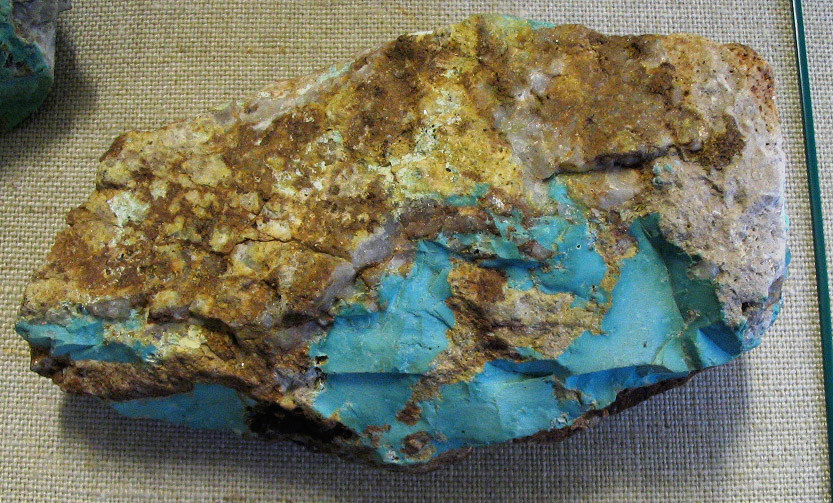 🇮🇷 Iran and 5 moreTurquoise
An opaque blue-green gemstone prized for its color since ancient timesSubstance · Protection · Luck and prosperity Living
🇮🇷 Iran and 5 moreTurquoise
An opaque blue-green gemstone prized for its color since ancient timesSubstance · Protection · Luck and prosperity Living
Related elsewhere
All being 🇨🇬 Republic of the CongoNkisi
Spirit containers and power figures from the Congo Basin used for justice and healingCharm · Protection · Healing Living
🇧🇷 Brazil and 1 moreQuimbanda
An Afro-Brazilian religion focused on male and female street spirits for worldly mattersTradition · Protection · Luck and prosperity Living
🇨🇬 Republic of the CongoNkisi
Spirit containers and power figures from the Congo Basin used for justice and healingCharm · Protection · Healing Living
🇧🇷 Brazil and 1 moreQuimbanda
An Afro-Brazilian religion focused on male and female street spirits for worldly mattersTradition · Protection · Luck and prosperity Living
 🇺🇦 Ukraine and 5 moreMugwortчорнобиль (chornóbyl')
An aromatic herb used in folk medicine, cooking, and magical protection across Eurasia.Substance · Protection · Healing Living
🇺🇦 Ukraine and 5 moreMugwortчорнобиль (chornóbyl')
An aromatic herb used in folk medicine, cooking, and magical protection across Eurasia.Substance · Protection · Healing Living
 🇮🇳 India and 1 moreNavagrahaनवग्रह
A group of nine celestial deities in Hinduism that govern fate and astrologyTradition · Protection · Luck and prosperity Living
🇮🇳 India and 1 moreNavagrahaनवग्रह
A group of nine celestial deities in Hinduism that govern fate and astrologyTradition · Protection · Luck and prosperity Living