Spirits, creatures and beings
Djinn, fairies, orisha, golems and the other powers that magic deals with.
Beings are the powers that magic deals with: spirits, ancestors, gods, djinn, fairies, orisha, nats, kami, demons, golems, ghosts and the many kinds of household and landscape spirit. People in most cultures have described a world shared with unseen others, who may help, trouble or ask for respect. This page covers what these beings are said to be and the very different ways communities relate to them. They are always described here as what communities believe, not as established fact.
Different kinds of beings
A being can be a god with a priesthood, such as an orisha served in Yoruba religion, Cuba and Brazil. It can be an ancestor, honoured in China, Africa and Mexico. It can belong to a place, such as the kami of Shinto, the Thai phi or the Burmese nats. It can be a trouble-maker, like the djinn of Arabic and Islamic tradition, formed from smokeless fire, or the fairies of Ireland, whom people avoided naming.
Relationship, not command
In many traditions, a person does not command a being but enters a relationship with it, through offerings, promises and respect. Possession and mediumship are forms of that relationship, as in Vodou, Candomblé, Korean mudang rites and Sufi gatherings. In ceremonial magic of the European grimoires, by contrast, the magician summons spirits by name and authority, which the Church condemned as demon-raising. The same being may be loved in one household and feared in the next, and a spirit helpful to its servant can be harmful to a stranger.
Religions and renaming
Dominant religions often absorbed beings by relabelling them. Christian missionaries called many African and Indigenous spirits demons. Islam reads the djinn as real creatures, some of whom are Muslim, and Hindu and Buddhist traditions fold local deities into their own pantheons. Pagan and fairy beliefs were sometimes recast as the devil's work, which fed witch trials in Europe. Churches and mosques have sometimes divided beings into good and evil in ways the older traditions did not, so that a neutral local spirit became a demon on the day a missionary arrived.
Harm and interpretation
Belief in harmful spirits has been used to accuse people. Children in parts of West and Central Africa have been branded as witches possessed by evil spirits, and some have been abused by pastors or families in the name of deliverance. Scholars read spirit beliefs as ways to make sense of illness, loss and conflict, and many communities see them simply as neighbours. That is why accusations tied to spirit beliefs fall hardest on children and the vulnerable, and why many agencies train local leaders to challenge them.
Being on EveryJaadu
The entries written up so far, best known first.
 🇬🇷 GreeceDaimonδαίμων
A Greek spirit or divine force that mediates between gods and humansBeing · Protection · Speaking with spirits and the dead Historical
 🇬🇷 Greece and 2 moreDioneΔιώνη
An ancient Greek oracular goddess and Titaness, mother of Aphrodite.Being · Seeing and foretelling Historical
🇳🇬 Nigeria and 1 moreIbo lwa
A nation of Vodou spirits carried from Igbo religion to Haiti, honoured as fightersBeing · Luck and prosperity · Cleansing and purification Living
 🇧🇹 BhutanVajravarahiརྡོ་རྗེ་ཕག་མོ། (Dorje Pakmo)
A wrathful female buddha in Tibetan Buddhism, depicted with a sow head and dancing posture.Being · Power and authority · Change and initiation Living
🇱🇹 Lithuania and 1 moreLaima
A Baltic goddess of fate connected to childbirth and destinyBeing · Seeing and foretelling · Luck and prosperity Historical
 🇯🇵 Japan and 4 moreKṣitigarbhaक्षितिगर्भ
A bodhisattva vowed to empty the hells and guard children, shown with a staff and jewel.Being · Protection · Speaking with spirits and the dead Living
 🇯🇵 JapanKamikiri髪切り
A Japanese yōkai blamed for the sudden disappearance of human hairBeing · Cursing and harm Historical
🇬🇧 United KingdomLazy Laurence
A mischievous English pixie who makes orchard workers lazy and gives them indigestionBeing · Protection · Cursing and harm Historical
 🇬🇷 Greece and 1 moreHephaestusἭφαιστος
The Greek smith god who forged divine weapons and crafted automata for the gods.Being · Power and authority Historical
 🇮🇳 IndiaKroniகுறோணி
A primordial evil spirit in Ayyavazhi mythology, split into fragments across ages.Being · Cursing and harm Living
 🇮🇷 Iran and 5 moreKhidrالخضر
A Qur'anic guide and saint believed to hold hidden wisdom and aid those in need.Being · Seeing and foretelling · Power and authority Living
 🇮🇱 Israel and 1 moreUnclean spiritπνεῦμα ἀκάθαρτον (pneuma akatharton)
A spirit of impurity in biblical belief, driven out by breath, smoke and wordsBeing · Cleansing and purification · Cursing and harm Living
 🇬🇷 GreeceEudaemonεὐδαίμων
A benevolent Greek spirit offering guidance and protection to individuals.Being · Protection · Speaking with spirits and the dead Historical
 🇯🇵 JapanGagoze元興寺の鬼
A yōkai of Nara said to be a lightning child or a monk demon from Gangō-jiBeing · Cursing and harm Historical
 🇪🇬 EgyptAkhty
A rarely attested ancient Egyptian deity linked to the ibis and the evening horizon.Being · Speaking with spirits and the dead Historical
 🇯🇵 JapanHyōsubeひょうすべ
A hairy river spirit of Kyushu that eats eggplants and brings fever.Being · Cursing and harm Historical
🇯🇵 JapanYamajijii山爺
A one-eyed mountain spirit from Shikoku folklore known for its thunderous voice and unpredictable nature.Being · Cursing and harm · Luck and prosperity Historical
🇯🇵 JapanTsurubebi釣瓶火
A hanging fire spirit from Japanese folklore, linked to trees and mountain paths.Being · Wonder and entertainment Historical
🇯🇵 JapanOshiroibabā白粉ばばあ
A yōkai old woman from Nara folklore linked to white powder and mirrors.Being · Wonder and entertainment Historical
🇪🇬 Egypt and 1 moreAiwass
A voice that dictated a foundational occult text to Aleister Crowley in 1904Being · Speaking with spirits and the dead Historical
 🇲🇽 MexicoXolotl
An Aztec deity of fire, lightning, and death who guides souls to the underworld.Being · Cursing and harm · Speaking with spirits and the dead Historical
 🇪🇬 EgyptHermanubisἙρμανοῦβις
A Graeco-Egyptian god who guides the souls of the dead to the underworld.Being · Speaking with spirits and the dead Historical
 🇵🇪 Peru and 3 moreMuki
A subterranean goblin of the Andes who guards mines and makes pacts with miners.Being · Power and authority · Luck and prosperity Living
🇮🇷 IranHouriحُورِيَّـة
Heavenly beings described in Islamic scripture as companions for the faithful in paradise.Being · Speaking with spirits and the dead Historical
🇳🇵 Nepal and 1 moreTenma goddesses
Twelve guardian deities in Tibetan Buddhism who swore to protect the faith.Being · Protection Historical
🇮🇳 IndiaBaakবাক
A shapeshifting water spirit from Assamese folklore that mimics humans and fears torn nets.Being · Cursing and harm · Wonder and entertainment Living
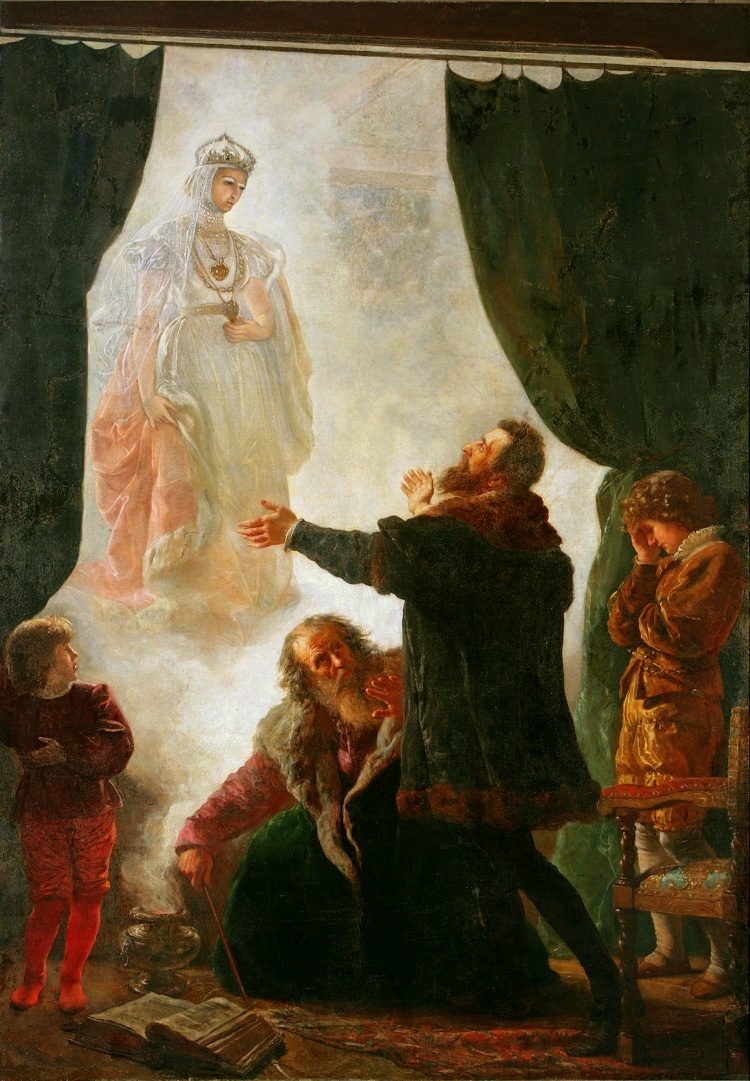 🇩🇪 Germany and 4 moreWeiße Frauen
Elven spirits of sunlight and water in Germanic folkloreBeing · Wonder and entertainment Historical
🇬🇭 GhanaAmokye
Guardian of the entrance to Asamando in Akan and Ashanti beliefBeing · Speaking with spirits and the dead Living
 🇸🇪 Sweden and 1 moreStalloStállu
A large, clumsy creature from Sámi folklore that eats people and is often outwitted by humans.Being · Cursing and harm · Wonder and entertainment Historical
 🇮🇱 IsraelSeraphשָׂרָף
Six-winged heavenly beings who chant 'holy, holy, holy' at God's throneBeing · Speaking with spirits and the dead · Cleansing and purification Living
🇪🇬 Egypt and 1 moreMahalathמָחֲלַת
A queen of demons in Jewish mysticism and the mother of AgratBeing · Cursing and harm Historical
🇬🇧 United KingdomCaoineag
A Highland spirit whose night cries signal impending death for a specific family lineBeing · Seeing and foretelling Historical
🇮🇹 ItalyMazapégul
A mischievous elf of Romagna with a red cap that steals sleep and braids horse manesBeing · Cursing and harm · Luck and prosperity Historical
 🇯🇵 JapanKasha火車
A Japanese yōkai that steals corpses from funerals and gravesBeing · Cursing and harm Historical
🇯🇵 JapanAme no Ohabari天之尾羽
A legendary sword and Shinto spirit from Japanese mythBeing · Cursing and harm · Power and authority Historical
 🇬🇷 GreeceNymphνύμφη
A nature spirit from Greek myth, tied to specific places like springs or trees, often seen as a maiden.Being · Healing · Seeing and foretelling Historical
🇲🇦 Morocco and 1 moreZuhriزوهري
A human-djinn hybrid child in North African folklore, sought for treasure ritualsBeing · Luck and prosperity · Cursing and harm Fading
🇪🇬 EgyptEn-Naddahaالنداهة
A water spirit of the Nile who lures men to their doom with a hypnotic callBeing · Cursing and harm Fading
 🇫🇷 France and 2 moreTarasqueTarasca
A mythical beast from Provence tamed by Saint Martha and paraded in festivalsBeing · Wonder and entertainment Living
🇬🇧 United KingdomDunnie
A border spirit that mimics horses and sings of lost treasureBeing · Cursing and harm · Wonder and entertainment Historical
 🇮🇱 IsraelMelchom
A demon of hell and former Ammonite idol described in the Dictionnaire InfernalBeing · Power and authority Historical
🇮🇳 IndiaEtheric body
A subtle energy layer said to sustain the physical form and connect it to higher states.Being · Power and authority Historical
🇬🇱 GreenlandAnguta
A Greenlandic Inuit figure who guides the dead and fathered the sea goddess SednaBeing · Speaking with spirits and the dead Historical
 🇨🇦 CanadaMistapewmistâpêw (ᒥᐢᑖᐤ)
A spirit-being of the Cree peoples, known as the Great Man or Bigfoot.Being · Protection · Healing Living
 🇬🇧 United Kingdom and 1 moreGiants (esotericism)
Spiritual beings linked to lost continents and root races in occult literatureBeing · Wonder and entertainment Historical
🇮🇸 IcelandSelkolla
A seal-headed woman from Icelandic folklore who clashed with a medieval bishop.Being · Cursing and harm Historical
 🇷🇺 Russia and 5 moreFiredrakeognennyi zmei
A European dragon myth born from sightings of shooting stars and will-o'-the-wispsBeing · Cursing and harm · Luck and prosperity Historical
🇵🇬 Papua New GuineaBaloma
Spirits of departed kin who, Trobrianders hold, place each new child in the wombBeing · Love and attraction Living
Photo credits on this page
The small pictures above come from Wikimedia Commons under free licences. Some are cropped to fit.
- Shamanism in Ayyavazhi: Vaikunda Raja, CC BY-SA 3.0, source
- Hephaestus: Foundry Painter (name vase), Public domain, source
- Kṣitigarbha: སངས་རྒྱས་བཅོམ་ལྡན་འདས།, Public domain, source
- Daimon: François-André Vincent, Public domain, source
- Mistapew: Alarichall, CC0, source
- Tarasque: Olivier, CC BY-SA 4.0, source
- Nymph: Unknown author, Public domain, source
- Stallo: John Bauer, Public domain, source
- Weiße Frauen: Wojciech Gerson, Public domain, source
- Seraph: Pietro Perugino, CC BY 2.0, source
- Kasha: Brigham Young University, CC BY-SA 4.0, source
- Melchom: Louis Le Breton, Public domain, source
- Giants (esotericism): Athanasius Kircher, Public domain, source
- Firedrake: Ramesh Kumar R, CC BY-SA 4.0, source
- Dione: Phidias, CC BY 2.5, source
- Vajravarahi: Foto: Andreas Praefcke, Public domain, source
- Kamikiri: Sawaki Suushi (佐脇嵩之, Japanese, *1707, †1772), Public domain, source
- Khidr: Unknown author, Public domain, source
- Unclean spirit: David Shankbone, CC BY-SA 3.0, source
- Eudaemon: WolfgangRieger, Public domain, source
- Gagoze: Brigham Young University, CC BY-SA 4.0, source
- Akhty: Rémih, CC BY-SA 3.0, source
- Hyōsube: Brigham Young University, CC BY-SA 4.0, source
- Xolotl: Adamt, CC0, source
- Hermanubis: Ad Meskens, CC BY-SA 3.0, source
- Muki: Arístides Herrera Cuntti at Spanish Wikipedia, CC BY-SA 3.0, source