
Vajravarahi
In its own language: རྡོ་རྗེ་ཕག་མོ། (Dorje Pakmo)
From Sanskrit vajra (indestructible) and varahi (female bovine or sow)
A wrathful female buddha in Tibetan Buddhism, depicted with a sow head and dancing posture.
Vajravarahi is a principal female deity in Tibetan Buddhist tantra, revered as the root source of all dakinis. She appears in multiple colors and is central to practices in schools like Nyingma and Kagyu, often paired with male counterparts in ritual visualizations.
- Root of all dakinis in Tibetan Buddhism
- Manifests in six colors: white, yellow, red, green, blue, black
- Consort of Hayagriva in the Nyingma school
- Samding Dorje Phagmo tulku lineage began in 1717
- Depicted with a sow head behind the ear
What it is
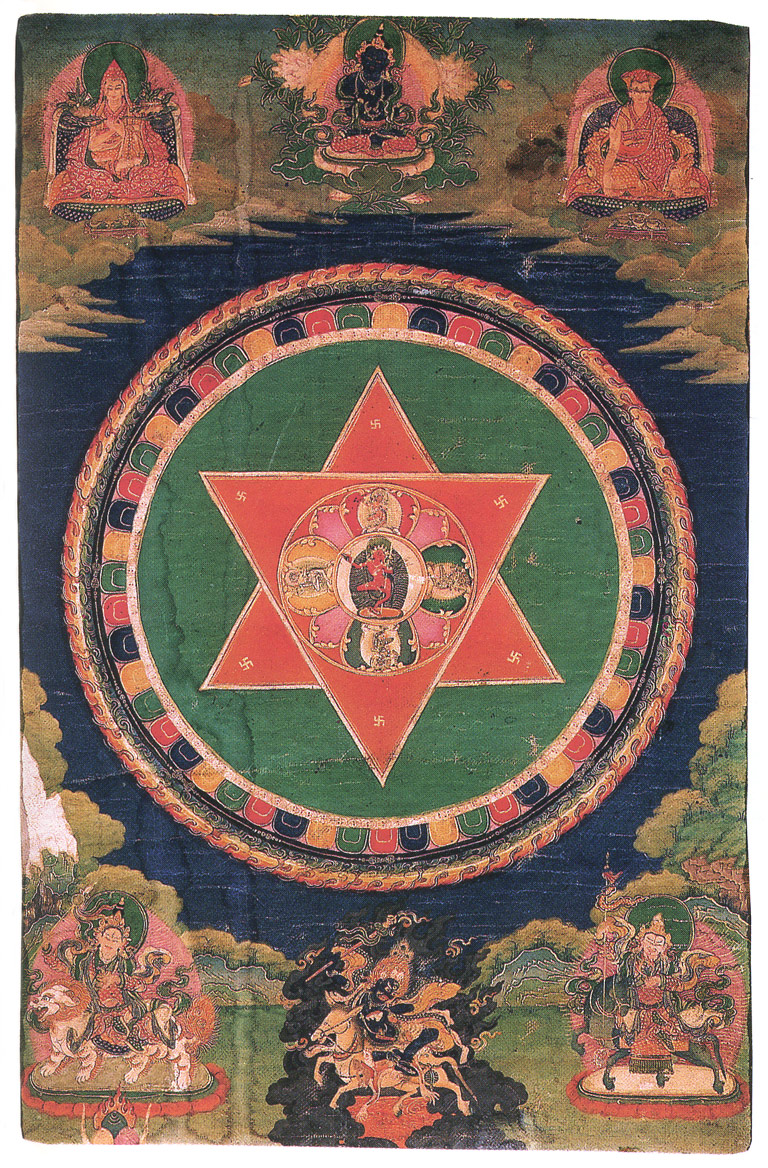
Vajravarahi stands as a major female figure within Tibetan Buddhist tantric systems. Practitioners view her as the fundamental source from which all dakinis emerge. She is not limited to one appearance but manifests across six distinct colors: white, yellow, red, green, blue, and black. In specific lineages like the Nyingma school, she serves as the consort to Hayagriva. Other traditions link her closely to the Cakrasaṃvara Tantra, where she engages in union with the Heruka form. This relationship symbolizes the integration of wisdom and method.
Where it comes from
The deity emerges from Buddhist tantric literature rather than folk myth. Texts describe a cosmic struggle where Vajravarahi and her partner defeat ego-personifications at twenty-four sacred sites. This narrative frames her power against ignorance. The name itself combines terms for indestructibility and a sow, pointing to victory over delusion. Her iconography shares roots with Vajrayogini, though scholars note distinct features like the sow head that set her apart visually and ritually.
How it is done
Ritual practice involves visualizing the deity in specific postures. She is typically shown naked, dancing on a corpse, which represents the destruction of ego. One leg bends upward while the other stands firm. Devotees hold symbolic items: a skull cup in one hand and a staff on the shoulder. These tools represent the transformation of ordinary experience into enlightened awareness. The practice aims to harness her wrathful energy to cut through mental obscurations.
Tools and materials
Artifacts associated with her include the kapala, a skull cup often filled with symbolic blood, representing wisdom. A khatvanga staff rests on her shoulder, signifying her inseparable bond with her consort. A curved knife appears in her right hand, used to sever attachment. The most unique marker is the sow head placed behind her ear or above her head, symbolizing the conquest of ignorance.
Vajravarahi, drawn and placed
- Living
- Revived
- Fading
- Historical
- Legendary
- Performed
- Lineage
- Tibetan Buddhism
What it is for
Devotees seek her power to overcome internal obstacles and ego structures. She is invoked to transform negative energies into clarity. Her wrathful aspect is not malicious but fierce compassion aimed at destroying delusion. Practitioners ask for strength to maintain discipline and insight. The lineage of Samding Dorje Phagmo specifically sought to protect communities from external threats and natural disasters.
Who does it
Monastics and yogis trained in tantric methods engage with her practices. The Samding Dorje Phagmo tulku lineage consists of women recognized as her incarnations. The first appeared in 1717 at Samding Monastery. These figures are abbesses who lead monastic communities. Their authority stems from perceived spiritual powers, including the ability to influence events and protect followers from invaders.
Peoples and places
The deity is central to Tibetan Buddhism broadly. The Nyingma school views her as Hayagriva's consort. The Kagyu school treats her as a primary yidam, or meditation deity. The Bodongpa school maintains the Samding tulku lineage. In Bhutan, a separate Dorje Phagmo incarnation is recognized by Sakya lamas and resides in a nunnery following Nyingma and Shangpa Kagyu traditions.
At a glance: who, where and when
What people believe
Tantric cosmology places her in a battle against Bhairava and Kali, embodiments of ego. Victory at sacred sites establishes her dominance over ignorance. The sow head represents this triumph. Her nudity signifies freedom from social conventions and attachments. Dancing on a corpse shows the death of the self. The union with male deities illustrates the balance of masculine and feminine principles necessary for enlightenment.
When it is done
Practices occur within the broader framework of tantric cycles and initiations. The tulku lineage history marks key dates, such as the 1716-1717 period when the first incarnation manifested to tame Yamdrok Lake and repel Dzungar invaders.
How scholars and sceptics see it
Researchers analyze her role in gender dynamics within Tibetan Buddhism. Judith Simmer-Brown notes her similarity to Vajrayogini but highlights her more prominent fangs and wrathful expression. Scholars examine how her image evolved from earlier tantric forms. Historical accounts describe how her supposed powers influenced political events, such as deterring invasions through reported transformations of nuns into sows.
Cautions and what is closed
The tradition involves closed knowledge accessible only to initiated practitioners. Outsiders cannot access the full depth of the rituals without proper transmission. The wrathful imagery can be misunderstood as violent, but it functions internally to dismantle ego structures rather than cause physical harm.
Compare and confuse
She is frequently conflated with Vajrayogini due to shared iconography. Both appear red, dance, and hold similar implements. Key differences lie in the sow head and specific hand positions. Vajrayogini holds a drum and knife at the hip, while Vajravarahi displays the khatvanga and skull cup prominently. The term 'two-faced' sometimes links them, referring to the dual nature of wisdom and compassion.
Questions people ask about Vajravarahi
Who is Vajravarahi?
She is a female buddha in Tibetan Buddhism, considered the source of all dakinis. She appears in various colors and is central to tantric practices in schools like Nyingma and Kagyu.
What does her name mean?
It translates to 'Indestructible Sow'. The term combines vajra, meaning diamond or thunderbolt, and varahi, referring to a female bovine, symbolizing victory over ignorance.
How is she different from Vajrayogini?
While both are red, dancing deities, Vajravarahi has a sow head behind her ear and holds a khatvanga staff. Vajrayogini holds a damaru drum and a knife at her hip.
Is there a living lineage associated with her?
Yes, the Samding Dorje Phagmo tulku lineage. It began in 1717 with a woman who manifested at Samding Monastery to protect the region and its lake.
Good reading and sources
- Vajravārāhī on WikipediaEncyclopedia
- More photos on Wikimedia CommonsPhotos and video
- Wikidata recordOpen data
The facts on this page come from the Wikipedia article "Vajravārāhī", written by its contributors and used under the CC BY-SA 4.0 licence, and from its Wikidata record (CC0). EveryJaadu rewrote the text in its own words, with AI assistance, and compares every page with the article to make sure no passage is copied. It may be reused under the same CC BY-SA 4.0 licence with a link back.
It may contain mistakes. Names and customs differ from one community to the next, and some knowledge is closed to outsiders and left out here. This page describes belief and practice. It does not say that any of it works, it is not a how-to, and it is not medical advice. If something is wrong, tell us. Last refreshed 2026-10-07.
More from Bhutan
All the entries from Bhutan 🇮🇳 India and 5 moreShakta pithasशाक्त पीठ (Śākta Pīṭha)
Sacred shrines in Shaktism marking where parts of the goddess Sati fell to earth.Tradition · Speaking with spirits and the dead · Power and authority Living
🇮🇳 India and 5 moreShakta pithasशाक्त पीठ (Śākta Pīṭha)
Sacred shrines in Shaktism marking where parts of the goddess Sati fell to earth.Tradition · Speaking with spirits and the dead · Power and authority Living
 🇮🇳 India and 4 moreDzi beadགཟི། (gzi)
An agate amulet worn in the Himalayas for protection against the evil eye.Charm · Protection · Speaking with spirits and the dead Living
🇮🇳 India and 4 moreDzi beadགཟི། (gzi)
An agate amulet worn in the Himalayas for protection against the evil eye.Charm · Protection · Speaking with spirits and the dead Living
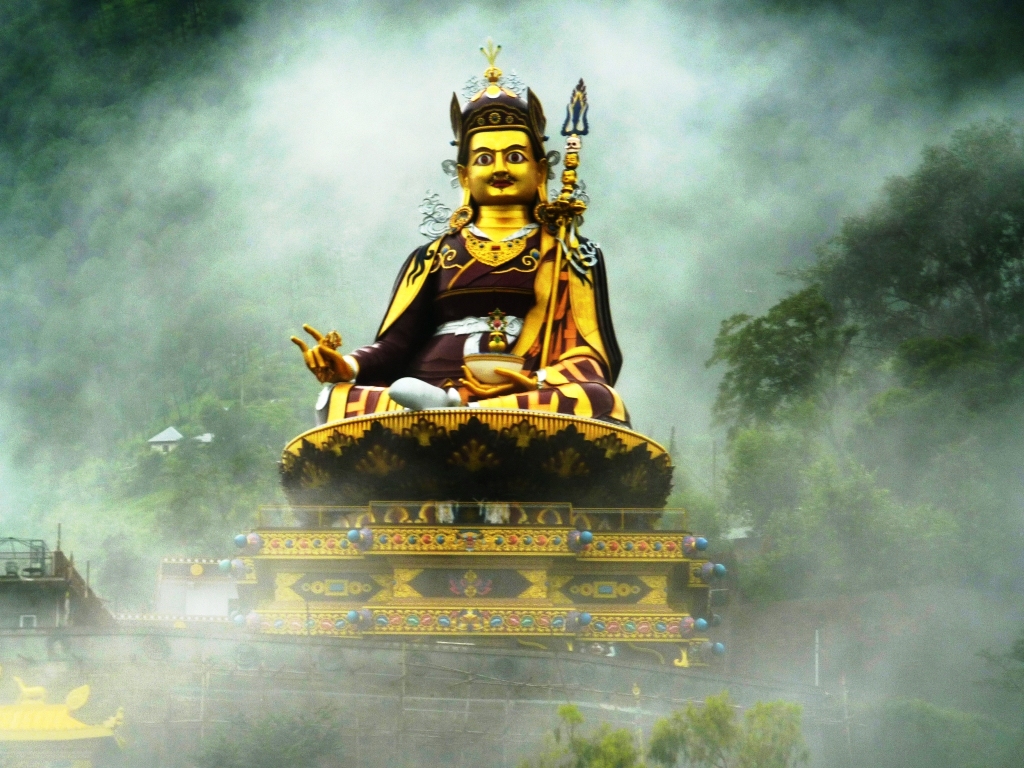 🇮🇳 India and 2 morePadmasambhavaཔདྨ་འབྱུང་གནས།
A tantric master credited with establishing Buddhism in Tibet and founding the Nyingma school.Figure · Protection · Power and authority Living
🇮🇳 India and 2 morePadmasambhavaཔདྨ་འབྱུང་གནས།
A tantric master credited with establishing Buddhism in Tibet and founding the Nyingma school.Figure · Protection · Power and authority Living
Related elsewhere
All being 🇬🇧 United Kingdom and 5 moreAleister Crowley
English occultist and founder of the religion of ThelemaText · Power and authority · Change and initiation Living
🇬🇧 United Kingdom and 5 moreAleister Crowley
English occultist and founder of the religion of ThelemaText · Power and authority · Change and initiation Living
 🇮🇳 India and 4 moreTantraतन्त्र
An esoteric yogic tradition from India focusing on ritual, mantra, and body-based spiritual practices.Tradition · Power and authority · Change and initiation Living
🇬🇧 United Kingdom and 1 moreChaos magic
A modern magical system that treats belief as a flexible tool rather than a fixed truth.Tradition · Change and initiation · Power and authority Living
🇮🇳 India and 4 moreTantraतन्त्र
An esoteric yogic tradition from India focusing on ritual, mantra, and body-based spiritual practices.Tradition · Power and authority · Change and initiation Living
🇬🇧 United Kingdom and 1 moreChaos magic
A modern magical system that treats belief as a flexible tool rather than a fixed truth.Tradition · Change and initiation · Power and authority Living
 🇪🇬 Egypt and 5 moreHermetica
A collection of ancient texts attributed to Hermes Trismegistus, covering magic, alchemy and philosophy.Text · Seeing and foretelling · Change and initiation Historical
🇪🇬 Egypt and 5 moreHermetica
A collection of ancient texts attributed to Hermes Trismegistus, covering magic, alchemy and philosophy.Text · Seeing and foretelling · Change and initiation Historical