
Dione
In its own language: Διώνη
from Greek Diṓnē, meaning 'she-Zeus', derived from the genitive form of Zeus
An ancient Greek oracular goddess and Titaness, mother of Aphrodite.
Dione is an oracular goddess in ancient Greek religion. She appears in Homer's Iliad as the mother of Aphrodite and a healer of divine wounds. Her worship centered at Dodona, where she served as the consort of Zeus.
- Dione is an oracular goddess and Titaness in Greek myth.
- She heals Aphrodite's wound in Homer's Iliad.
- Her oracle at Dodona was among the oldest in Greece.
- Name means 'she-Zeus' in Ancient Greek.
- Black doves signaled divine will at her sanctuary.
What it is
Dione is an oracular goddess and Titaness within ancient Greek mythology. She serves as a maternal figure to Aphrodite and acts as a healer for wounded deities. Scholars identify her as a female counterpart to Zeus, reflecting her role in early religious traditions. Her presence marks a significant link between the older Titan generation and the Olympian pantheon. She represents a distinct aspect of divine femininity associated with prophecy and counsel.
Where it comes from
The name Dione derives from the genitive form of Zeus, indicating a close relationship with the sky god. Early texts present conflicting lineages. Homer describes her as an Olympian nymph and daughter of Oceanus. Later mythographers like Apollodorus classify her as a Titan, the daughter of Gaia and Uranus. Some scholars suggest an earlier form Diwōnā links her to Proto-Indo-European sky deities. The Linear B tablet reference Di-u-ja supports her status as a major goddess predating classical myths.
How it is done
Dione is not performed as a ritual but is invoked through oracular practices. At Dodona, priests interpreted the rustling of sacred oak leaves and the flight of black doves. These signs were believed to convey Zeus's will through his consort. Worshipers sought guidance on personal and civic matters. The oracle at Dodona was considered one of the oldest in Greece, drawing pilgrims who relied on these natural phenomena for divine insight.
Tools and materials
Sacred oaks and black doves formed the primary tools of divination at Dodona. The rustling leaves provided audible signals, while the doves represented messengers from the divine realm. In literary contexts, Dione uses healing words and comfort to tend wounds. Physical altars and temples housed her image, such as those found on the Pergamon Altar. These structures reinforced her connection to the broader family of gods.
Dione, drawn and placed
- Living
- Revived
- Fading
- Historical
- Legendary
- Performed
- Lineage
- Ancient Greek religion
What it is for
Worshippers consulted Dione's oracle to foresee future events and gain clarity on uncertain paths. Her role as a healer in myth suggests a protective function for the divine order. Pilgrims visited Dodona seeking validation of their decisions. The oracle provided answers that shaped political and personal choices. Her association with Aphrodite also linked her to themes of love and fertility in certain local traditions.
Who does it
Priests at Dodona managed the oracle and interpreted its signs. They maintained the sacred groves and oversaw rituals dedicated to Zeus and Dione. Women played a specific role in the founding myths, with priestesses transporting rites from Thebes. Scholars analyze textual evidence to reconstruct her theological position. The priesthood ensured the continuity of the oracle's traditions across centuries.
Peoples and places
Ancient Greeks venerated Dione primarily in Epirus and the Peloponnese. The oracle at Dodona attracted visitors from across the Greek world. Strabo notes a sacred grove near Lepreon dedicated to her worship. Egyptian and Libyan accounts appear in Herodotus's records, suggesting cross-cultural connections. Different regions emphasized varying aspects of her identity, from Titaness to Oceanid.
At a glance: who, where and when


What people believe
Dione embodies the concept of divine feminine authority alongside Zeus. She represents the wisdom of the older generation guiding the younger Olympians. Her healing of Aphrodite illustrates the importance of maternal support among gods. The belief in her oracular power rested on the interpretation of natural signs. Followers viewed her as an essential component of the cosmic order and prophetic tradition.
When it is done
Worship occurred continuously at the oracle sites. Seasonal activities likely influenced pilgrimages to Dodona. Life events may have prompted consultations for guidance. The lack of fixed calendar dates suggests a flexible approach to seeking her counsel.
How scholars and sceptics see it
Researchers debate Dione's origins and relationships. Some view her as an earth goddess absorbed into the Zeus cult. Others see her as a direct linguistic counterpart to Zeus. Textual analysis of Homer, Hesiod, and later mythographers reveals evolving narratives. Archaeological findings from Pergamon and Dodona provide physical evidence of her veneration. These studies help map the development of Greek religious thought.
Cautions and what is closed
No specific harms or restrictions are recorded regarding Dione. Her myths involve divine conflicts but do not outline dangers for worshippers. The oracle operated openly without noted prohibitions. Modern interest focuses on historical and literary analysis rather than active practice. There are no known risks associated with studying her legacy.
Compare and confuse
Dione is often compared to Hera due to their shared roles as Zeus's consorts. Some scholars equate them based on epithets used at Dodona. Unlike Hera, Dione lacks a prominent independent cult outside of oracular contexts. She differs from other Titanesses by her direct maternal link to Aphrodite in Homeric tradition. Her identity remains distinct from later Roman interpretations of similar figures.
Law and persecution
Ancient laws protected the sanctity of the Dodona oracle. The decline of her cult followed the general suppression of pagan religions. Modern legal frameworks treat her as a historical subject of study. No current laws govern her veneration as it is no longer actively practiced.
Questions people ask about Dione
Who is Dione?
Dione is an oracular goddess and Titaness in ancient Greek religion. She appears in Homer's Iliad as the mother of Aphrodite and a healer of divine wounds. Her name means 'she-Zeus', linking her closely to the sky god.
Where was Dione worshipped?
She was primarily worshipped at the oracle of Dodona in Greece. Strabo also mentions a sacred grove near Lepreon on the Peloponnese coast. These sites served as centers for divination and religious consultation.
What is the origin of her name?
The name Dione comes from the Greek word Diṓnē, meaning 'she-Zeus'. It derives from the genitive form of Zeus, indicating her role as his consort or female counterpart in early traditions.
How did people receive prophecies from Dione?
At Dodona, priests interpreted the rustling of sacred oak leaves and the flight of black doves. These natural signs were believed to convey messages from Zeus through his consort, guiding worshippers on their paths.
Good reading and sources
- Dione (Titaness) on WikipediaEncyclopedia
- More photos on Wikimedia CommonsPhotos and video
- Wikidata recordOpen data
The facts on this page come from the Wikipedia article "Dione (Titaness)", written by its contributors and used under the CC BY-SA 4.0 licence, and from its Wikidata record (CC0). EveryJaadu rewrote the text in its own words, with AI assistance, and compares every page with the article to make sure no passage is copied. It may be reused under the same CC BY-SA 4.0 licence with a link back.
It may contain mistakes. Names and customs differ from one community to the next, and some knowledge is closed to outsiders and left out here. This page describes belief and practice. It does not say that any of it works, it is not a how-to, and it is not medical advice. If something is wrong, tell us. Last refreshed 2026-10-10.
More from Greece
All the entries from Greece 🇷🇸 Serbia and 5 moreVampire
An undead creature from folklore that feeds on the blood or life force of the livingBeing · Cursing and harm · Luck and prosperity Legendary
🇷🇸 Serbia and 5 moreVampire
An undead creature from folklore that feeds on the blood or life force of the livingBeing · Cursing and harm · Luck and prosperity Legendary
 🇬🇷 GreeceTriple Goddess
A Neopagan deity representing three female life stages and lunar phasesBeing · Power and authority Living
🇬🇷 GreeceTriple Goddess
A Neopagan deity representing three female life stages and lunar phasesBeing · Power and authority Living
 🇬🇷 GreeceCirceΚίρκη
A Greek goddess and witch known for turning men into beasts with her potionsBeing · Cursing and harm · Love and attraction Legendary
🇬🇷 GreeceCirceΚίρκη
A Greek goddess and witch known for turning men into beasts with her potionsBeing · Cursing and harm · Love and attraction Legendary
 🇬🇷 Greece and 3 moreHellhound
A mythological canine that guards the underworld or serves demonic forces across global folkloreBeing · Protection · Cursing and harm Legendary
🇬🇷 Greece and 3 moreHellhound
A mythological canine that guards the underworld or serves demonic forces across global folkloreBeing · Protection · Cursing and harm Legendary
Related elsewhere
All being 🇮🇳 India and 5 moreAstrology
A divinatory practice that reads human fate through the positions of celestial bodies.Belief · Seeing and foretelling · Luck and prosperity Living
🇮🇳 India and 5 moreAstrology
A divinatory practice that reads human fate through the positions of celestial bodies.Belief · Seeing and foretelling · Luck and prosperity Living
 🇮🇳 India and 2 morePalmistry
A divination method that interprets the lines and shapes of the hand to predict fate or reveal character.Oracle · Seeing and foretelling · Power and authority Living
🇮🇳 India and 2 morePalmistry
A divination method that interprets the lines and shapes of the hand to predict fate or reveal character.Oracle · Seeing and foretelling · Power and authority Living
 🇳🇬 NigeriaOrunmilaỌ̀rúnmìlà
Yoruba deity of wisdom and the creator of the Ifá divination systemBeing · Seeing and foretelling · Speaking with spirits and the dead Living
🇳🇬 NigeriaOrunmilaỌ̀rúnmìlà
Yoruba deity of wisdom and the creator of the Ifá divination systemBeing · Seeing and foretelling · Speaking with spirits and the dead Living
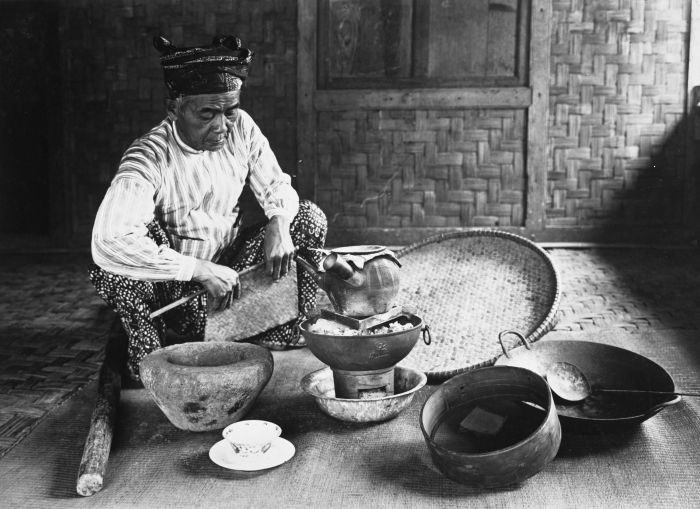 🇮🇩 Indonesia and 2 moreDukun
A traditional healer and spirit medium in Indonesian folk practiceTradition · Healing · Seeing and foretelling Living
🇮🇩 Indonesia and 2 moreDukun
A traditional healer and spirit medium in Indonesian folk practiceTradition · Healing · Seeing and foretelling Living