Aiwass
From Hebrew Aiwaz, equated with the number 93
A voice that dictated a foundational occult text to Aleister Crowley in 1904
Aiwass is the name given to a voice reported by English magician Aleister Crowley. It dictated The Book of the Law during his honeymoon in Cairo in April 1904. Crowley viewed it as a discarnate intelligence or deity.
- Voice dictated The Book of the Law in Cairo, 1904
- Identified as minister of Hoor-paar-kraat
- Crowley linked it to Lucifer and Hadit
- Gematria reveals number 93 for Thelema
- Skeptics view it as Crowley's unconscious mind
What it is
Aiwass is the name assigned to a voice heard by Aleister Crowley. He reported hearing it on three days in April 1904 while in Cairo. The voice dictated a text called The Book of the Law. Crowley considered this entity a non-corporeal being. He described it as a tall, dark man with a savage king's face. The voice spoke in pure English without an accent. It seemed to come from a corner of the room. Crowley later identified it as his Holy Guardian Angel. He also linked it to Lucifer and the god Hadit. The entity serves as a minister for Hoor-paar-kraat, known as Harpocrates.
Where it comes from
The encounter occurred during Crowley's honeymoon in Egypt. He recorded the event in his book The Equinox of the Gods. He claimed the voice dictated Liber AL vel Legis. This text became central to Thelemic cosmology. Crowley argued the being possessed superior knowledge. He cited complex puzzles in the text as proof of its alien origin. Later writings link the voice to the 8th Aethyr. Crowley saw it as a bridge between humanity and divine forces. He believed it proved the existence of discarnate intelligence.
How it is done
Crowley received the dictation over three consecutive days. He described the voice as having a deep, musical timbre. It echoed in his physical heart. He felt the speaker was present in fine matter. The voice conveyed secrets of truth. Crowley used gematria to analyze the name. He calculated numerical values for different spellings. He found links to the number 93 and 418. These numbers held significance in Thelema and Freemasonry. He interpreted these calculations as evidence of the entity's nature.
Tools and materials
The primary tool was the voice itself. It communicated through speech and internal resonance. Crowley used Qabalah and gematria to decode the name. He explored Hebrew and Greek spellings. The number 93 represented Thelema. The number 418 represented the magical formula. These numerical systems served as keys to understanding the entity. Crowley relied on his own esoteric training to interpret the messages.
Aiwass, drawn and placed
- Living
- Revived
- Fading
- Historical
- Legendary
- Performed
- Lineage
- Thelema
- Timing
- April 8, 9, and 10, 1904
What it is for
The entity dictated a new religious law. It aimed to establish a new aeon of Horus. It sought to prove the existence of discarnate intelligence. Crowley believed it offered a path to initiation. It revealed secrets about the Higher Self. The message challenged traditional religious concepts. It redefined the Devil as a liberating force. The purpose was spiritual transformation and knowledge.
Who does it
Aleister Crowley was the sole recipient. He was an English occultist and ceremonial magician. He trained extensively in Western esotericism. He interpreted the voice through his own lens. Scholars study his accounts critically. They analyze the text and his psychological state. No other practitioners claim direct contact with Aiwass. The experience remains unique to Crowley's biography.
Peoples and places
The subject is tied to Crowley and his followers. It originates in the context of Western magic. The events took place in Egypt. Crowley drew on Egyptian mythology. He referenced Sumerian gods and Celtic legends. The entity appears in Thelemic literature. It is studied by historians of religion. Skeptics view it as a product of Crowley's mind.
At a glance: who, where and when
What people believe
Crowley believed Aiwass was an objective individual. He rejected the idea that it was merely a Higher Self. He saw it as a solar-phallic-hermetic figure. It represents the Great Fool archetype. It is linked to Osiris and Baphomet. The entity embodies arcane perfection. Believers see it as a guide to self-knowledge. It teaches that the Devil is not an enemy. It promotes the principle of knowing oneself.
How scholars and sceptics see it
Authors like Israel Regardie and Joshua Gunn offer skeptical views. They argue Aiwass was an unconscious manifestation. They cite stylistic similarities to Crowley's other works. They suggest The Book of the Law was wish fulfillment. Regardie noted Crowley's rebellion against his upbringing. Cammell described the text as an emanation of Crowley's personality. These views contrast with Crowley's claims of external intelligence.
Cautions and what is closed
Some scholars view the experience as psychological projection. There is no scientific proof of discarnate entities. Critics argue the text reflects Crowley's personal desires. The identification with Lucifer has caused confusion. Misinterpretations can lead to dangerous delusions. Crowley warned against confusing the Holy Guardian Angel with the abstract self. The subject requires careful historical analysis.
Questions people ask about Aiwass
What is Aiwass?
Aiwass is the name given to a voice heard by Aleister Crowley. It dictated The Book of the Law in 1904. Crowley viewed it as a discarnate intelligence or deity.
Where did the encounter happen?
The encounter took place in Cairo, Egypt. Crowley was on his honeymoon when he heard the voice. He recorded the details in his later writings.
Who is Aiwass in Thelema?
Crowley identified Aiwass as his Holy Guardian Angel. He also linked it to Lucifer and the god Hadit. It serves as a minister for Harpocrates.
What does the name mean numerically?
Crowley used gematria to calculate the name's value. The Hebrew spelling Aiwaz equals 93, the number of Thelema. Other spellings yield 418, representing the magical formula.
Good reading and sources
The facts on this page come from the Wikipedia article "Aiwass", written by its contributors and used under the CC BY-SA 4.0 licence, and from its Wikidata record (CC0). EveryJaadu rewrote the text in its own words, with AI assistance, and compares every page with the article to make sure no passage is copied. It may be reused under the same CC BY-SA 4.0 licence with a link back.
It may contain mistakes. Names and customs differ from one community to the next, and some knowledge is closed to outsiders and left out here. This page describes belief and practice. It does not say that any of it works, it is not a how-to, and it is not medical advice. If something is wrong, tell us. Last refreshed 2026-10-10.
More from Egypt
All the entries from Egypt 🇪🇬 Egypt and 1 moreSphinx
A mythical hybrid with a human head and lion body, serving as guardian or riddler in Egyptian and Greek traditions.Being · Protection · Wonder and entertainment Legendary
🇪🇬 Egypt and 1 moreSphinx
A mythical hybrid with a human head and lion body, serving as guardian or riddler in Egyptian and Greek traditions.Being · Protection · Wonder and entertainment Legendary
 🇮🇱 Israel and 2 moreLeviathanלִוְיָתָן (Livyaṯān)
A primordial sea monster from ancient Near Eastern myth and biblical textBeing · Cursing and harm · Power and authority Historical
🇮🇱 Israel and 2 moreBelialבְּלִיַּעַל
A Hebrew term for worthlessness that evolved into a demon of darkness in Jewish and Christian texts.Being · Cursing and harm Historical
🇮🇱 Israel and 2 moreLeviathanלִוְיָתָן (Livyaṯān)
A primordial sea monster from ancient Near Eastern myth and biblical textBeing · Cursing and harm · Power and authority Historical
🇮🇱 Israel and 2 moreBelialבְּלִיַּעַל
A Hebrew term for worthlessness that evolved into a demon of darkness in Jewish and Christian texts.Being · Cursing and harm Historical
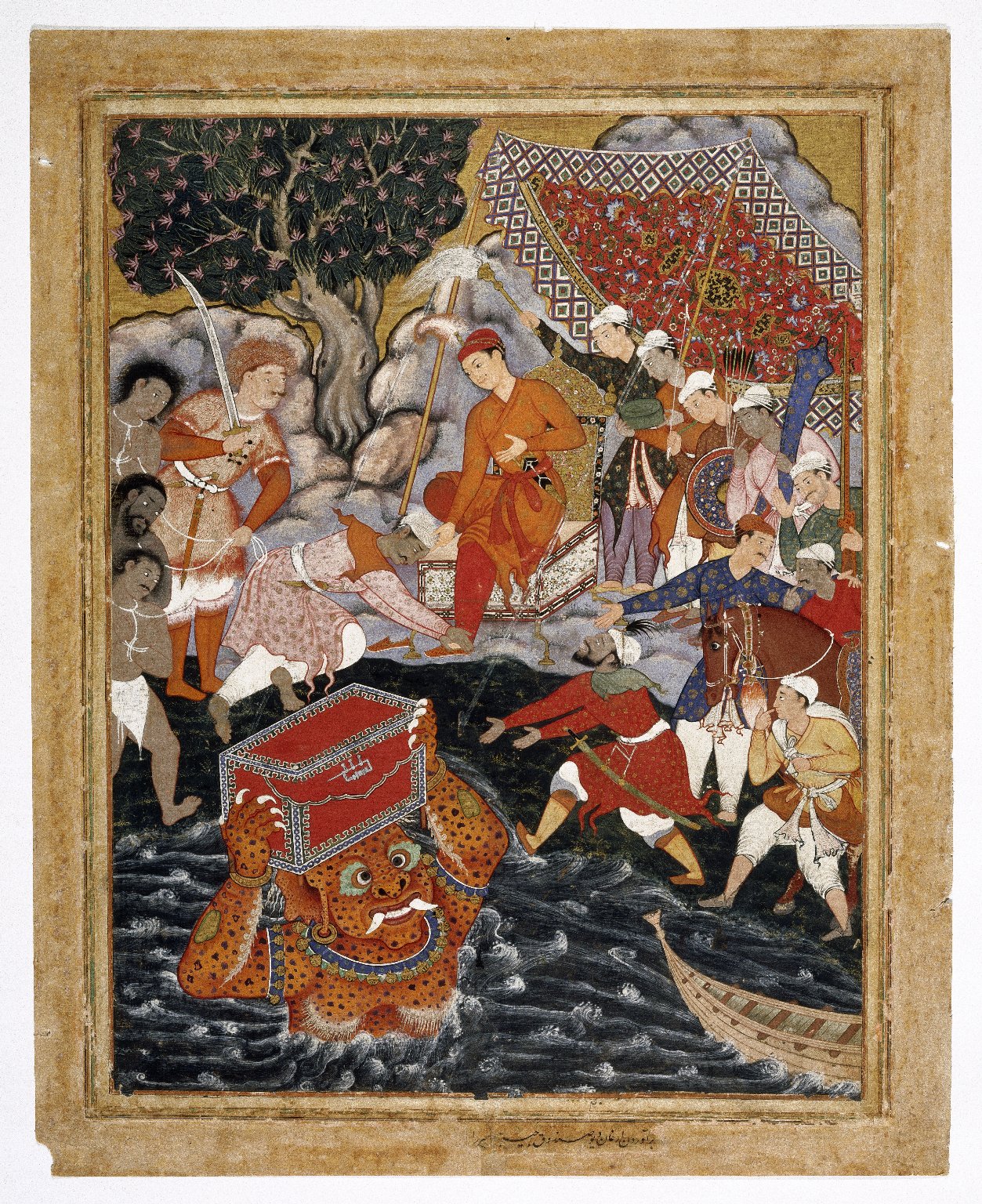 🇪🇬 Egypt and 3 moreIfritعفريت
A class of powerful chthonic spirits in Islamic tradition and folkloreBeing · Cursing and harm · Power and authority Historical
🇪🇬 Egypt and 3 moreIfritعفريت
A class of powerful chthonic spirits in Islamic tradition and folkloreBeing · Cursing and harm · Power and authority Historical
Related elsewhere
All being 🇮🇳 IndiaChakraचक्र
Meditation points in the subtle body used in Hindu and Buddhist yogaTradition · Speaking with spirits and the dead · Change and initiation Living
🇮🇳 IndiaChakraचक्र
Meditation points in the subtle body used in Hindu and Buddhist yogaTradition · Speaking with spirits and the dead · Change and initiation Living
 🇮🇹 ItalyEtruscan religion
The polytheistic beliefs and divination practices of the ancient Etruscans of ItalyTradition · Seeing and foretelling · Speaking with spirits and the dead Historical
🇮🇹 ItalyEtruscan religion
The polytheistic beliefs and divination practices of the ancient Etruscans of ItalyTradition · Seeing and foretelling · Speaking with spirits and the dead Historical
 🇸🇳 Senegal and 1 moreSerer religionA ƭat Roog
The traditional faith of the Serer people, centred on the supreme deity Roog and ancestral veneration.Tradition · Protection · Speaking with spirits and the dead Living
🇸🇳 Senegal and 1 moreSerer religionA ƭat Roog
The traditional faith of the Serer people, centred on the supreme deity Roog and ancestral veneration.Tradition · Protection · Speaking with spirits and the dead Living
 🇮🇶 Iraq and 5 moreGrimoire
A textbook containing instructions for spells, rituals, and the creation of magical objects.Text · Protection · Healing Historical
🇮🇶 Iraq and 5 moreGrimoire
A textbook containing instructions for spells, rituals, and the creation of magical objects.Text · Protection · Healing Historical